155319Lovisenberg Diaconal University College, University Hospital of North Norway, Norway.
1006Aarhus University, Denmark; 5562Molde University College, Norway.
Nurs Ethics. 2022 Mar;29(2):498-510. doi: 10.1177/09697330211050998. Epub 2021 Dec 12.
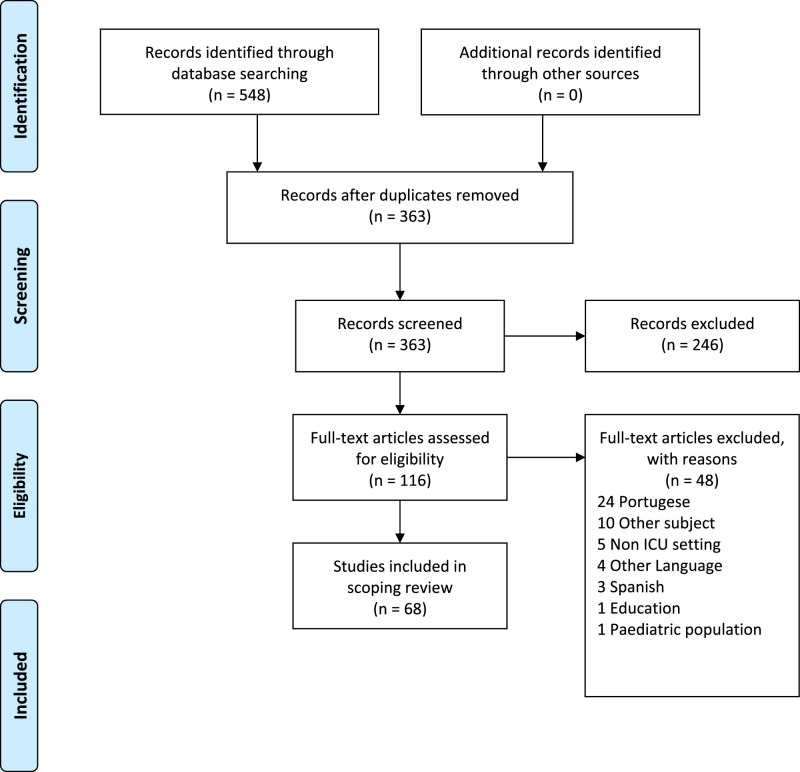
Significant scientific and technological advances in intensive care have been made. However, patients in the intensive care unit may experience discomfort, loss of control, and surreal experiences. This has generated relevant debates about how to humanize the intensive care units and whether humanization is necessary at all. This paper aimed to explore how humanizing intensive care is described in the literature. A scoping review was performed. Studies published between 01.01.1999 and 02.03.2020 were identified in the CINAHL, Embase, PubMed, and Scopus databases. After removing 185 duplicates, 363 papers were screened by title and abstract. Full-text screening of 116 papers led to the inclusion of 68 papers in the review based on the inclusion criteria; these papers mentioned humanizing or dehumanizing intensive care in the title or abstract. Humanizing care was defined as holistic care, as a general attitude of professionals toward patients and relatives and an organizational ideal encompassing all subjects of the healthcare system. Technology was considered an integral component of intensive care that must be balanced with caring for the patient as a whole and autonomous person. This holistic view of patients and relatives could ameliorate the negative effects of technology. There were geographical differences and the large number of studies from Spain and Brazil reflect the growing interest in humanizing intensive care in these particular countries. In conclusion, a more holistic approach with a greater emphasis on the individual patient, relatives, and social context is the foundation for humanizing intensive care, as reflected in the attitudes of nurses and other healthcare professionals. Demands for mastering technology may dominate nurses' attention toward patients and relatives; therefore, humanized intensive care requires a holistic attitude from health professionals and organizations toward patients and relatives. Healthcare organizations, society, and regulatory frameworks demanding humanized intensive care may enforce humanized intensive care.
重症监护领域取得了重大的科学技术进步。然而,重症监护病房的患者可能会感到不适、失去控制并产生超现实的体验。这引发了关于如何使重症监护人性化以及人性化是否有必要的相关争论。本文旨在探讨文献中如何描述重症监护的人性化。进行了范围综述。在 CINAHL、Embase、PubMed 和 Scopus 数据库中确定了 1999 年 1 月 1 日至 2020 年 3 月 2 日期间发表的研究。在去除 185 篇重复文献后,通过标题和摘要筛选了 363 篇文献。对 116 篇论文进行全文筛选后,根据纳入标准纳入了 68 篇论文;这些论文在标题或摘要中提到了使重症监护人性化或非人性化。人性化护理被定义为整体护理,是专业人员对患者和家属的一般态度,以及一个包含医疗保健系统所有主体的组织理想。技术被认为是重症监护的一个组成部分,必须与作为整体的患者和自主个体的护理相平衡。这种对患者和家属的整体观点可以减轻技术的负面影响。存在地理差异,来自西班牙和巴西的大量研究反映了这些特定国家对使重症监护人性化的浓厚兴趣。总之,更加注重个体患者、家属和社会背景的整体方法是使重症监护人性化的基础,这反映在护士和其他医疗保健专业人员的态度中。对掌握技术的需求可能会主导护士对患者和家属的关注;因此,人性化的重症监护需要医疗保健专业人员和组织对患者和家属采取整体态度。要求重症监护人性化的医疗保健组织、社会和监管框架可能会强制实施人性化的重症监护。