Yu Dongmei, Guo Shuo, Yu Meng, Liu Wenwen, Li Xiaokang, Chen Dafu, Li Bo, Guo Zheng, Han Yong
State Key Laboratory for Mechanical Behavior of Materials, Xi'an Jiaotong University, Xi'an, 710049, Shaanxi, China.
Department of Orthopaedics, Tangdu Hospital, Fourth Military Medical University, Xi'an, 710038, Shaanxi, China.
Bioact Mater. 2021 Sep 2;10:323-334. doi: 10.1016/j.bioactmat.2021.08.033. eCollection 2022 Apr.
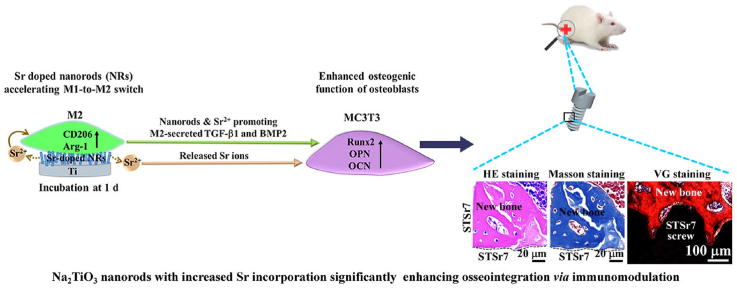
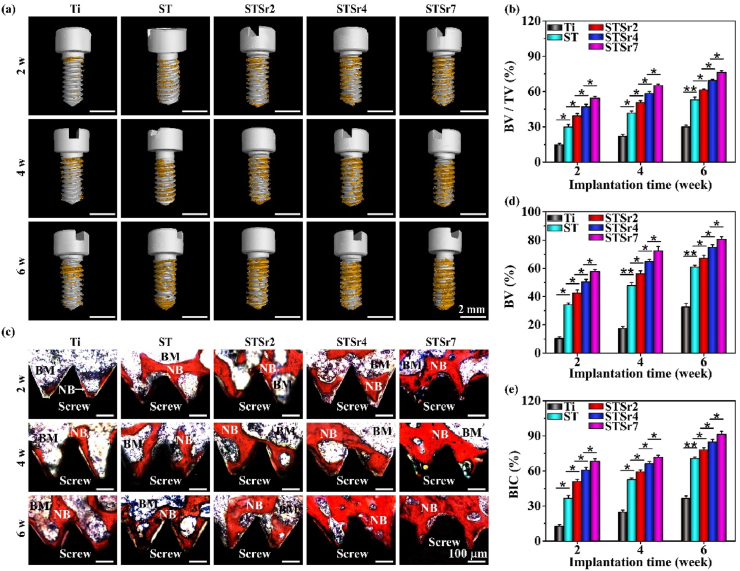
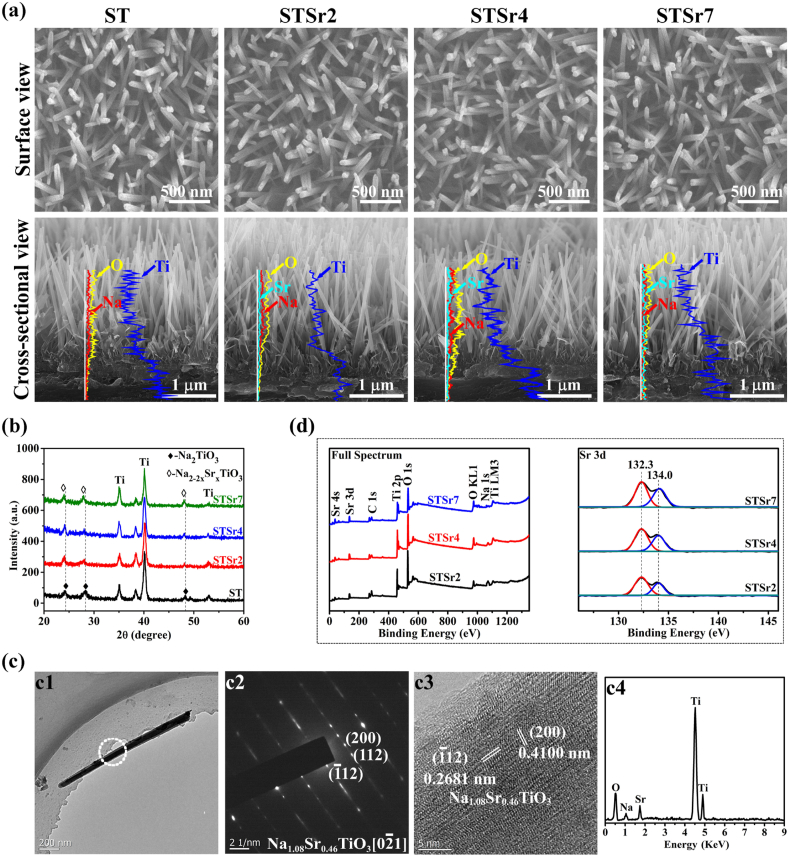
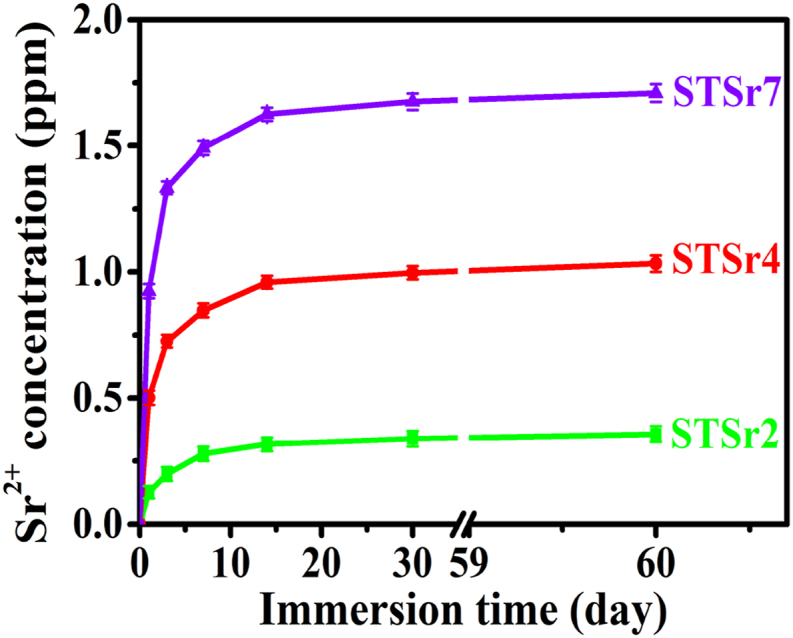
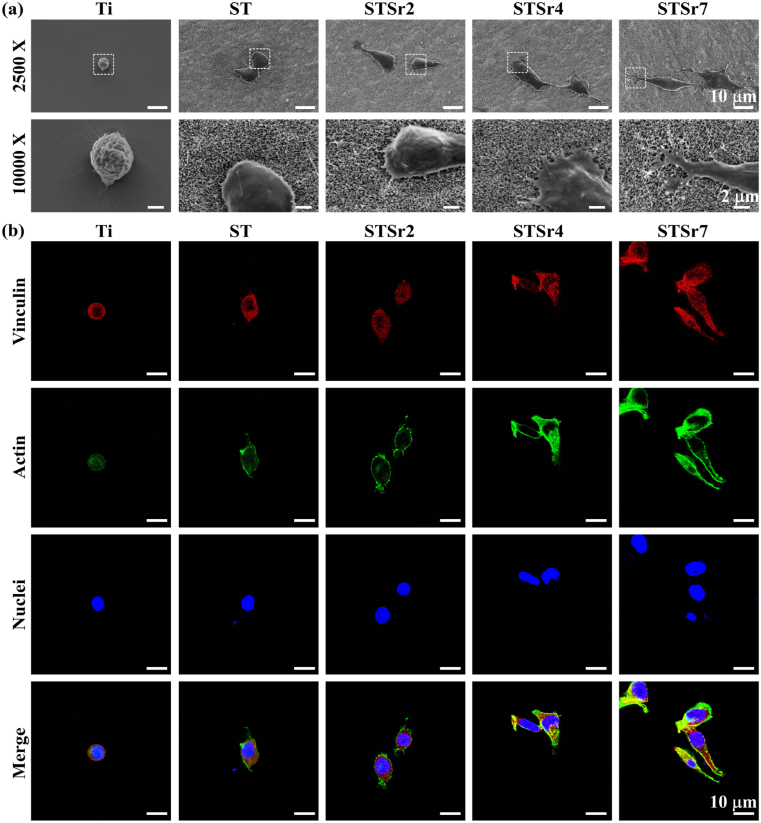
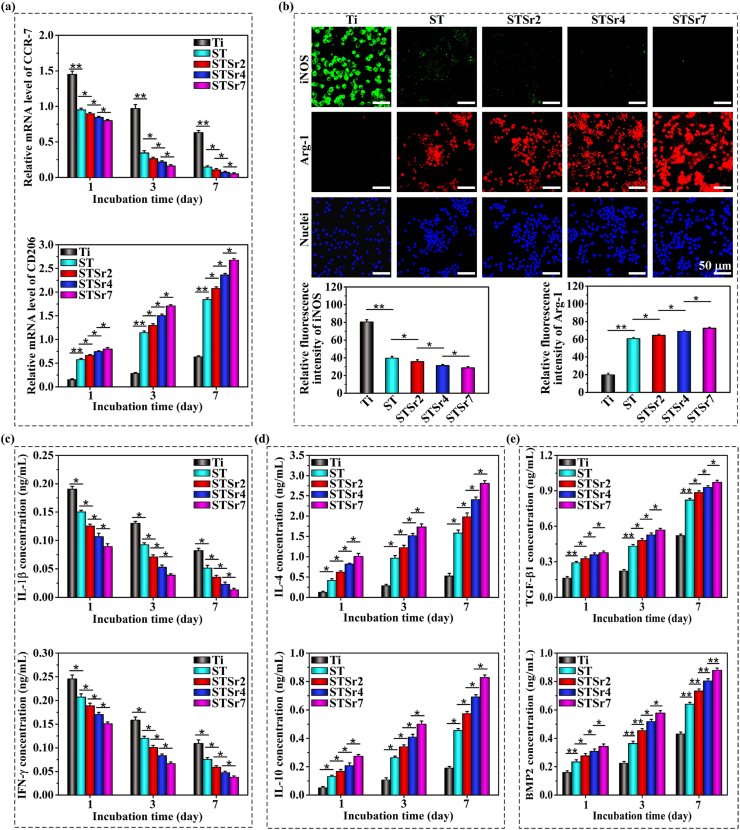
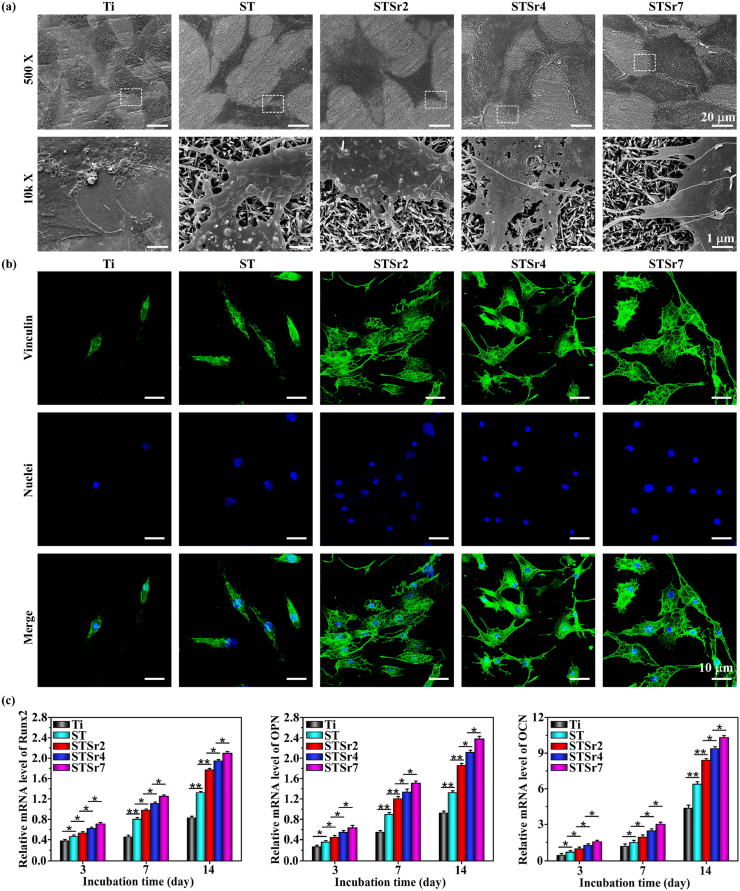
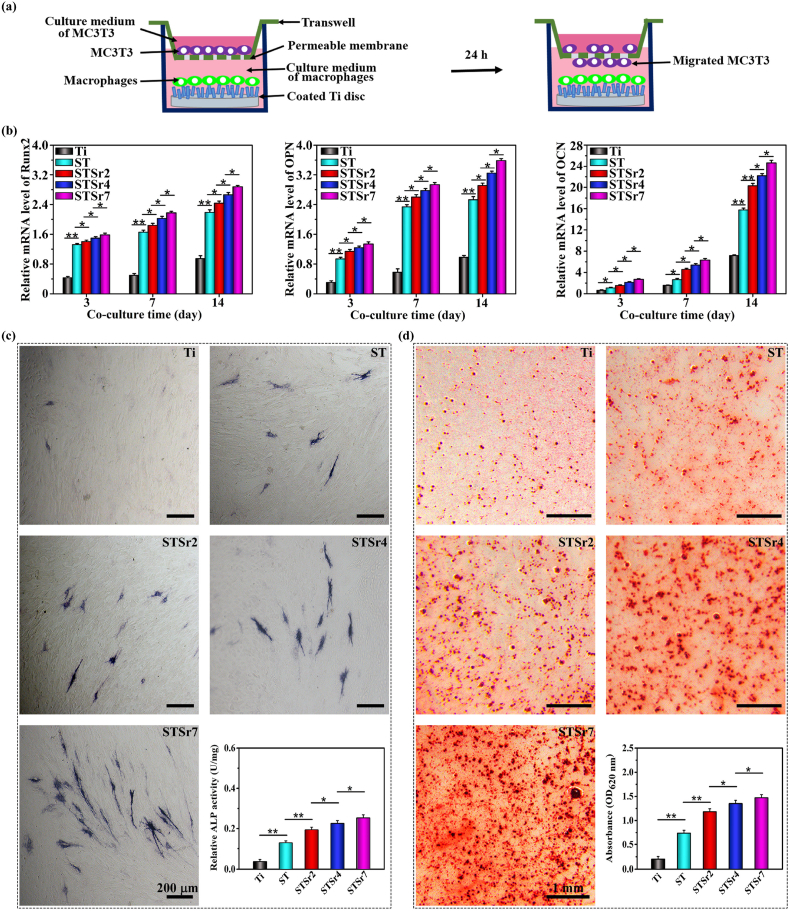
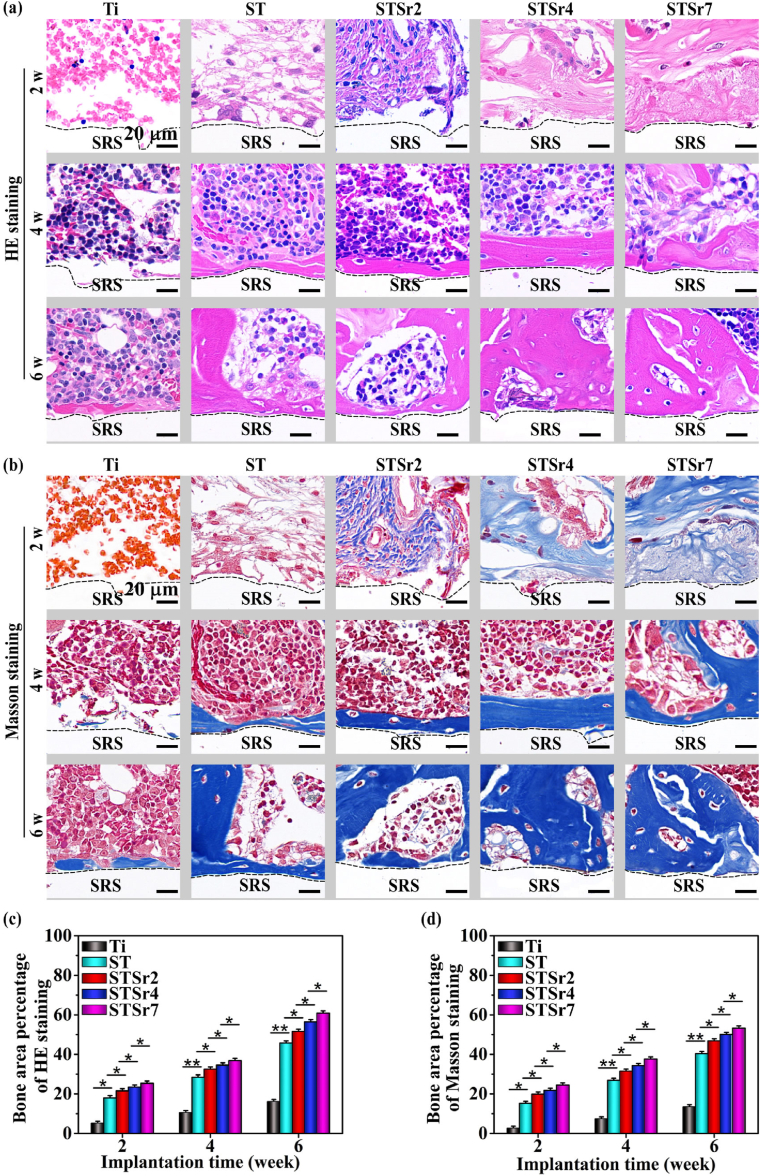
To endow Ti-based orthopedic implants immunomodulatory capability and thus enhanced osseointegration, different amounts of Sr are doped in NaTiO nanorods in the arrays with identical nanotopographic parameters (rod diameter, length and inter-rod spacing) by substitution of Na using hydrothermal treatment. The obtained arrays are denoted as STSr2, STSr4, and STSr7, where the arabic numbers indicate the incorporating amounts of Sr in NaTiO. The modulation effects of the Sr-doped nanorods arrays on macrophage polarization and osteogenetic functions of osteoblasts are investigated, together with the array without Sr (ST). Moreover, osseointegration of these arrays are also assayed in rat femoral condyles. Sr-doped nanorods arrays accelerate M1 (pro-inflammatory phenotype)-to-M2 (anti-inflammatory phenotype) transformation of the adhered macrophages, enhancing secretion of pro-osteogenetic cytokines and growth factors (TGF-β1 and BMP2), moreover, the Sr doped arrays directly enhance osteogenetic functions of osteoblasts. The enhancement of paracrine of M2 macrophages and osteogenetic function of osteoblasts is promoted with the increase of Sr incorporating amounts. Consequently, Sr doped arrays show significantly enhanced osseointegration compared to ST, and STSr7 exhibits the best performance. Our work sheds a new light on the design of surface chemical components and structures for orthopedic implants to enhance their osseointegration.
为赋予钛基骨科植入物免疫调节能力从而增强骨整合,通过水热处理用锶取代钠,在具有相同纳米拓扑参数(棒直径、长度和棒间距)的阵列中的钠钛矿纳米棒中掺杂不同量的锶。所得阵列分别记为STSr2、STSr4和STSr7,其中阿拉伯数字表示锶在钠钛矿中的掺入量。研究了掺锶纳米棒阵列对巨噬细胞极化和成骨细胞成骨功能的调节作用,以及不含锶的阵列(ST)。此外,还在大鼠股骨髁中检测了这些阵列的骨整合情况。掺锶纳米棒阵列加速黏附巨噬细胞从M1(促炎表型)向M2(抗炎表型)的转变,增强促骨生成细胞因子和生长因子(TGF-β1和BMP2)的分泌,此外,掺锶阵列直接增强成骨细胞的成骨功能。随着锶掺入量的增加,M2巨噬细胞旁分泌和成骨细胞成骨功能的增强作用得到促进。因此,与ST相比,掺锶阵列显示出显著增强的骨整合,且STSr7表现最佳。我们的工作为骨科植入物表面化学成分和结构的设计以增强其骨整合提供了新的思路。