Social Medicine and Global Health, Department of Clinical Sciences, Lund University, Malmö, Sweden
Social Medicine and Global Health, Department of Clinical Sciences, Lund University, Malmö, Sweden.
BMJ Open. 2021 Dec 13;11(12):e054136. doi: 10.1136/bmjopen-2021-054136.
To examine how maternal and sociodemographic factors determine continued care-seeking behaviour from pregnancy to postnatal period in Kenya and Uganda and to determine associated neonatal survival outcomes.
A population-based analysis of cross-sectional data using multinomial and binary logistic regressions.
Countrywide, Kenya and Uganda.
Most recent live births of 24 502 mothers within 1-59 months prior to the 2014-2016 Demographic and Health Surveys.
Care-seeking continuum and neonatal mortality.
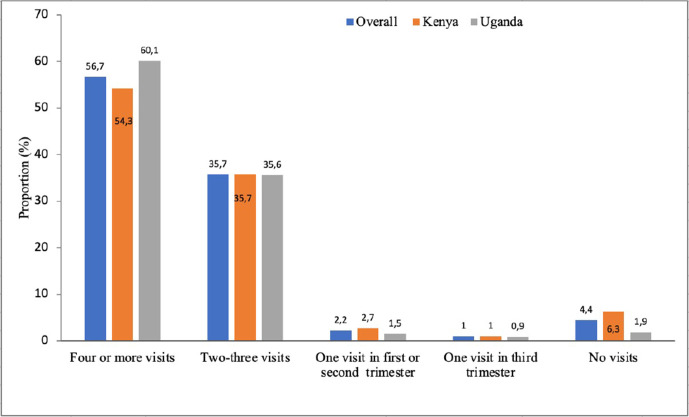
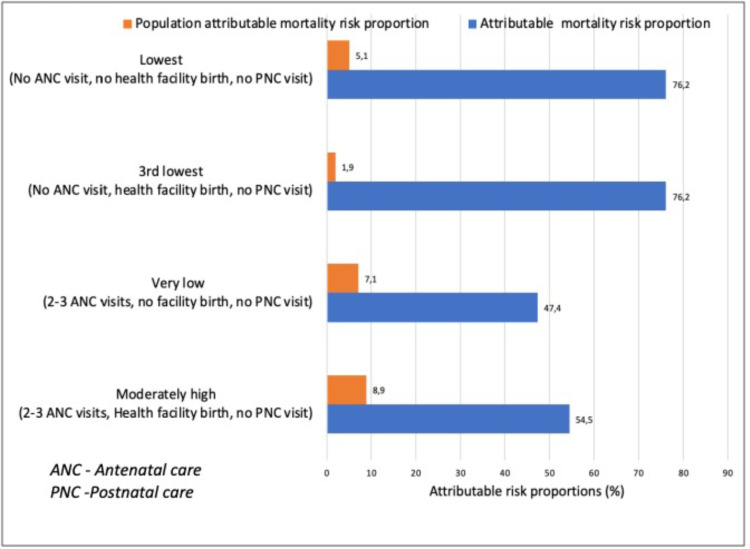
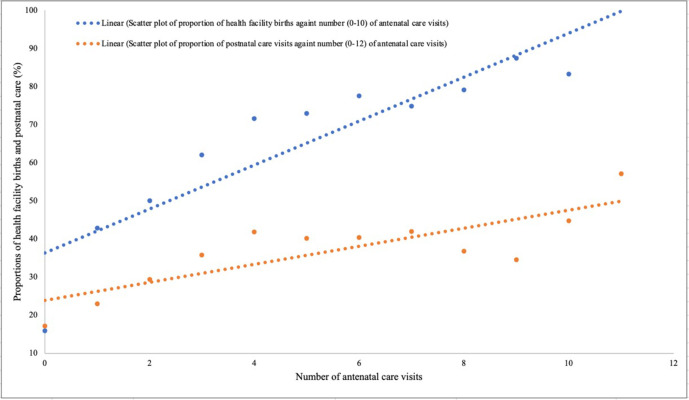
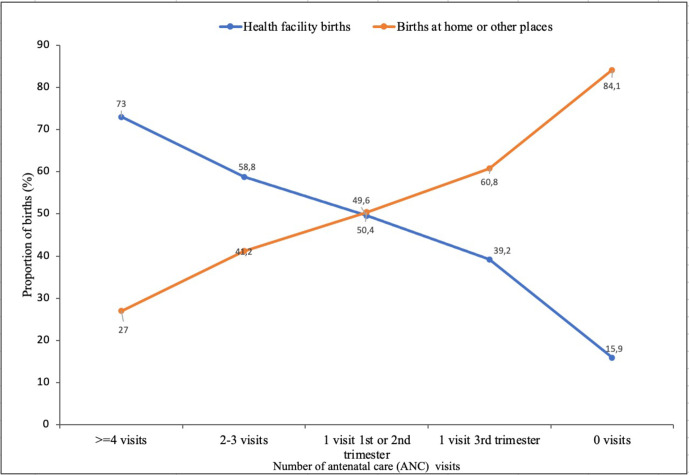
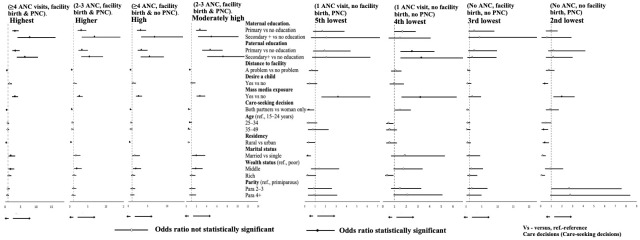
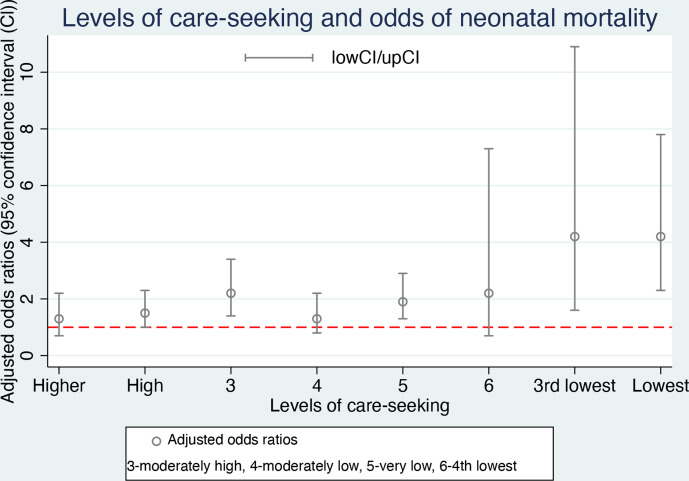
Overall, 57% of the mothers had four or more antenatal care (ANC) contacts, of which 73% and 41% had facility births and postnatal care (PNC), respectively. Maternal/paternal education versus no education was associated with continued care seeking in majority of care-seeking classes; relative risk ratios (RRRs) ranged from 2.1 to 8.0 (95% CI 1.1 to 16.3). Similarly, exposure to mass media was generally associated with continued care seekin; RRRs ranged from 1.8 to 3.2 (95% CI 1.2 to 5.4). Care-seeking tendency reduced if a husband made major maternal care-seeking decisions. Transportation problems and living in rural versus urban were largely associated with lower continued care use; RRR ranged from 0.4 to 0.7 (95% CI 0.3 to 0.9). The two care-seeking categories with no ANC and no PNC indicated the highest odds for neonatal mortality (adjusted OR 4.2, 95% CI 1.6 to 10.9). 23% neonatal deaths were attributable to inadequate maternal care attendance.
Strategies such as mobile health specifically for promoting continued maternal care use up to postnatal could be integrated in the existing structures. Another strategy would be to develop and employ a brief standard questionnaire to determine a mother's continued care-seeking level during the first ANC visit and to use the information to close the care-seeking gaps. Strengthening the community health workers system to be an integral part of promoting continued care seeking could enhance care seeking as a stand-alone strategy or as a component of aforementioned suggested strategies.
探讨肯尼亚和乌干达母婴和社会人口因素如何决定产妇从孕期到产后持续寻求护理的行为,并确定相关的新生儿生存结局。
使用多项和二项逻辑回归对基于人群的横断面数据进行的分析。
肯尼亚和乌干达全国范围。
2014-2016 年人口与健康调查前 1-59 个月内最近一次活产的 24502 名母亲。
护理连续体和新生儿死亡率。
总体而言,57%的母亲有 4 次或更多次产前保健(ANC)接触,其中 73%和 41%分别在医疗机构分娩和接受产后护理(PNC)。母亲/父亲教育与无教育相比,与大多数寻求护理的类别中持续寻求护理相关;相对风险比(RRR)范围为 2.1 至 8.0(95%CI 1.1 至 16.3)。同样,接触大众媒体通常与持续寻求护理相关;RRR 范围为 1.8 至 3.2(95%CI 1.2 至 5.4)。如果丈夫主要做出产妇护理决策,则寻求护理的意愿会降低。交通问题以及居住在农村与城市相比,与较低的持续护理使用率有很大关系;RRR 范围为 0.4 至 0.7(95%CI 0.3 至 0.9)。没有 ANC 和没有 PNC 的两个护理寻求类别表示新生儿死亡的可能性最高(调整后的 OR 4.2,95%CI 1.6 至 10.9)。23%的新生儿死亡归因于产妇护理就诊不足。
可以将专门用于促进产后持续接受产妇护理的移动健康等策略纳入现有结构中。另一个策略是制定和使用一个简短的标准问卷,以确定母亲在第一次 ANC 就诊时的持续护理寻求水平,并利用该信息来缩小护理寻求差距。加强社区卫生工作者系统,使其成为促进持续寻求护理的一个组成部分,可以增强作为独立策略或作为上述建议策略组成部分的护理寻求。