Center for Translational Immunology, University Medical Center Utrecht, Utrecht University, Utrecht, The Netherlands.
Oncode Institute, Utrecht, The Netherlands.
J Exp Med. 2022 Jan 3;219(1). doi: 10.1084/jem.20211463. Epub 2021 Dec 14.
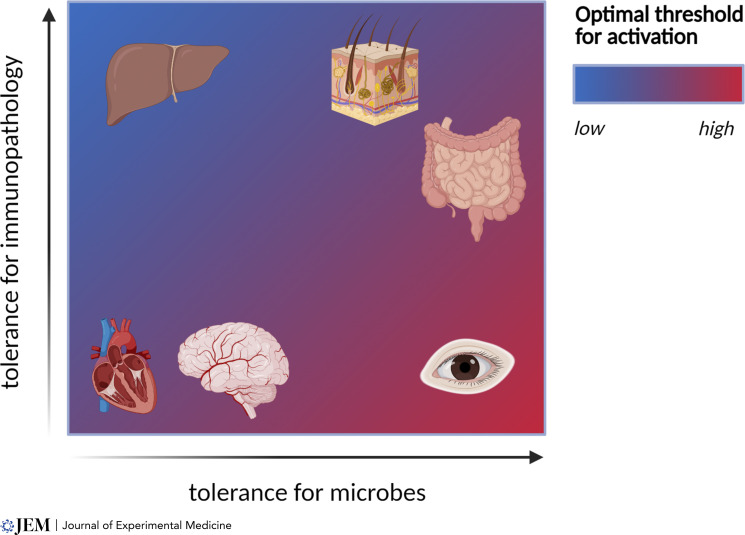
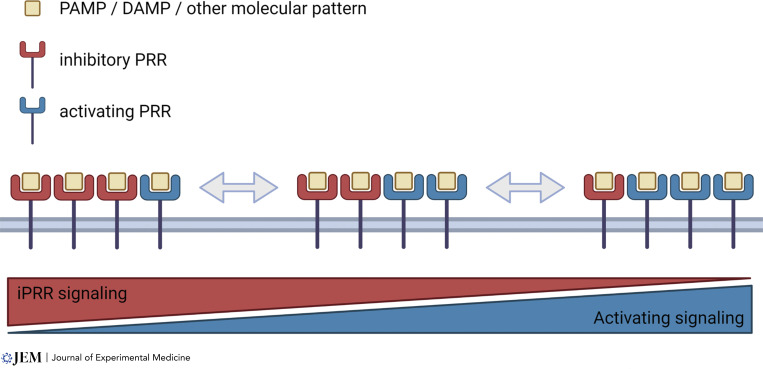
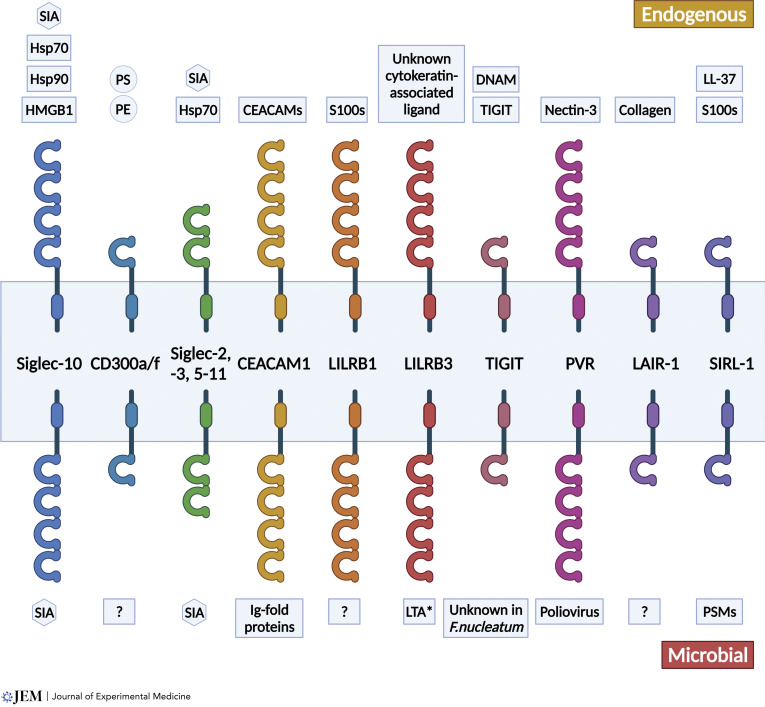
Pathogen- and damage-associated molecular patterns are sensed by the immune system's pattern recognition receptors (PRRs) upon contact with a microbe or damaged tissue. In situations such as contact with commensals or during physiological cell death, the immune system should not respond to these patterns. Hence, immune responses need to be context dependent, but it is not clear how context for molecular pattern recognition is provided. We discuss inhibitory receptors as potential counterparts to activating pattern recognition receptors. We propose a group of inhibitory pattern recognition receptors (iPRRs) that recognize endogenous and microbial patterns associated with danger, homeostasis, or both. We propose that recognition of molecular patterns by iPRRs provides context, helps mediate tolerance to microbes, and helps balance responses to danger signals.
病原体和损伤相关的分子模式在与微生物或受损组织接触时,被免疫系统的模式识别受体(PRRs)所感知。在与共生菌接触或发生生理性细胞死亡等情况下,免疫系统不应对这些模式作出反应。因此,免疫反应需要依赖于具体情况,但目前尚不清楚分子模式识别的上下文是如何提供的。我们讨论了抑制性受体作为激活型模式识别受体的潜在对应物。我们提出了一组识别与危险、内稳态或两者相关的内源性和微生物模式的抑制性模式识别受体(iPRRs)。我们提出,iPRRs 对分子模式的识别提供了上下文,有助于介导对微生物的耐受性,并有助于平衡对危险信号的反应。