Department of Health Management, School of Public Health, Nantong University, Nantong, Jiangsu, China.
Department of Social Medicine, School of Health Management, Harbin Medical University, Harbin, Heilongjiang, China.
BMC Womens Health. 2021 Dec 18;21(1):419. doi: 10.1186/s12905-021-01571-3.
Cervical cancer is one of the most common cancers among women worldwide. The formulation or evaluation on prevention strategies all require an accurate understanding of the burden for cervical cancer burden. We aimed to report the up-to-date estimates of cervical cancer burden at global, regional, and national levels.
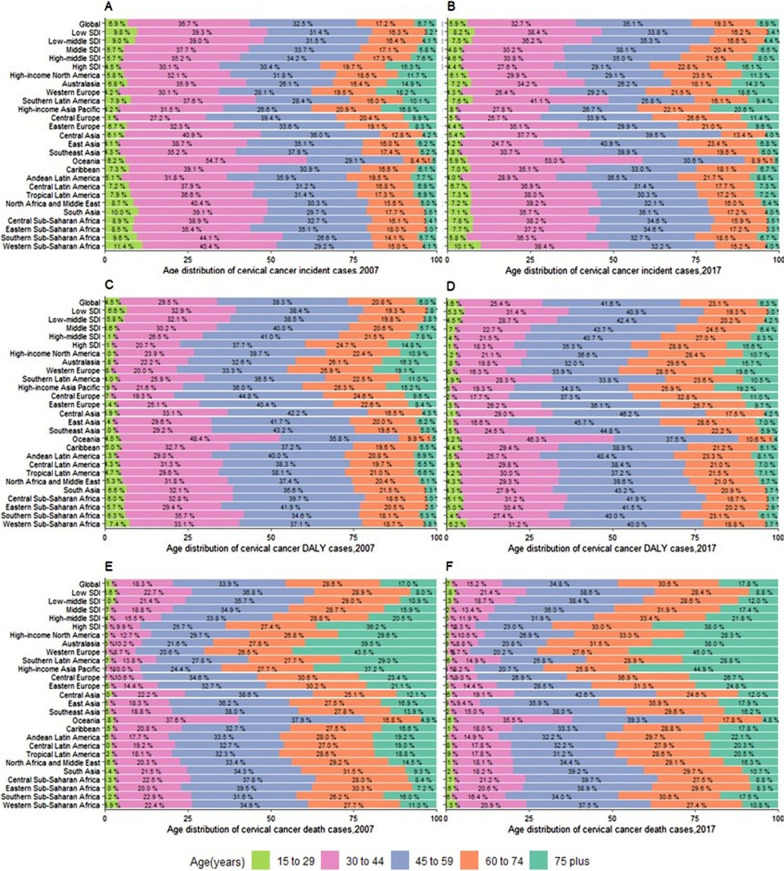
Data were extracted from the Global Burden of Diseases, Injuries, and Risk Factors Study (GBD) 2017 study. The counts, age-standardized rates, and percentage changes of incidence, disability-adjusted life-years (DALYs), and death attributed to cervical cancer at the global, regional, and national levels in all 195 countries and territories from 21 regions during 2007 to 2017 by age and by Socio-demographic Index (SDI) were measured. All estimates were reported with 95% uncertainty intervals (UIs).
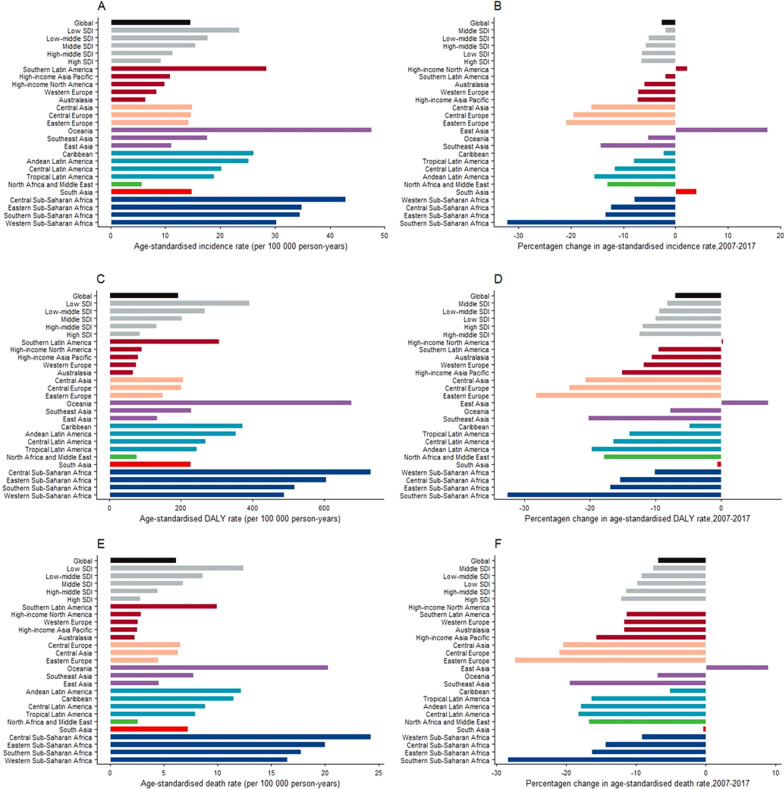
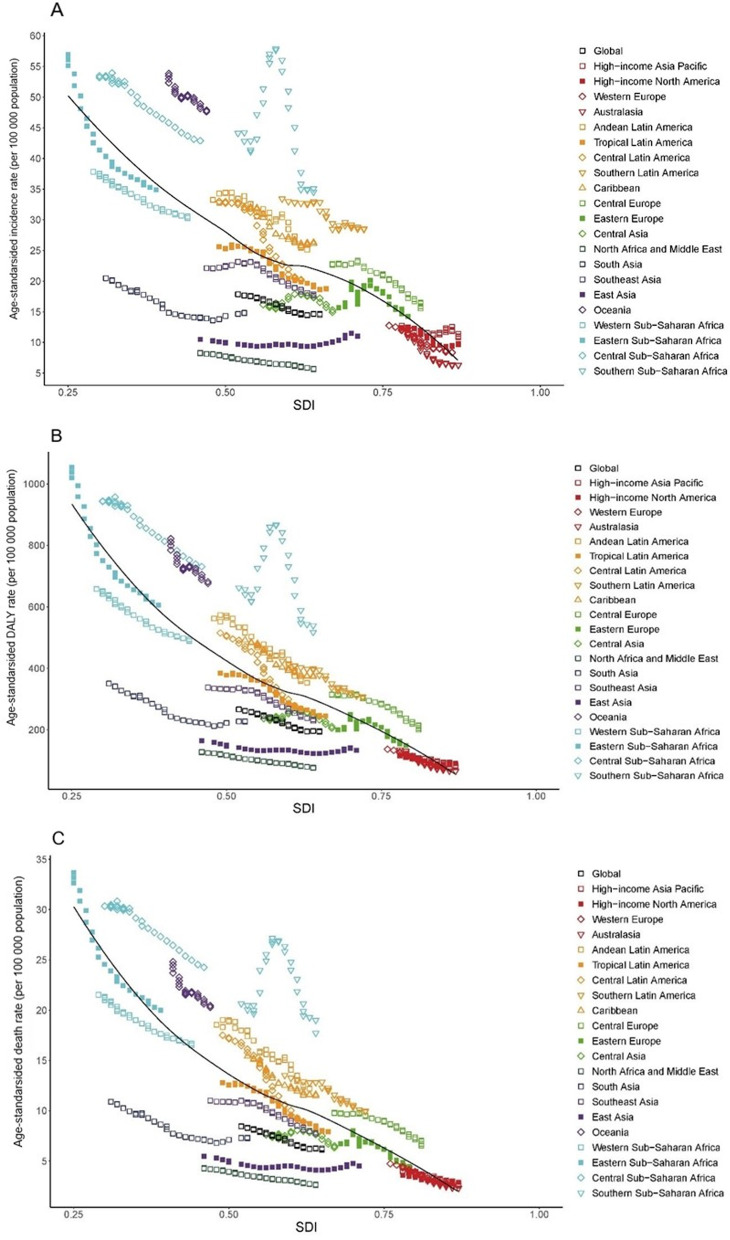
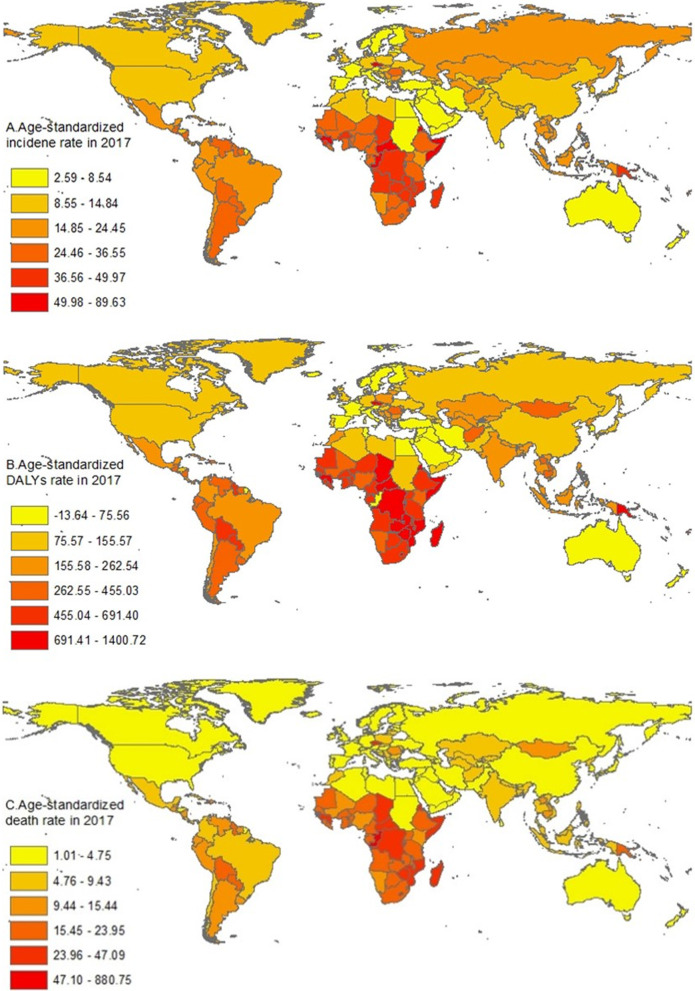
In 2017, 601,186 (95% UI 554,455 to 625,402) incident cases of cervical cancer were reported worldwide, which caused 8,061,667 (7,527,014 to 8,401,647) DALYs and 259,671 (241,128 to 269,214) deaths. The age-standardized rates for incidence, DALYs and death decreased by - 2.8% (- 7.8% to 0.6%), - 7.1% [- 11.8% to - 3.9%] and - 6.9% [- 11.5% to - 3.7%] from 2007 to 2017, respectively. The highest age-standardized incidence, DALYs and death rates in 2017 were observed in the low SDI quintile, Oceania, Central and Eastern Sub-Saharan Africa. During 2007 to 2017, only East Asia showed increase in these rates despite not significant. At the national level, the highest age-standardized rates for incidence, DALYs, and death in 2017 were observed in Kiribati, Somalia, Eritrea, and Central African Republic; and Georgia showed the largest increases in all these rates during 2007 to 2017.
Although the age-standardized rates for incidence, DALYs, and death of cervical cancer have decreased in most parts of the world from 2007 to 2017, cervical cancer remains a major public health concern in view of the absolute number of cervical cancer cases, DALYs, and deaths increased during this period. The challenge is more prone to in the low SDI quintile, Oceania, Central and Eastern Sub-Saharan Africa, East Asia, and some countries, suggesting an urgent to promote human papillomavirus vaccination in these regions.
宫颈癌是全球女性中最常见的癌症之一。制定或评估预防策略都需要准确了解宫颈癌的负担。我们旨在报告全球、区域和国家各级宫颈癌负担的最新估计。
数据来自全球疾病、伤害和危险因素研究(GBD)2017 年研究。通过年龄和社会人口指数(SDI),在全球 195 个国家和地区的 21 个地区,对 2007 年至 2017 年期间全球、区域和国家各级宫颈癌的发病、伤残调整生命年(DALYs)和死亡的数量、年龄标准化率和百分比变化进行了测量。所有估计值均以 95%的置信区间(UI)报告。
2017 年,全球报告宫颈癌新发病例 601186 例(95% UI 554455-625402),导致 8061667 例伤残调整生命年(7527014-8401647)和 259671 例死亡(241128-269214)。2007 年至 2017 年,发病率、DALYs 和死亡率的年龄标准化率分别下降了 2.8%(-7.8%至 0.6%)、7.1%(-11.8%至-3.9%)和 6.9%(-11.5%至-3.7%)。2017 年,SDI 五分位数较低、大洋洲、撒哈拉以南非洲中部和东部地区的年龄标准化发病率、DALYs 和死亡率最高。2007 年至 2017 年期间,东亚的这些比率仅略有上升,但没有显著增加。在国家一级,2017 年发病率、DALYs 和死亡率的年龄标准化率最高的是基里巴斯、索马里、厄立特里亚和中非共和国;格鲁吉亚在这三个比率的所有国家中增长最快。
尽管 2007 年至 2017 年期间,全球大多数地区的宫颈癌发病率、DALYs 和死亡率的年龄标准化率有所下降,但考虑到在此期间宫颈癌病例、DALYs 和死亡人数的绝对增加,宫颈癌仍然是一个主要的公共卫生问题。在 SDI 五分位数较低的地区、大洋洲、撒哈拉以南非洲中部和东部、东亚以及一些国家,情况更为严重,这表明迫切需要在这些地区推广人乳头瘤病毒疫苗接种。