Institute of Mathematical Sciences, Claremont Graduate University, Claremont, CA 91711, United States of America.
Math Biosci. 2022 Feb;344:108758. doi: 10.1016/j.mbs.2021.108758. Epub 2021 Dec 16.
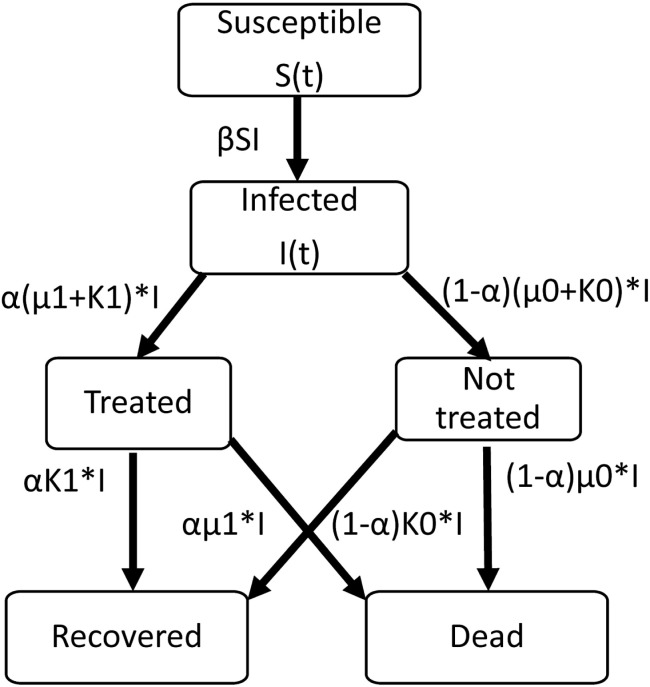
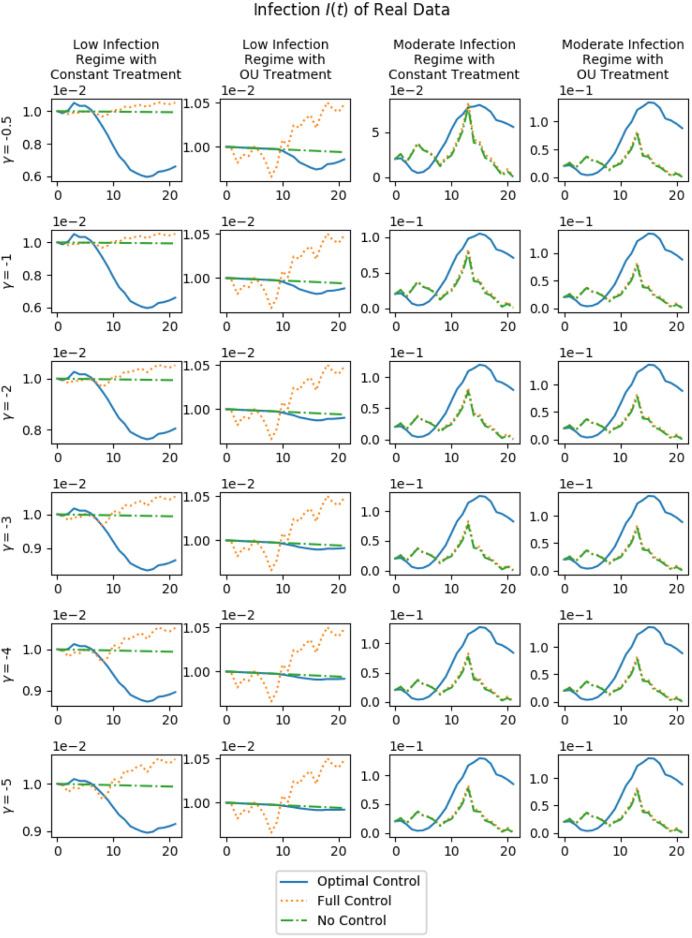
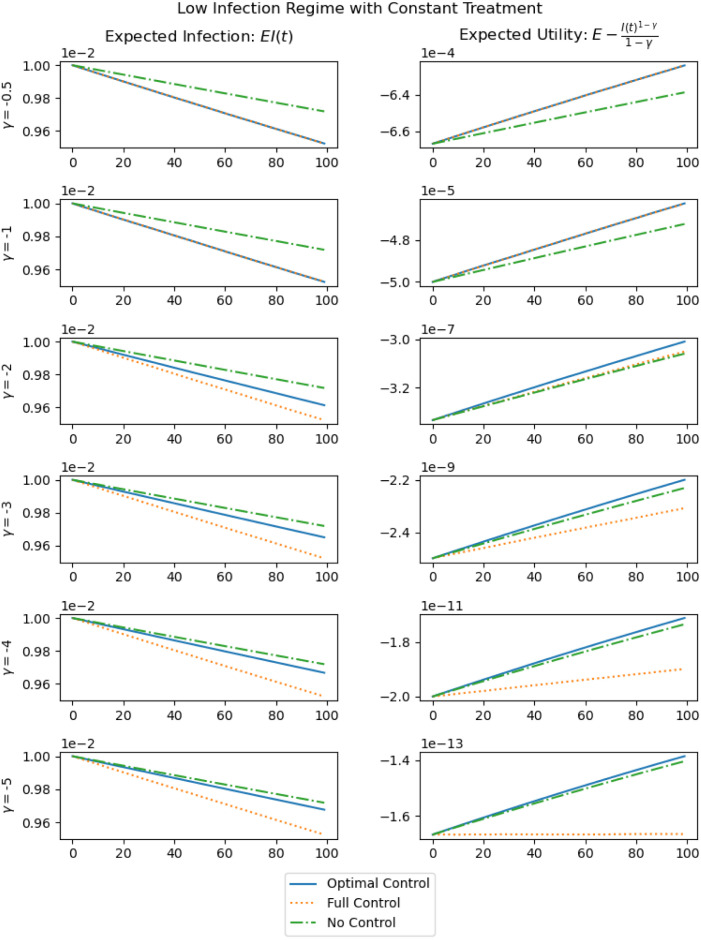
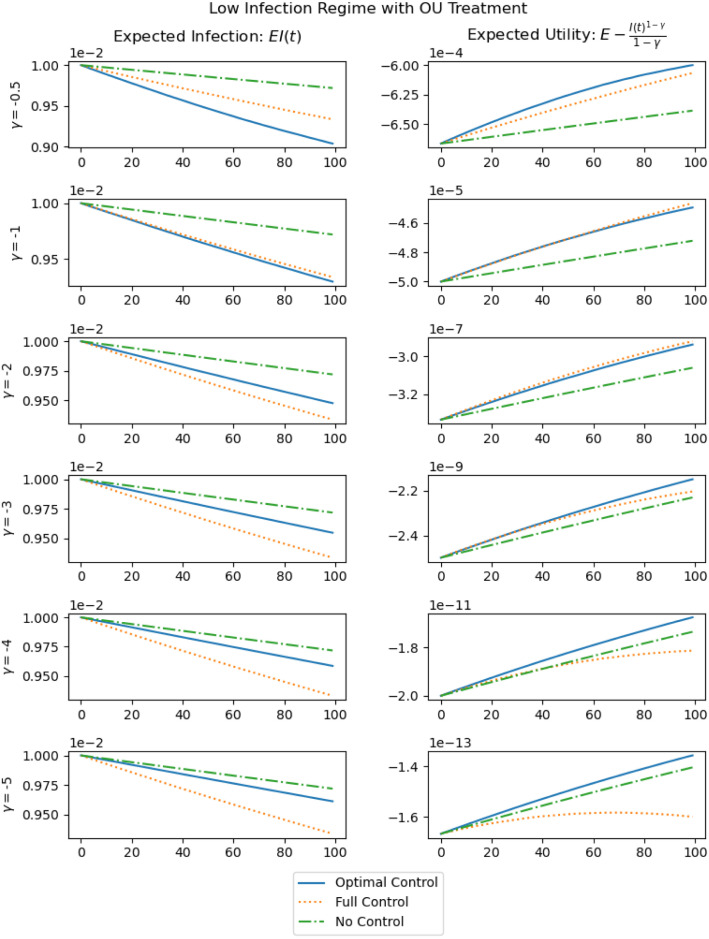
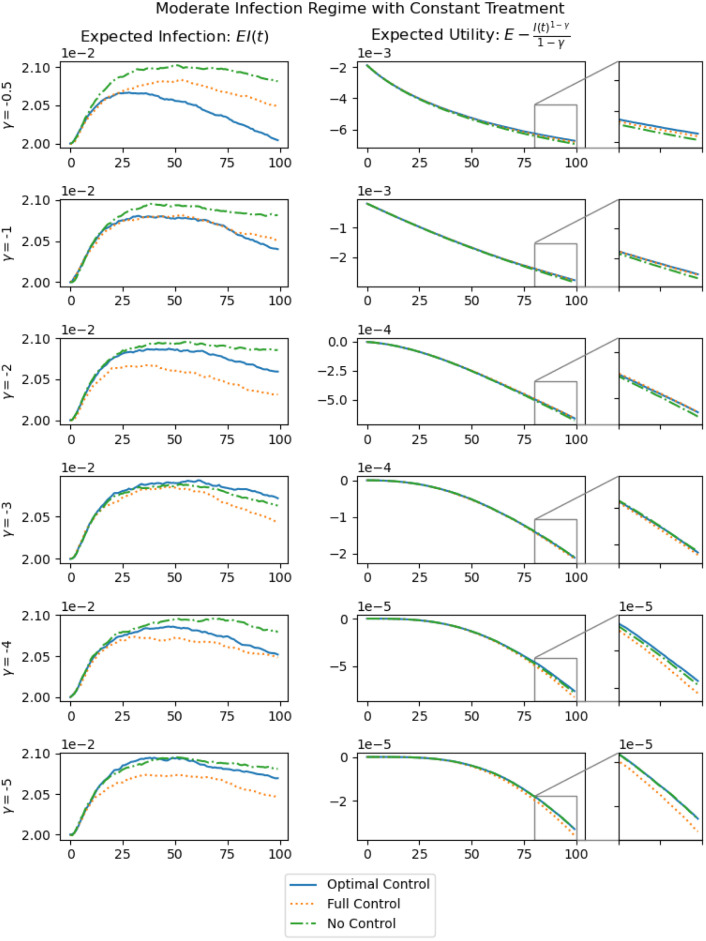
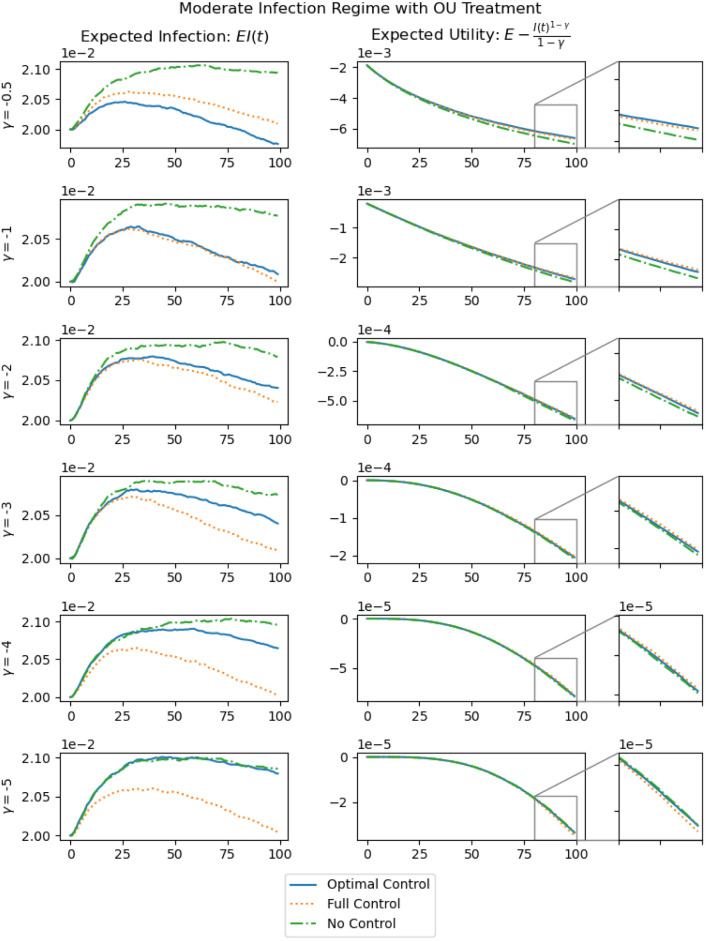
This article considers the optimal control of the SIR model with both transmission and treatment uncertainty. It follows the model presented in Gatto and Schellhorn (2021). We make four significant improvements on the latter paper. First, we prove the existence of a solution to the model. Second, our interpretation of the control is more realistic: while in Gatto and Schellhorn (2021) the control α is the proportion of the population that takes a basic dose of treatment, so that α>1 occurs only if some patients take more than a basic dose, in our paper, α is constrained between zero and one, and represents thus the proportion of the population undergoing treatment. Third, we provide a complete solution for the moderate infection regime (with constant treatment). Finally, we give a thorough interpretation of the control in the moderate infection regime, while Gatto and Schellhorn (2021) focused on the interpretation of the low infection regime. Finally, we compare the efficiency of our control to curb the COVID-19 epidemic to other types of control.
本文考虑了同时存在传播和治疗不确定性的 SIR 模型的最优控制。它遵循了 Gatto 和 Schellhorn(2021)提出的模型。我们对后者的论文进行了四项重大改进。首先,我们证明了模型解的存在性。其次,我们对控制的解释更加现实:在 Gatto 和 Schellhorn(2021)中,控制变量 α 是接受基本治疗剂量的人群比例,因此只有当一些患者接受了超过基本剂量的治疗时,α>1 才会发生,而在我们的论文中,α 的取值范围在 0 到 1 之间,因此代表了接受治疗的人群比例。第三,我们为中等感染阶段(恒定治疗)提供了完整的解决方案。最后,我们对中等感染阶段的控制进行了全面的解释,而 Gatto 和 Schellhorn(2021)则侧重于对低感染阶段的解释。最后,我们将我们的控制措施与其他类型的控制措施进行了比较,以遏制 COVID-19 疫情。