College of Animal Science and Technology, Henan University of Science and Technology, Luoyang, China.
Key Laboratory of Molecular Pathogen and Immunology of Animal of Luoyang, Luoyang, China.
Virulence. 2021 Dec;12(1):3062-3073. doi: 10.1080/21505594.2021.2010398.
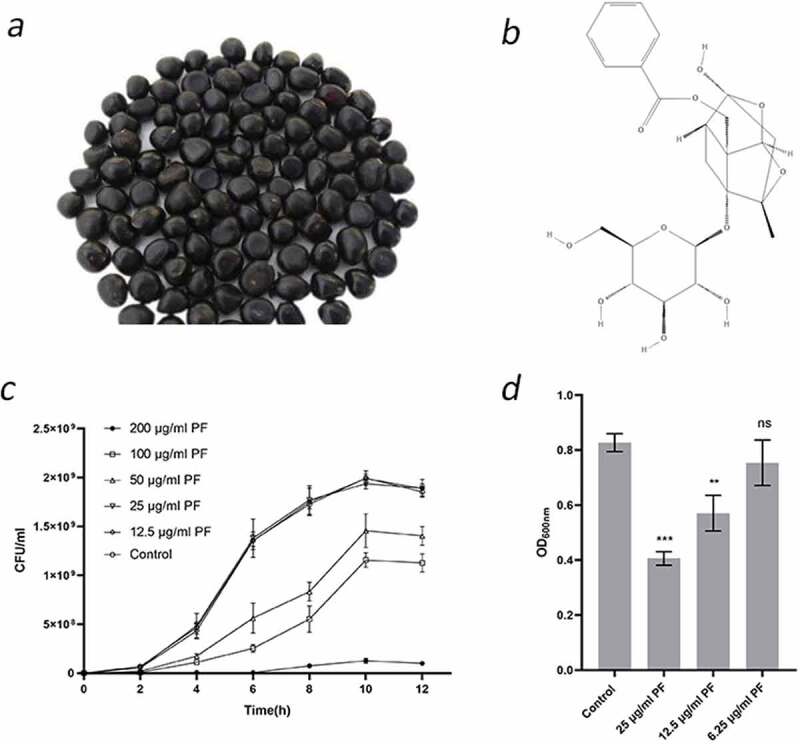
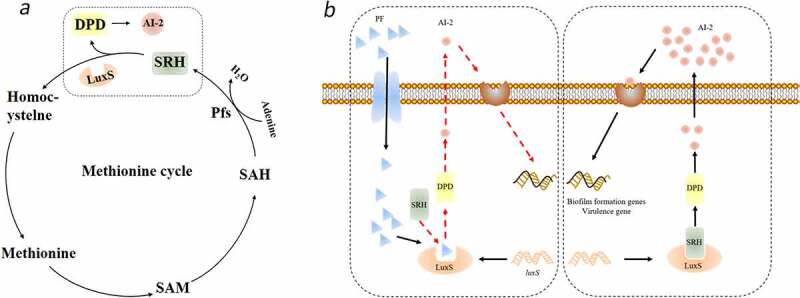
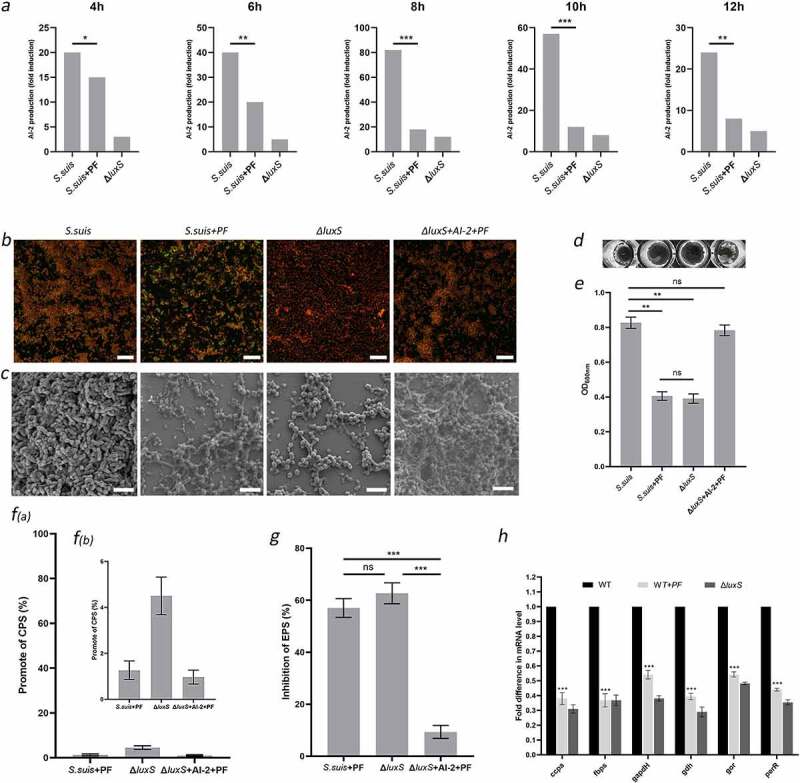
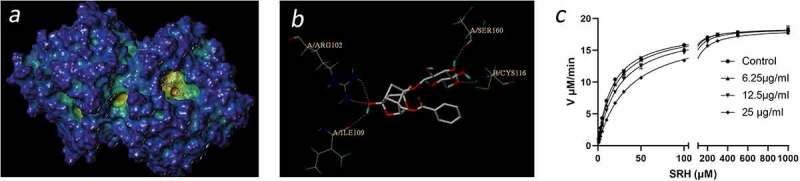
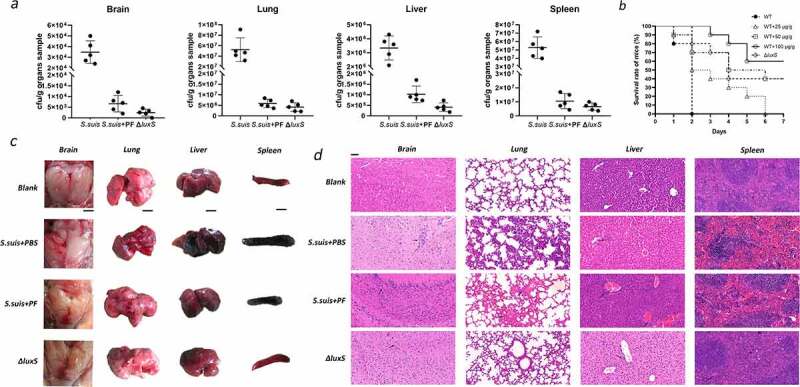
(), more specifically serotype 2, is a bacterial pathogen that threatens the lives of pigs and humans. Like many other pathogens, exhibits quorum sensing (QS) system-controlled virulence factors, such as biofilm formation that complicates treatment. Therefore, impairing the QS involving LuxS/AI-2 cycle in , may be a promising alternative strategy for overcoming infections. In this study, we investigated paeoniflorin (PF), a monoterpenoid glycoside compound extracted from peony, as an inhibitor of LuxS/AI-2 system. At a sub-minimal inhibitory concentration (MIC) (1/16 MIC; 25 μg/ml), PF significantly reduced biofilm formation by through inhibition of extracellular polysaccharide (EPS) production, without affecting bacterial growth. Moreover, evidence was brought that PF reduces AI-2 activity in biofilm. Molecular docking indicated that LuxS may be the target of PF. Monitoring LuxS enzymatic activity confirmed that PF had a partial inhibitory effect. Finally, we showed that the use of PF in a mouse model can relieve infections. This study highlighted the anti-biofilm potential of PF against , and brought evidence that it may as an inhibitor of the LuxS/AI-2 system to prevent biofilm-related infections. PF can thus be used as a new type of natural biofilm inhibitor for clinical application.
(),更具体地说是血清型 2,是一种威胁猪和人类生命的细菌病原体。与许多其他病原体一样,表现出群体感应(QS)系统控制的毒力因子,例如生物膜形成,这使得治疗变得复杂。因此,削弱涉及 LuxS/AI-2 循环的 QS,可能是克服感染的一种有前途的替代策略。在这项研究中,我们研究了从牡丹中提取的单萜糖苷化合物芍药苷(PF)作为 LuxS/AI-2 系统的抑制剂。在亚最小抑制浓度(MIC)(1/16 MIC;25μg/ml)下,PF 通过抑制细胞外多糖(EPS)的产生,显著降低了通过抑制细胞外多糖(EPS)的产生而导致的生物膜形成,而不影响细菌生长。此外,有证据表明 PF 降低了生物膜中的 AI-2 活性。分子对接表明 LuxS 可能是 PF 的靶标。监测 LuxS 酶活性证实 PF 具有部分抑制作用。最后,我们表明在小鼠模型中使用 PF 可以缓解感染。这项研究强调了 PF 对生物膜的抗生物膜潜力,并提供了证据表明它可能作为 LuxS/AI-2 系统的抑制剂来预防生物膜相关感染。因此,PF 可以用作临床应用的新型天然生物膜抑制剂。