Institute for Evidence-Based Health (ISBE), Faculdade de Medicina da Universidade de Lisboa, Edifício Reynaldo dos Santos, Piso 3, Av. Prof. Egas Moniz, 1649-028 Lisboa, Portugal.
Institute for Evidence-Based Health (ISBE), Faculdade de Medicina da Universidade de Lisboa, Edifício Reynaldo dos Santos, Piso 3, Av. Prof. Egas Moniz, 1649-028 Lisboa, Portugal; Centre for Health Evaluation & Research (CEFAR), Infosaúde, Associação Nacional das Farmácias (ANF), R. Marechal Saldanha, 1, 1249-069 Lisboa, Portugal.
Res Social Adm Pharm. 2022 Aug;18(8):3338-3349. doi: 10.1016/j.sapharm.2021.12.003. Epub 2021 Dec 14.
The COVID-19 pandemic has put community pharmacists at the frontline of prevention, preparedness, response, and recovery efforts. Pharmacies had to reorganize and implement several different interventions and measures within a very short time frame.
We used a mixed methods approach combining country mapping of current practices of pharmacy interventions on COVID-19 reported by pharmacy associations in Europe with a scoping review of published literature.
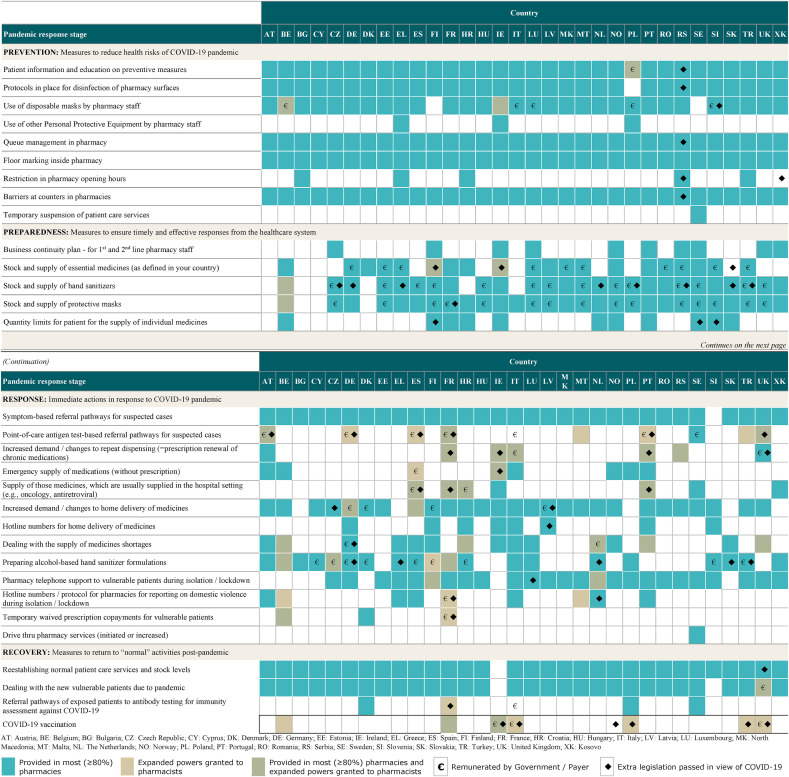
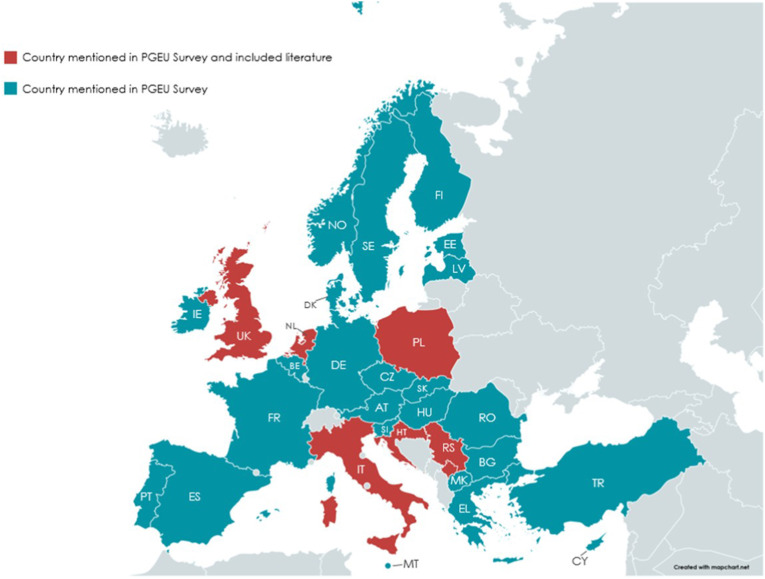
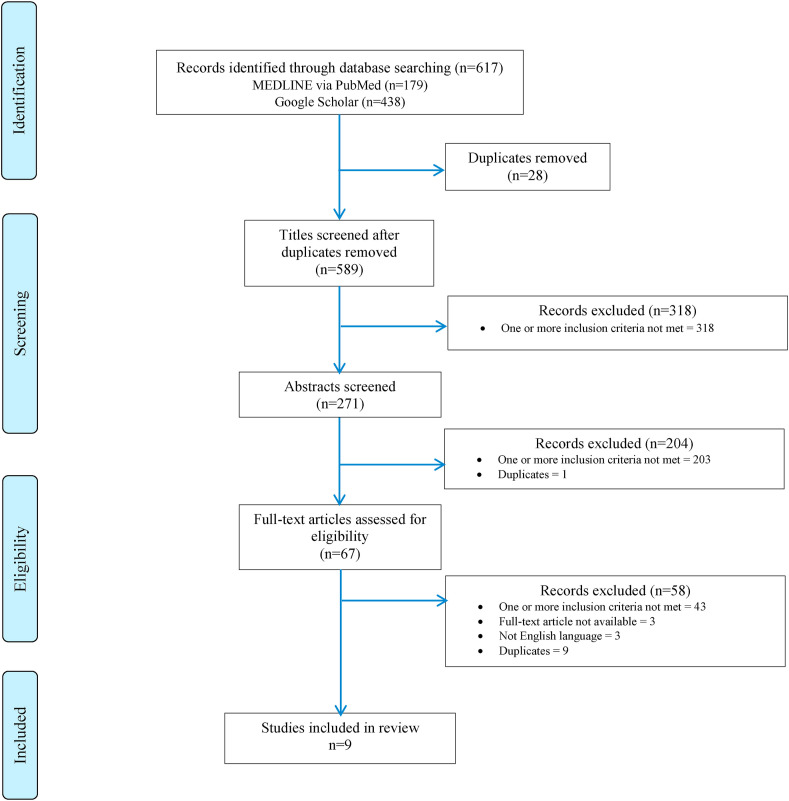
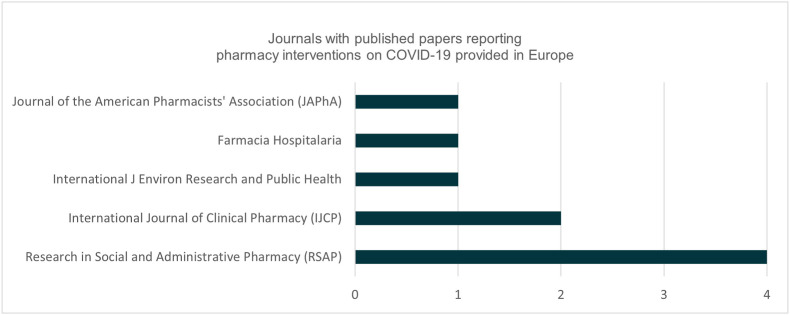
We mapped current practices on 31 pharmacy interventions on COVID-19 in 32 countries in Europe. Almost all preventive measures to reduce health risks have been provided in most countries. Other frequent interventions reflected preparedness for stockpiling, increased demand for services and products, and important patient care interventions exceeding dispensing role. Expanded powers granted to pharmacies and legislation passed in view of COVID-19 enabled services that improve access to medicines and relevant products, patient screening and referral including point-of-care antigen testing, support to vulnerable patients, and COVID-19 vaccination. We identified 9 studies conducted in pharmacies in 7 countries in Europe. Most studies are cross-sectional and/or descriptive. Pharmacy associations played an important supporting role by developing and updating guidance and emergency plans to assist community pharmacists.
A wide array of pharmacy interventions on COVID-19 was implemented in several countries within a very short time frame. Research on pharmacy interventions on COVID-19 is still in its infancy but confirmed the wide array of interventions provided and expanded powers granted to pharmacies. These findings may provide a significant impact to improve pharmacy research, policy, and practice in response to future public health emergencies in Europe and globally.
新冠疫情大流行使社区药剂师成为预防、准备、应对和恢复工作的第一线。药剂师必须在很短的时间内重新组织并实施多项不同的干预措施和措施。
1)绘制欧洲已报道的实践和趋势图,并对基于药房的新冠病毒干预措施进行文献综述;2)确定知识空白,并为应对突发公共卫生事件制定药房研究、政策和实践的未来方向。
我们采用混合方法,结合欧洲药房协会报告的新冠病毒药房干预措施的国家概况和已发表文献的范围综述。
我们在欧洲 32 个国家的 31 项关于新冠病毒的药房干预措施中绘制了当前的实践情况。几乎所有降低健康风险的预防措施都在大多数国家提供。其他常见的干预措施反映了为储备、服务和产品需求增加以及超出配药角色的重要患者护理干预措施的准备情况。鉴于新冠病毒而授予药房的扩大权力和通过的立法,使提高药物和相关产品的可及性、患者筛查和转诊(包括现场抗原检测)、支持弱势群体患者以及新冠病毒疫苗接种等服务成为可能。我们在欧洲 7 个国家的 9 家药房中发现了 9 项研究。大多数研究是横断面和/或描述性的。药房协会通过制定和更新指南和应急计划,为社区药剂师提供支持,发挥了重要的辅助作用。
在很短的时间内,许多国家实施了广泛的新冠病毒药房干预措施。关于新冠病毒药房干预措施的研究仍处于起步阶段,但证实了所提供的广泛干预措施和授予药房的扩大权力。这些发现可能会对改善欧洲乃至全球未来应对突发公共卫生事件的药房研究、政策和实践产生重大影响。