Molecular Allergology, Paul-Ehrlich-Institut, Langen, Germany.
Front Immunol. 2021 Dec 1;12:790658. doi: 10.3389/fimmu.2021.790658. eCollection 2021.
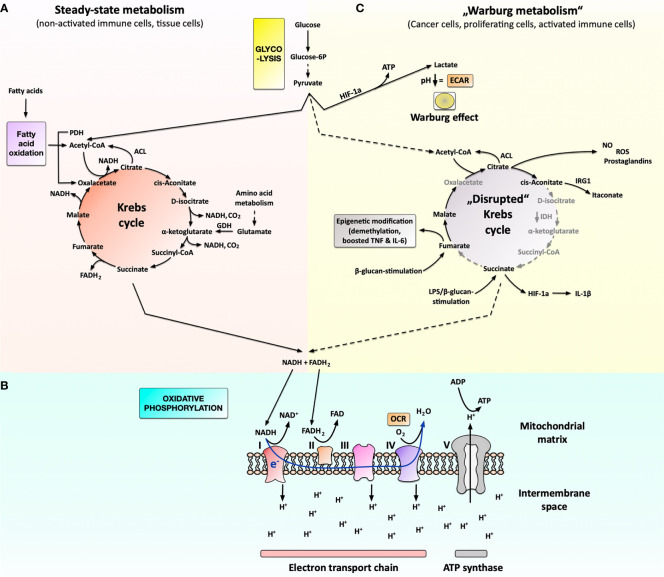
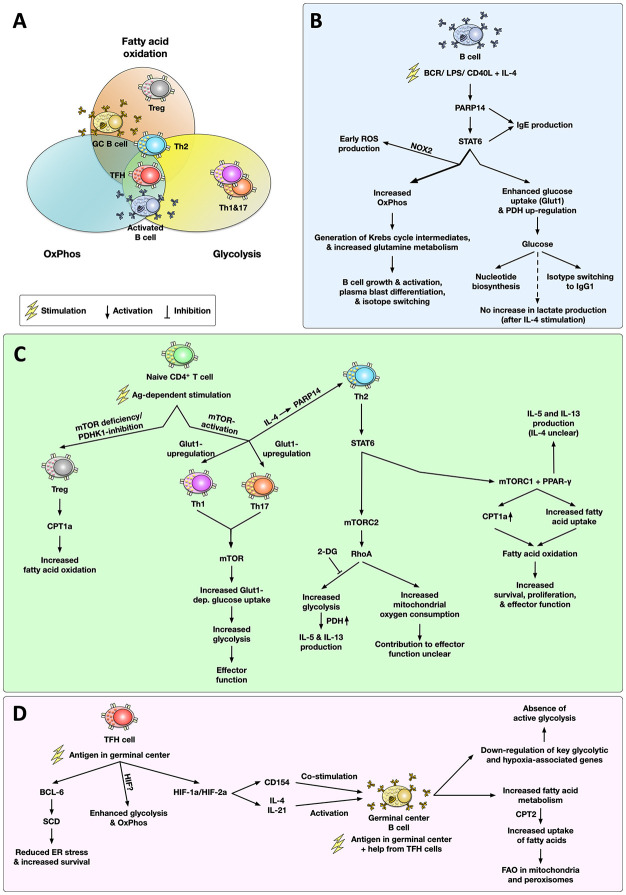
Over the last decades, the frequency of allergic disorders has steadily increased. Immunologically, allergies are caused by abnormal immune responses directed against otherwise harmless antigens derived from our environment. Two of the main cell types driving allergic sensitization and inflammation are IgE-producing plasma cells and Th2 cells. The acute activation of T and B cells, their differentiation into effector cells, as well as the formation of immunological memory are paralleled by distinct changes in cellular metabolism. Understanding the functional consequences of these metabolic changes is the focus of a new research field termed "immune metabolism". Currently, the contribution of metabolic changes in T and B cells to either the development or maintenance of allergies is not completely understood. Therefore, this mini review will introduce the fundamentals of energy metabolism, its connection to immune metabolism, and subsequently focus on the metabolic phenotypes of IL-4-activated B cells and Th2 cells.
在过去的几十年里,过敏疾病的频率一直在稳步上升。从免疫学角度来看,过敏是由针对源自我们环境的无害抗原的异常免疫反应引起的。导致过敏致敏和炎症的两种主要细胞类型是产生 IgE 的浆细胞和 Th2 细胞。T 细胞和 B 细胞的急性激活、它们向效应细胞的分化以及免疫记忆的形成,伴随着细胞代谢的明显变化。了解这些代谢变化的功能后果是一个新的研究领域的重点,该领域被称为“免疫代谢”。目前,T 细胞和 B 细胞代谢变化对过敏的发展或维持的贡献尚不完全清楚。因此,这篇小综述将介绍能量代谢的基础知识,及其与免疫代谢的联系,随后将重点介绍 IL-4 激活的 B 细胞和 Th2 细胞的代谢表型。