Oliveira-Santos L Gustavo R, Moore Seth A, Severud William J, Forester James D, Isaac Edmund J, Chenaux-Ibrahim Yvette, Garwood Tyler, Escobar Luis E, Wolf Tiffany M
Veterinary Population Medicine, University of Minnesota, 1988 Fitch Ave, 495 AnSci/VetMed Bldg, St. Paul, MN 55108, USA.
Movement and Population Ecology Laboratory, Ecology Department, Federal University of Mato Grosso do Sul, Av. Costa e Silva, s/n°, Bairro Universitário, Campo Grande-MS 79070-900, Brazil.
Sci Adv. 2021 Dec 24;7(52):eabj5944. doi: 10.1126/sciadv.abj5944. Epub 2021 Dec 22.
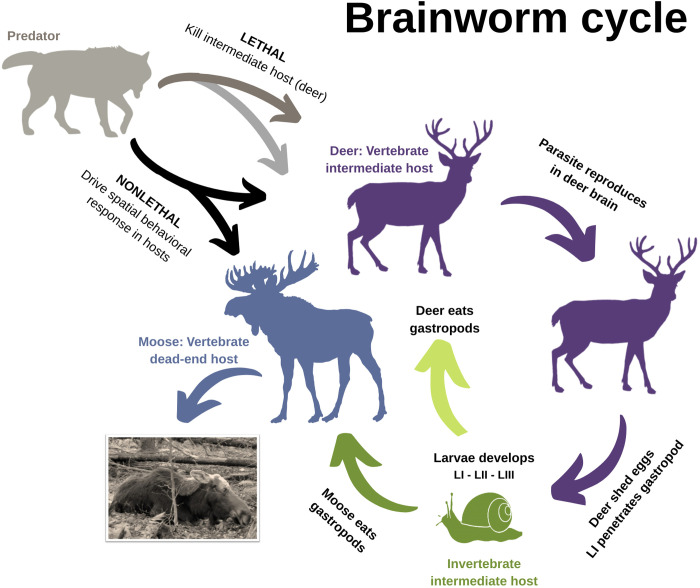
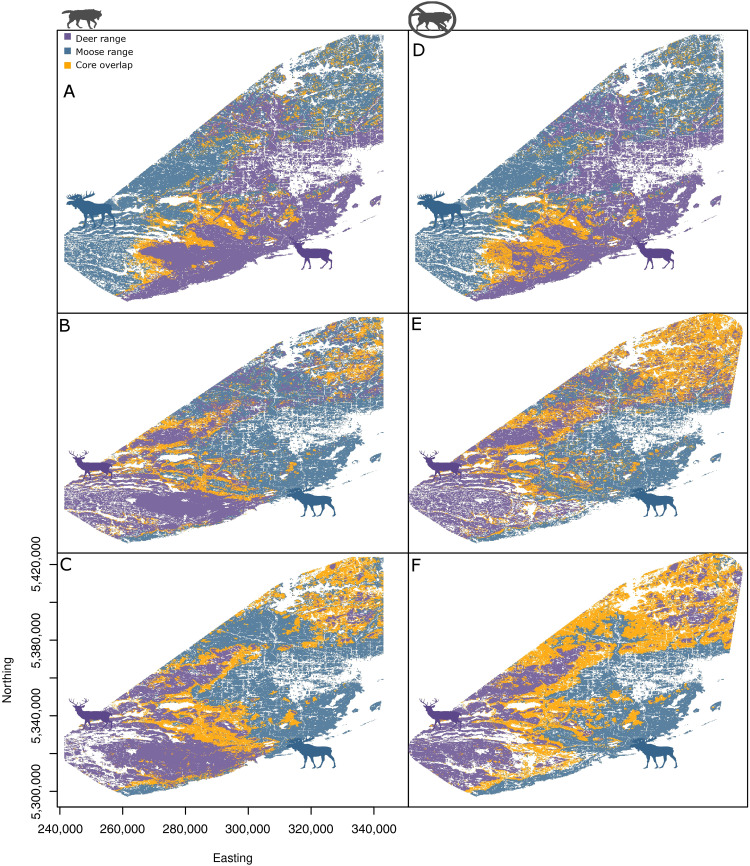
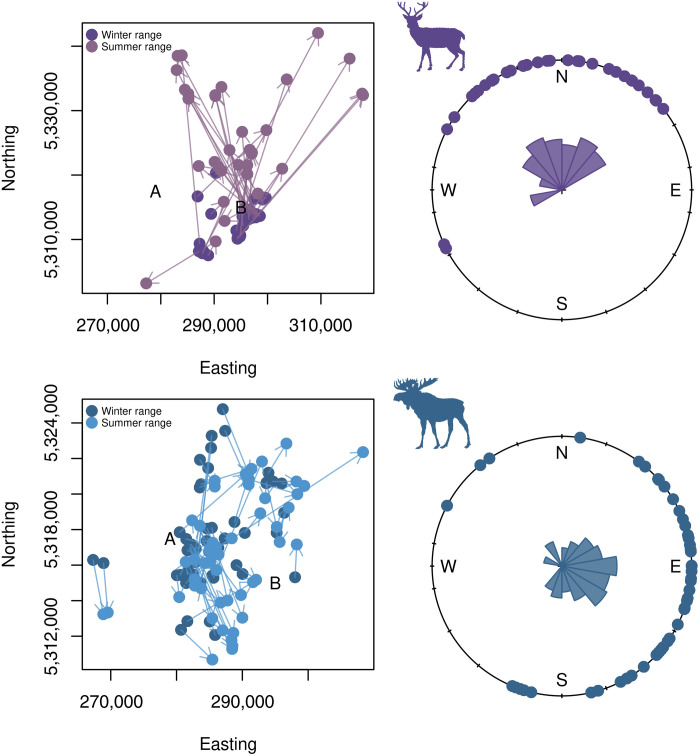
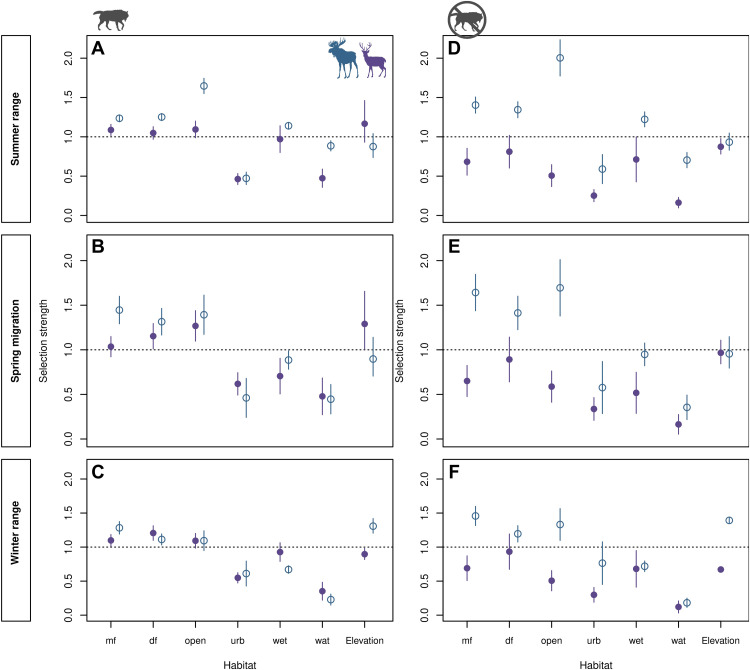
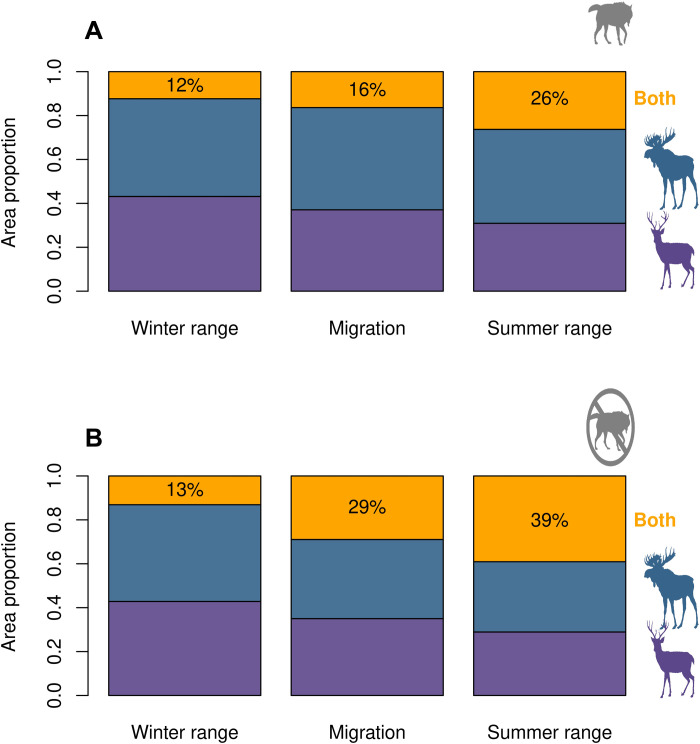
Predators can modulate disease transmission within prey populations by influencing prey demography and behavior. Predator-prey dynamics can involve multiple species in heterogeneous landscapes; however, studies of predation on disease transmission rarely consider the role of landscapes or the transmission among diverse prey species (i.e., spillover). We used high-resolution habitat and movement data to model spillover risk of the brainworm parasite () between two prey species [white-tailed deer () and moose ()], accounting for predator [gray wolf ()] presence and landscape configuration. Results revealed that spring migratory movements of cervid hosts increased parasite spillover risk from deer to moose, an effect tempered by changes in elevation, land cover, and wolf presence. Wolves induced host-species segregation, a nonlethal mechanism that modulated disease emergence by reducing spatiotemporal overlap between infected and susceptible prey, showing that wildlife disease dynamics may change with landscape disturbance and the loss of large carnivores.
捕食者可以通过影响猎物的种群统计学特征和行为来调节猎物种群内的疾病传播。捕食者 - 猎物动态在异质景观中可能涉及多个物种;然而,关于捕食对疾病传播影响的研究很少考虑景观的作用或不同猎物物种之间的传播(即溢出效应)。我们使用高分辨率的栖息地和移动数据来模拟脑线虫寄生虫()在两种猎物物种[白尾鹿()和驼鹿()]之间的溢出风险,同时考虑捕食者[灰狼()]的存在和景观配置。结果表明,鹿类宿主的春季迁徙活动增加了寄生虫从鹿到驼鹿的溢出风险,而海拔、土地覆盖和狼的存在所导致的变化缓和了这种影响。狼引发了宿主物种的隔离,这是一种非致命机制,通过减少受感染猎物和易感猎物之间的时空重叠来调节疾病的出现,表明野生动物疾病动态可能会随着景观干扰和大型食肉动物的减少而发生变化。