Department of Urology, Faculty of Medicine and Health, Örebro University, Örebro, Sweden.
Department of Environmental and Life Sciences/Biology, Faculty of Health, Science and Technology, Karlstad University, Karlstad, Sweden.
Microbiol Spectr. 2021 Dec 22;9(3):e0149721. doi: 10.1128/spectrum.01497-21.
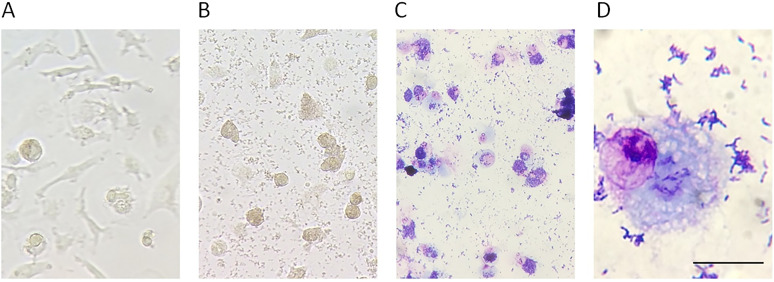
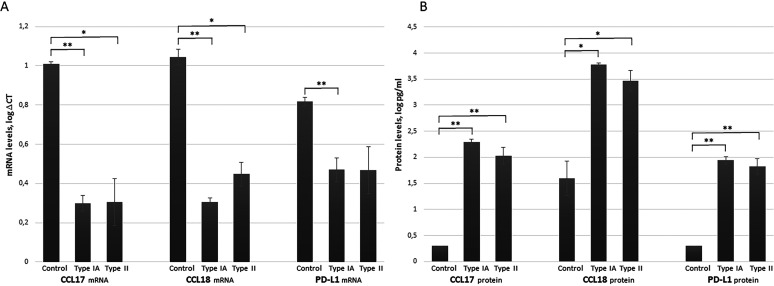
Tumors and infectious agents both benefit from an immunosuppressive environment. Cutibacterium acnes () is a bacterium in the normal skin microbiota, which has the ability to survive intracellularly in macrophages and is significantly more common in prostate cancer tissue compared with normal prostate tissue. This study investigated if prostate cancer tissue culture positive for has a higher infiltration of regulatory T-cells (Tregs) and if macrophages stimulated with induced the expression of immunosuppressive genes that could be linked to an increase of Tregs in prostate cancer. Real-time PCR and enzyme-linked immunosorbent spot assay (ELISA) were used to examine the expression of immunosuppressive genes in human macrophages stimulated with , and associations between the presence of and infiltration of Tregs were investigated by statistically analyzing data generated in two previous studies. The results demonstrated that macrophages stimulated with significantly increased their expression of PD-L1, CCL17, and CCL18 mRNA and protein (0.05). In the cohort, Tregs in tumor stroma and tumor epithelia were positively associated with the presence of (0.0004 and 0.046, respectively). Since the macrophages stimulated with increased the expression of immunosuppressive genes, and prostate cancer patients with prostatic infection had higher infiltration of Tregs than their noninfected counterparts, we suggest that may contribute to an immunosuppressive tumor environment that is vital for prostate cancer progression. In an immune suppressive tumor microenvironment constituted by immunosuppressive cells and immunosuppressive mediators, tumors may improve their ability to give rise to a clinically relevant cancer. In the present study, we found that might contribute to an immunosuppressive environment by recruiting Tregs and by increasing the expression of immunosuppressive mediators such as PD-L1, CCL17, and CCL18. We believe that our data add support to the hypothesis of a contributing role of in prostate cancer development. If established that stimulates prostate cancer progression it may open up avenues for targeted prostate cancer treatment.
肿瘤和感染因子都受益于免疫抑制环境。痤疮丙酸杆菌()是正常皮肤微生物群中的一种细菌,它具有在巨噬细胞内生存的能力,并且在前列腺癌组织中比正常前列腺组织中更为常见。本研究调查了前列腺癌组织培养阳性的 是否有更高比例的调节性 T 细胞(Tregs)浸润,如果用 刺激巨噬细胞是否会诱导表达免疫抑制基因,这些基因可能与前列腺癌中 Tregs 的增加有关。实时 PCR 和酶联免疫斑点分析(ELISA)用于检测经 刺激的人巨噬细胞中免疫抑制基因的表达,并通过对两项先前研究中产生的数据进行统计分析,研究了 的存在与 Tregs 浸润之间的关联。 结果表明,用 刺激的巨噬细胞显著增加了 PD-L1、CCL17 和 CCL18mRNA 和蛋白的表达(0.05)。在该队列中,肿瘤基质和肿瘤上皮中的 Tregs 与 的存在呈正相关(分别为 0.0004 和 0.046)。由于用 刺激的巨噬细胞增加了免疫抑制基因的表达,且前列腺感染 的患者比未感染的患者具有更高比例的 Tregs 浸润,我们推测 可能有助于形成有利于前列腺癌进展的免疫抑制肿瘤微环境。 在由免疫抑制细胞和免疫抑制介质构成的免疫抑制性肿瘤微环境中,肿瘤可能会提高其产生临床上相关癌症的能力。在本研究中,我们发现 可能通过招募 Tregs 并增加 PD-L1、CCL17 和 CCL18 等免疫抑制介质的表达来促成免疫抑制环境。我们相信,我们的数据为 促进前列腺癌发展的假说提供了支持。如果证实 刺激前列腺癌进展,它可能为靶向前列腺癌治疗开辟新途径。