Artym Jolanta, Zimecki Michał
Department of Experimental Therapy, Hirszfeld Institute of Immunology and Experimental Therapy, Polish Academy of Sciences, R. Weigla 12 Str., 53-112 Wrocław, Poland.
Biomedicines. 2021 Dec 17;9(12):1940. doi: 10.3390/biomedicines9121940.
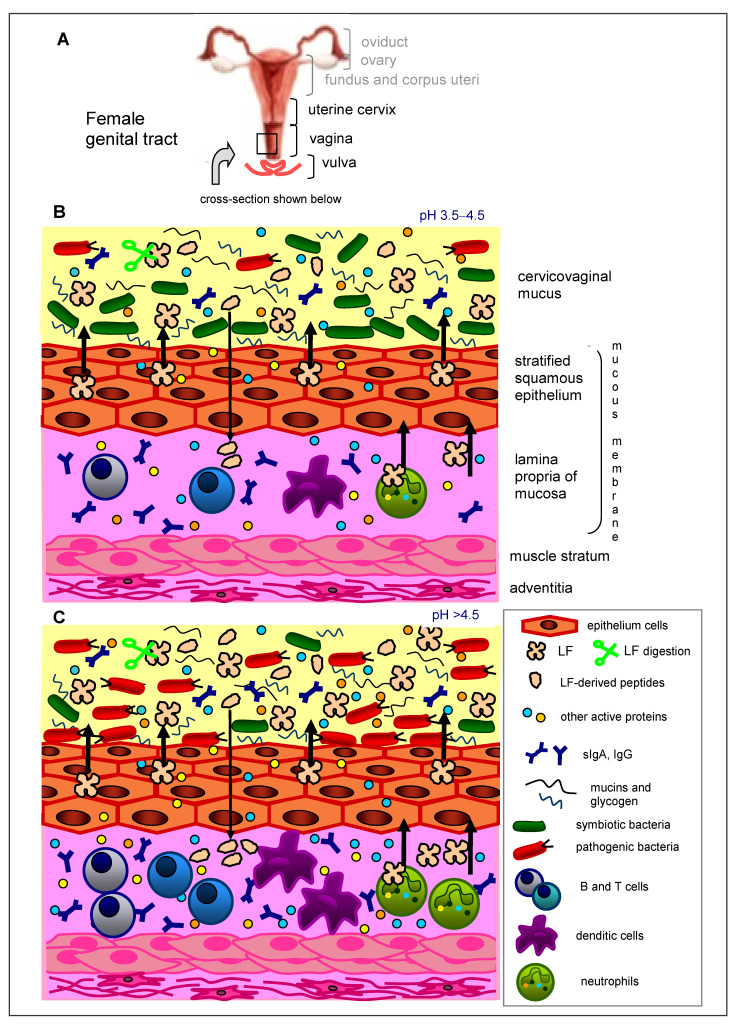
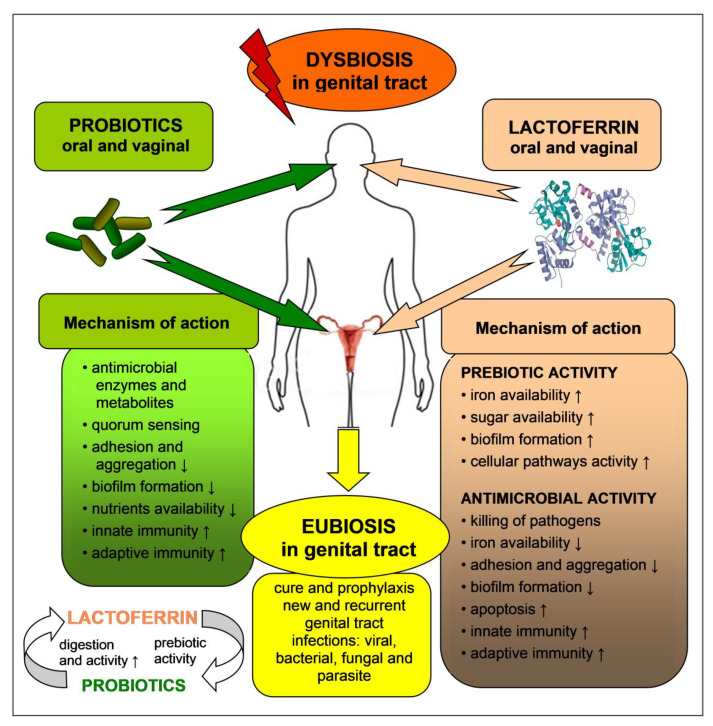
Women's intimate health depends on several factors, such as age, diet, coexisting metabolic disorders, hormonal equilibrium, sexual activity, drug intake, contraception, surgery, and personal hygiene. These factors may affect the homeostasis of the internal environment of the genital tract: the vulva, vagina and cervix. This equilibrium is dependent on strict and complex mutual interactions between epithelial cells, immunocompetent cells and microorganisms residing in this environment. The microbiota of the genital tract in healthy women is dominated by several species of symbiotic bacteria of the genus. The bacteria inhibit the growth of pathogenic microorganisms and inflammatory processes by virtue of direct and multidirectional antimicrobial action and, indirectly, by the modulation of immune system activity. For the homeostasis of the genital tract ecosystem, antimicrobial and anti-inflammatory peptides, as well as proteins secreted by mucus cells into the cervicovaginal fluid, have a fundamental significance. Of these, a multifunctional protein known as lactoferrin (LF) is one of the most important since it bridges innate and acquired immunity. Among its numerous properties, particular attention should be paid to prebiotic activity, i.e., exerting a beneficial action on symbiotic microbiota of the gastrointestinal and genital tract. Such activity of LF is associated with the inhibition of bacterial and fungal infections in the genital tract and their consequences, such as endometritis, pelvic inflammation, urinary tract infections, miscarriage, premature delivery, and infection of the fetus and newborns. The aim of this article is to review the results of laboratory as well as clinical trials, confirming the prebiotic action of LF on the microbiota of the lower genital tract.
女性的私密健康取决于多种因素,如年龄、饮食、并存的代谢紊乱、激素平衡、性活动、药物摄入、避孕、手术和个人卫生。这些因素可能会影响生殖道内部环境(外阴、阴道和宫颈)的稳态。这种平衡依赖于上皮细胞、免疫活性细胞和存在于该环境中的微生物之间严格而复杂的相互作用。健康女性生殖道的微生物群以几种共生细菌属为主。这些细菌凭借直接和多向的抗菌作用,以及间接通过调节免疫系统活动,抑制致病微生物的生长和炎症过程。对于生殖道生态系统的稳态而言,抗菌和抗炎肽以及黏液细胞分泌到宫颈阴道液中的蛋白质具有根本意义。其中,一种名为乳铁蛋白(LF)的多功能蛋白质最为重要,因为它连接了先天免疫和后天免疫。在其众多特性中,应特别关注益生元活性,即对胃肠道和生殖道的共生微生物群发挥有益作用。LF的这种活性与抑制生殖道中的细菌和真菌感染及其后果相关,如子宫内膜炎、盆腔炎、尿路感染、流产、早产以及胎儿和新生儿感染。本文的目的是综述实验室及临床试验结果,证实LF对下生殖道微生物群的益生元作用。