Wu Ting, Chu Xueqi, Cheng Yuxin, Tang Shuxin, Zogona Daniel, Pan Siyi, Xu Xiaoyun
Key Laboratory of Environment Correlative Dietology, Ministry of Education, Huazhong Agricultural University, Wuhan 430070, China.
Foods. 2021 Dec 8;10(12):3055. doi: 10.3390/foods10123055.
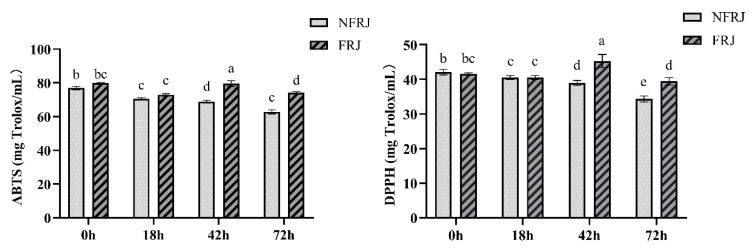
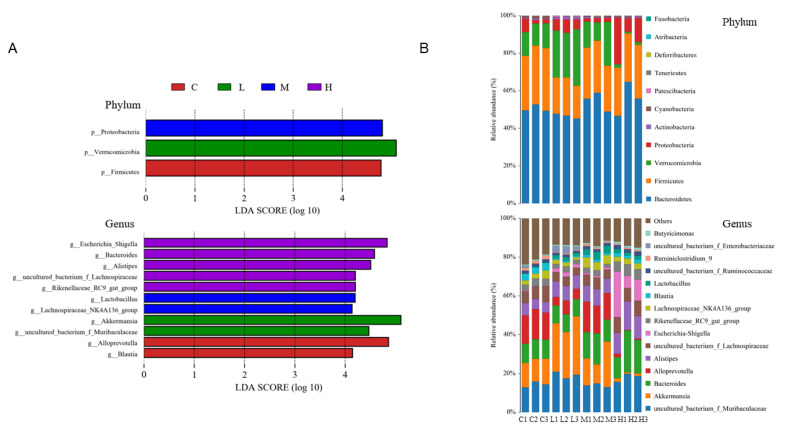
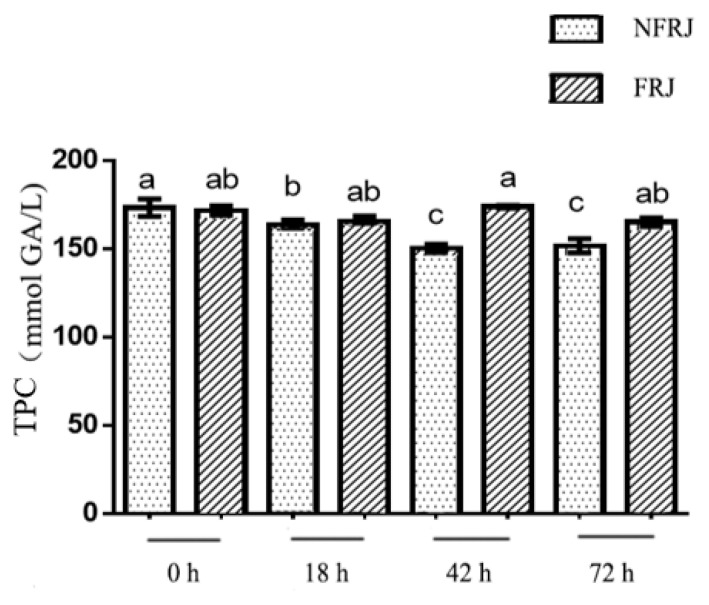
The aim of this study was to investigate the modulation of gut microbiota by fermented raspberry juice (FRJ) both in vitro and in vivo. Results showed that total phenolic content and antioxidant activities of FRJ reached the highest after fermentation for 42 h. Seventeen phenolic compounds were contained in FRJ, mainly including ellagic acid (496.64 ± 2.91 μg/g) and anthocyanins (total concentration: 387.93 μg/g). FRJ modulated the gut microbiota into a healthy in vitro status, with increase of valeric and isovaleric acids production. In healthy mice, all FRJ treatments improved the production of acetic, butyric and isovaleric acids as well as the gene expression of ZO-1, Claudin-1, Claudin-4, Ocdudin, E-cadherin and Muc-2. Moreover, variable gut microbial compositions were found among the groups fed diet-supplemented the different doses of FRJ, within low and median doses of FRJ may regulate the microbiota to a healthier state compared to the high dose supplementation. This study indicated that fermentation is a potential way to produce plant-based juices, which could reshape the gut microbiota and improve the host health.
本研究旨在探讨发酵树莓汁(FRJ)在体外和体内对肠道微生物群的调节作用。结果表明,FRJ在发酵42小时后总酚含量和抗氧化活性达到最高。FRJ中含有17种酚类化合物,主要包括鞣花酸(496.64±2.91μg/g)和花青素(总浓度:387.93μg/g)。FRJ将肠道微生物群调节到健康的体外状态,戊酸和异戊酸产量增加。在健康小鼠中,所有FRJ处理均改善了乙酸、丁酸和异戊酸的产生以及紧密连接蛋白1(ZO-1)、闭合蛋白1(Claudin-1)、闭合蛋白4(Claudin-4)、闭锁蛋白(Ocdudin)、E-钙黏蛋白和黏蛋白2(Muc-2)的基因表达。此外,在喂食不同剂量FRJ补充剂的组中发现了不同的肠道微生物组成,与高剂量补充相比,低剂量和中剂量的FRJ可能将微生物群调节到更健康的状态。本研究表明,发酵是生产植物性果汁的一种潜在方法,其可以重塑肠道微生物群并改善宿主健康。