• 文献检索
  • 文档翻译
  • 深度研究
  • 学术资讯
  • Suppr Zotero 插件Zotero 插件
  • 邀请有礼
  • 套餐&价格
  • 历史记录
应用&插件
Suppr Zotero 插件Zotero 插件浏览器插件Mac 客户端Windows 客户端微信小程序
定价
高级版会员购买积分包购买API积分包
服务
文献检索文档翻译深度研究API 文档MCP 服务
关于我们
关于 Suppr公司介绍联系我们用户协议隐私条款
关注我们

Suppr 超能文献

核心技术专利:CN118964589B侵权必究
粤ICP备2023148730 号-1Suppr @ 2026

文献检索

告别复杂PubMed语法,用中文像聊天一样搜索,搜遍4000万医学文献。AI智能推荐,让科研检索更轻松。

立即免费搜索

文件翻译

保留排版,准确专业,支持PDF/Word/PPT等文件格式,支持 12+语言互译。

免费翻译文档

深度研究

AI帮你快速写综述,25分钟生成高质量综述,智能提取关键信息,辅助科研写作。

立即免费体验

社交媒体上公众对 SARS-CoV-2 疫苗接种的看法:问卷调查和情感分析。

Public Perception of SARS-CoV-2 Vaccinations on Social Media: Questionnaire and Sentiment Analysis.

机构信息

School of Life Sciences, University of Lincoln, Lincoln LN6 7TS, UK.

School of Computer Science, University of Lincoln, Lincoln LN6 7TS, UK.

出版信息

Int J Environ Res Public Health. 2021 Dec 10;18(24):13028. doi: 10.3390/ijerph182413028.

DOI:10.3390/ijerph182413028
PMID:34948638
原文链接:https://pmc.ncbi.nlm.nih.gov/articles/PMC8700913/
Abstract

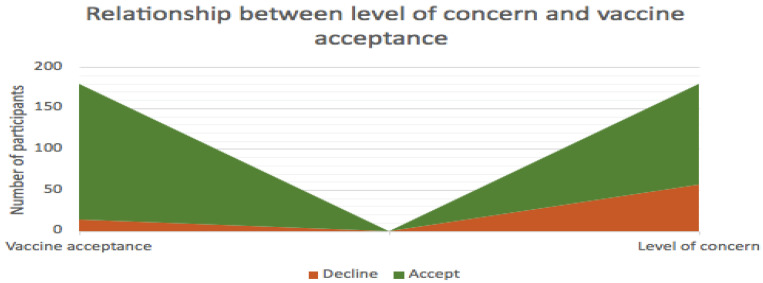
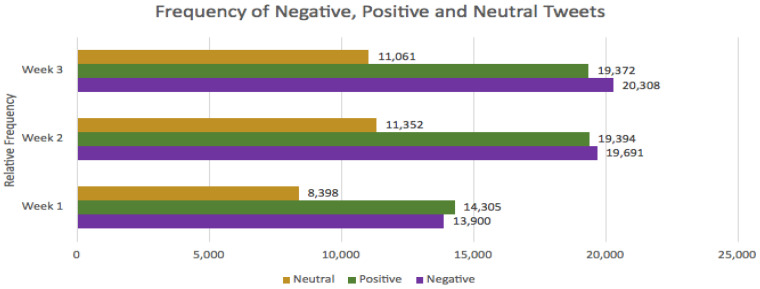
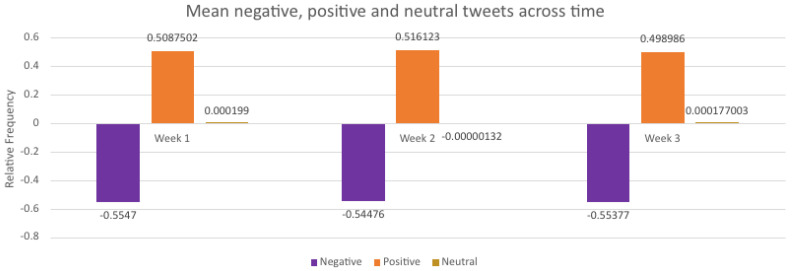
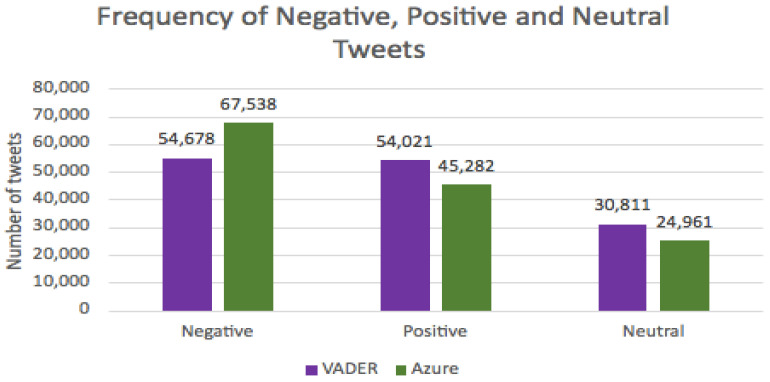
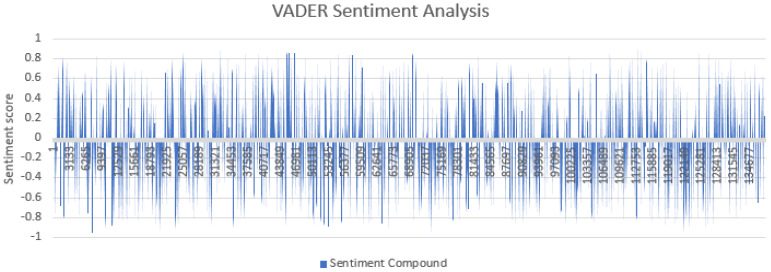
Vaccine hesitancy is an ongoing concern, presenting a major threat to global health. SARS-CoV-2 COVID-19 vaccinations are no exception as misinformation began to circulate on social media early in their development. Twitter's Application Programming Interface (API) for Python was used to collect 137,781 tweets between 1 July 2021 and 21 July 2021 using 43 search terms relating to COVID-19 vaccines. Tweets were analysed for sentiment using Microsoft Azure (a machine learning approach) and the VADER sentiment analysis model (a lexicon-based approach), where the Natural Language Processing Toolkit (NLTK) assessed whether tweets represented positive, negative or neutral opinions. The majority of tweets were found to be negative in sentiment (53,899), followed by positive (53,071) and neutral (30,811). The negative tweets displayed a higher intensity of sentiment than positive tweets. A questionnaire was distributed and analysis found that individuals with full vaccination histories were less concerned about receiving and were more likely to accept the vaccine. Overall, we determined that this sentiment-based approach is useful to establish levels of vaccine hesitancy in the general public and, alongside the questionnaire, suggests strategies to combat specific concerns and misinformation.

摘要

疫苗犹豫仍然是一个持续存在的问题,这对全球健康构成了重大威胁。SARS-CoV-2 COVID-19 疫苗也不例外,因为早在其研发阶段,就开始在社交媒体上传播错误信息。我们使用了 Python 的 Twitter 应用程序编程接口 (API),在 2021 年 7 月 1 日至 7 月 21 日期间使用 43 个与 COVID-19 疫苗相关的搜索词,收集了 137781 条推文。使用 Microsoft Azure(一种机器学习方法)和 VADER 情感分析模型(一种基于词典的方法)对推文进行情感分析,其中自然语言处理工具包 (NLTK) 评估推文是否代表积极、消极或中性观点。大多数推文的情绪是消极的(53899 条),其次是积极的(53071 条)和中性的(30811 条)。负面推文的情绪强度高于正面推文。我们分发了一份问卷,分析发现,完全接种疫苗的人对接受疫苗的担忧较少,更有可能接受疫苗。总的来说,我们确定这种基于情绪的方法有助于确定公众对疫苗的犹豫程度,并且结合问卷,提出了应对具体问题和错误信息的策略。
https://cdn.ncbi.nlm.nih.gov/pmc/blobs/31a7/8700913/37fcb920e08a/ijerph-18-13028-g007.jpg
https://cdn.ncbi.nlm.nih.gov/pmc/blobs/31a7/8700913/0b588dd48d8f/ijerph-18-13028-g001.jpg
https://cdn.ncbi.nlm.nih.gov/pmc/blobs/31a7/8700913/a56d7830c618/ijerph-18-13028-g002.jpg
https://cdn.ncbi.nlm.nih.gov/pmc/blobs/31a7/8700913/c85ee2d0ac6e/ijerph-18-13028-g003a.jpg
https://cdn.ncbi.nlm.nih.gov/pmc/blobs/31a7/8700913/66a75172ccce/ijerph-18-13028-g004.jpg
https://cdn.ncbi.nlm.nih.gov/pmc/blobs/31a7/8700913/dd42591025e0/ijerph-18-13028-g005.jpg
https://cdn.ncbi.nlm.nih.gov/pmc/blobs/31a7/8700913/c048bab785eb/ijerph-18-13028-g006.jpg
https://cdn.ncbi.nlm.nih.gov/pmc/blobs/31a7/8700913/37fcb920e08a/ijerph-18-13028-g007.jpg
https://cdn.ncbi.nlm.nih.gov/pmc/blobs/31a7/8700913/0b588dd48d8f/ijerph-18-13028-g001.jpg
https://cdn.ncbi.nlm.nih.gov/pmc/blobs/31a7/8700913/a56d7830c618/ijerph-18-13028-g002.jpg
https://cdn.ncbi.nlm.nih.gov/pmc/blobs/31a7/8700913/c85ee2d0ac6e/ijerph-18-13028-g003a.jpg
https://cdn.ncbi.nlm.nih.gov/pmc/blobs/31a7/8700913/66a75172ccce/ijerph-18-13028-g004.jpg
https://cdn.ncbi.nlm.nih.gov/pmc/blobs/31a7/8700913/dd42591025e0/ijerph-18-13028-g005.jpg
https://cdn.ncbi.nlm.nih.gov/pmc/blobs/31a7/8700913/c048bab785eb/ijerph-18-13028-g006.jpg
https://cdn.ncbi.nlm.nih.gov/pmc/blobs/31a7/8700913/37fcb920e08a/ijerph-18-13028-g007.jpg

相似文献

1
Public Perception of SARS-CoV-2 Vaccinations on Social Media: Questionnaire and Sentiment Analysis.社交媒体上公众对 SARS-CoV-2 疫苗接种的看法:问卷调查和情感分析。
Int J Environ Res Public Health. 2021 Dec 10;18(24):13028. doi: 10.3390/ijerph182413028.
2
Tracking Public Attitudes Toward COVID-19 Vaccination on Tweets in Canada: Using Aspect-Based Sentiment Analysis.追踪加拿大推特上公众对 COVID-19 疫苗接种的态度:使用基于方面的情感分析。
J Med Internet Res. 2022 Mar 29;24(3):e35016. doi: 10.2196/35016.
3
COVID-19 Vaccine-Related Discussion on Twitter: Topic Modeling and Sentiment Analysis.新冠疫苗相关推文的讨论:主题建模和情感分析。
J Med Internet Res. 2021 Jun 29;23(6):e24435. doi: 10.2196/24435.
4
Exploring Coronavirus Disease 2019 Vaccine Hesitancy on Twitter Using Sentiment Analysis and Natural Language Processing Algorithms.利用情感分析和自然语言处理算法探索推特上对 2019 年冠状病毒病疫苗的犹豫态度。
Clin Infect Dis. 2022 May 15;74(Suppl_3):e4-e9. doi: 10.1093/cid/ciac141.
5
COVID-19 Vaccine Tweets After Vaccine Rollout: Sentiment-Based Topic Modeling.疫苗接种后关于 COVID-19 疫苗的推文:基于情感的主题建模。
J Med Internet Res. 2022 Feb 8;24(2):e31726. doi: 10.2196/31726.
6
Uncovering the Reasons Behind COVID-19 Vaccine Hesitancy in Serbia: Sentiment-Based Topic Modeling.揭示塞尔维亚人对 COVID-19 疫苗犹豫不决的原因:基于情绪的主题建模。
J Med Internet Res. 2022 Nov 17;24(11):e42261. doi: 10.2196/42261.
7
Twitter sentiment analysis from Iran about COVID 19 vaccine.推特上关于新冠疫苗的伊朗民众情绪分析。
Diabetes Metab Syndr. 2022 Jan;16(1):102367. doi: 10.1016/j.dsx.2021.102367. Epub 2021 Dec 13.
8
Examining the Utility of Social Media in COVID-19 Vaccination: Unsupervised Learning of 672,133 Twitter Posts.社交媒体在新冠疫苗接种中的应用研究:对 672,133 条推特帖子的无监督学习。
JMIR Public Health Surveill. 2021 Nov 3;7(11):e29789. doi: 10.2196/29789.
9
Topics and Sentiments of Public Concerns Regarding COVID-19 Vaccines: Social Media Trend Analysis.公众对新冠疫苗关注的话题和情绪:社交媒体趋势分析。
J Med Internet Res. 2021 Oct 21;23(10):e30765. doi: 10.2196/30765.
10
Public perception of COVID-19 vaccines through analysis of Twitter content and users.公众对 COVID-19 疫苗的看法通过对 Twitter 内容和用户的分析。
Vaccine. 2023 Jul 25;41(33):4844-4853. doi: 10.1016/j.vaccine.2023.06.058. Epub 2023 Jun 23.

引用本文的文献

1
Sentiment analysis in medication adherence: using ruled-based and artificial intelligence-driven algorithms to understand patient medication experiences.药物依从性中的情感分析:运用基于规则和人工智能驱动的算法来理解患者的用药体验。
Int J Clin Pharm. 2024 Oct 4. doi: 10.1007/s11096-024-01803-0.
2
Mapping automatic social media information disorder. The role of bots and AI in spreading misleading information in society.自动社交媒体信息混乱的映射。机器人和人工智能在社会传播误导性信息中的作用。
PLoS One. 2024 May 31;19(5):e0303183. doi: 10.1371/journal.pone.0303183. eCollection 2024.
3
Statin Twitter: Human and Automated Bot Contributions, 2010 to 2022.

本文引用的文献

1
To Tweet or Not to Tweet-a Review of the Viral Power of Twitter for Infectious Diseases.发推还是不发推——推特在传染病领域的传播影响力综述
Curr Infect Dis Rep. 2020;22(6):14. doi: 10.1007/s11908-020-00723-0. Epub 2020 Apr 24.
2
COVID-19 vaccine hesitancy and related fears and anxiety.新冠疫苗犹豫及其相关的恐惧和焦虑。
Int Immunopharmacol. 2021 Aug;97:107724. doi: 10.1016/j.intimp.2021.107724. Epub 2021 Apr 27.
3
Vaccine Hesitancy on Social Media: Sentiment Analysis from June 2011 to April 2019.社交媒体上的疫苗犹豫情绪:2011年6月至2019年4月的情感分析
他汀类药物推特:2010 年至 2022 年的人类和自动机器人贡献。
J Am Heart Assoc. 2024 Apr 2;13(7):e032678. doi: 10.1161/JAHA.123.032678. Epub 2024 Mar 27.
4
Navigating the asthma network on Twitter: Insights from social network and sentiment analysis.在推特上探索哮喘网络:来自社交网络和情感分析的见解
Digit Health. 2024 Jan 22;10:20552076231224075. doi: 10.1177/20552076231224075. eCollection 2024 Jan-Dec.
5
Applications of Social Media and Digital Technologies in COVID-19 Vaccination: Scoping Review.社交媒体和数字技术在 COVID-19 疫苗接种中的应用:范围综述。
J Med Internet Res. 2023 Feb 10;25:e40057. doi: 10.2196/40057.
6
Users' Reactions to Announced Vaccines Against COVID-19 Before Marketing in France: Analysis of Twitter Posts.法国上市前公布的 COVID-19 疫苗引发的用户反应:对 Twitter 帖子的分析。
J Med Internet Res. 2023 Apr 24;25:e37237. doi: 10.2196/37237.
7
Impact of COVID-19 Vaccine Misinformation on Social Media Virality: Content Analysis of Message Themes and Writing Strategies.社交媒体上 COVID-19 疫苗错误信息的传播影响:信息主题和写作策略的内容分析。
J Med Internet Res. 2022 Jul 6;24(7):e37806. doi: 10.2196/37806.
8
Social media and attitudes towards a COVID-19 vaccination: A systematic review of the literature.社交媒体与对新冠疫苗接种的态度:文献系统综述
EClinicalMedicine. 2022 Jun;48:101454. doi: 10.1016/j.eclinm.2022.101454. Epub 2022 May 20.
9
Computational Intelligence-Based Model for Exploring Individual Perception on SARS-CoV-2 Vaccine in Saudi Arabia.基于计算智能的沙特阿拉伯个体对 SARS-CoV-2 疫苗认知探索模型。
Comput Intell Neurosci. 2022 Apr 6;2022:6722427. doi: 10.1155/2022/6722427. eCollection 2022.
Vaccines (Basel). 2021 Jan 7;9(1):28. doi: 10.3390/vaccines9010028.
4
Concerns and motivations about COVID-19 vaccination.对新冠疫苗接种的担忧与动机。
Lancet Infect Dis. 2021 Feb;21(2):161-163. doi: 10.1016/S1473-3099(20)30926-9. Epub 2020 Dec 15.
5
COVID-19 vaccine hesitancy in the UK: the Oxford coronavirus explanations, attitudes, and narratives survey (Oceans) II.英国对 COVID-19 疫苗的犹豫:牛津冠状病毒解释、态度和叙事调查(海洋) II。
Psychol Med. 2022 Oct;52(14):3127-3141. doi: 10.1017/S0033291720005188. Epub 2020 Dec 11.
6
A Proactive Approach for Managing COVID-19: The Importance of Understanding the Motivational Roots of Vaccination Hesitancy for SARS-CoV2.一种应对新冠疫情的积极方法:理解对新冠病毒疫苗接种犹豫的动机根源的重要性。
Front Psychol. 2020 Oct 19;11:575950. doi: 10.3389/fpsyg.2020.575950. eCollection 2020.
7
Twitter Discussions and Emotions About the COVID-19 Pandemic: Machine Learning Approach.关于新冠疫情的推特讨论与情绪:机器学习方法
J Med Internet Res. 2020 Nov 25;22(11):e20550. doi: 10.2196/20550.
8
Relationship between Citizens' Health Engagement and Intention to Take the COVID-19 Vaccine in Italy: A Mediation Analysis.意大利公民的健康参与度与接种新冠疫苗意愿之间的关系:一项中介分析
Vaccines (Basel). 2020 Oct 1;8(4):576. doi: 10.3390/vaccines8040576.
9
Topics, Trends, and Sentiments of Tweets About the COVID-19 Pandemic: Temporal Infoveillance Study.关于新冠疫情的推文主题、趋势和情绪:时间信息监测研究
J Med Internet Res. 2020 Oct 23;22(10):e22624. doi: 10.2196/22624.
10
Risk factors for positive and negative COVID-19 tests: a cautious and in-depth analysis of UK biobank data.COVID-19 检测呈阳性和阴性的风险因素:对英国生物银行数据的谨慎和深入分析。
Int J Epidemiol. 2020 Oct 1;49(5):1454-1467. doi: 10.1093/ije/dyaa134.