Francone Achille, Merino Santos, Retolaza Aritz, Ramiro Jorge, Alves Sofia A, de Castro Joana Vieira, Neves Nuno M, Arana Ainara, Marimon Jose M, Torres Clivia M Sotomayor, Kehagias Nikolaos
CSIC and BIST, Catalan Institute of Nanoscience and Nanotechnology (ICN2), Campus UAB, Bellaterra, Barcelona 08193, Spain.
Tekniker, Basque Research and Technology Alliance (BRTA), Eibar 20600, Spain.
Surf Interfaces. 2021 Dec;27:101494. doi: 10.1016/j.surfin.2021.101494. Epub 2021 Oct 5.
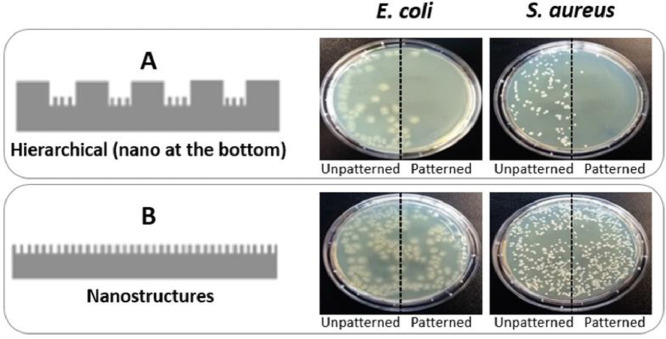
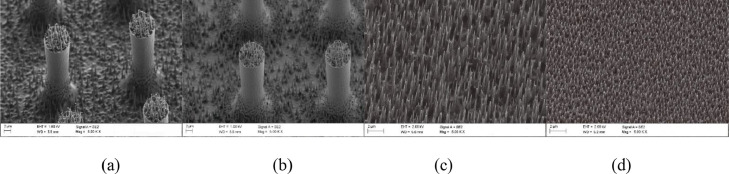
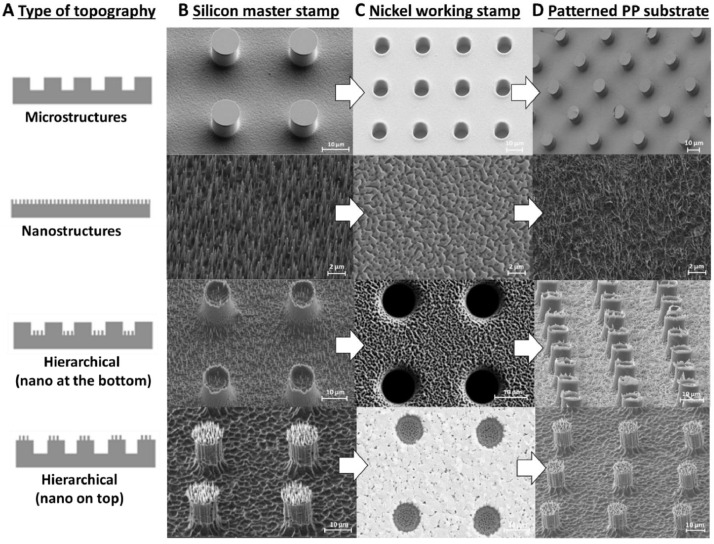
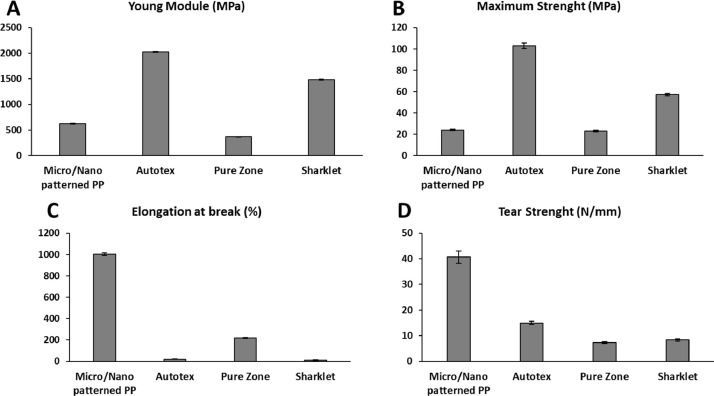
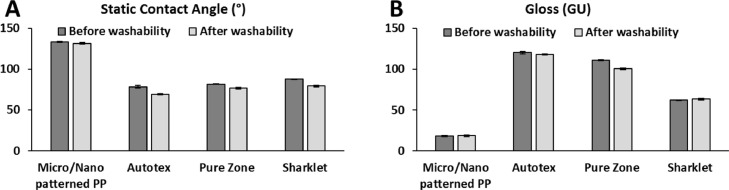
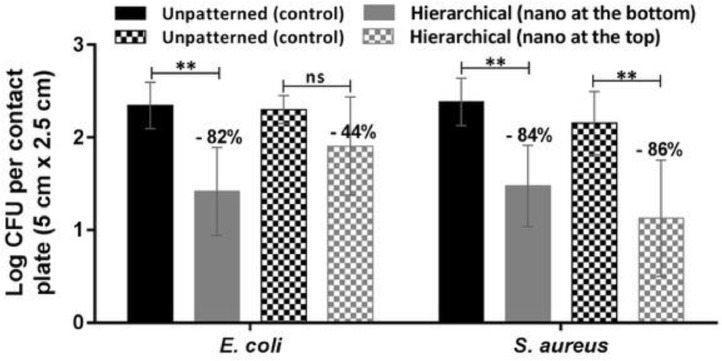
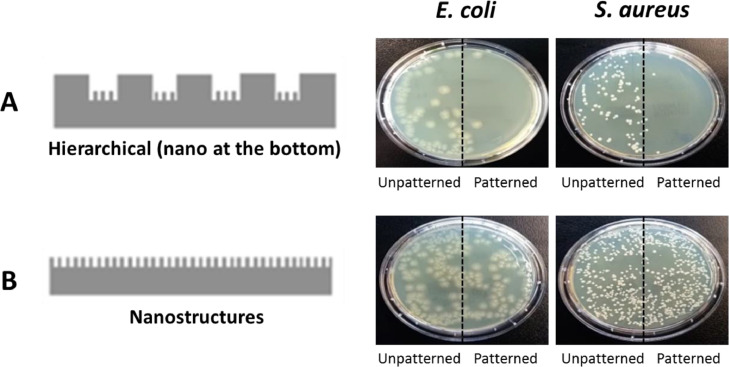
The development of antimicrobial surfaces has become a high priority in recent times. There are two ongoing worldwide health crises: the COVID-19 pandemic provoked by the SARS-CoV-2 virus and the antibiotic-resistant diseases provoked by bacteria resistant to antibiotic-based treatments. The need for antimicrobial surfaces against bacteria and virus is a common factor to both crises. Most extended strategies to prevent bacterial associated infections rely on chemical based-approaches based on surface coatings or biocide encapsulated agents that release chemical agents. A critical limitation of these chemistry-based strategies is their limited effectiveness in time while grows the concerns about the long-term toxicity on human beings and environment pollution. An alternative strategy to prevent bacterial attachment consists in the introduction of physical modification to the surface. Pursuing this chemistry-independent strategy, we present a fabrication process of surface topographies [one-level (micro, nano) and hierarchical (micro+nano) structures] in polypropylene (PP) substrates and discuss how wettability, topography and patterns size influence on its antibacterial properties. Using nanoimprint lithography as patterning technique, we report as best results 82 and 86% reduction in the bacterial attachment of and for hierarchically patterned samples compared to unpatterned reference surfaces. Furthermore, we benchmark the mechanical properties of the patterned PP surfaces against commercially available antimicrobial films and provide evidence for the patterned PP films to be suitable candidates for use as antibacterial functional surfaces in a hospital environment.
近年来,抗菌表面的开发已成为当务之急。目前全球存在两场健康危机:由严重急性呼吸综合征冠状病毒2(SARS-CoV-2)病毒引发的新冠疫情,以及由对抗生素治疗产生耐药性的细菌引发的耐药性疾病。对抗细菌和病毒的抗菌表面的需求是这两场危机的共同因素。大多数预防细菌相关感染的扩展策略依赖于基于表面涂层或封装有释放化学剂的杀菌剂的化学方法。这些基于化学的策略的一个关键局限性在于它们的有效性随时间有限,同时人们越来越担心其对人类的长期毒性和环境污染。一种防止细菌附着的替代策略是对表面进行物理改性。遵循这种与化学无关的策略,我们展示了聚丙烯(PP)基材中表面形貌(一级(微米、纳米)和分级(微米+纳米)结构)的制造过程,并讨论了润湿性、形貌和图案尺寸如何影响其抗菌性能。使用纳米压印光刻作为图案化技术,我们报告称,与未图案化的参考表面相比,分级图案化样品的细菌附着减少了82%和86%,这是最好的结果。此外,我们将图案化PP表面的机械性能与市售抗菌膜进行了对比,并证明图案化PP膜是医院环境中用作抗菌功能表面的合适候选材料。