Department of Clinical Laboratory Medicine, The Cancer Hospital of Shantou University Medical College, Shantou, 515041, Guangdong, People's Republic of China.
Precision Medicine Research Center, Shantou University Medical College, Shantou, 515041, Guangdong, People's Republic of China.
BMC Oral Health. 2021 Dec 27;21(1):667. doi: 10.1186/s12903-021-02028-7.
Oral tongue squamous cell carcinoma (OTSCC) is a prevalent malignant disease that is characterized by high rates of metastasis and postoperative recurrence. The aim of this study was to establish a nomogram to predict the outcome of OTSCC patients after surgery.
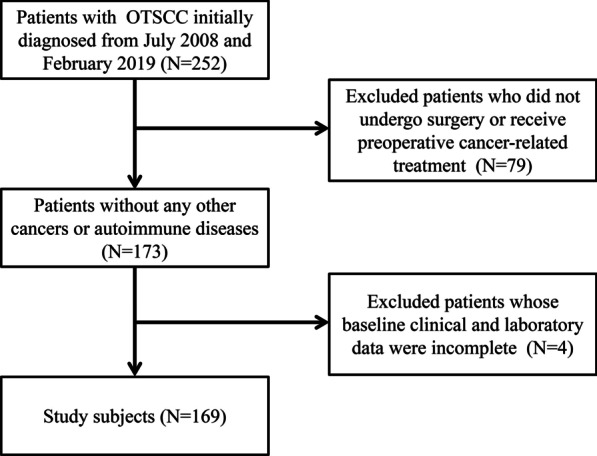
We retrospectively analyzed 169 OTSCC patients who underwent treatments in the Cancer Hospital of Shantou University Medical College from 2008 to 2019. The Cox regression analysis was performed to determine the independent prognostic factors associated with patient's overall survival (OS). A nomogram based on these prognostic factors was established and internally validated using a bootstrap resampling method.
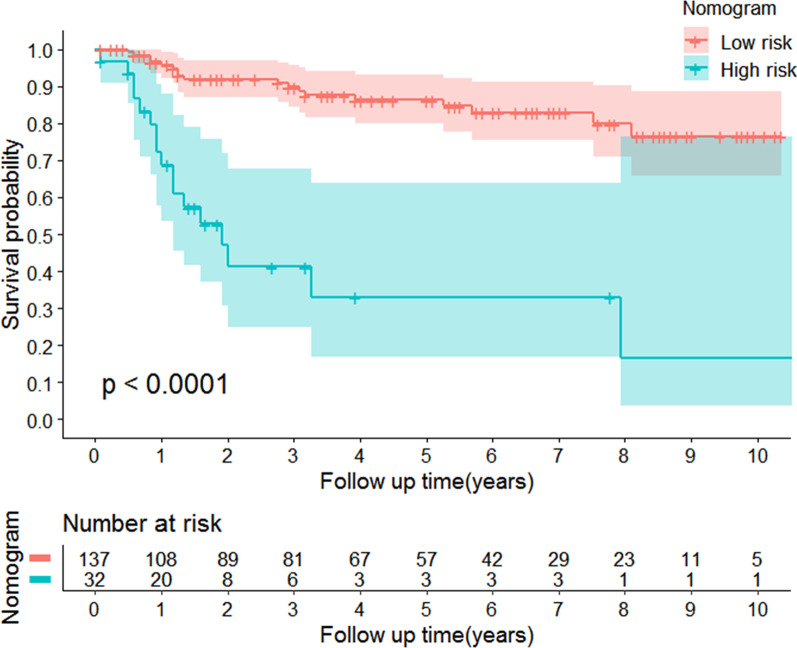
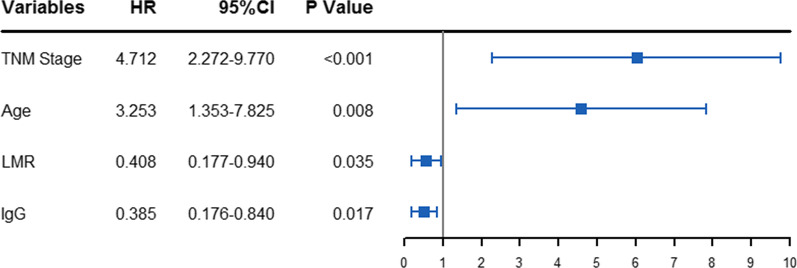
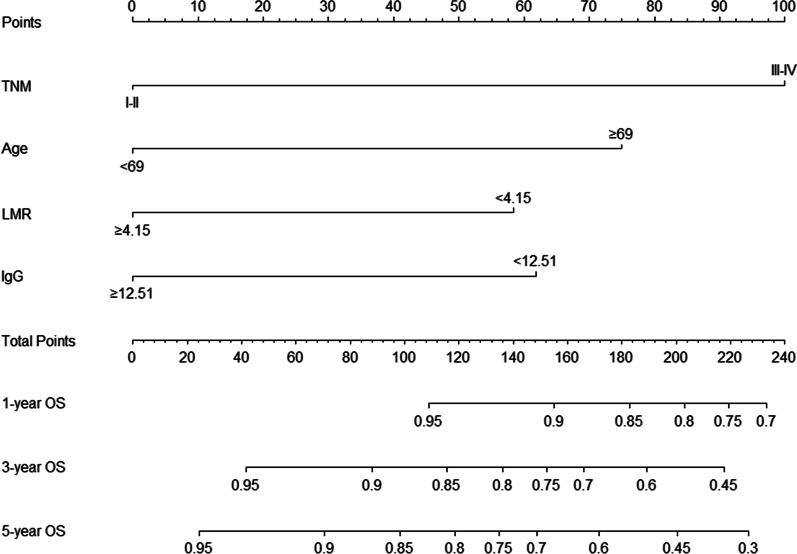
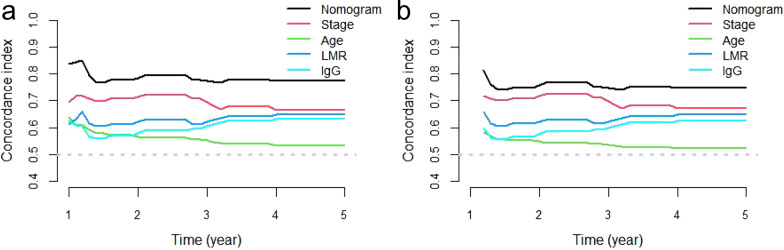
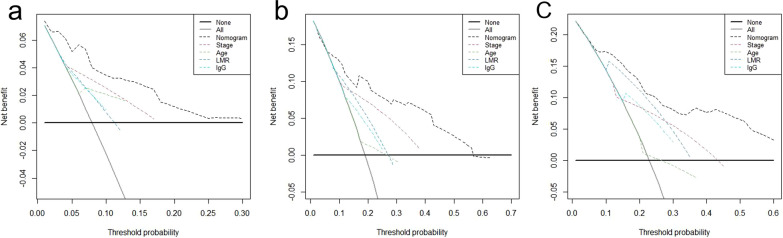
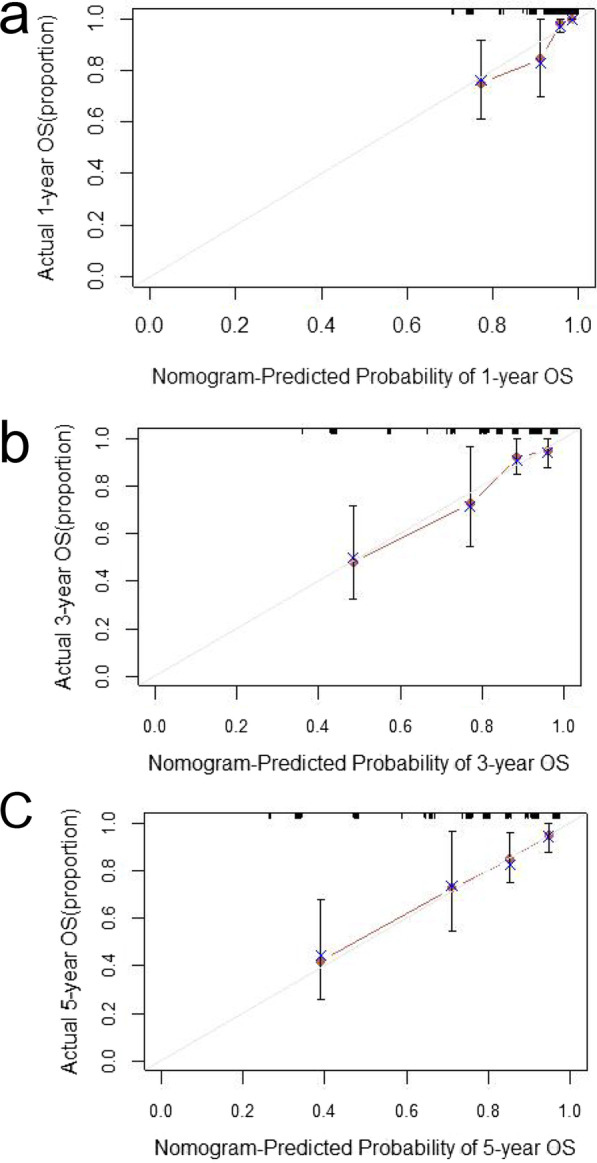
Multivariate Cox regression analysis revealed the independent prognostic factors for OS were TNM stage, age, lymphocyte-to-monocyte ratio and immunoglobulin G, all of which were identified to create the nomogram. The Akaike Information Criterion and Bayesian Information Criterion of the nomogram were lower than those of TNM stage (292.222 vs. 305.480; 298.444 vs. 307.036, respectively), indicating a better goodness-of-fit of the nomogram for predicting OS. The bootstrap-corrected of concordance index (C-index) of nomogram was 0.784 (95% CI 0.708-0.860), which was higher than that of TNM stage (0.685, 95% CI 0.603-0.767, P = 0.017). The results of time-dependent C-index for OS also showed that the nomogram had a better discriminative ability than that of TNM stage. The calibration curves of the nomogram showed good consistency between the probabilities and observed values. The decision curve analysis also revealed the potential clinical usefulness of the nomogram. Based on the cutoff value obtained from the nomogram, the proposed high-risk group had poorer OS than low-risk group (P < 0.0001).
The nomogram based on clinical characteristics and serological inflammation markers might be useful for outcome prediction of OTSCC patient.
口腔舌鳞状细胞癌(OTSCC)是一种常见的恶性疾病,其特点是转移和术后复发率高。本研究旨在建立一个列线图来预测 OTSCC 患者手术后的结局。
我们回顾性分析了 2008 年至 2019 年在汕头大学医学院附属肿瘤医院接受治疗的 169 例 OTSCC 患者。采用 Cox 回归分析确定与患者总生存(OS)相关的独立预后因素。基于这些预后因素建立列线图,并采用 bootstrap 重采样方法进行内部验证。
多因素 Cox 回归分析显示,OS 的独立预后因素为 TNM 分期、年龄、淋巴细胞与单核细胞比值和免疫球蛋白 G,这些因素均被确定用于构建列线图。列线图的 Akaike 信息准则和贝叶斯信息准则均低于 TNM 分期(分别为 292.222 与 305.480;298.444 与 307.036),表明列线图对 OS 预测的拟合优度更好。列线图 bootstrap 校正的一致性指数(C 指数)为 0.784(95%CI 0.708-0.860),高于 TNM 分期(0.685,95%CI 0.603-0.767,P=0.017)。OS 的时间依赖性 C 指数结果也表明,列线图的区分能力优于 TNM 分期。列线图的校准曲线显示概率与观察值之间具有良好的一致性。决策曲线分析也表明了列线图的潜在临床应用价值。根据列线图获得的截断值,提出的高危组的 OS 明显差于低危组(P<0.0001)。
基于临床特征和血清炎症标志物的列线图可能有助于预测 OTSCC 患者的结局。