Institute of Virology and Immunology, Bern and Mittelhäusern, Switzerland.
Department of Infectious Diseases and Pathobiology, Vetsuisse Faculty, University of Bern, Bern, Switzerland.
PLoS Biol. 2021 Dec 28;19(12):e3001490. doi: 10.1371/journal.pbio.3001490. eCollection 2021 Dec.
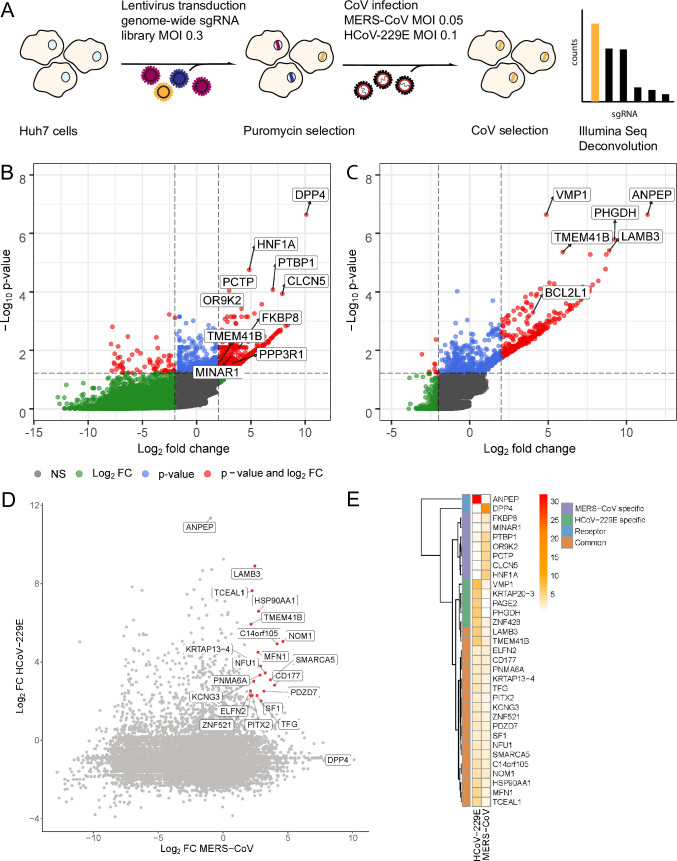
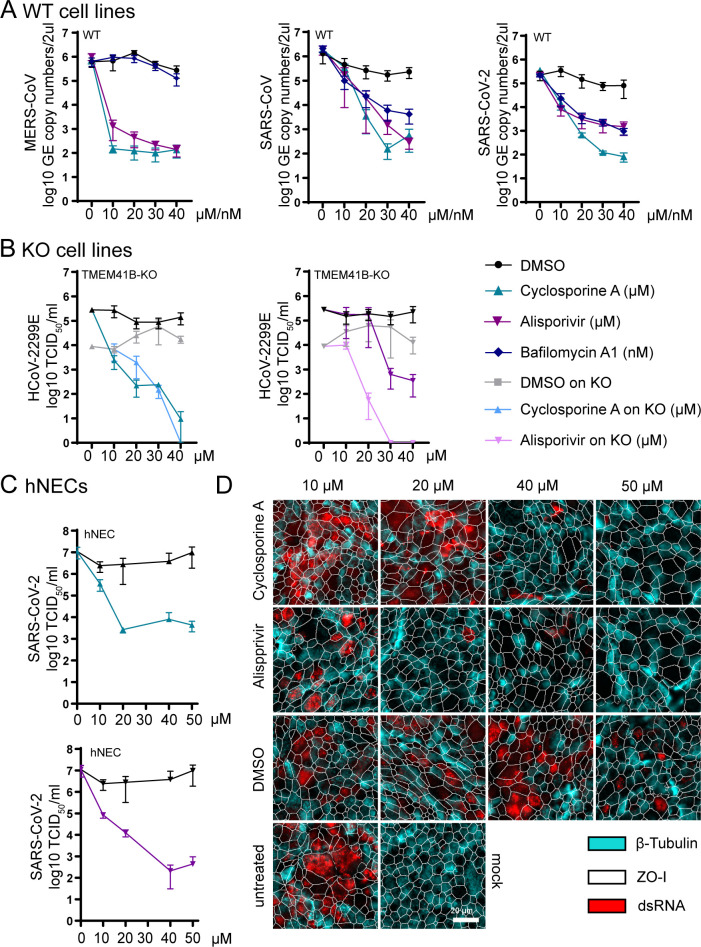
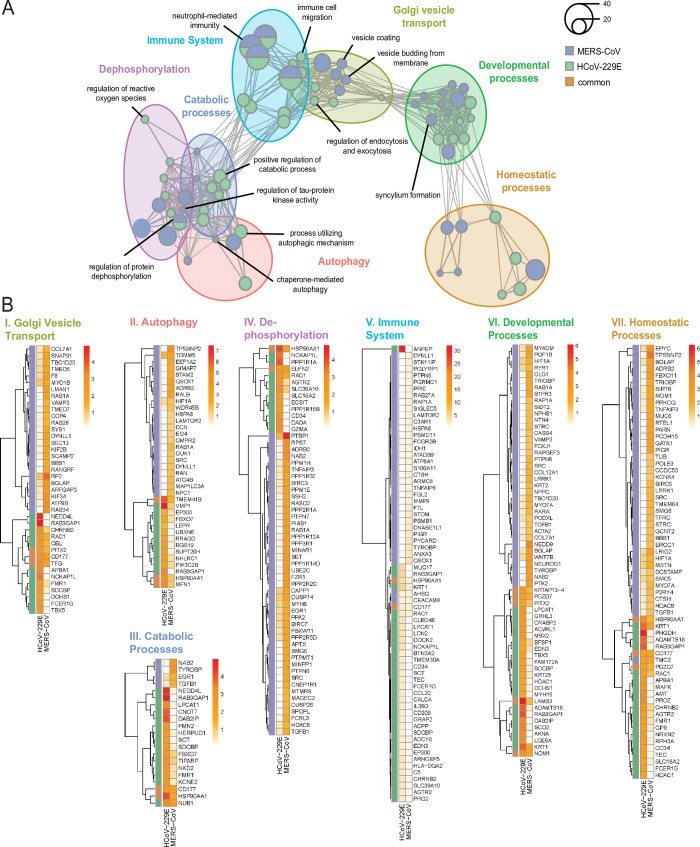
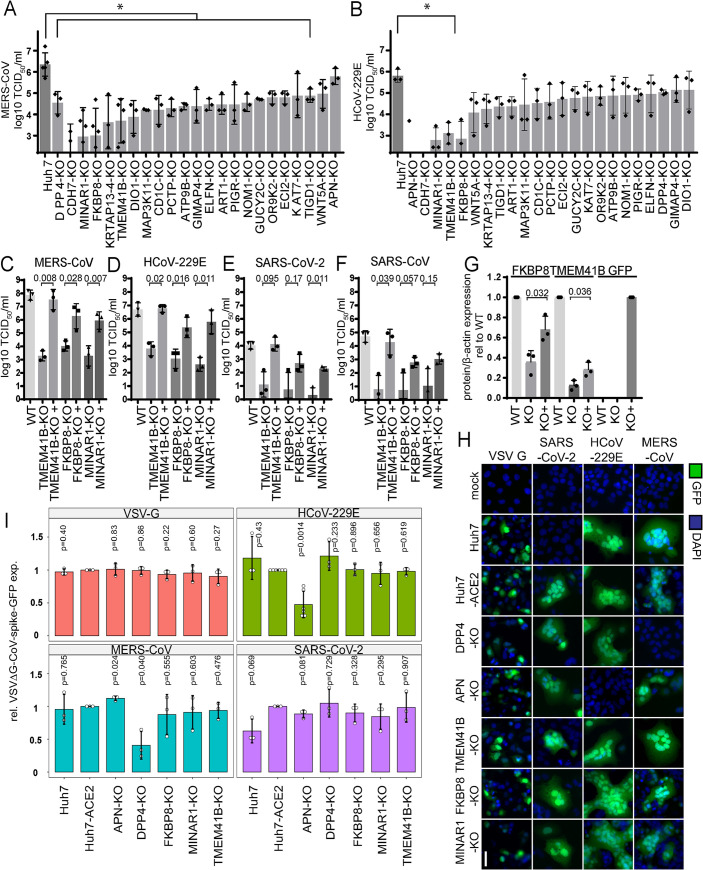
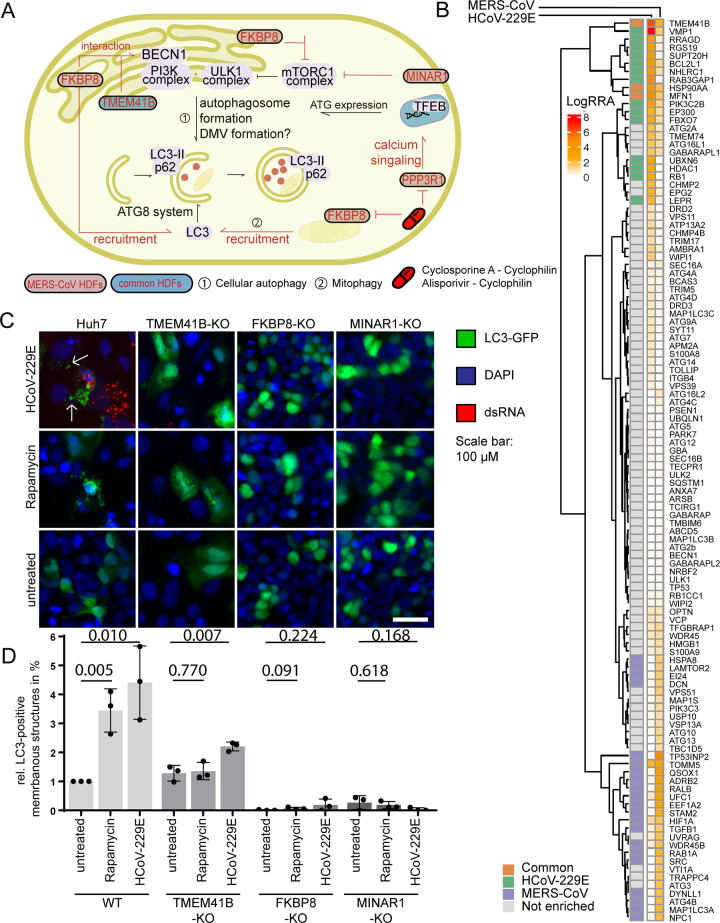
Over the past 20 years, 3 highly pathogenic human coronaviruses (HCoVs) have emerged-Severe Acute Respiratory Syndrome Coronavirus (SARS-CoV), Middle East Respiratory Syndrome Coronavirus (MERS-CoV), and, most recently, Severe Acute Respiratory Syndrome Coronavirus 2 (SARS-CoV-2)-demonstrating that coronaviruses (CoVs) pose a serious threat to human health and highlighting the importance of developing effective therapies against them. Similar to other viruses, CoVs are dependent on host factors for their survival and replication. We hypothesized that evolutionarily distinct CoVs may exploit similar host factors and pathways to support their replication cycles. Herein, we conducted 2 independent genome-wide CRISPR/Cas-9 knockout (KO) screens to identify MERS-CoV and HCoV-229E host dependency factors (HDFs) required for HCoV replication in the human Huh7 cell line. Top scoring genes were further validated and assessed in the context of MERS-CoV and HCoV-229E infection as well as SARS-CoV and SARS-CoV-2 infection. Strikingly, we found that several autophagy-related genes, including TMEM41B, MINAR1, and the immunophilin FKBP8, were common host factors required for pan-CoV replication. Importantly, inhibition of the immunophilin protein family with the compounds cyclosporine A, and the nonimmunosuppressive derivative alisporivir, resulted in dose-dependent inhibition of CoV replication in primary human nasal epithelial cell cultures, which recapitulate the natural site of virus replication. Overall, we identified host factors that are crucial for CoV replication and demonstrated that these factors constitute potential targets for therapeutic intervention by clinically approved drugs.
在过去的 20 年中,已经出现了 3 种高致病性人类冠状病毒(HCoV),即严重急性呼吸系统综合征冠状病毒(SARS-CoV)、中东呼吸系统综合征冠状病毒(MERS-CoV),以及最近的严重急性呼吸系统综合征冠状病毒 2(SARS-CoV-2),这表明冠状病毒(CoV)对人类健康构成严重威胁,并强调了开发针对它们的有效疗法的重要性。与其他病毒一样,CoV 的存活和复制依赖于宿主因素。我们假设,进化上不同的 CoV 可能利用相似的宿主因素和途径来支持其复制周期。在此,我们进行了 2 项独立的基于全基因组 CRISPR/Cas-9 敲除(KO)的筛选,以鉴定在人 Huh7 细胞系中支持 HCoV 复制所需的 MERS-CoV 和 HCoV-229E 宿主依赖因子(HDF)。得分最高的基因在 MERS-CoV 和 HCoV-229E 感染以及 SARS-CoV 和 SARS-CoV-2 感染的背景下进一步得到验证和评估。引人注目的是,我们发现了一些自噬相关基因,包括 TMEM41B、MINAR1 和免疫亲和素 FKBP8,它们是泛 CoV 复制所必需的共同宿主因子。重要的是,用化合物环孢素 A 和非免疫抑制衍生物阿利西普利抑制免疫亲和素蛋白家族,导致在原代人鼻上皮细胞培养物中 CoV 复制呈剂量依赖性抑制,这些细胞培养物再现了病毒复制的天然部位。总的来说,我们确定了对 CoV 复制至关重要的宿主因子,并证明这些因子构成了临床批准药物进行治疗干预的潜在靶点。