Bermúdez Juan Pablo
Institut de Philosophie, Université de Neuchâtel, Neuchâtel, Switzerland.
Programa de Filosofía & Área de Investigación Salud, Conocimiento Médico y Sociedad, Universidad Externado de Colombia, Bogotá, Colombia.
Synthese. 2021;199(3-4):6251-6273. doi: 10.1007/s11229-021-03068-w. Epub 2021 Feb 18.
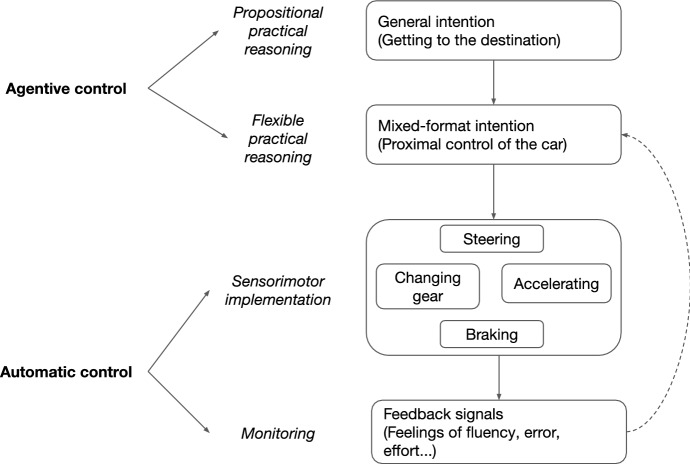
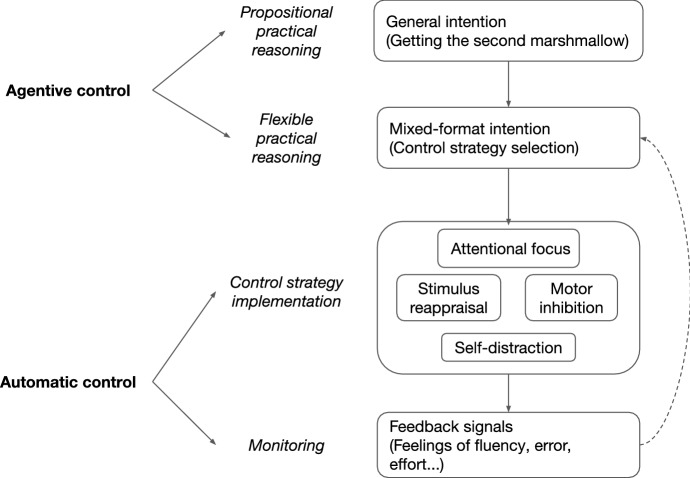
Researchers often claim that self-control is a skill. It is also often stated that self-control exertions are intentional actions. However, no account has yet been proposed of the skillful agency that makes self-control exertion possible, so our understanding of self-control remains incomplete. Here I propose the , which accounts for skillful agency by tackling the guidance problem: how can agents transform their abstract and coarse-grained intentions into the highly context-sensitive, fine-grained control processes required to select, revise and correct strategies during self-control exertion? The skill model borrows conceptual tools from 'hierarchical models' recently developed in the context of motor skills, and asserts that self-control crucially involves the ability to manage the implementation and monitoring of regulatory strategies as the self-control exercise unfolds. Skilled agents are able do this by means of : a fast, context-sensitive type of deliberation that incorporates non-propositional representations (including feedback signals about strategy implementation, such as the feeling of mental effort) into the formation and revision of the mixed-format intentions that structure self-control exertion. The literatures on implementation intentions and motivation framing offer corroborating evidence for the theory. As a surprising result, the skill of self-control that allows agents to overcome the contrary motivations they experience is self-effacing: instead of continuously honing this skill, expert agents replace it with a different one, which minimizes or prevents contrary motivations from arising in the first place. Thus, the more expert you are at self-control, the less likely you are to use it.
研究人员经常声称自我控制是一种技能。人们也经常说自我控制的努力是有意为之的行为。然而,目前尚未有人提出关于使自我控制努力成为可能的熟练能动性的解释,因此我们对自我控制的理解仍然不完整。在此我提出技能模型,它通过解决指导问题来解释熟练能动性:在自我控制努力过程中,行动者如何将其抽象且粗略的意图转化为高度情境敏感、精细的控制过程,以便在选择、修正和纠正策略时使用?该技能模型借鉴了近期在运动技能背景下发展起来的“层次模型”的概念工具,并断言自我控制关键涉及在自我控制活动展开时管理监管策略的实施和监控的能力。熟练的行动者能够通过混合格式审议做到这一点:一种快速、情境敏感的审议类型,它将非命题表征(包括关于策略实施的反馈信号,如心理努力的感觉)纳入构成自我控制努力的混合格式意图的形成和修正过程中。关于实施意图和动机框架的文献为该理论提供了确证证据。一个令人惊讶的结果是,使行动者能够克服其所经历的相反动机的自我控制技能是自我消除的:专家型行动者不是持续磨练这种技能,而是用另一种技能取而代之,这种技能能在一开始就最大限度地减少或防止相反动机的产生。因此,你在自我控制方面越专业,就越不太可能使用它。