Nuffield Department of Orthopaedics, Rheumatology and Musculoskeletal Sciences (NDORMS), Tissue and Tumor Microenvironments Group, University of Oxford, Oxford, United Kingdom.
Front Immunol. 2021 Dec 17;12:798211. doi: 10.3389/fimmu.2021.798211. eCollection 2021.
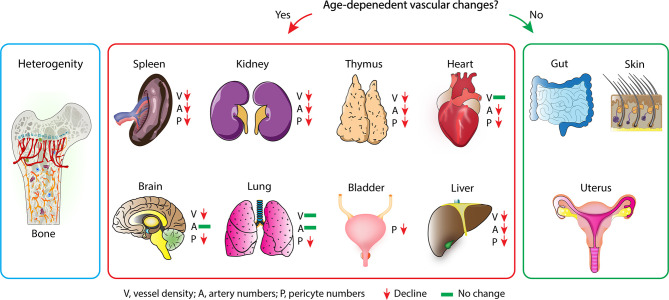
The bones and joints in the skeletal system are composed of diverse cell types, including vascular niches, bone cells, connective tissue cells and mineral deposits and regulate whole-body homeostasis. The capacity of maintaining strength and generation of blood lineages lies within the skeletal system. Bone harbours blood and immune cells and their progenitors, and vascular cells provide several immune cell type niches. Blood vessels in bone are phenotypically and functionally diverse, with distinct capillary subtypes exhibiting striking changes with age. The bone vasculature has a special impact on osteogenesis and haematopoiesis, and dysregulation of the vasculature is associated with diverse blood and bone diseases. Ageing is associated with perturbed haematopoiesis, loss of osteogenesis, increased adipogenesis and diminished immune response and immune cell production. Endothelial and perivascular cells impact immune cell production and play a crucial role during inflammation. Here, we discuss normal and maladapted vascular niches in bone during development, homeostasis, ageing and bone diseases such as rheumatoid arthritis and osteoarthritis. Further, we discuss the role of vascular niches during bone malignancy.
骨骼系统中的骨骼和关节由多种细胞类型组成,包括血管龛、骨细胞、结缔组织细胞和矿物质沉积,它们共同调节着全身的内稳态。骨骼系统具有维持力量和生成血液谱系的能力。骨骼中含有血液和免疫细胞及其祖细胞,血管细胞为多种免疫细胞类型提供龛位。骨骼中的血管在表型和功能上具有多样性,不同的毛细血管亚型随年龄的变化而显著改变。骨骼血管对成骨和造血有特殊影响,血管失调与多种血液和骨骼疾病相关。衰老与造血功能紊乱、成骨能力丧失、脂肪生成增加以及免疫反应和免疫细胞生成减少有关。内皮细胞和血管周细胞影响免疫细胞的生成,并在炎症过程中发挥关键作用。在这里,我们讨论了在发育、稳态、衰老以及类风湿关节炎和骨关节炎等骨骼疾病过程中,骨骼中正常和失调的血管龛位。此外,我们还讨论了血管龛位在骨骼恶性肿瘤中的作用。