Department of Epidemiology and Health Monitoring, Robert Koch Institute, Berlin, Germany.
Centre for Biological Threats and Special Pathogens, Robert Koch Institute, Berlin, Germany.
Front Public Health. 2021 Dec 13;9:773850. doi: 10.3389/fpubh.2021.773850. eCollection 2021.
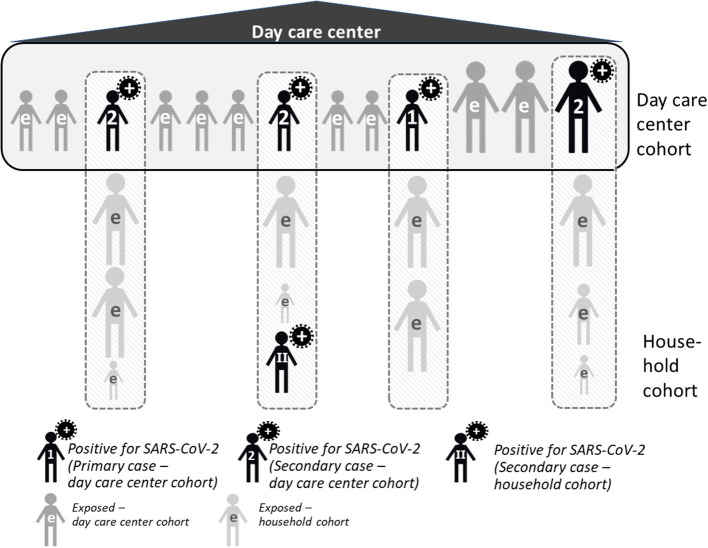
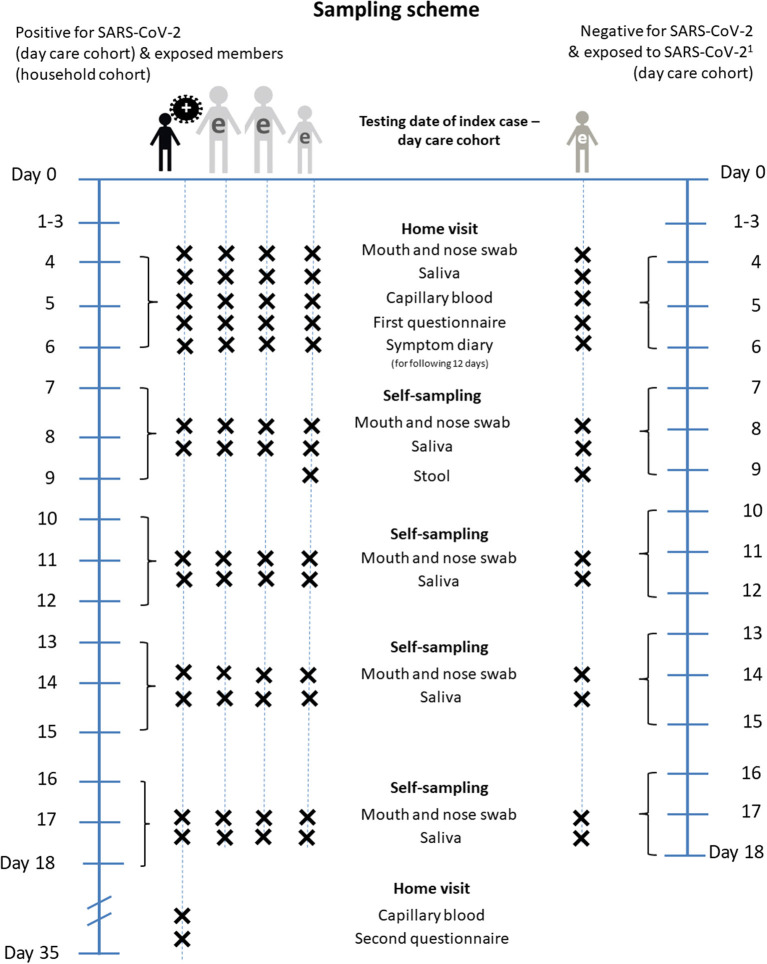
Until today, the role of children in the transmission dynamics of SARS-CoV-2 and the development of the COVID-19 pandemic seems to be dynamic and is not finally resolved. The primary aim of this study is to investigate the transmission dynamics of SARS-CoV-2 in child day care centers and connected households as well as transmission-related indicators and clinical symptoms among children and adults. COALA ("Corona outbreak-related examinations in day care centers") is a day care center- and household-based study with a case-ascertained study design. Based on day care centers with at least one reported case of SARS-CoV-2, we include one- to six-year-old children and staff of the affected group in the day care center as well as their respective households. We visit each child's and adult's household. During the home visit we take from each household member a combined mouth and nose swab as well as a saliva sample for analysis of SARS-CoV-2-RNA by real-time reverse transcription polymerase chain reaction (real-time RT-PCR) and a capillary blood sample for a retrospective assessment of an earlier SARS-CoV-2 infection. Furthermore, information on health status, socio-demographics and COVID-19 protective measures are collected via a short telephone interview in the subsequent days. In the following 12 days, household members (or parents for their children) self-collect the same respiratory samples as described above every 3 days and a stool sample for children once. COVID-19 symptoms are documented daily in a symptom diary. Approximately 35 days after testing the index case, every participant who tested positive for SARS-CoV-2 during the study is re-visited at home for another capillary blood sample and a standardized interview. The analysis includes secondary attack rates, by age of primary case, both in the day care center and in households, as well as viral shedding dynamics, including the beginning of shedding relative to symptom onset and viral clearance. The results contribute to a better understanding of the epidemiological and virological transmission-related indicators of SARS-CoV-2 among young children, as compared to adults and the interplay between day care and households.
截至今日,儿童在 SARS-CoV-2 传播动力学和 COVID-19 大流行发展中的作用似乎是动态的,尚未最终确定。本研究的主要目的是调查儿童日托中心和相关家庭中 SARS-CoV-2 的传播动力学,以及儿童和成人中与传播相关的指标和临床症状。COALA(“日托中心与 COVID-19 相关的检查”)是一项以日托中心和家庭为基础的研究,采用病例确证的研究设计。基于至少有一例 SARS-CoV-2 报告病例的日托中心,我们纳入受影响日托中心的 1 至 6 岁儿童和工作人员及其各自的家庭。我们访问每个孩子和成人的家庭。在家庭访问期间,我们从每个家庭成员那里采集口鼻合并拭子以及唾液样本,通过实时逆转录聚合酶链反应(real-time RT-PCR)分析 SARS-CoV-2-RNA,并采集毛细血管血样用于回顾性评估早期 SARS-CoV-2 感染。此外,通过随后几天的简短电话访谈收集健康状况、社会人口统计学和 COVID-19 保护措施信息。在接下来的 12 天内,家庭成员(或其父母为其子女)按照上述描述自行采集相同的呼吸道样本,儿童每 3 天采集一次粪便样本。每天在症状日记中记录 COVID-19 症状。在测试索引病例约 35 天后,研究期间检测出 SARS-CoV-2 阳性的每位参与者都在家中再次接受毛细血管血样采集和标准化访谈。分析包括次要攻击率,按主要病例的年龄,分别在日托中心和家庭中,以及病毒脱落动力学,包括相对于症状出现开始脱落和病毒清除的时间。研究结果有助于更好地了解幼儿中 SARS-CoV-2 的流行病学和病毒学传播相关指标,与成年人以及日托中心和家庭之间的相互作用相比。