Health Promotion Research Centre, National University of Ireland Galway, University Rd, Galway, Republic of Ireland.
Centre for Public Health, Queen's University Belfast, Belfast, BT12 6BJ, UK.
BMC Public Health. 2022 Jan 5;22(1):9. doi: 10.1186/s12889-021-12414-z.
The food environment within and surrounding homes influences family dietary habits with socio-economic areas at a nutritional disadvantage. Families' perception of the food environment and how it influences their food decisions is less clear. This rapid review aimed to synthesise qualitative evidence of parental perspectives of the food environment and their influence on food decisions among disadvantaged families.
Qualitative and mixed-methods peer-reviewed journal articles published after 2000, that explored the perspectives of low-income parents in relation to their food environment and how this impacted food decisions for families with children aged 2-17 years, were included in this review. Embase, Scopus and PsycINFO were the databases chosen for this review. Search strategies included seven concepts related to family, food, perceptions, influences, environment, socio-economic status and study type. Two independent reviewers screened sixty-four studies. Thematic synthesis was employed.
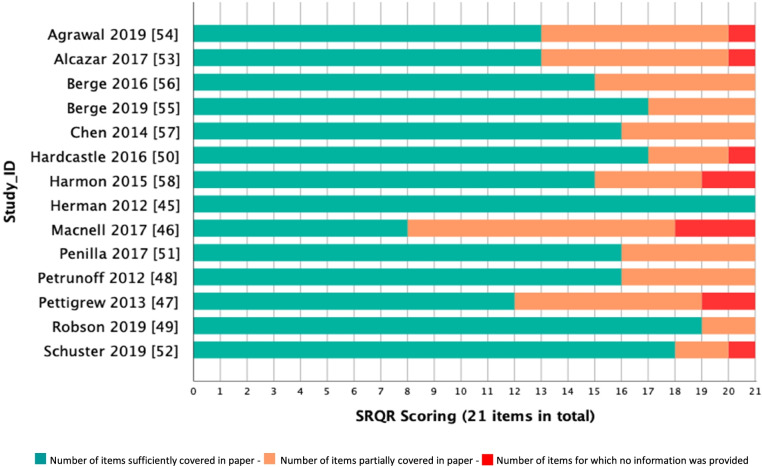
Two thousand one hundred and forty five results were identified through database searching and 1,650 were screened. Fourteen articles that originated from the US, Australia and the UK were included in this review. No articles were excluded following quality appraisal. Child preferences, financial and time constraints, and location and access to food outlets were barriers to accessing healthy food. Parental nutrition education and feeding approaches varied but positive outcomes from interventions to address these behaviours will be short-lived if inequities in health caused by poverty and access to affordable and healthy food are not addressed. The reliance on social support from families or government sources played an important role for families but are likely to be short-term solutions to health and nutritional inequities.
This qualitative evidence synthesis provides an insight into the perceptions of low-income parents on the factors influencing food decisions. Findings have implications for public health and the development of effective strategies to improve the dietary habits of children of disadvantaged families. Sustainable changes to dietary habits for families on low-income requires policy responses to low income, food access and to the high cost of healthy foods.
家庭内外的食物环境影响着家庭的饮食行为,社会经济地位较低的家庭在营养方面处于不利地位。家庭对食物环境的看法以及它如何影响他们的食物决策不太清楚。本快速综述旨在综合定性证据,了解弱势家庭中父母对食物环境的看法及其对食物决策的影响。
本综述纳入了 2000 年后发表的、探讨低收入父母对其食物环境的看法以及这些看法如何影响有 2-17 岁儿童的家庭食物决策的定性和混合方法同行评审期刊文章。本综述选择了 Embase、Scopus 和 PsycINFO 数据库。检索策略包括与家庭、食物、看法、影响、社会经济地位和研究类型相关的七个概念。两位独立的审查员筛选了 64 篇研究文章。采用主题综合法。
通过数据库搜索共确定了 2145 项结果,筛选了 1650 项。本综述纳入了 14 篇来自美国、澳大利亚和英国的文章。经质量评估后,没有文章被排除。儿童偏好、经济和时间限制以及食物供应点的位置和获取是获取健康食品的障碍。父母的营养教育和喂养方法各不相同,但如果不解决贫困和负担得起的健康食品获取造成的健康不平等问题,针对这些行为的干预措施取得的积极结果将是短暂的。家庭或政府来源的社会支持对家庭起着重要作用,但这可能只是解决健康和营养不平等问题的短期解决方案。
本定性证据综述提供了对低收入父母对影响食物决策因素的看法的深入了解。研究结果对公共卫生和制定有效战略改善弱势家庭儿童饮食习惯具有重要意义。要使低收入家庭的饮食习惯发生可持续变化,需要对低收入、食物获取和健康食品高成本问题采取政策应对措施。