Xiong Yunxia, Cao Shuting, Xiao Hao, Wu Qiwen, Yi Hongbo, Jiang Zongyong, Wang Li
State Key Laboratory of Livestock and Poultry Breeding, Key Laboratory of Animal Nutrition and Feed Science in South China Ministry of Agriculture, Maoming Branch, Guangdong Laboratory for Lingnan Modern Agriculture, Guangdong Key Laboratory of Animal Breeding and Nutrition, Institute of Animal Science, Guangdong Academy of Agricultural Sciences, Guangzhou, 510640, China.
J Anim Sci Biotechnol. 2022 Jan 5;13(1):1. doi: 10.1186/s40104-021-00651-6.
Previous studies had shown that short-term acute heat stress (HS) affected the host's metabolism and intestinal microbiota independent of feed intake (FI) reduction, and long-term calorie restriction caused intestinal morphological injuries and gut microbial alterations. However, research on the effects of constant chronic HS on intestinal microbial composition and the roles of FI reduction played in is limited. This study aimed to investigate the effects of 7-day constant chronic HS on the composition of intestinal microbes in growing-finishing pigs, and its relationship with pigs' performance, intestinal morphology, and ileal immune response. Twenty-four growing-finishing pigs (Duroc × Large White × Landrace, 30 ± 1 kg body weight) were randomly assigned to three treatments (n = 8), 1) thermal neutral (TN) conditions (25 ± 1 °C) with ad libitum FI, 2) HS conditions (35 ± 1 °C) with ad libitum FI, 3) pair-fed (PF) with HS under TN conditions to discriminate the confounding effects of dissimilar FI, and the FI was the previous day's average FI of HS. The small intestinal segments (duodenum, jejunum, and ileum) and feces were collected on d 8.
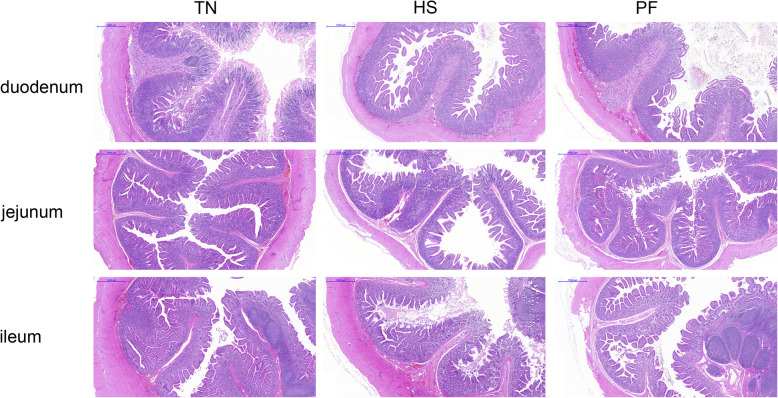
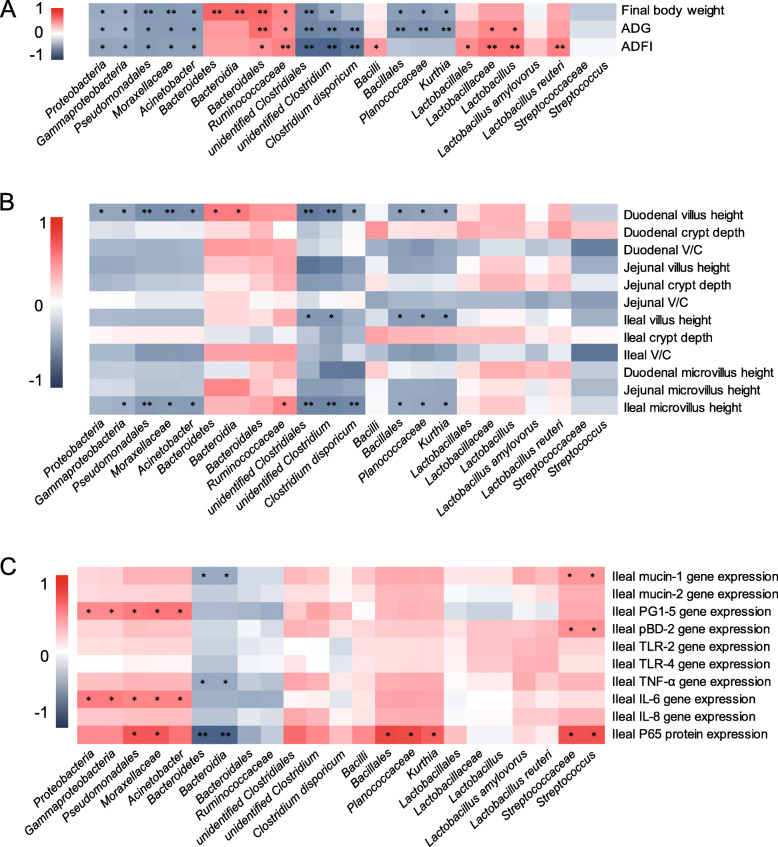
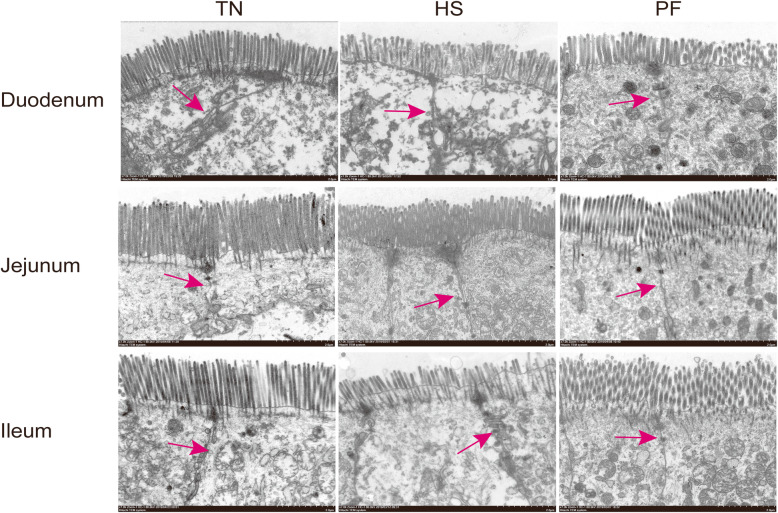
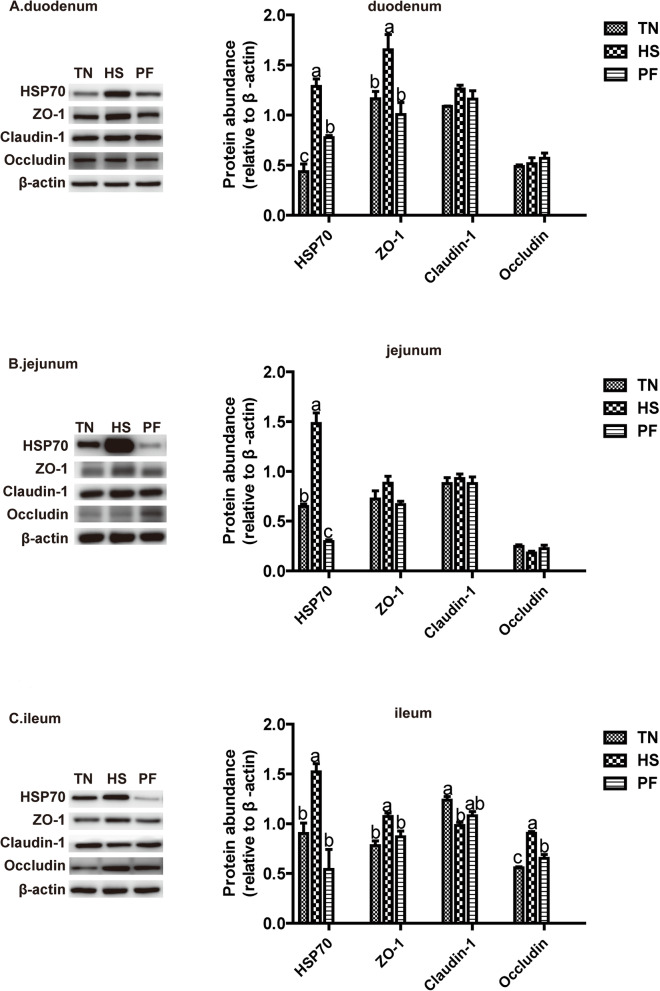
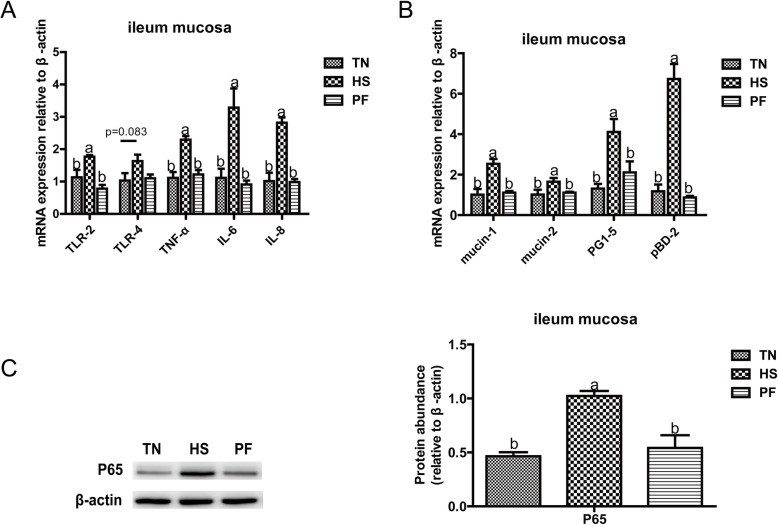
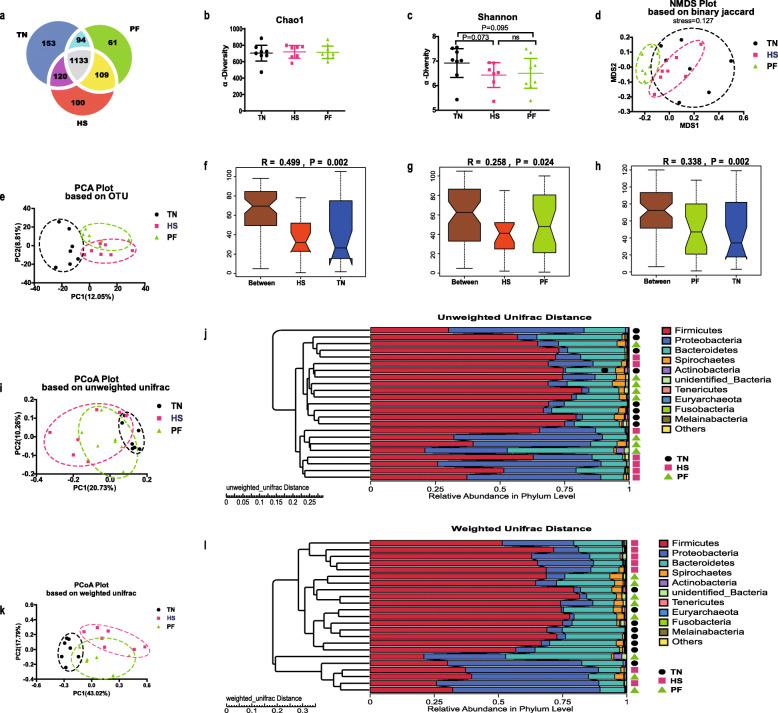
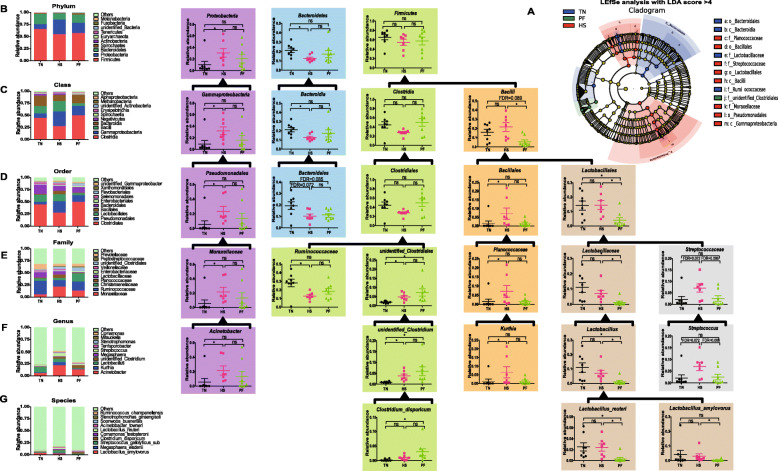
Results indicated that HS drastically declined (P < 0.05) average daily gain (ADG) and average daily feed intake (ADFI) (about 61%) in comparison with TN, and caused hyperpyrexia, meanwhile PF caused hypothermia. Morphological observation by light and electron microscopes showed that both HS and PF treatment decreased (P < 0.05) the villus and microvillus height compared with TN. Additionally, HS increased (P < 0.05) protein expression of heat shock protein 70 in the duodenum, jejunum, and ileum. Furthermore, the expression of tight junction protein zonula occluden-1 (ZO-1) in the duodenum and ileum, and Occludin in the ileum were enhanced (P < 0.05) compared with TN and PF. Moreover, HS significantly enhanced (P < 0.05) the mRNA relative expression of inflammatory cytokines (TLR-2, TLR-4, and tumor necrosis factor-α (TNF-α), IL-6, IL-8, PG1-5, β-defensin 2 (pBD-2)), mucins (mucin-1 and mucin-2) and P65 protein level in the ileal mucosa tissue. Intestinal microbiota analysis by 16S rRNA sequencing showed lower (P < 0.10) α diversity in both HS and PF, and a separated cluster of β diversity among groups. Compared with TN, HS but not PF mainly reduced (FDR < 0.05) Bacteroidetes (phylum), Bacteroidia (class) and elevated the proportions of Proteobacteria (phylum, FDR < 0.05), Bacillales (order, FDR < 0.05), Planococcaceae (family, FDR < 0.05), Kurthia (genus, FDR < 0.05), Streptococcaceae (family, FDR < 0.10) and Streptococcus (genus, FDR < 0.10). Notably, Lactobacillales (order) was decreased (FDR < 0.05) by PF alone. Furthermore, the Spearman correlation analysis indicated that the microbes prevalent in HS were positively (P < 0.05) associated with intestinal morphological injuries indicators and ileal immune response parameters, and the microbes reduced in HS were negatively (P < 0.05) with the performance data.
Intestinal morphological injuries and ileal immune response caused by constant chronic HS independent of FI showed close connections with alterations in intestinal microbiota in growing-finishing pigs.
以往研究表明,短期急性热应激(HS)会影响宿主的新陈代谢和肠道微生物群,且与采食量(FI)减少无关,长期热量限制会导致肠道形态损伤和肠道微生物改变。然而,关于持续慢性HS对肠道微生物组成的影响以及FI减少在其中所起作用的研究有限。本研究旨在探讨7天持续慢性HS对生长育肥猪肠道微生物组成的影响,及其与猪的生长性能、肠道形态和回肠免疫反应的关系。将24头生长育肥猪(杜洛克×大白×长白,体重30±1 kg)随机分为三个处理组(n = 8),1)热中性(TN)条件(25±1°C),自由采食;2)HS条件(35±1°C),自由采食;3)在TN条件下与HS组配对饲养(PF),以区分不同采食量的混杂效应,采食量为HS组前一天的平均采食量。在第8天收集小肠段(十二指肠、空肠和回肠)和粪便。
结果表明,与TN组相比,HS组的平均日增重(ADG)和平均日采食量(ADFI)显著下降(P < 0.05)(约61%),并导致高热症,同时PF组导致体温过低。光镜和电镜形态学观察表明,与TN组相比,HS组和PF组的绒毛和微绒毛高度均降低(P < 0.05)。此外,HS组十二指肠、空肠和回肠中热休克蛋白70的蛋白表达增加(P < 0.05)。此外,与TN组和PF组相比,十二指肠和回肠中紧密连接蛋白闭合蛋白-1(ZO-1)以及回肠中闭合蛋白的表达增强(P < 0.05)。此外,HS组显著增强了回肠黏膜组织中炎性细胞因子(TLR-2、TLR-4和肿瘤坏死因子-α(TNF-α)、IL-6、IL-8、PG1-5、β-防御素2(pBD-2))、粘蛋白(粘蛋白-1和粘蛋白-2)的mRNA相对表达以及P65蛋白水平(P < 0.05)。通过16S rRNA测序进行的肠道微生物群分析表明,HS组和PF组的α多样性均较低(P < 0.10),且各组间β多样性呈分离聚类。与TN组相比,HS组而非PF组主要降低了拟杆菌门(菌门)、拟杆菌纲(菌纲)的比例,并提高了变形菌门(菌门,FDR < 0.05)、芽孢杆菌目(菌目,FDR < 0.05)、扁平球菌科(菌科,FDR < 0.05)、库特氏菌属(菌属,FDR < 0.05)、链球菌科(菌科,FDR < 0.10)和链球菌属(菌属,FDR < 0.10)的比例。值得注意的是,仅PF组降低了乳杆菌目(菌目)的比例(FDR < 0.05)。此外,Spearman相关性分析表明,HS组中普遍存在的微生物与肠道形态损伤指标和回肠免疫反应参数呈正相关(P < 0.05),而HS组中减少的微生物与生长性能数据呈负相关(P < 0.05)。
持续慢性HS导致的肠道形态损伤和回肠免疫反应与生长育肥猪肠道微生物群的改变密切相关,且与采食量无关。