Institute of Plant and Microbial Biology and Zurich-Basel Plant Science Center, University of Zurich, Zurich, Switzerland.
The Sainsbury Laboratory, University of East Anglia, Norwich Research Park, Norwich, United Kingdom.
Elife. 2022 Jan 6;11:e74162. doi: 10.7554/eLife.74162.
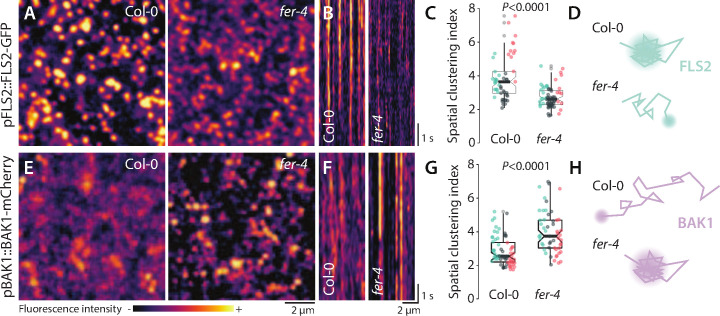
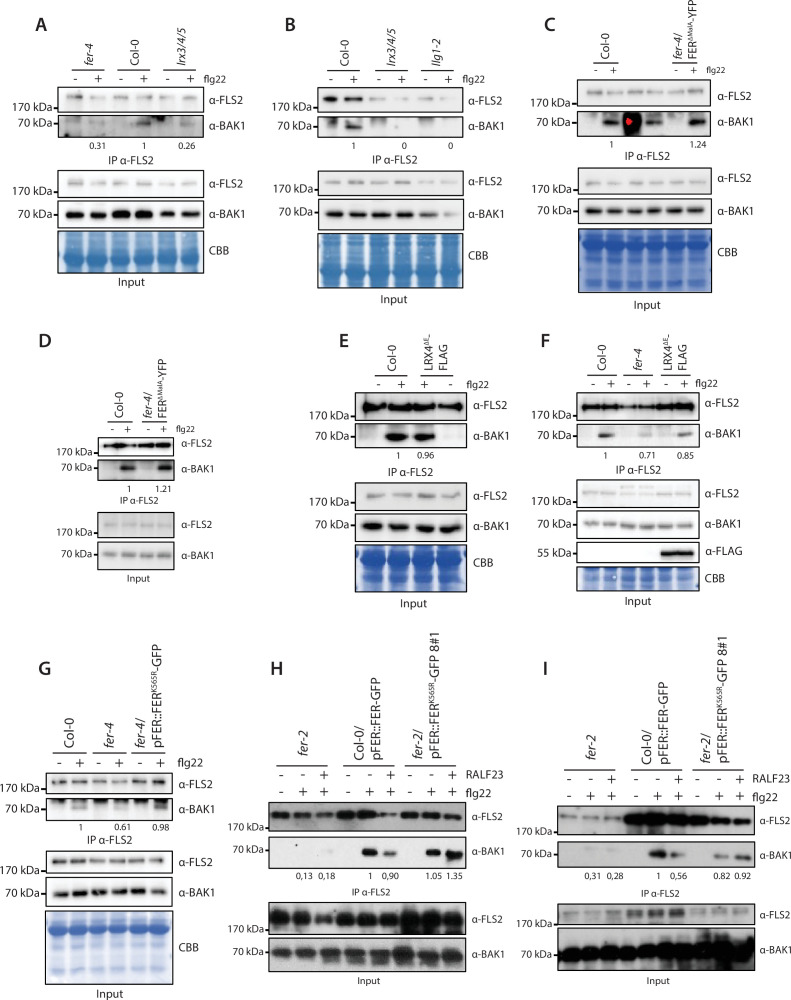
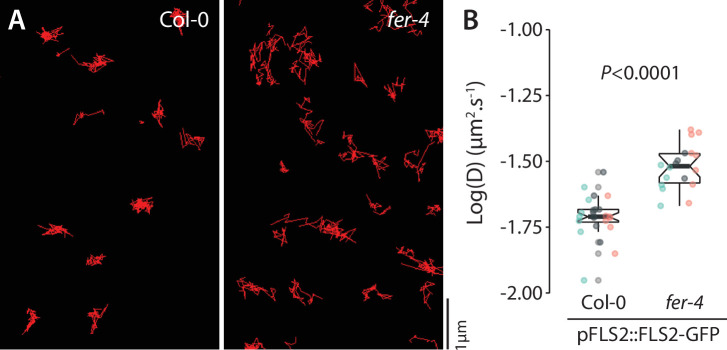
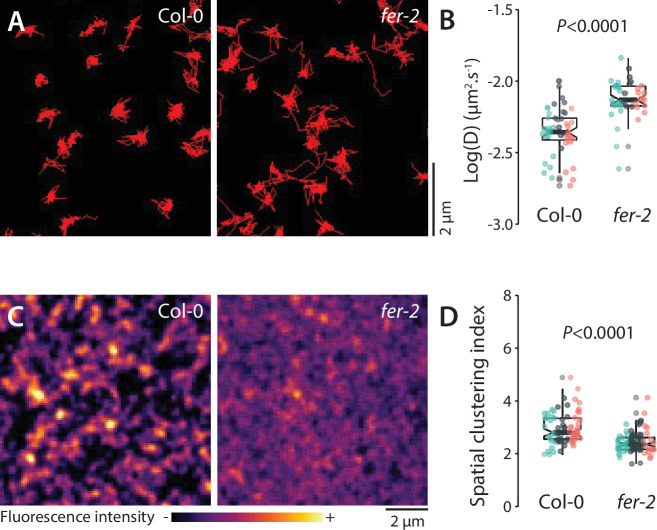
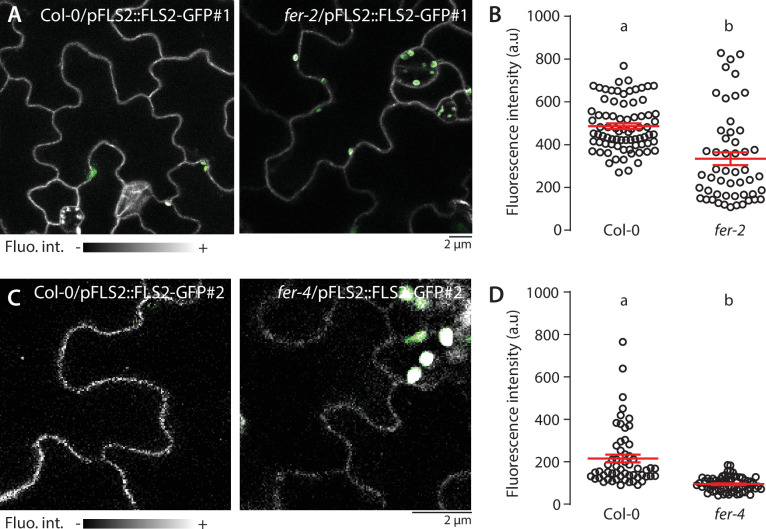
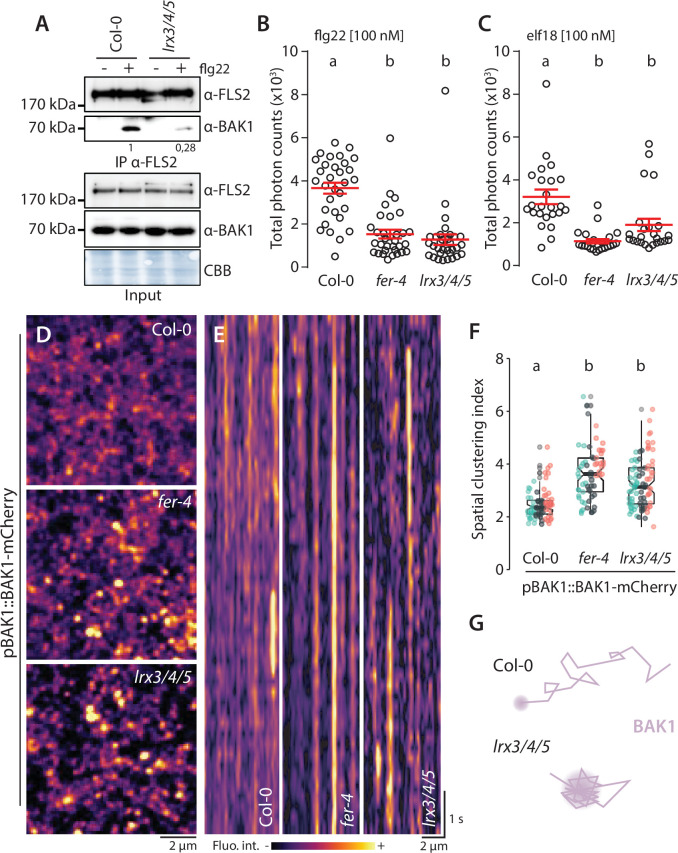
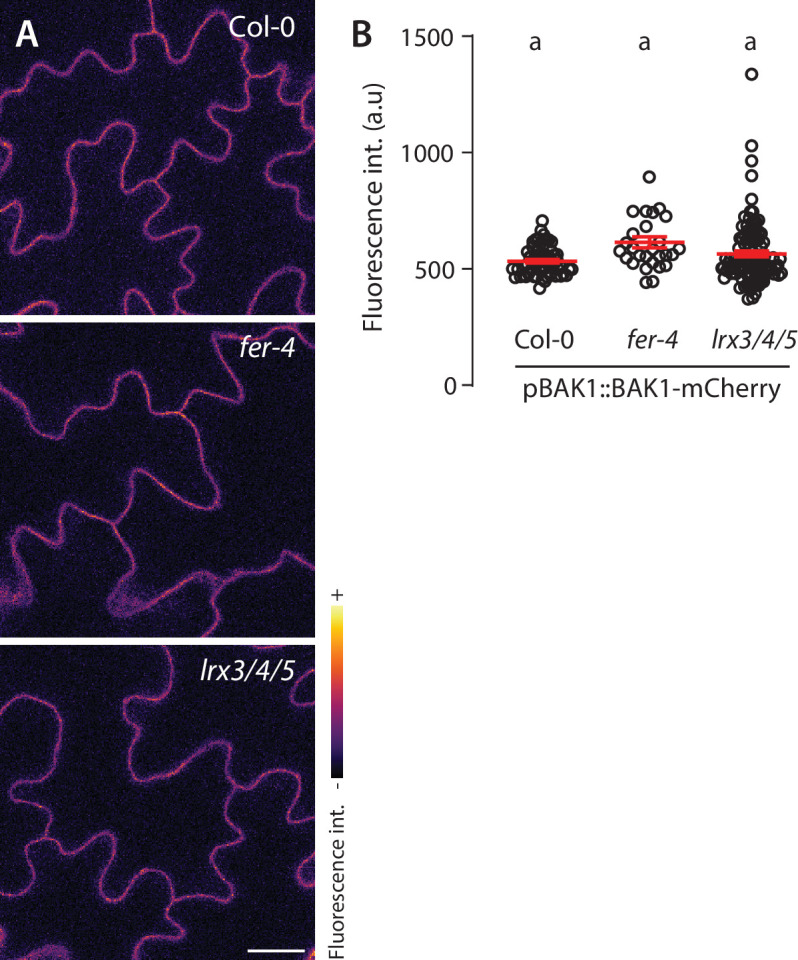
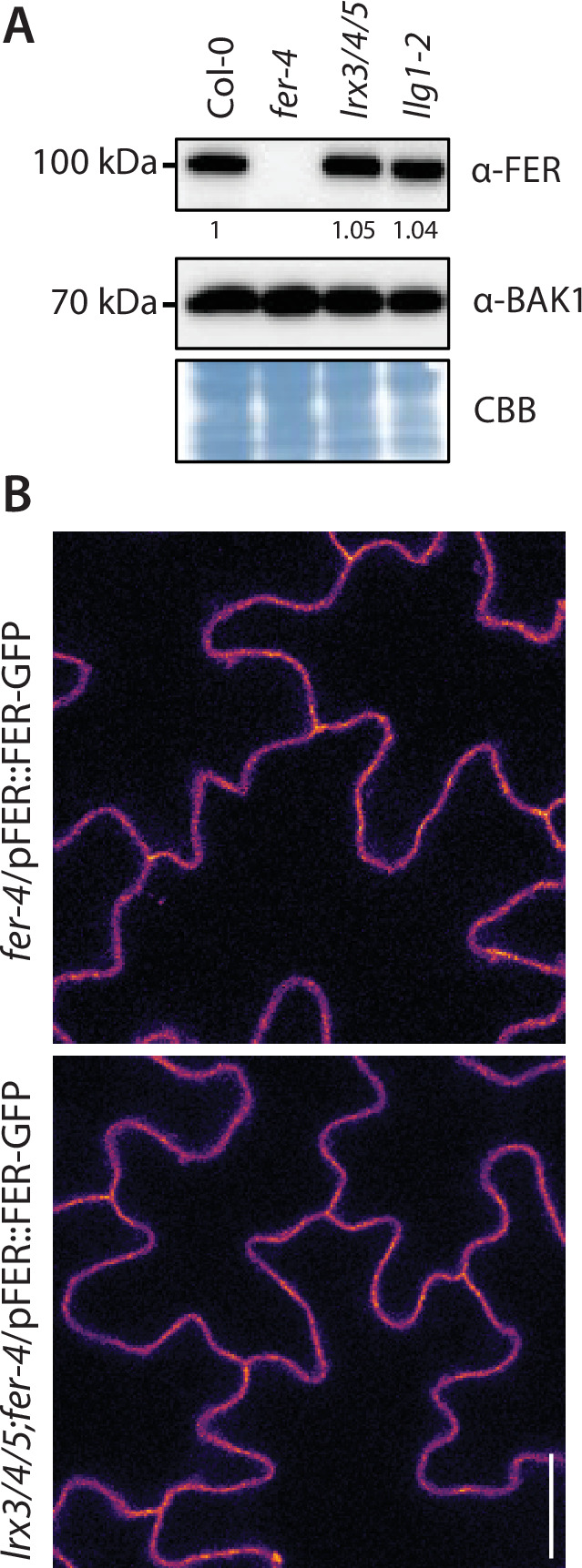
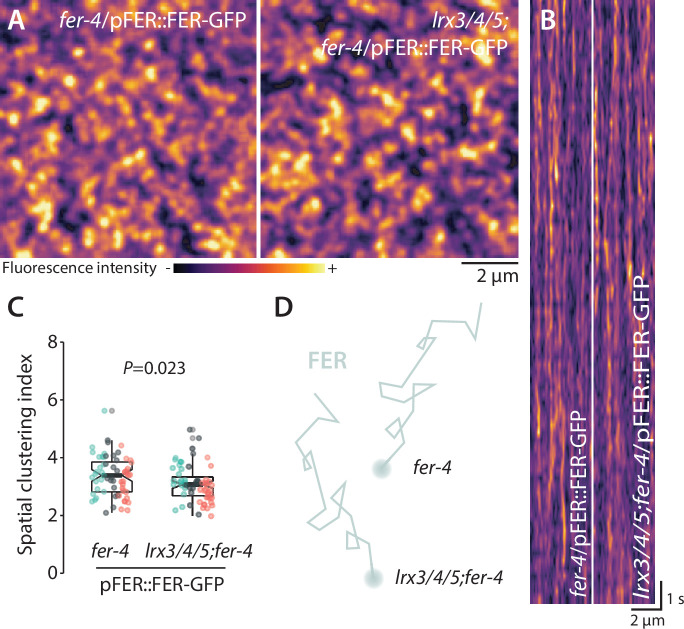
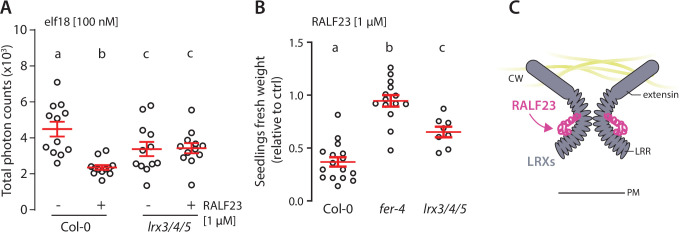
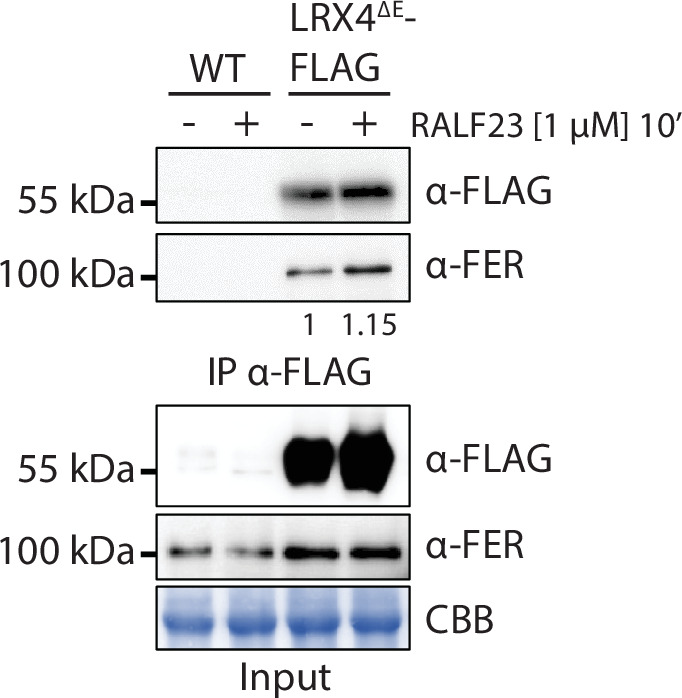
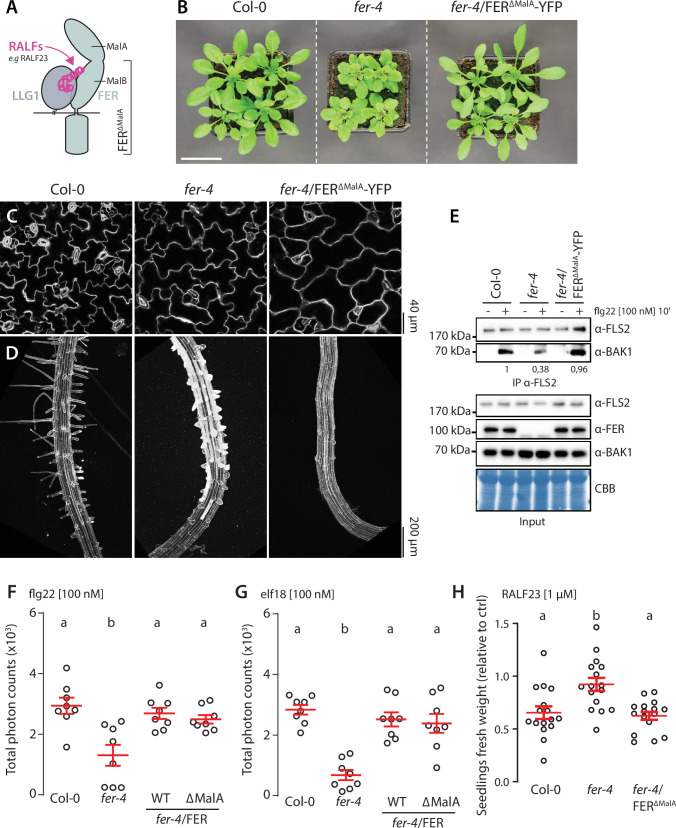
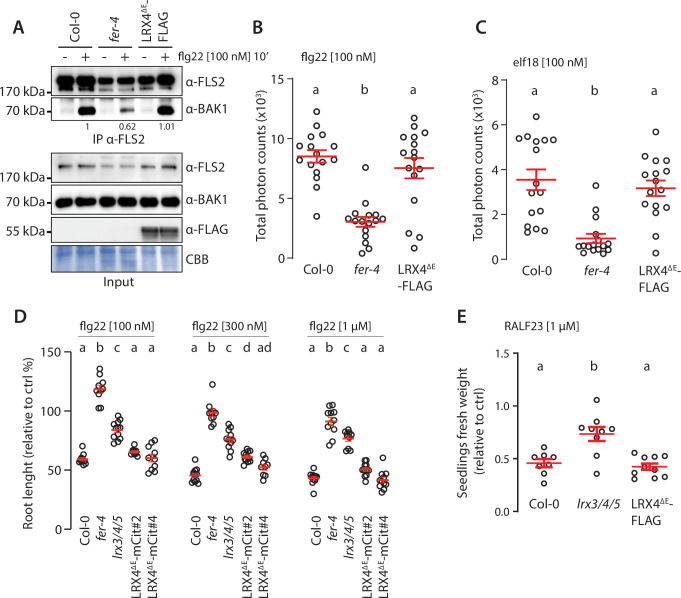
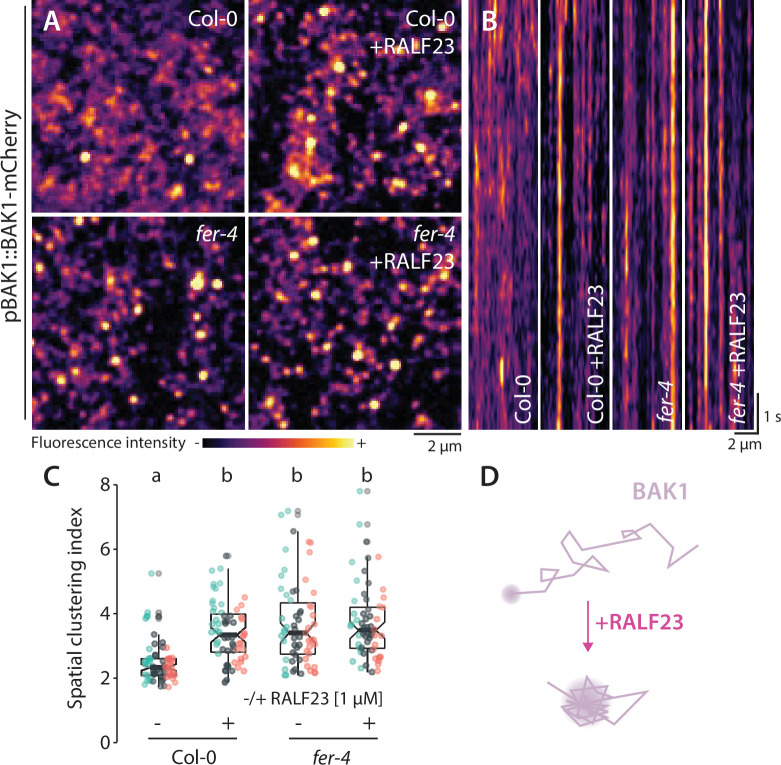
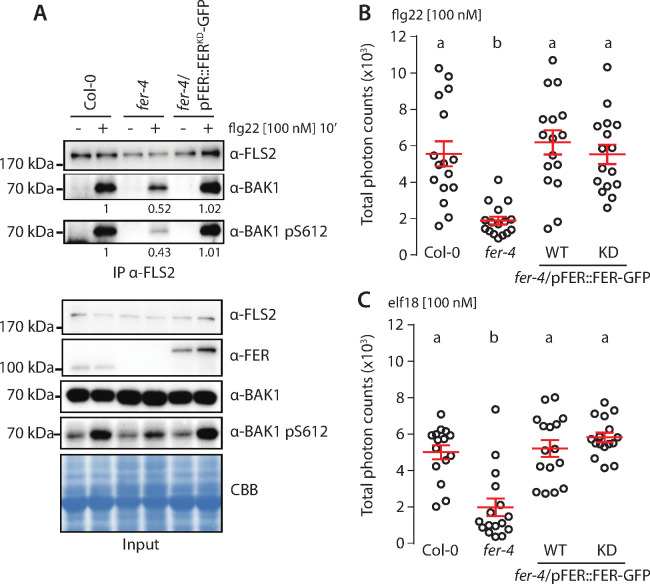
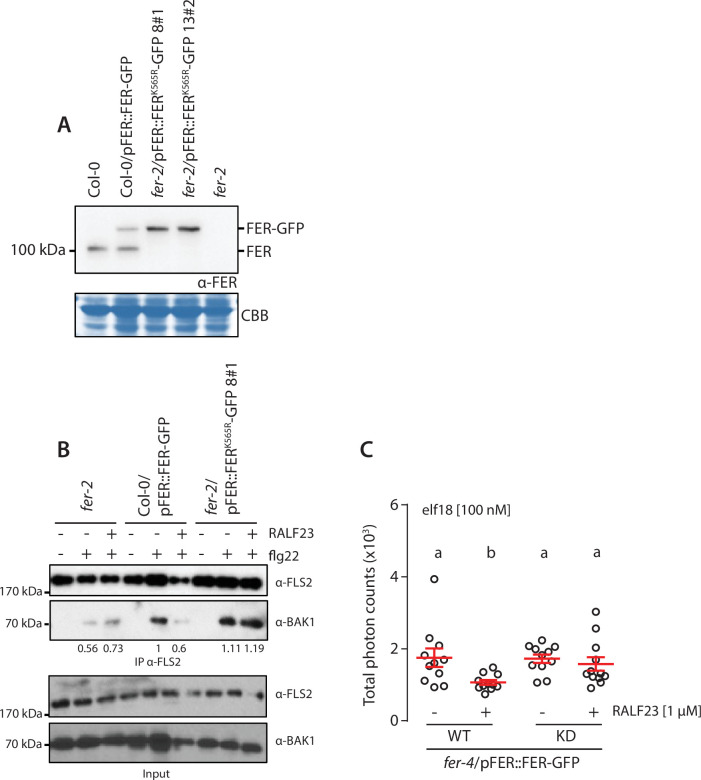
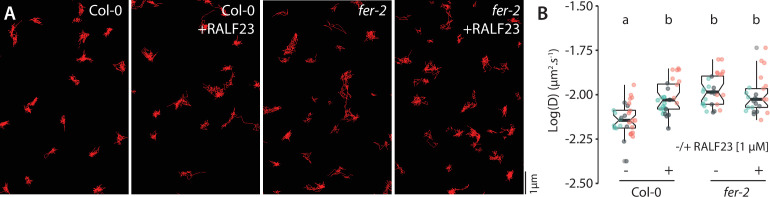
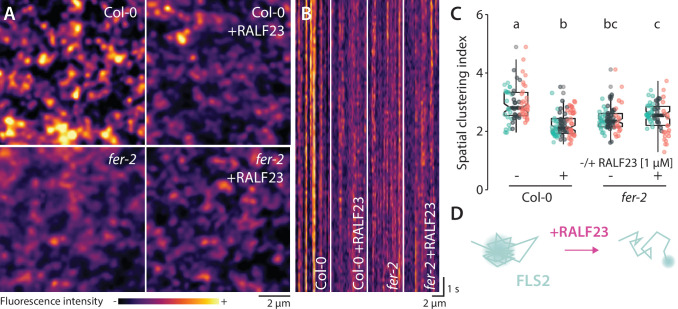
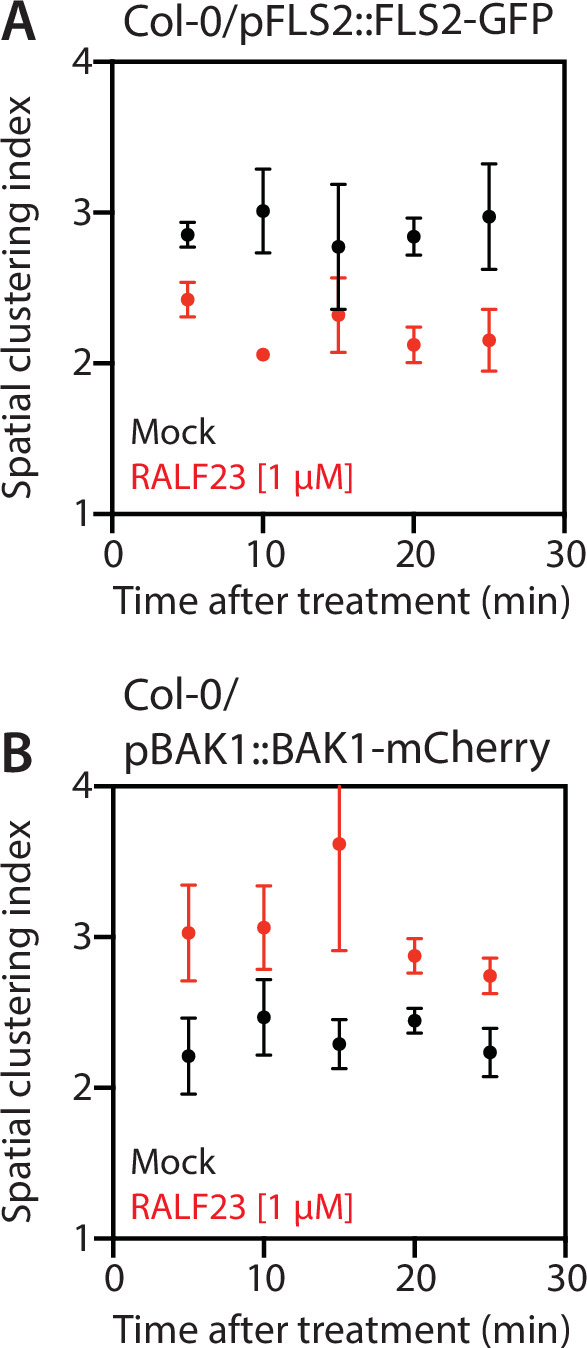
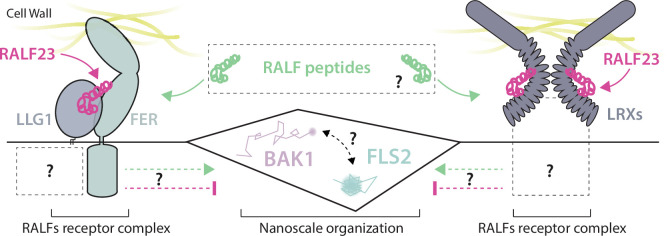
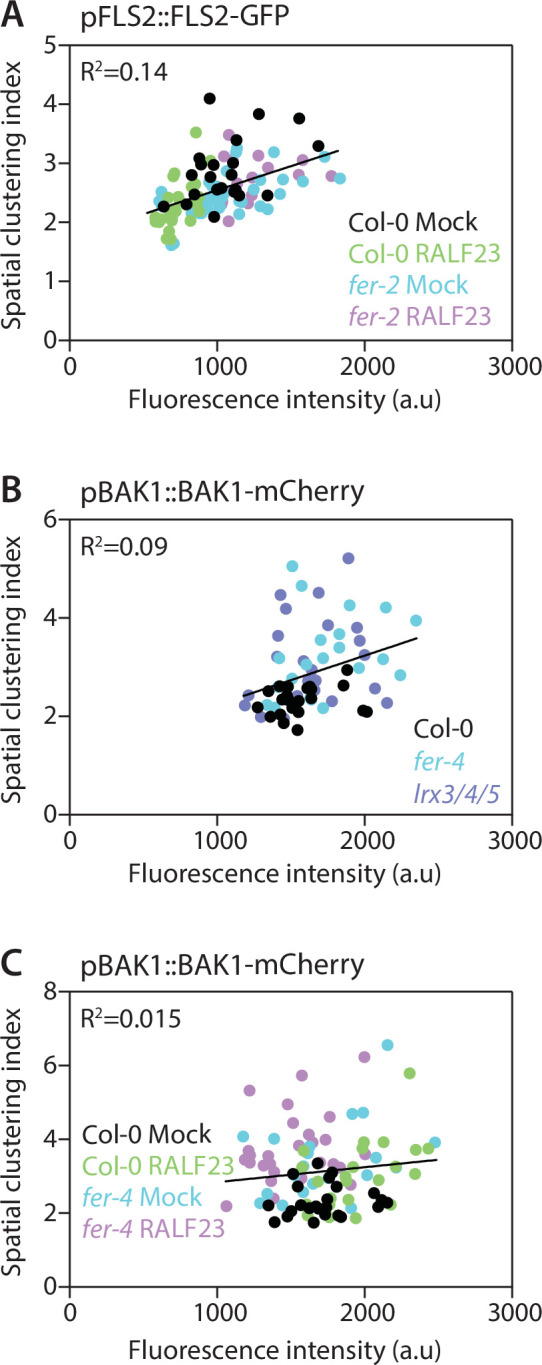
Spatial partitioning is a propensity of biological systems orchestrating cell activities in space and time. The dynamic regulation of plasma membrane nano-environments has recently emerged as a key fundamental aspect of plant signaling, but the molecular components governing it are still mostly unclear. The receptor kinase FERONIA (FER) controls ligand-induced complex formation of the immune receptor kinase FLAGELLIN SENSING 2 (FLS2) with its co-receptor BRASSINOSTEROID-INSENSITIVE 1-ASSOCIATED KINASE 1 (BAK1), and perception of the endogenous peptide hormone RAPID ALKALANIZATION FACTOR 23 (RALF23) by FER inhibits immunity. Here, we show that FER regulates the plasma membrane nanoscale organization of FLS2 and BAK1. Our study demonstrates that akin to FER, leucine-rich repeat (LRR) extensin proteins (LRXs) contribute to RALF23 responsiveness and regulate BAK1 nanoscale organization and immune signaling. Furthermore, RALF23 perception leads to rapid modification of FLS2 and BAK1 nanoscale organization, and its inhibitory activity on immune signaling relies on FER kinase activity. Our results suggest that perception of RALF peptides by FER and LRXs actively modulates plasma membrane nanoscale organization to regulate cell surface signaling by other ligand-binding receptor kinases.
空间分隔是生物系统在时空上协调细胞活动的一种倾向。质膜纳米环境的动态调控最近成为植物信号转导的一个关键基础方面,但其调控的分子成分仍大多不清楚。受体激酶 FERONIA(FER)控制配体诱导的免疫受体激酶 FLAGELIN SENSING 2(FLS2)与其共受体 BRASSINOSTEROID-INSENSITIVE 1-ASSOCIATED KINASE 1(BAK1)的复合物形成,而 FER 对内源性肽激素 RAPID ALKALANIZATION FACTOR 23(RALF23)的感知抑制免疫。在这里,我们表明 FER 调节 FLS2 和 BAK1 的质膜纳米尺度组织。我们的研究表明,类似于 FER,富含亮氨酸重复(LRR)伸展蛋白(LRXs)有助于 RALF23 的响应,并调节 BAK1 的纳米尺度组织和免疫信号。此外,RALF23 的感知导致 FLS2 和 BAK1 纳米尺度组织的快速修饰,其对免疫信号的抑制活性依赖于 FER 激酶活性。我们的结果表明,RALF 肽通过 FER 和 LRXs 的感知主动调节质膜纳米尺度组织,以调节其他配体结合受体激酶的细胞表面信号。