Tate & Lyle PLC, London, UK.
Creme Global, Dublin, Ireland.
Br J Nutr. 2022 Nov 14;128(9):1868-1874. doi: 10.1017/S0007114521004827. Epub 2022 Jan 7.
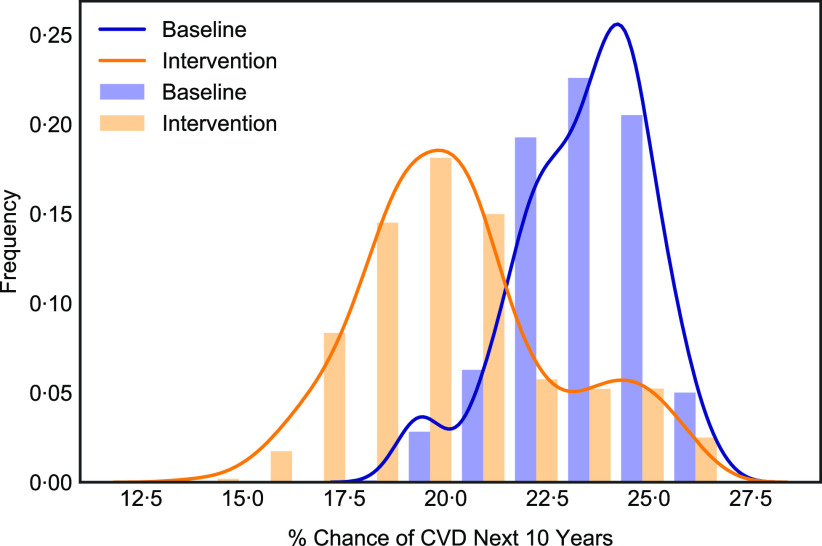
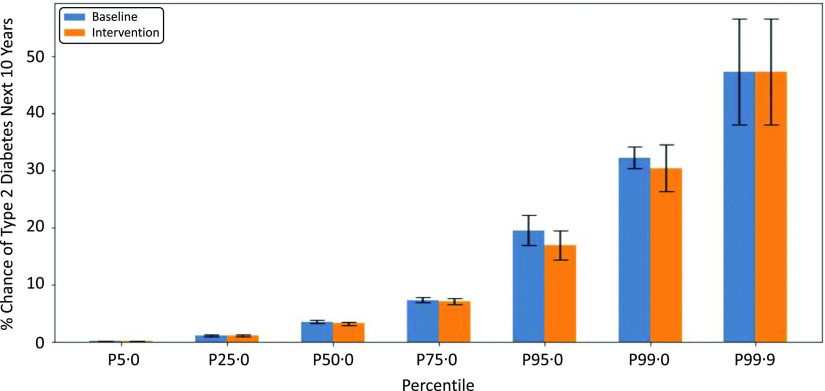
For improving human health, reformulation can be a tool as it allows individuals to consume products of choice while reducing intake of less desirable nutrients, such as sugars and fats, and potentially increasing intake of beneficial nutrients such as fibre. The potential effects of reformulating foods with increased fibre on diet and health need to be better understood. The objective of this statistical modelling study was to understand how fibre enrichment can affect the diet and health of consumers. The UK National Diet and Nutrition Survey datasets from 2014 to 2015 and 2015 to 2016 were utilised to evaluate intakes of fibre and kilocalories with a dietary intake model. Foods and beverages eligible for fibre enrichment were identified ( 915) based on EU legislation for fibre content claims. Those people who meet dietary reference values and fibre enrichment health outcomes such as weight, CVD and type 2 diabetes risk reductions were quantified pre- and post-fibre reformulation via Reynolds , D'Agostino and QDiabetes algorithms, respectively. The fibre enrichment intervention showed a mean fibre intake of 19·9 g/d in the UK, signifying a 2·2 g/d increase from baseline. Modelling suggested that 5·9 % of subjects could achieve a weight reduction, 72·2 % a reduction in cardiovascular risk and 71·7 % a reduced risk of type 2 diabetes with fibre fortification (all s ≤ 0·05). This study gives a good overview of the potential public health benefits of reformulating food products using a straightforward enrichment scenario.
为了改善人类健康,配方改革可以作为一种工具,因为它允许个人选择消费产品,同时减少不太理想的营养物质(如糖和脂肪)的摄入,并可能增加有益营养物质(如纤维)的摄入。需要更好地了解用富含纤维的食物进行配方改革对饮食和健康的潜在影响。本统计建模研究的目的是了解纤维强化如何影响消费者的饮食和健康。该研究利用了 2014 年至 2015 年和 2015 年至 2016 年的英国国家饮食与营养调查数据集,通过饮食摄入模型评估纤维和千卡的摄入量。根据欧盟关于纤维含量声明的立法,确定了可进行纤维强化的食品和饮料(915 种)。通过 Reynolds、D'Agostino 和 QDiabetes 算法,分别量化了符合饮食参考值和纤维强化健康结果(如体重、心血管疾病和 2 型糖尿病风险降低)的人群在纤维改革前后的情况。纤维强化干预使英国的纤维摄入量平均增加了 19.9 克/天,比基线增加了 2.2 克/天。建模表明,5.9%的受试者可以减轻体重,72.2%的受试者可以降低心血管风险,71.7%的受试者可以降低 2 型糖尿病风险(所有 s ≤ 0.05)。这项研究很好地概述了使用简单的强化方案对食品进行配方改革可能带来的公共卫生益处。