Liu Kaiyuan, Zhang Li, Li Xiuli, Zhao Jingjun
Department of Orthopaedics, Shanghai Tenth People's Hospital, Tongji University School of Medicine, Shanghai 200072, P.R. China.
Department of Dermatology, Tongji Hospital, Tongji University School of Medicine, Shanghai 200065, P.R. China.
Oncol Lett. 2022 Feb;23(2):54. doi: 10.3892/ol.2021.13172. Epub 2021 Dec 20.
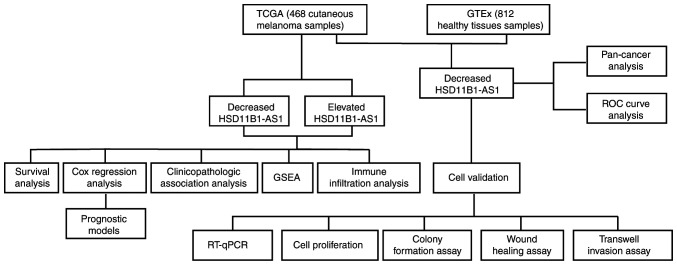
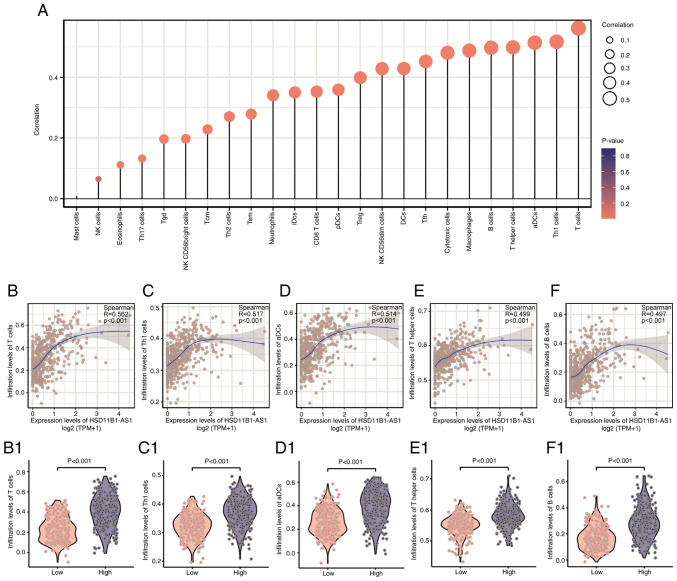
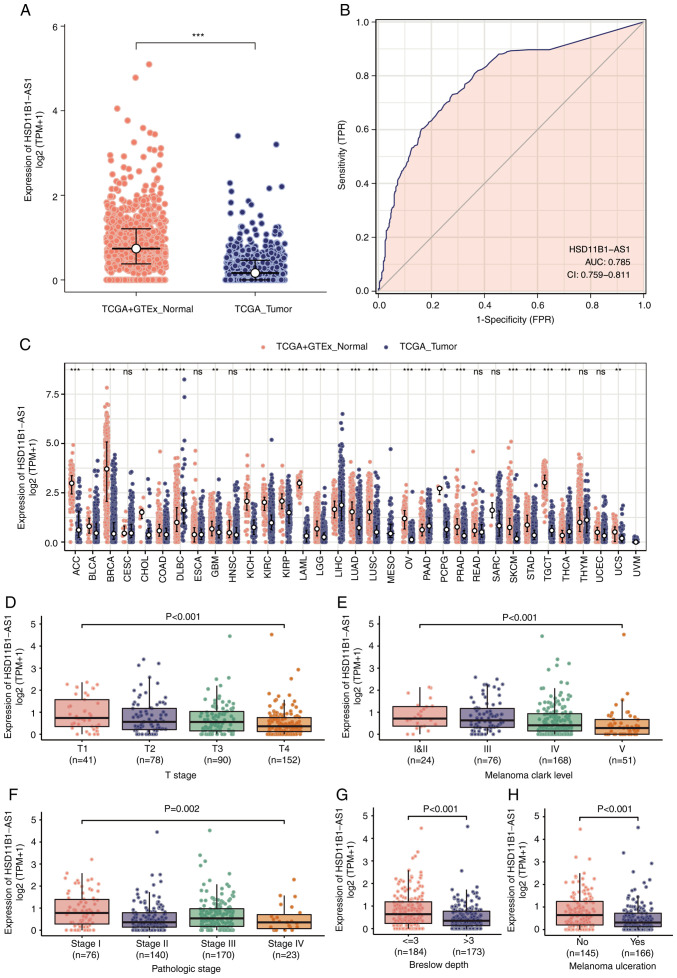
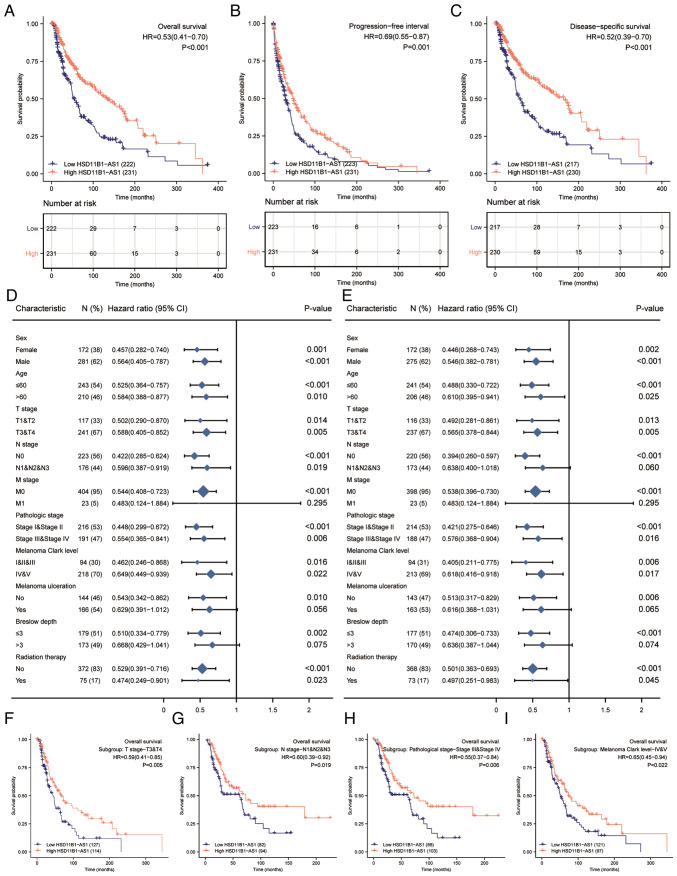
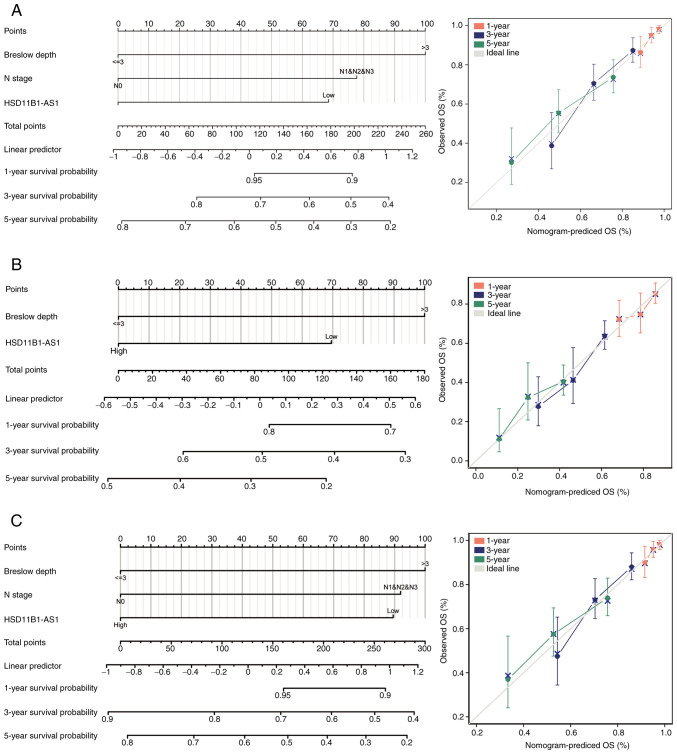
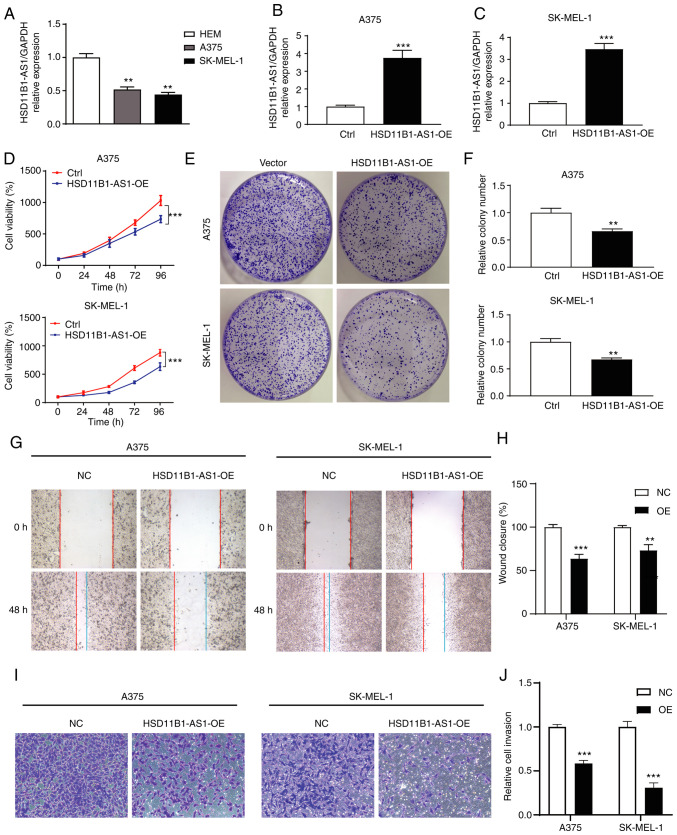
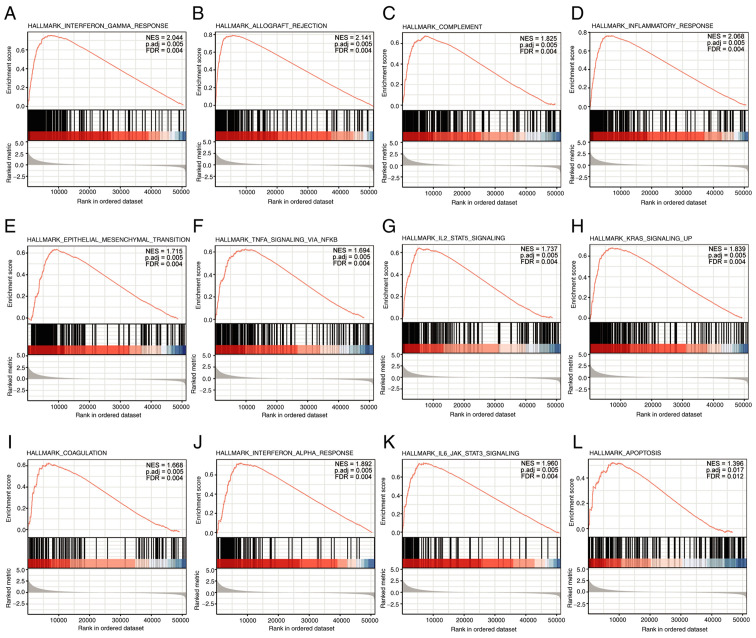
Cutaneous melanoma is an aggressive malignant cancer associated with poor prognosis. Identification of reliable biomarkers for predicting prognosis of melanoma contributes to improved clinical outcome and disease management. Long non-coding RNAs (lncRNAs) serve a crucial regulatory role of oncogenesis and tumor suppression in melanoma. Using data from The Cancer Genome Atlas database, novel lncRNA 11β-hydroxysteroid dehydrogenase type 1-antisense RNA 1 () was identified, which was significantly downregulated in malignant melanoma and its downregulation was significantly associated with poor clinicopathological characteristics, including advanced T and pathological stage, Clark level, Breslow depth and ulceration and worse prognosis. Multivariate analysis showed that , as well as N stage and Breslow depth, were independent prognostic factors in cutaneous melanoma, and nomograms suggested a good predictive value of 1-, 3- and 5-year overall survival, progression-free interval and disease-specific survival. experiments verified the decreased expression in melanoma cell lines compared with human epidermal melanocytes. Moreover, cell experiments , including Cell Counting Kit-8, colony formation, wound healing and Transwell assay, suggested that overexpression of significantly inhibited melanoma cell proliferation, migration and invasion. Functional enrichment showed significantly enriched pathways in IFN-γ and -α response, TNF-α signaling via NF-κB and IL-2/STAT-5 and IL-6/JAK/STAT-3 signaling. In addition, immune infiltration analysis demonstrated that may function by accelerating immune response regulation and the immune cell infiltration of various immunocytes, especially T, T helper 1, activated dendritic and B cells. The present study revealed as a potential therapeutic target and promising biomarker for diagnosis and prognosis of cutaneous melanoma.
皮肤黑色素瘤是一种侵袭性恶性肿瘤,预后较差。识别可靠的黑色素瘤预后预测生物标志物有助于改善临床结局和疾病管理。长链非编码RNA(lncRNAs)在黑色素瘤的肿瘤发生和肿瘤抑制中发挥关键调节作用。利用癌症基因组图谱数据库的数据,鉴定出新型lncRNA 11β-羟类固醇脱氢酶1反义RNA 1(),其在恶性黑色素瘤中显著下调,其下调与不良临床病理特征显著相关,包括T分期晚期、病理分期、克拉克分级、布雷斯洛厚度和溃疡,以及较差的预后。多因素分析表明,以及N分期和布雷斯洛厚度是皮肤黑色素瘤的独立预后因素,列线图显示其对1年、3年和5年总生存期、无进展生存期和疾病特异性生存期具有良好的预测价值。实验证实,与人类表皮黑素细胞相比,黑色素瘤细胞系中表达降低。此外,细胞实验,包括细胞计数试剂盒-8、集落形成、伤口愈合和Transwell实验,表明过表达显著抑制黑色素瘤细胞的增殖、迁移和侵袭。功能富集显示在IFN-γ和-α反应、通过NF-κB的TNF-α信号传导以及IL-2/STAT-5和IL-6/JAK/STAT-3信号传导中显著富集的通路。此外,免疫浸润分析表明,可能通过加速免疫反应调节和各种免疫细胞,特别是T细胞、辅助性T细胞1、活化树突状细胞和B细胞的免疫细胞浸润发挥作用。本研究揭示作为皮肤黑色素瘤诊断和预后的潜在治疗靶点和有前景的生物标志物。