Thanapongtharm Weerapong, Kasemsuwan Suwicha, Wongphruksasoong Vilaiporn, Boonyo Khemmapat, Pinyopummintr Tanu, Wiratsudakul Anuwat, Gilbert Marius, Leelahapongsathon Kansuda
Department of Livestock Development (DLD), Bangkok, Thailand.
Faculty of Veterinary Medicine, Kasetsart University, Nakhon Pathom, Thailand.
Front Vet Sci. 2021 Dec 21;8:790701. doi: 10.3389/fvets.2021.790701. eCollection 2021.
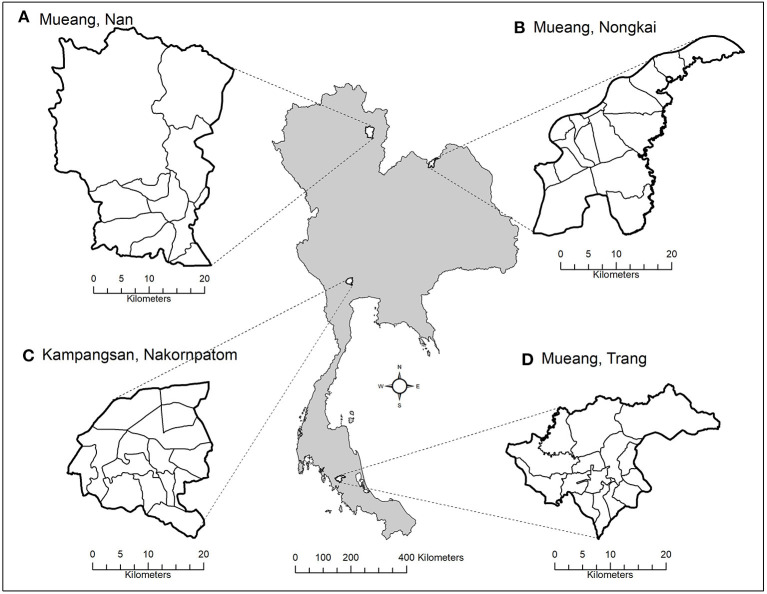
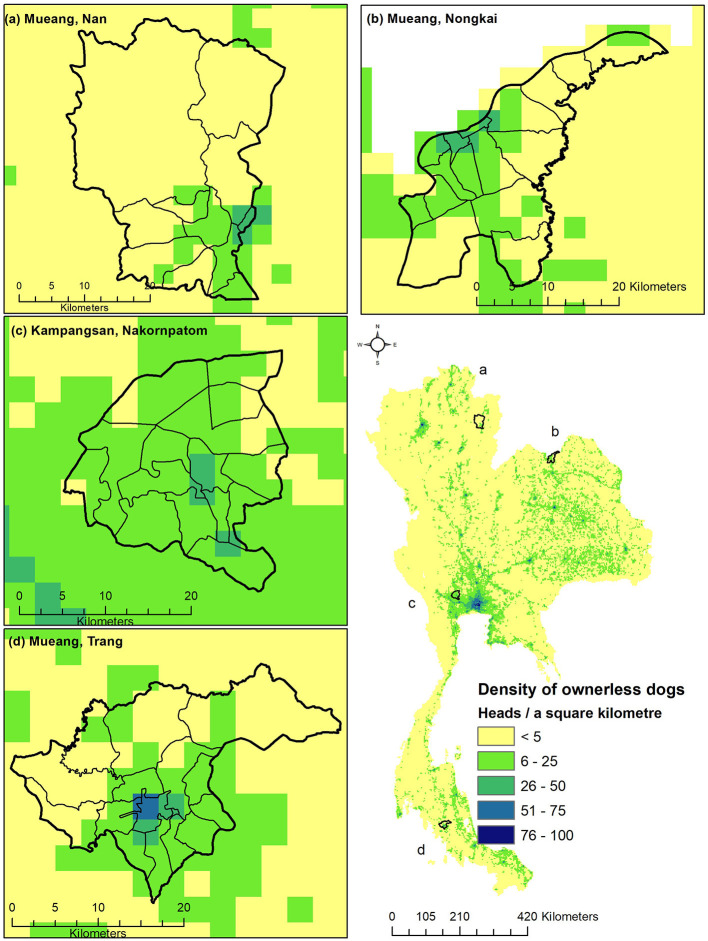
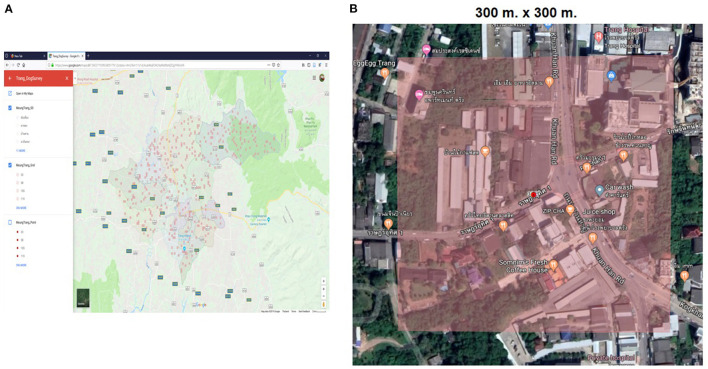
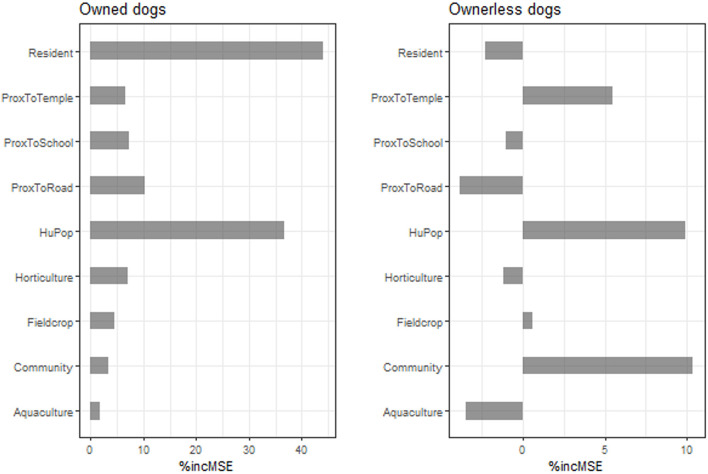
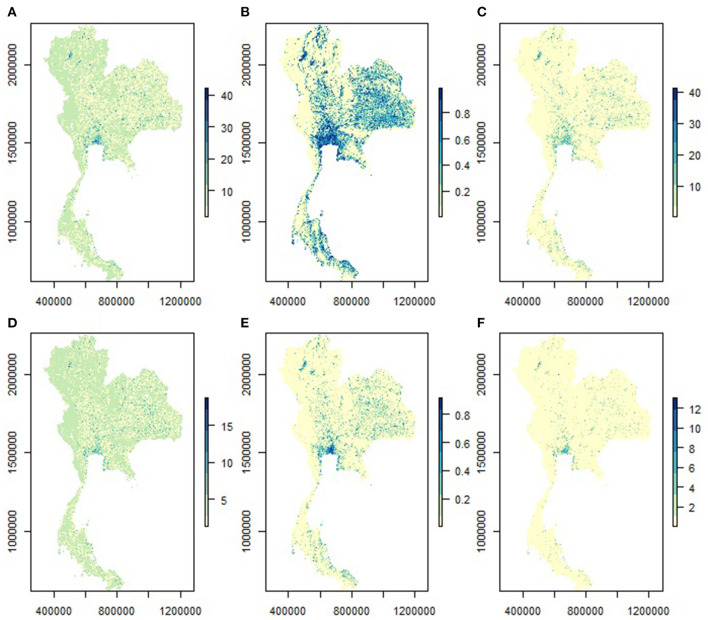
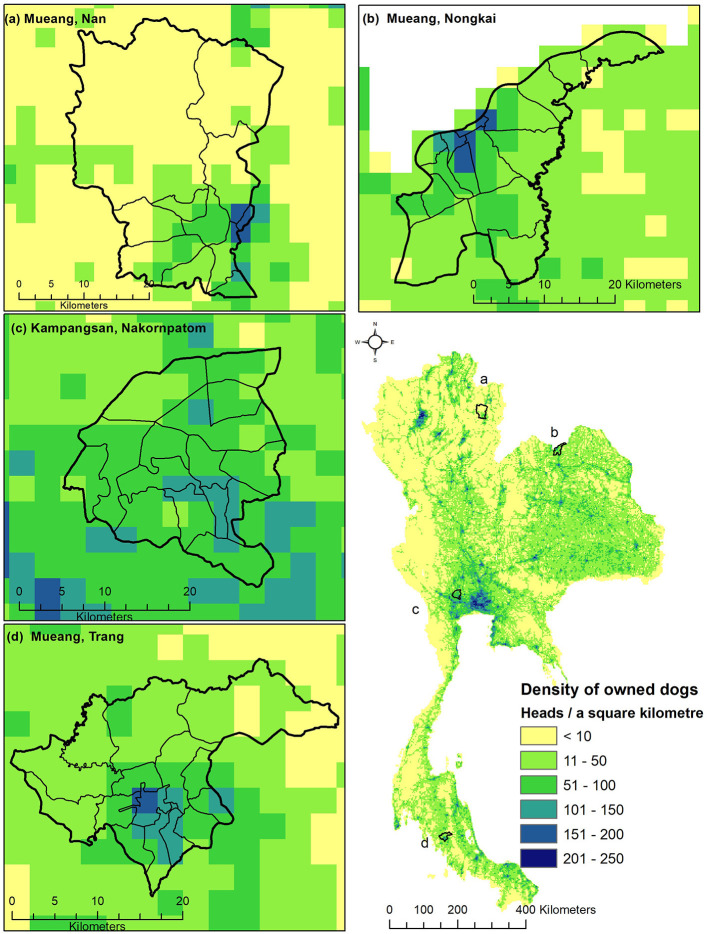
Poor management of dog populations causes many problems in different countries, including rabies. To strategically design a dog population management, certain sets of data are required, such as the population size and spatial distribution of dogs. However, these data are rarely available or incomplete. Hence, this study aimed to describe the characteristics of dog populations in Thailand, explore their spatial distribution and relevant factors, and estimate the number of dogs in the whole country. First, four districts were selected as representatives of each region. Each district was partitioned into grids with a 300-m resolution. The selected grids were then surveyed, and the number of dogs and related data were collected. Random forest models with a two-part approach were used to quantify the association between the surveyed dog population and predictor variables. The spatial distribution of dog populations was then predicted. A total of 1,750 grids were surveyed (945 grids with dog presence and 805 grids with dog absence). Among the surveyed dogs, 86.6% (12,027/13,895) were owned. Of these, 51% were classified as independent, followed by confined (25%), semi-independent (21%), and unidentified dogs (3%). Seventy-two percent (1,348/1,868) of the ownerless dogs were feral, and the rest were community dogs. The spatial pattern of the dog populations was highly distributed in big cities such as Bangkok and its suburbs. In owned dogs, it was linked to household demographics, whereas it was related to community factors in ownerless dogs. The number of estimated dogs in the entire country was 12.8 million heads including 11.2 million owned dogs (21.7 heads/km) and 1.6 million ownerless dogs (3.2 heads/km). The methods developed here are extrapolatable to a larger area and use much less budget and manpower compared to the present practices. Our results are helpful for canine rabies prevention and control programs, such as dog population management and control and rabies vaccine allocation.
犬类种群管理不善在不同国家引发了诸多问题,包括狂犬病。为了从战略上设计犬类种群管理方案,需要某些数据集,例如犬类的种群规模和空间分布。然而,这些数据很少可得或不完整。因此,本研究旨在描述泰国犬类种群的特征,探索其空间分布及相关因素,并估算全国犬类数量。首先,选取四个区作为每个地区的代表。每个区被划分为分辨率为300米的网格。然后对选定的网格进行调查,并收集犬只数量及相关数据。采用具有两部分方法的随机森林模型来量化调查的犬类种群与预测变量之间的关联。随后预测犬类种群的空间分布。共调查了1750个网格(945个有犬只的网格和805个无犬只的网格)。在被调查的犬只中,86.6%(12027/13895)为有主犬。其中,51%被归类为独立犬,其次是圈养犬(25%)、半独立犬(21%)和身份不明犬(3%)。72%(1348/1868)的无主犬为流浪犬,其余为社区犬。犬类种群的空间格局在曼谷及其郊区等大城市高度分布。在有主犬中,其与家庭人口统计学相关,而在无主犬中则与社区因素相关。全国估计犬类数量为1280万头,其中包括1120万只有主犬(每平方公里21.7头)和160万无主犬(每平方公里3.2头)。这里开发的方法可推广到更大区域,与目前的做法相比,使用的预算和人力要少得多。我们的结果有助于犬类狂犬病预防和控制项目,如犬类种群管理与控制以及狂犬病疫苗分配。