Department of Dermatology, Ruijin Hospital, School of Medicine, Shanghai Jiaotong University, Shanghai 200025, PR China.
Med Hypotheses. 2022 Feb;159:110752. doi: 10.1016/j.mehy.2021.110752. Epub 2022 Jan 3.
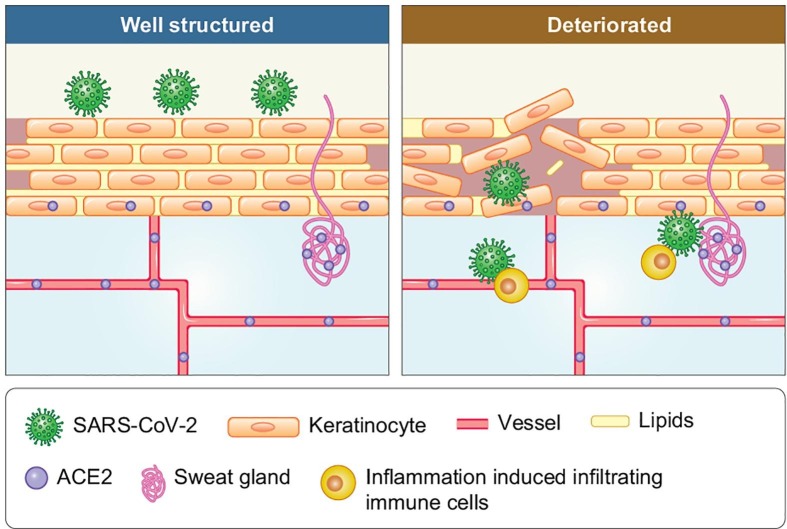
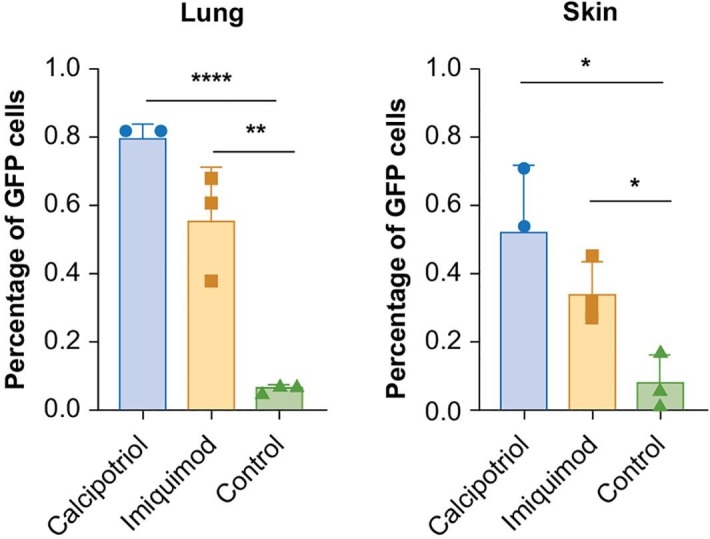
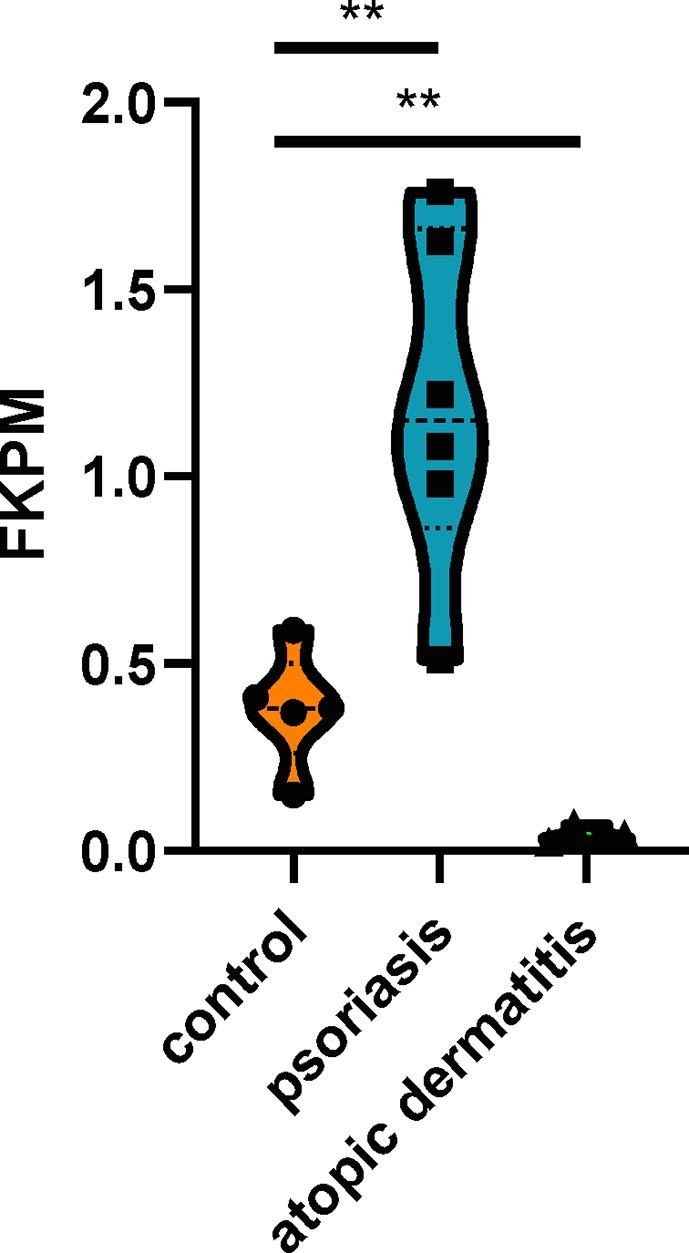
During the coronavirus disease 2019 (COVID-19) pandemic, it were reported that COVID-19 patients could have cutaneous symptoms, and severe acute respiratory syndrome coronavirus 2 was observed on the skin of COVID-19 patients, which indicated that the skin is one target of . Meanwhile, reports about transmission through food cold-chain overpacks emerged. With the fact that could survive on the skin for more than 9 h, the skin could be implicated in transmission. Angiotensin-converting enzyme 2 (ACE2), a critical membrane protein for that enters a host cell, was recognized to be associated with the risk of infection. Therefore, tissues that express ACE2 might have the potential to be infected by and transmit . The skin is one such tissue that expresses ACE2. However, unlike the lung that expresses ACE2 on the upper-most epithelial layer, the skin is composed of different layers of cells that function as a barrier, and cells under the top epidermal layer express ACE2. Since the skin barrier is the first line of protection, the typical position of ACE2-expressing cells in the skin implies that the skin barrier function could be the mediator of . In our study, we found that ACE2 could be expressed in the skin, and its expression level is increased in psoriasis, an inflammatory disease of the skin with barrier dysfunction. Additionally, by applying the pseudovirus on mouse models with or without deteriorated skin barrier, we found that the pseudovirus could infect the skin and lungs of mouse models, and when the skin barrier was impaired, more -infected cells could be found. Thus, we hypothesized that a deteriorated condition of the skin barrier might increase the risk of infection through the skin.
在 2019 冠状病毒病(COVID-19)大流行期间,有报道称 COVID-19 患者可能出现皮肤症状,且在 COVID-19 患者的皮肤中观察到严重急性呼吸综合征冠状病毒 2(SARS-CoV-2),这表明皮肤是 感染的靶标之一。同时,有关于通过冷链食品外包装传播的报道。由于 可在皮肤上存活超过 9 小时,皮肤可能与传播有关。血管紧张素转化酶 2(ACE2)是一种进入宿主细胞的关键膜蛋白,被认为与 COVID-19 感染风险相关。因此,表达 ACE2 的组织可能有被感染和传播的潜力。皮肤就是这样一种表达 ACE2 的组织。然而,与在上皮层最上层表达 ACE2 的肺部不同,皮肤由不同层次的细胞组成,作为屏障发挥作用,而表皮层下的细胞表达 ACE2。由于皮肤屏障是第一道保护防线,表达 ACE2 的典型皮肤位置意味着皮肤屏障功能可能是 的介导者。在我们的研究中,我们发现 ACE2 可在皮肤中表达,且其在具有屏障功能障碍的炎症性皮肤病银屑病中表达水平增加。此外,通过在皮肤屏障受损或未受损的小鼠模型上应用 SARS-CoV-2 假病毒,我们发现假病毒可感染小鼠模型的皮肤和肺部,且当皮肤屏障受损时,可发现更多感染的细胞。因此,我们假设皮肤屏障的恶化状况可能通过皮肤增加 COVID-19 感染的风险。