Saad Halim, Jabotian Karna, Sakr Carine, Mahfouz Rami, Akl Imad Bou, Zgheib Nathalie K
Department of Pharmacology and Toxicology, American University of Beirut Faculty of Medicine, Beirut, Lebanon.
Employee Health Unit, Department of Family Medicine, American University of Beirut Faculty of Medicine, Beirut, Lebanon.
Front Med (Lausanne). 2021 Dec 23;8:798571. doi: 10.3389/fmed.2021.798571. eCollection 2021.
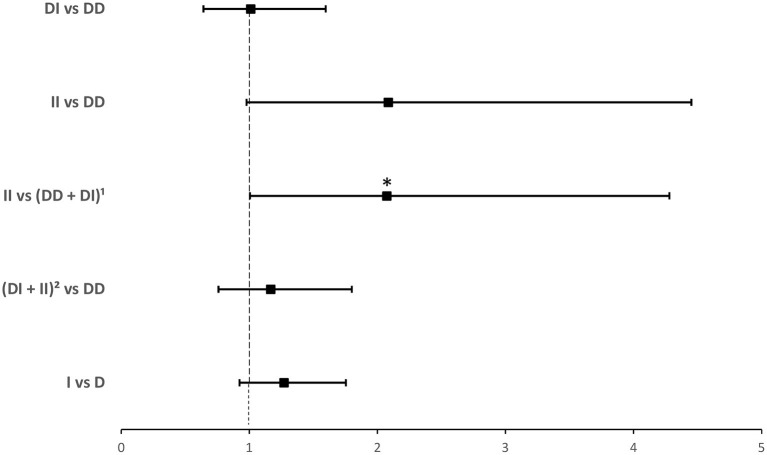
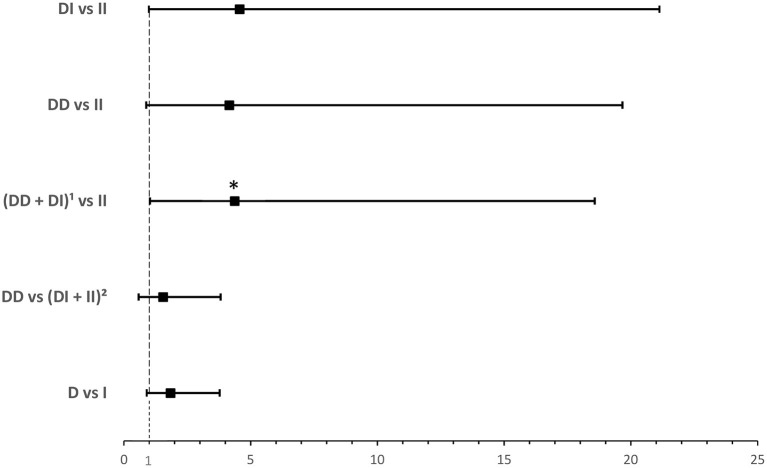
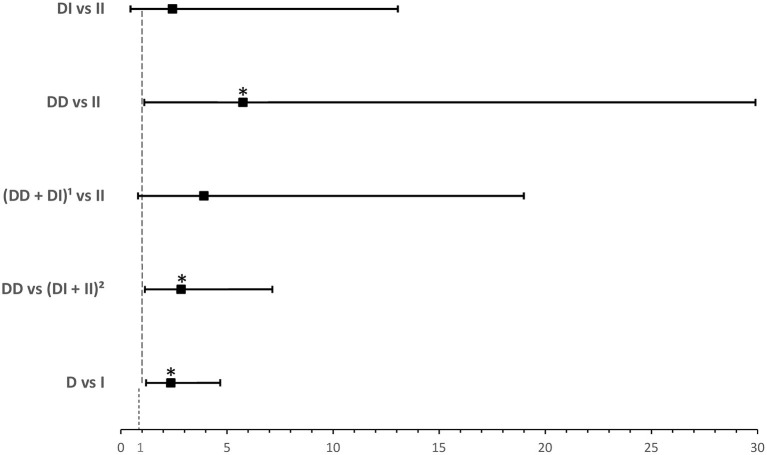
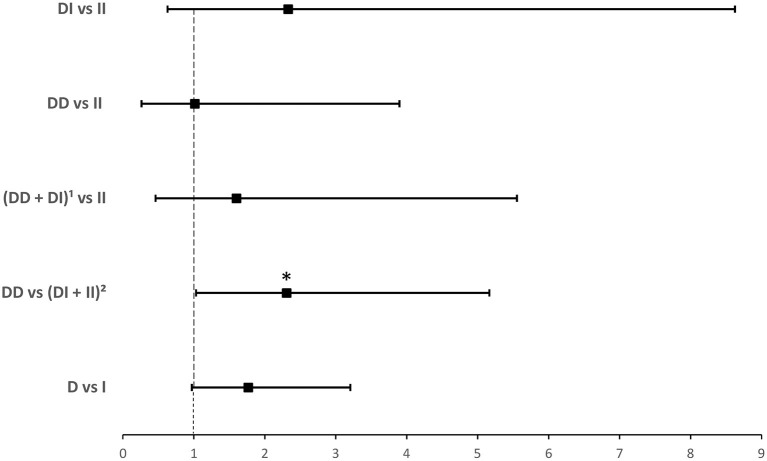
Individuals infected with the COVID-19 virus present with different symptoms of varying severity. In addition, not all individuals are infected despite exposure. Risk factors such as age, sex, and comorbidities play a major role in this variability; however, genetics may also be important in driving the differences in the incidence and prognosis of the disease. An () polymorphism in the gene (rs1799752) may explain these genetic differences. The aims of this study were to determine the potential role of genetic polymorphism in the risk of contracting COVID-19 as well as predicting the severity of COVID-19 infection. Three-hundred and eighty-seven non-related Lebanese subjects, 155 controls and 232 cases, who presented to the American University of Beirut Medical Center (AUBMC) for COVID-19 PCR testing were recruited. Clinical data were collected via filling a questionnaire and accessing the medical records. Peripheral blood was withdrawn for DNA isolation, and genotyping performed with standard PCR followed by band visualization on agarose gel. In our study population, previously described risk factors such as gender, age, and comorbidities were associated with increase in disease susceptibility and severity. was the least common allele, and there was a positive association between and the risk of contracting the COVID-19 disease. More specifically, the frequency of genotype was significantly higher among cases when compared to controls ( = 0.035) with individuals with the genotype having greater risk for contracting the COVID-19 disease: OR = 2.074, = 0.048 in the multivariate analysis. As for disease severity, the genotype and allele were associated with increased risk for developing severe symptoms (OR = 2.845, = 0.026 and OR = 2.359, = 0.014, respectively), and the genotype with necessitating hospitalization (OR = 2.307, = 0.042). In parallel, allele carriers showed a significantly increased risk for developing hypoxia: OR = 4.374, = 0.045. We found a positive association between and the risk of contracting the COVID-19 disease, and between and a worse outcome of the COVID-19 infection. Therefore, genotyping for polymorphism could be used to assess risk and predict severity for better prognosis and management of the disease.
感染新冠病毒的个体表现出不同严重程度的症状。此外,并非所有接触者都会被感染。年龄、性别和合并症等风险因素在这种变异性中起主要作用;然而,基因在驱动疾病发病率和预后差异方面也可能很重要。基因(rs1799752)中的一种()多态性可能解释这些基因差异。本研究的目的是确定基因多态性在感染新冠病毒风险以及预测新冠病毒感染严重程度方面的潜在作用。招募了387名无亲缘关系的黎巴嫩受试者,其中155名对照者和232名病例,他们前往贝鲁特美国大学医学中心(AUBMC)进行新冠病毒PCR检测。通过填写问卷和查阅病历收集临床数据。采集外周血进行DNA分离,并采用标准PCR进行基因分型,随后在琼脂糖凝胶上进行条带可视化分析。在我们的研究人群中,先前描述的风险因素如性别、年龄和合并症与疾病易感性和严重程度的增加有关。是最不常见的等位基因,并且与感染新冠病毒的风险呈正相关。更具体地说,与对照组相比,病例组中基因型的频率显著更高(=0.035),基因型个体感染新冠病毒的风险更大:多因素分析中比值比(OR)=2.074,=0.048。至于疾病严重程度,基因型和等位基因与出现严重症状的风险增加相关(OR分别为2.845,=0.026和OR=2.359,=0.014),基因型与需要住院治疗相关(OR=2.307,=0.042)。同时,等位基因携带者出现低氧的风险显著增加:OR=4.374,=0.045。我们发现与感染新冠病毒的风险之间以及与新冠病毒感染的更差预后之间存在正相关。因此,基因多态性的基因分型可用于评估风险和预测严重程度,以实现更好的疾病预后和管理。