Guo Feifei, Estévez-Vázquez Olga, Benedé-Ubieto Raquel, Maya-Miles Douglas, Zheng Kang, Gallego-Durán Rocío, Rojas Ángela, Ampuero Javier, Romero-Gómez Manuel, Philip Kaye, Egbuniwe Isioma U, Chen Chaobo, Simon Jorge, Delgado Teresa C, Martínez-Chantar María Luz, Sun Jie, Reissing Johanna, Bruns Tony, Lamas-Paz Arantza, Moral Manuel Gómez Del, Woitok Marius Maximilian, Vaquero Javier, Regueiro José R, Liedtke Christian, Trautwein Christian, Bañares Rafael, Cubero Francisco Javier, Nevzorova Yulia A
Department of Immunology, Ophthalmology and ENT, School of Medicine, Complutense University of Madrid, 12 de Octubre (imas12) Health Research Institute, 28040 Madrid, Spain.
Department of Obstetrics and Gynaecology, The Affiliated Drum Tower Hospital of Nanjing University Medical School, Nanjing 210023, China.
Cancers (Basel). 2021 Dec 31;14(1):192. doi: 10.3390/cancers14010192.
Metabolic-associated fatty liver disease (MAFLD) has risen as one of the leading etiologies for hepatocellular carcinoma (HCC). Oncogenes have been suggested to be responsible for the high risk of MAFLD-related HCC. We analyzed the impact of the proto-oncogene c-MYC in the development of human and murine MAFLD and MAFLD-associated HCC.
alb-myc mice were studied at baseline conditions and after administration of Western diet (WD) in comparison to WT littermates. c-MYC expression was analyzed in biopsies of patients with MAFLD and MAFLD-associated HCC by immunohistochemistry.
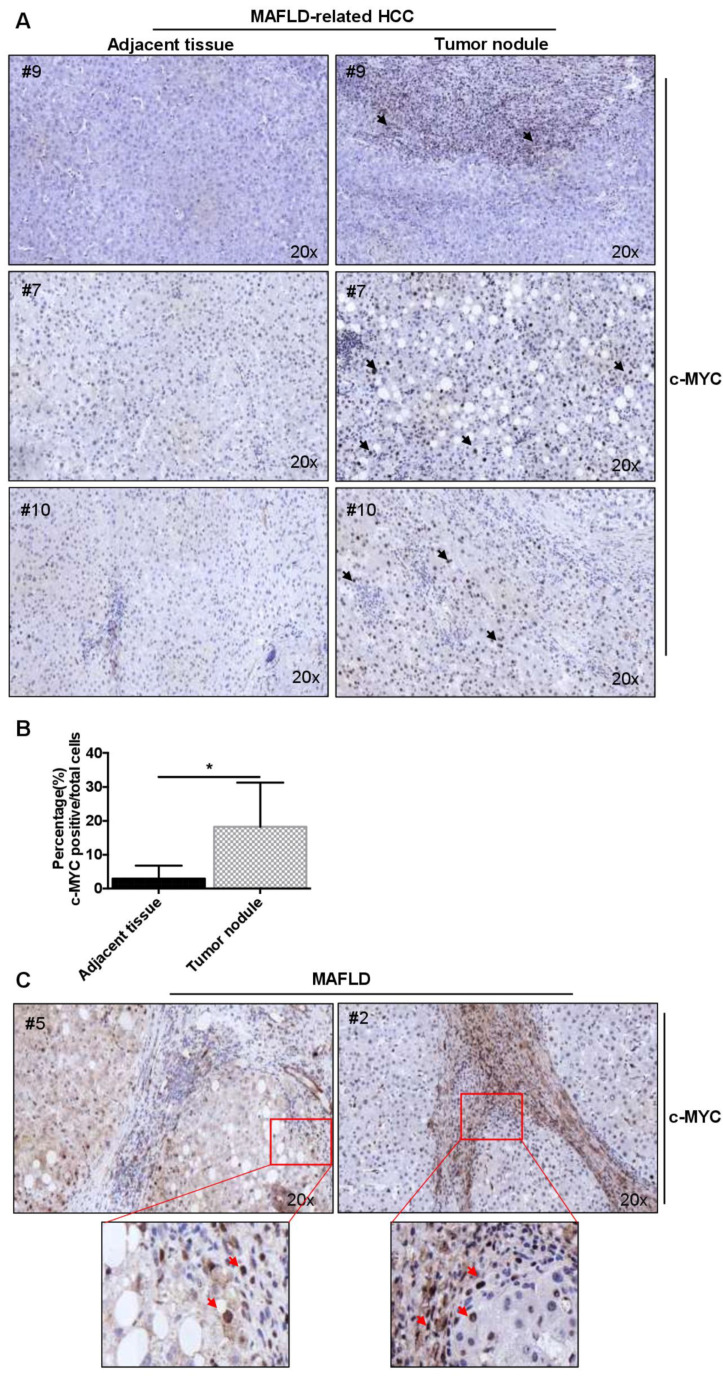
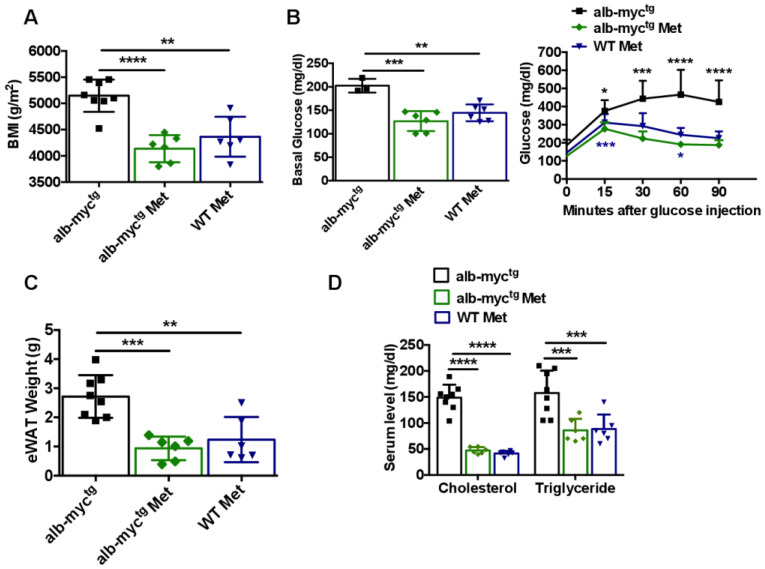
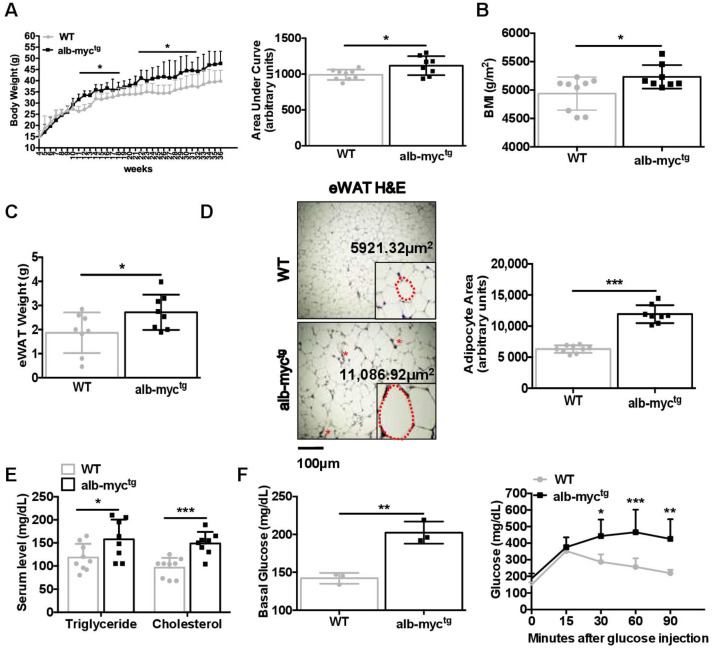
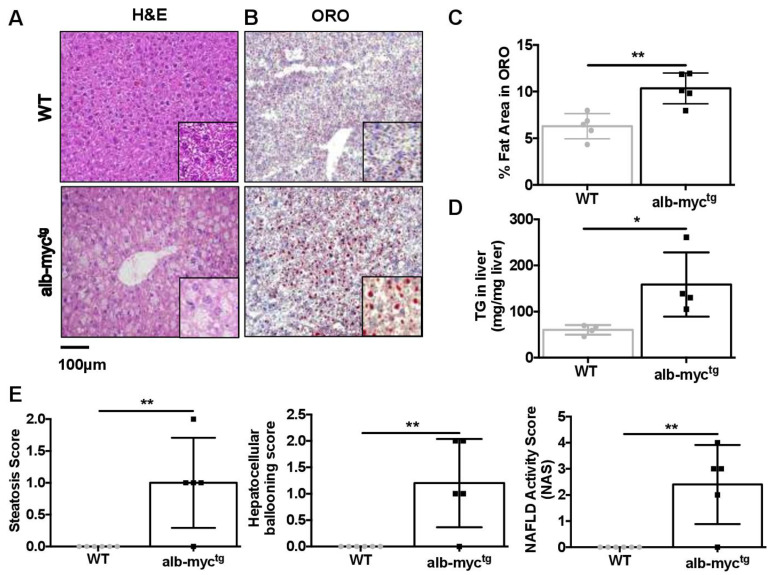
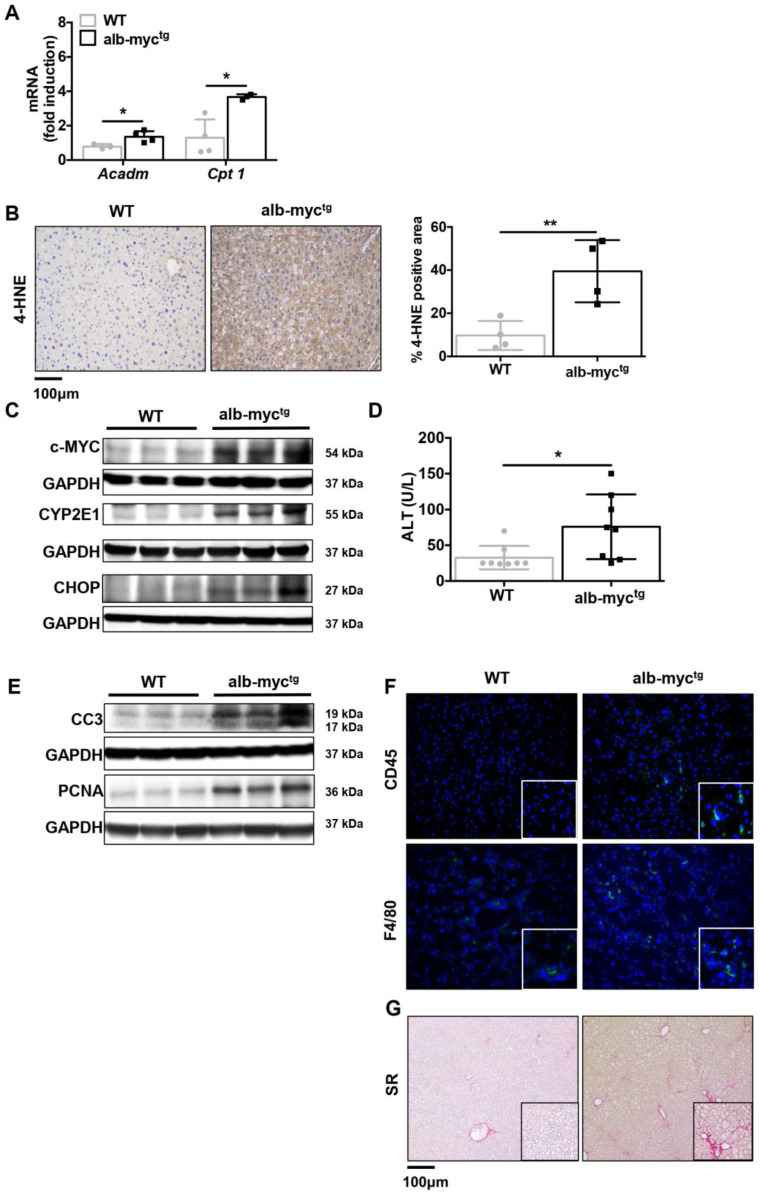
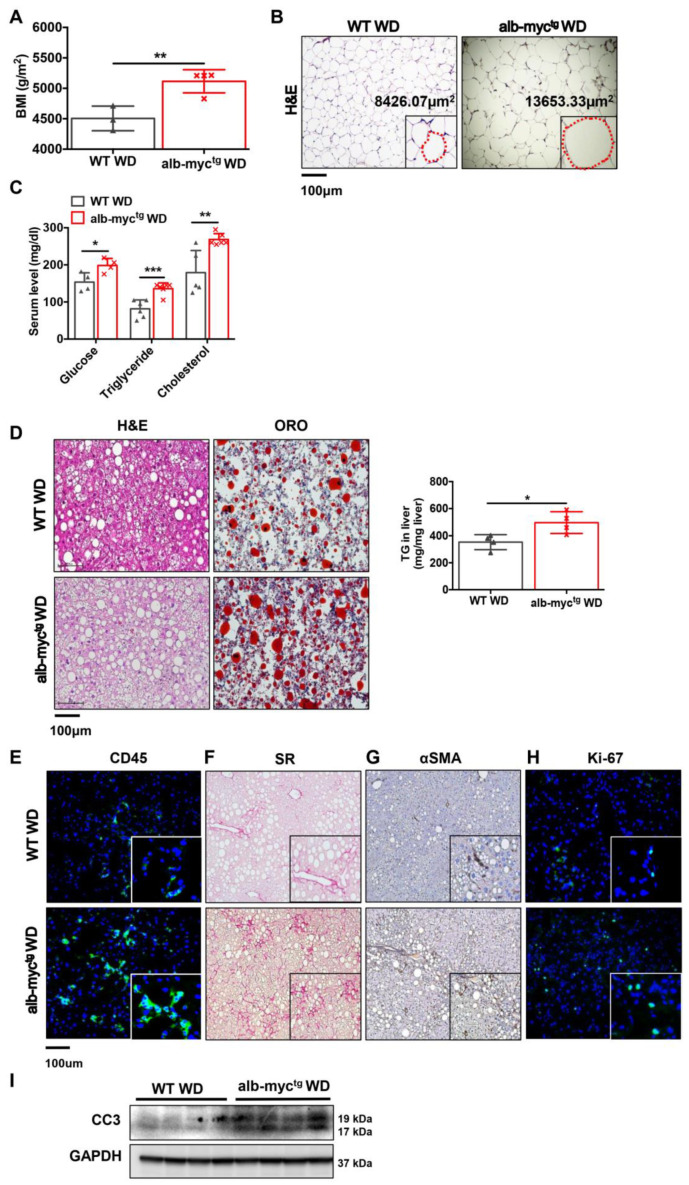
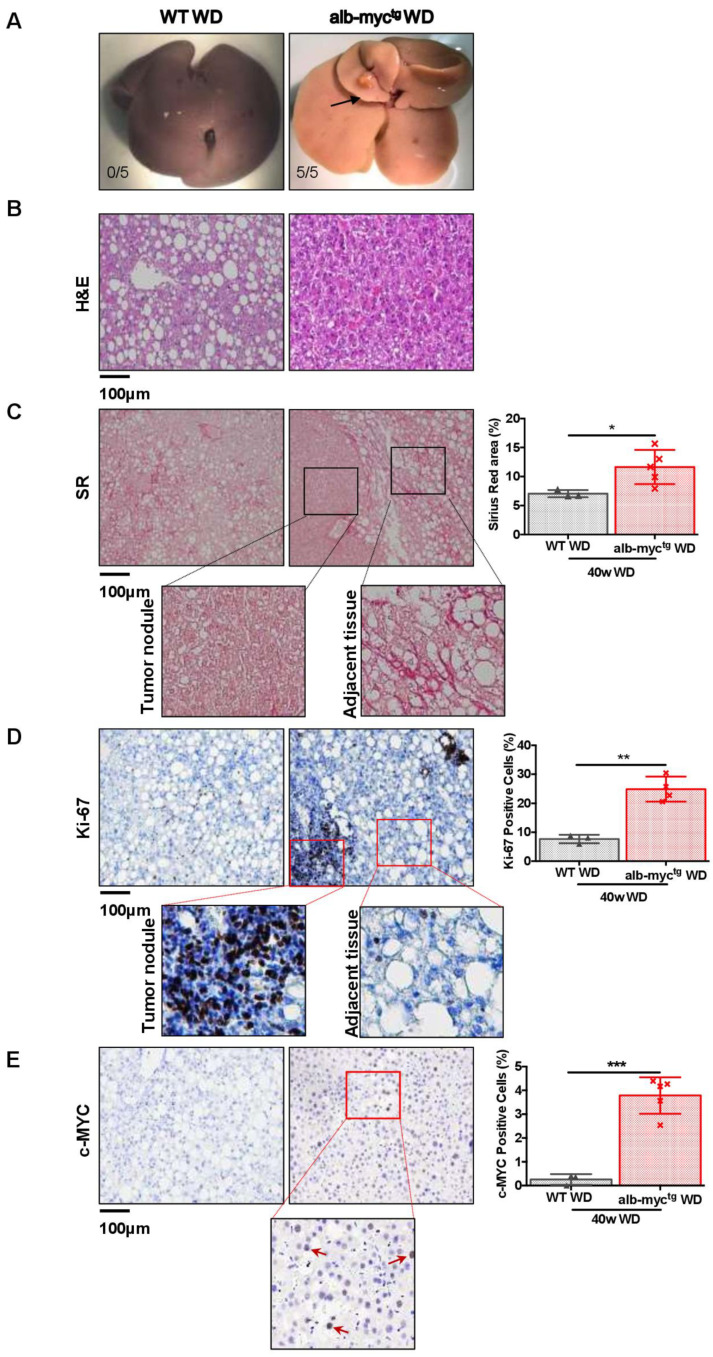
Mild obesity, spontaneous hyperlipidaemia, glucose intolerance and insulin resistance were characteristic of 36-week-old alb-myc mice. Middle-aged alb-myc exhibited liver steatosis and increased triglyceride content. Liver injury and inflammation were associated with elevated ALT, an upregulation of ER-stress response and increased ROS production, collagen deposition and compensatory proliferation. At 52 weeks, 20% of transgenic mice developed HCC. WD feeding exacerbated metabolic abnormalities, steatohepatitis, fibrogenesis and tumor prevalence. Therapeutic use of metformin partly attenuated the spontaneous MAFLD phenotype of alb-myc mice. Importantly, upregulation and nuclear localization of c-MYC were characteristic of patients with MAFLD and MAFLD-related HCC.
A novel function of c-MYC in MAFLD progression was identified opening new avenues for preventative strategies.
代谢相关脂肪性肝病(MAFLD)已成为肝细胞癌(HCC)的主要病因之一。癌基因被认为是MAFLD相关HCC高风险的原因。我们分析了原癌基因c-MYC在人类和小鼠MAFLD及MAFLD相关HCC发生发展中的作用。
将alb-myc小鼠与野生型同窝小鼠在基线条件下及给予西方饮食(WD)后进行研究。通过免疫组织化学分析MAFLD和MAFLD相关HCC患者活检组织中的c-MYC表达。
36周龄的alb-myc小鼠具有轻度肥胖、自发性高脂血症、葡萄糖不耐受和胰岛素抵抗的特征。中年alb-myc小鼠表现出肝脂肪变性和甘油三酯含量增加。肝损伤和炎症与ALT升高、内质网应激反应上调、活性氧生成增加、胶原蛋白沉积和代偿性增殖有关。在52周时,20%的转基因小鼠发生了HCC。WD喂养加剧了代谢异常、脂肪性肝炎、纤维化和肿瘤发生率。二甲双胍的治疗性使用部分减轻了alb-myc小鼠的自发性MAFLD表型。重要的是,c-MYC的上调和核定位是MAFLD和MAFLD相关HCC患者的特征。
确定了c-MYC在MAFLD进展中的新功能,为预防策略开辟了新途径。