Shagdarova Balzhima, Konovalova Mariya, Zhuikova Yuliya, Lunkov Alexey, Zhuikov Vsevolod, Khaydapova Dolgor, Il'ina Alla, Svirshchevskaya Elena, Varlamov Valery
Research Center of Biotechnology, Russian Academy of Sciences, 119071 Moscow, Russia.
Shemyakin-Ovchinnikov Institute of Bioorganic Chemistry, Russian Academy of Sciences, 117997 Moscow, Russia.
Materials (Basel). 2021 Dec 21;15(1):15. doi: 10.3390/ma15010015.
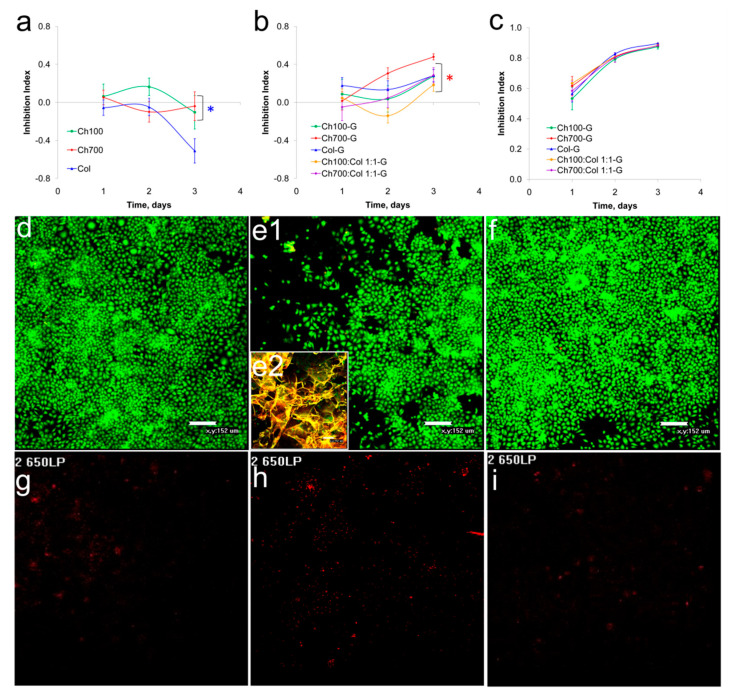
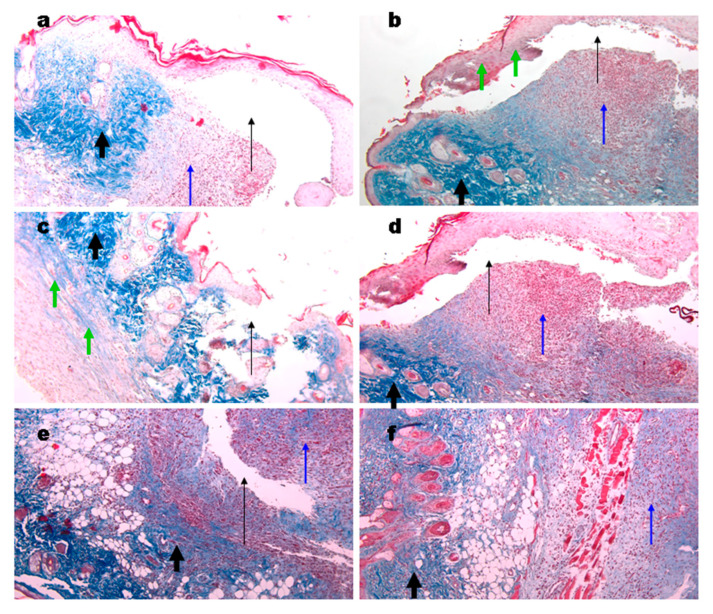
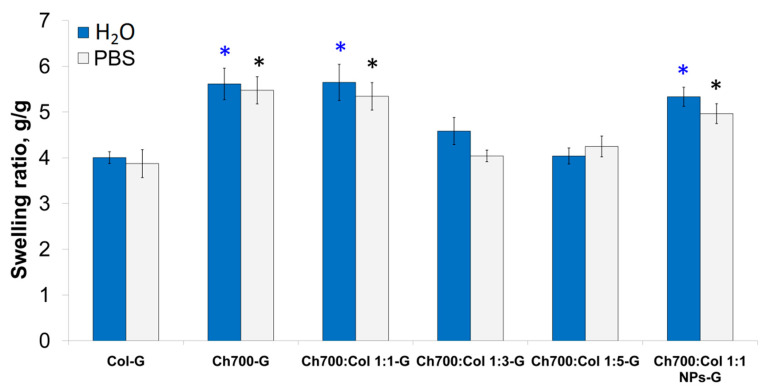
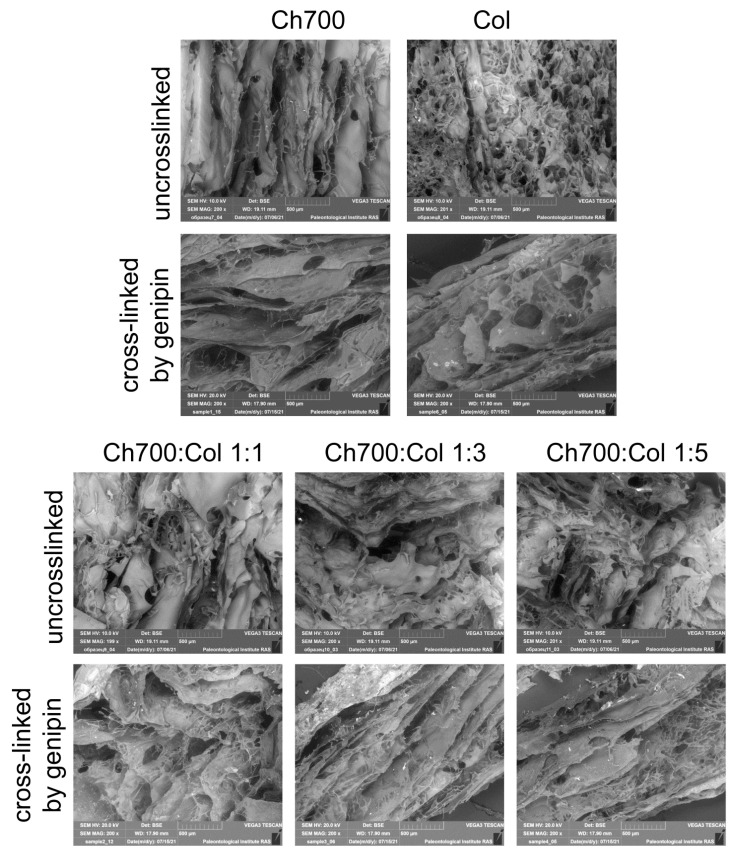
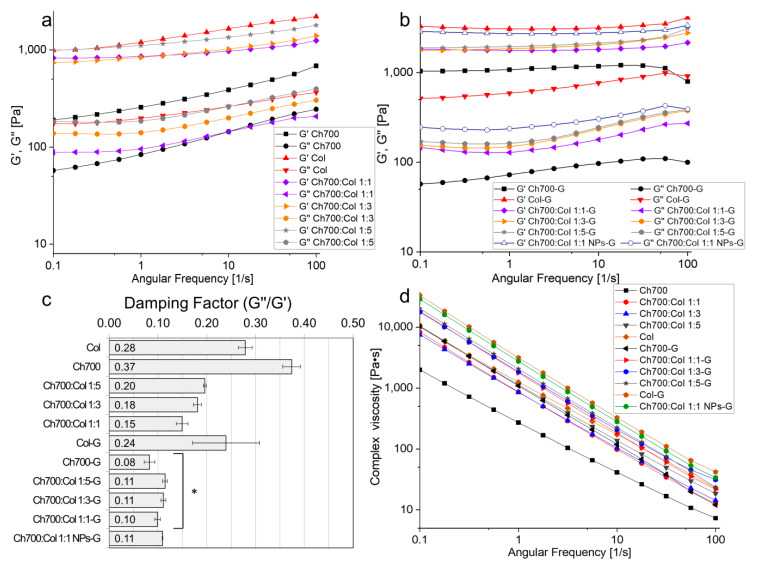
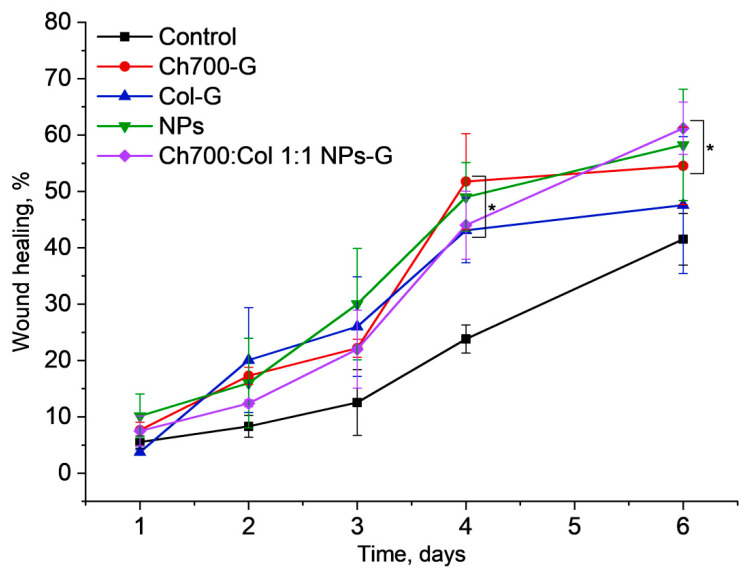
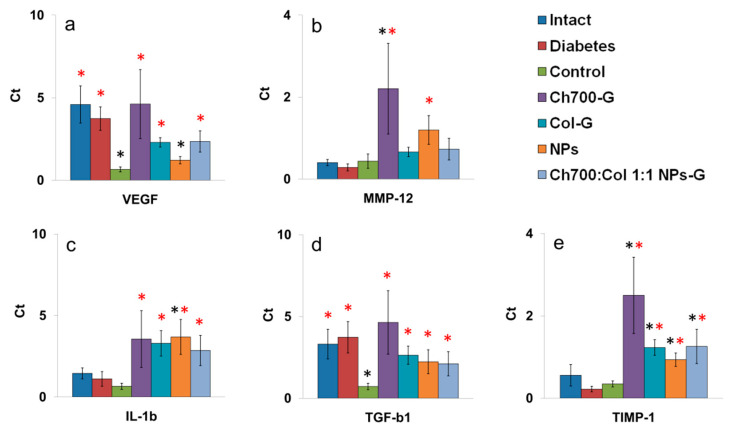
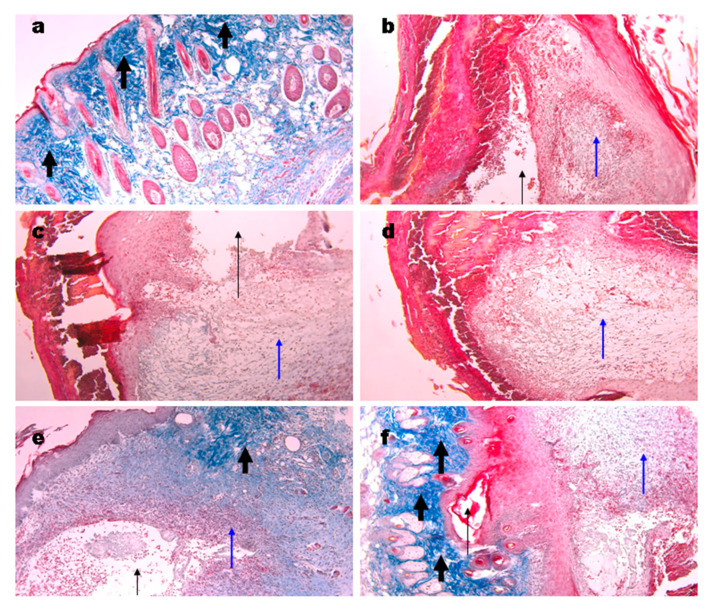
Diabetes mellitus continues to be one of the most common diseases often associated with diabetic ulcers. Chitosan is an attractive biopolymer for wound healing due to its biodegradability, biocompatibility, mucoadhesiveness, low toxicity, and hemostatic effect. A panel of hydrogels based on chitosan, collagen, and silver nanoparticels were produced to treat diabetic wounds. The antibacterial activity, cytotoxicity, swelling, rheological properties, and longitudinal sections of hydrogels were studied. The ability of the gels for wound healing was studied in CD1 mice with alloxan-induced diabetes. Application of the gels resulted in an increase in VEGF, TGF-b1, IL-1b, and TIMP1 gene expression and earlier wound closure in a comparison with control untreated wounds. All gels increased collagen deposition, hair follicle repair, and sebaceous glands formation. The results of these tests show that the obtained hydrogels have good mechanical properties and biological activity and have potential applications in the field of wound healing. However, clinical studies are required to compare the efficacy of the gels as animal models do not reproduce full diabetes pathology.
糖尿病仍然是最常见的疾病之一,常与糖尿病溃疡相关。壳聚糖因其生物可降解性、生物相容性、粘膜粘附性、低毒性和止血作用,是一种用于伤口愈合的有吸引力的生物聚合物。制备了一组基于壳聚糖、胶原蛋白和银纳米颗粒的水凝胶来治疗糖尿病伤口。研究了水凝胶的抗菌活性、细胞毒性、溶胀性、流变学性质和纵向切片。在四氧嘧啶诱导糖尿病的CD1小鼠中研究了凝胶的伤口愈合能力。与未处理的对照伤口相比,凝胶的应用导致VEGF、TGF-b1、IL-1b和TIMP1基因表达增加以及伤口更早闭合。所有凝胶均增加了胶原蛋白沉积、毛囊修复和皮脂腺形成。这些测试结果表明,所获得的水凝胶具有良好的机械性能和生物活性,在伤口愈合领域具有潜在应用。然而,由于动物模型不能完全重现糖尿病病理,需要进行临床研究来比较凝胶的疗效。