Pantea Mihaela, Totan Alexandra Ripszky, Imre Marina, Petre Alexandru Eugen, Țâncu Ana Maria Cristina, Tudos Cristian, Farcașiu Alexandru Titus, Butucescu Mihai, Spînu Tudor Claudiu
Department of Fixed Prosthodontics and Occlusology, Faculty of Dental Medicine, "Carol Davila" University of Medicine and Pharmacy, 17-23 Plevnei Street, 020221 Bucharest, Romania.
Department of Biochemistry, Faculty of Dental Medicine, "Carol Davila" University of Medicine and Pharmacy, 17-23 Plevnei Street, 020021 Bucharest, Romania.
Materials (Basel). 2021 Dec 29;15(1):226. doi: 10.3390/ma15010226.
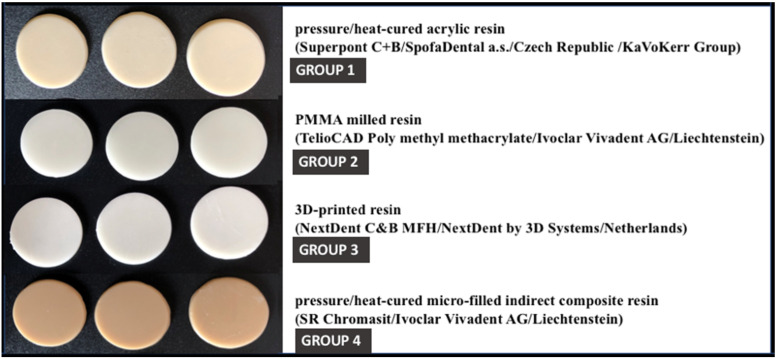
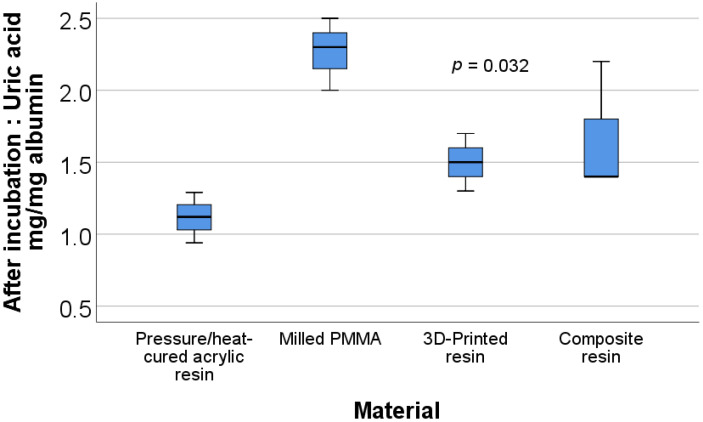
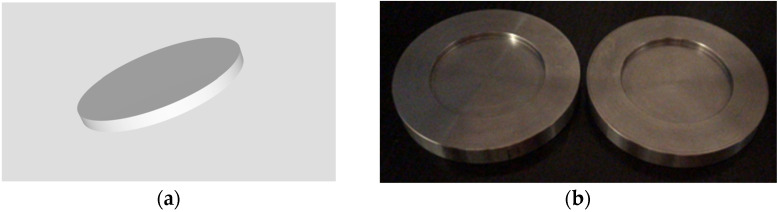
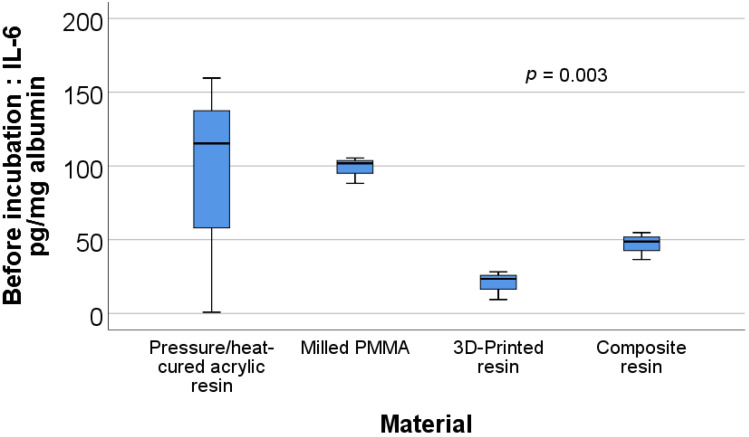
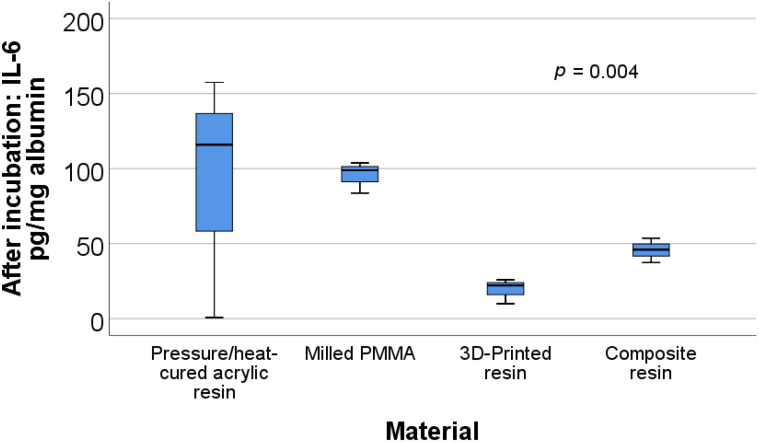
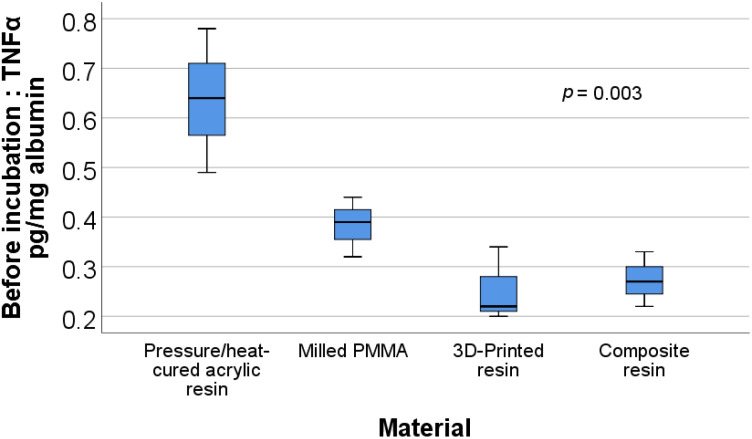
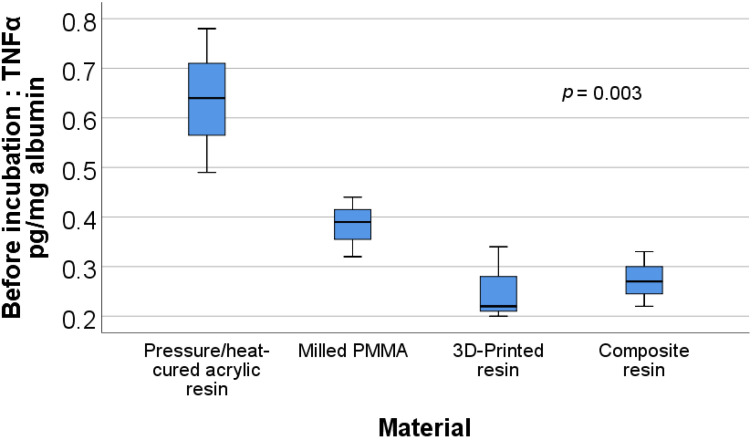
The purpose of this study was to analyze the oxidative stress level and inflammatory status of saliva in the presence of certain materials used for obtaining interim prosthetic restorations. Four types of interim resin materials were investigated: a pressure/heat-cured acrylic resin (Superpont C+B, SpofaDental a.s Czech Republic, /KaVo Kerr Group), a milled resin (Telio CAD polymethyl methacrylate, Ivoclar Vivadent AG, Liechtenstein), a 3D printed resin (NextDent C&B MFH, NextDent by 3D Systems, the Netherlands), and a pressure/heat-cured micro-filled indirect composite resin (SR Chromasit, Ivoclar Vivadent AG, Liechtenstein). The disk-shaped resin samples (30 mm diameter, 2 mm high) were obtained in line with the producers' recommendations. The resulting resin specimens were incubated with saliva samples collected from twenty healthy volunteers. In order to analyze the antioxidant activity of the tested materials, certain salivary parameters were evaluated before and after incubation: uric acid, gamma glutamyl transferase (GGT), oxidative stress responsive kinase-1 (OXSR-1), and total antioxidant capacity (TAC); the salivary levels of tumor necrosis factor (TNFα) and interleukin-6 (IL-6) (inflammatory markers) were measured as well. The obtained results are overall favorable, showing that the tested materials did not cause significant changes in the salivary oxidative stress level and did not influence the inflammatory salivary status.
本研究的目的是分析在使用某些用于制作临时修复体的材料时唾液的氧化应激水平和炎症状态。研究了四种类型的临时树脂材料:一种加压/热固化丙烯酸树脂(Superpont C+B,捷克共和国SpofaDental公司/卡瓦科尔集团)、一种铣削树脂(Telio CAD聚甲基丙烯酸甲酯,列支敦士登Ivoclar Vivadent公司)、一种3D打印树脂(NextDent C&B MFH,荷兰3D Systems公司的NextDent)以及一种加压/热固化微填料间接复合树脂(SR Chromasit,列支敦士登Ivoclar Vivadent公司)。按照生产商的建议制备了圆盘状树脂样品(直径30毫米,高2毫米)。将所得树脂标本与从20名健康志愿者收集的唾液样本一起孵育。为了分析受试材料的抗氧化活性,在孵育前后评估了某些唾液参数:尿酸、γ-谷氨酰转移酶(GGT)、氧化应激反应激酶-1(OXSR-1)和总抗氧化能力(TAC);还测量了肿瘤坏死因子(TNFα)和白细胞介素-6(IL-6)(炎症标志物)的唾液水平。所得结果总体良好,表明受试材料未引起唾液氧化应激水平的显著变化,也未影响唾液的炎症状态。