Department of Physical Activity and Health, the Swedish School of Sport and Health Sciences, GIH, 11433 Stockholm, Sweden.
Division of Clinical Geriatrics, Department of Neurobiology, Care Sciences and Society, Karolinska University Hospital at Huddinge, 14157 Huddinge, Sweden.
Int J Environ Res Public Health. 2021 Dec 27;19(1):266. doi: 10.3390/ijerph19010266.
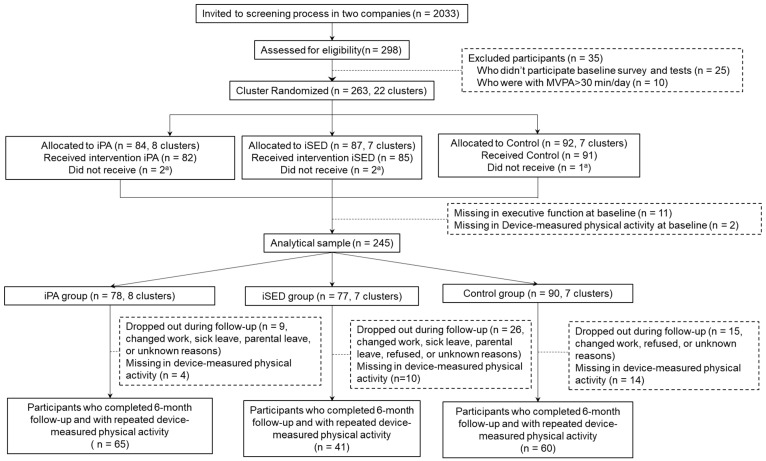
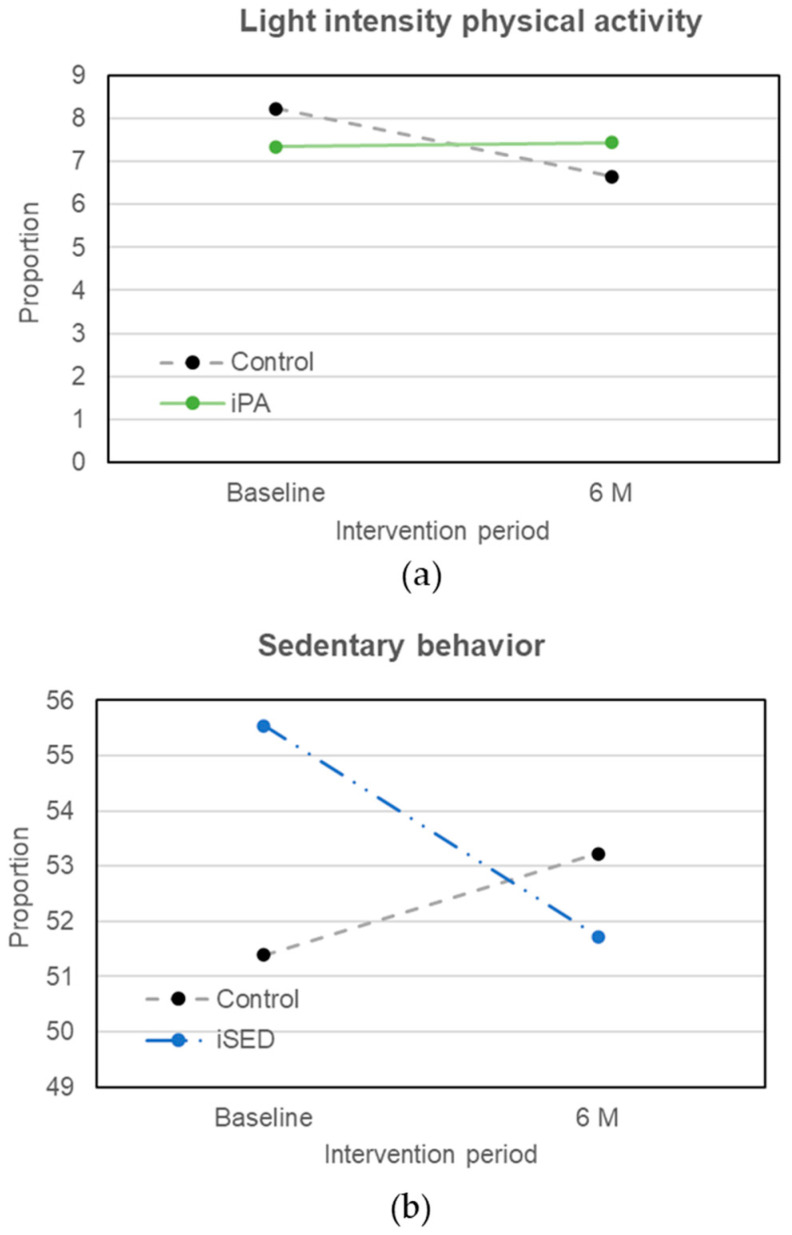
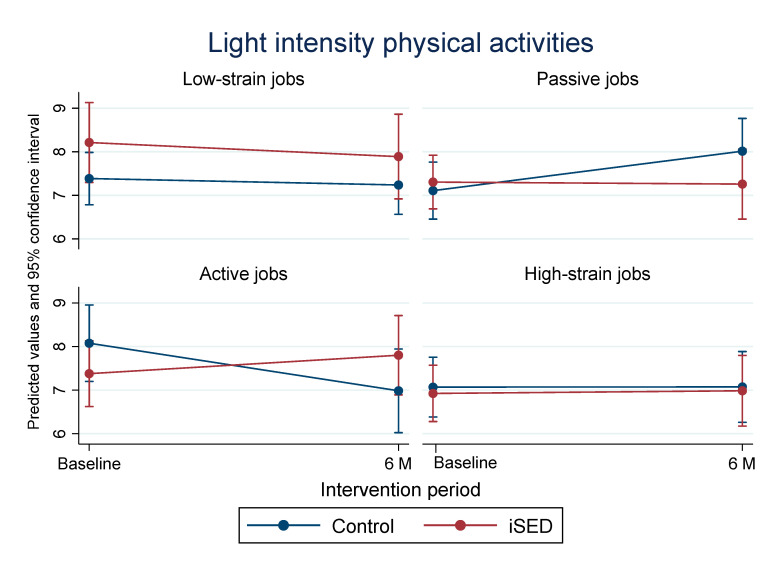
A knowledge gap remains in understanding how to improve the intervention effectiveness in office workers targeting physically active (PA) behavior. We aim to identify the modifying effect of executive function (EF) on the intervention effectiveness targeting PA-behaviors, and to verify whether the observed effect varies by Job Demand Control (JDC) categories. This workplace-based intervention study included 245 participants who were randomized into a control group and two intervention arms-promoting physical activity (iPA) group or reducing sedentary behavior (iSED) group. The interventions were conducted through counselling-based cognitive behavioral therapy and team activities over 6 months. PA-behaviors were measured by an accelerometer. EF was assessed by the Trail Making Test-B, Stroop, and n-back test. The JDC categories were measured by the demand control questionnaire. Higher EF level at baseline was significantly associated with the intervention effect on increased sleep time (β-coefficient: 3.33, = 0.003) and decreased sedentary time (-2.76, = 0.049) in the iSED-group. Participants with active jobs (high job demands, high control) presented significantly increased light-intensity PA in the iSED-group in comparison to the control group. Among participants with a high level of EF and active jobs, relative to the control group, the iPA-group showed a substantial increase in light-intensity PA (1.58, = 0.036) and the iSED-group showed a tendency of reducing sedentary behavior (-5.35, = 0.054). The findings suggest that office workers with a high EF and active jobs may benefit most from an intervention study targeting PA-behaviors.
在理解如何提高针对体力活动 (PA) 行为的办公室工作人员干预效果方面,仍存在知识差距。我们旨在确定执行功能 (EF) 对针对 PA 行为的干预效果的调节作用,并验证观察到的效果是否因工作需求控制 (JDC) 类别而有所不同。这项基于工作场所的干预研究包括 245 名参与者,他们被随机分为对照组和两个干预组——促进体力活动 (iPA) 组或减少久坐行为 (iSED) 组。干预措施通过基于咨询的认知行为疗法和团队活动进行,为期 6 个月。通过加速度计测量 PA 行为。EF 通过 Trail Making Test-B、Stroop 和 n-back 测试进行评估。JDC 类别通过需求控制问卷进行测量。基线时较高的 EF 水平与 iSED 组中睡眠时间增加(β系数:3.33, = 0.003)和久坐时间减少(-2.76, = 0.049)的干预效果显著相关。在 iSED 组中,高工作需求、高控制的活跃工作者呈现出显著增加的低强度体力活动。与对照组相比,在具有高 EF 水平和活跃工作的参与者中,与对照组相比,iPA 组的低强度体力活动显著增加(1.58, = 0.036),iSED 组减少久坐行为的趋势明显(-5.35, = 0.054)。研究结果表明,具有高 EF 和活跃工作的办公室工作人员可能从针对 PA 行为的干预研究中受益最大。