Burmistrov Dmitriy E, Simakin Alexander V, Smirnova Veronika V, Uvarov Oleg V, Ivashkin Petr I, Kucherov Roman N, Ivanov Vladimir E, Bruskov Vadim I, Sevostyanov Mihail A, Baikin Alexander S, Kozlov Valery A, Rebezov Maksim B, Semenova Anastasia A, Lisitsyn Andrey B, Vedunova Maria V, Gudkov Sergey V
Prokhorov General Physics Institute of the Russian Academy of Sciences, 38 Vavilova St., 119991 Moscow, Russia.
Moscow Engineering Physics Institute, National Research Nuclear University MEPhI, Kashirskoe Highway 31, 115409 Moscow, Russia.
Polymers (Basel). 2021 Dec 23;14(1):49. doi: 10.3390/polym14010049.
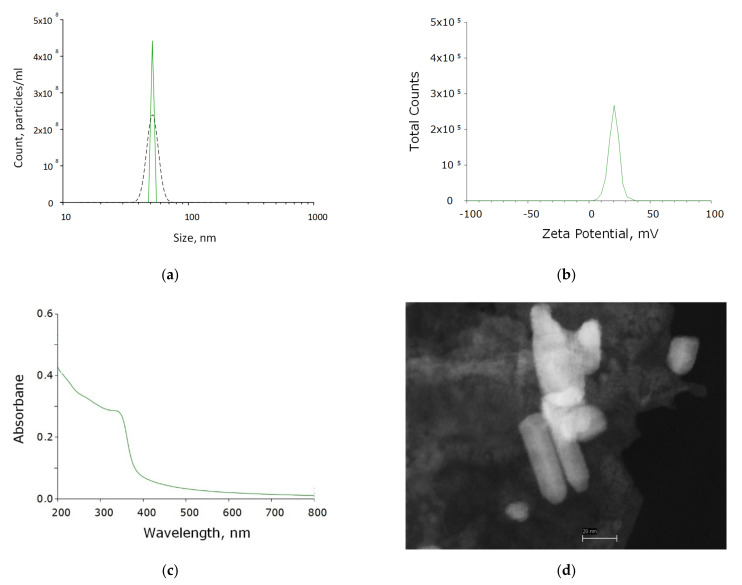
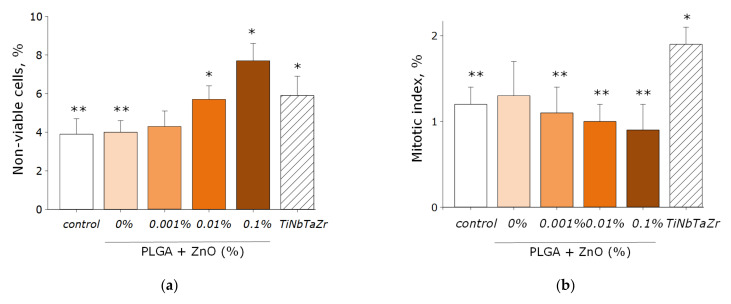
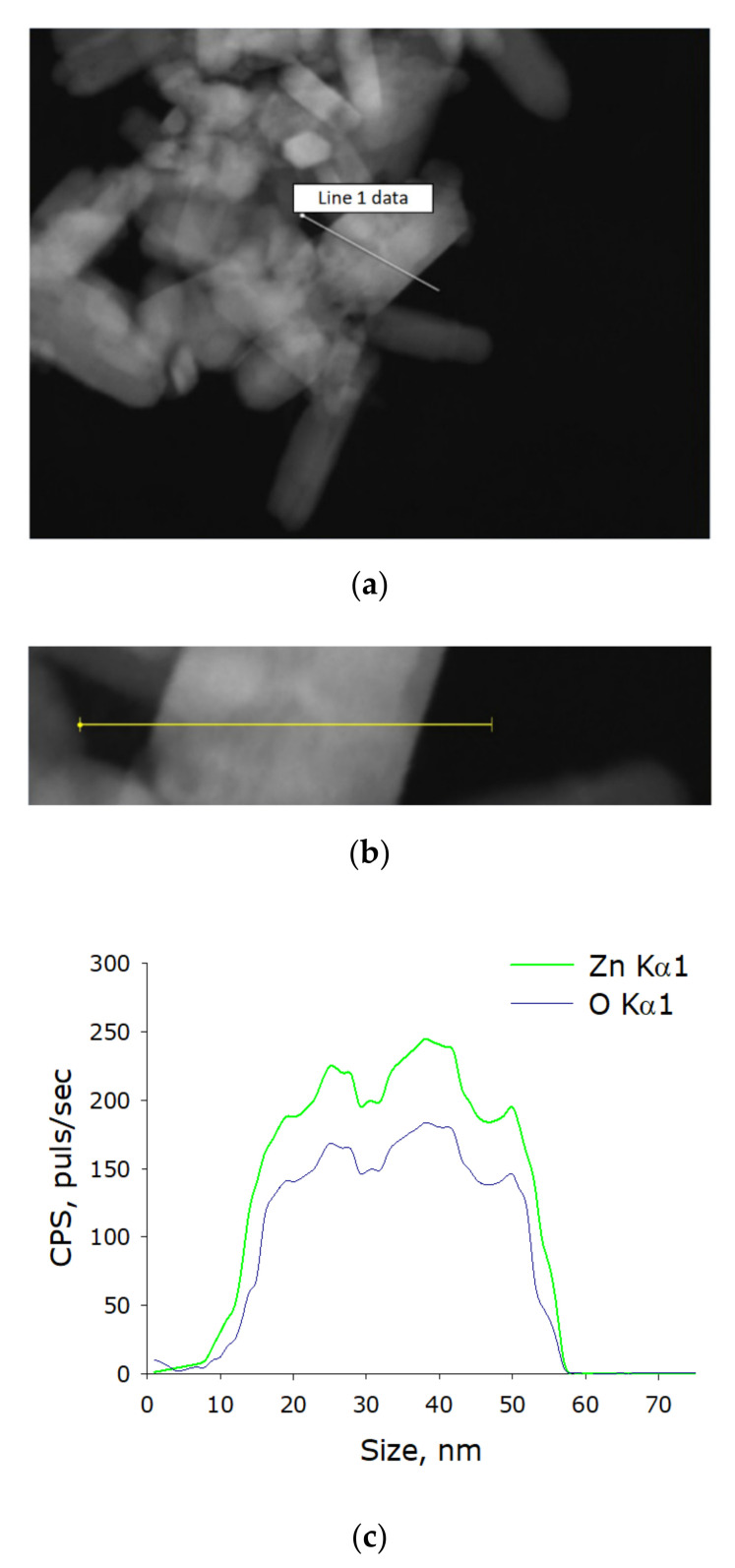
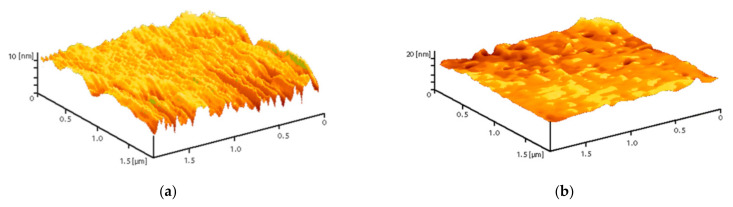
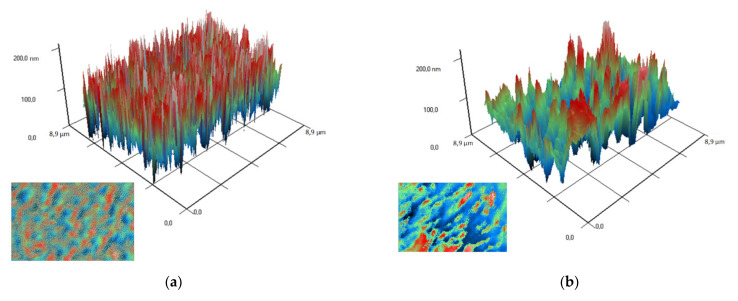
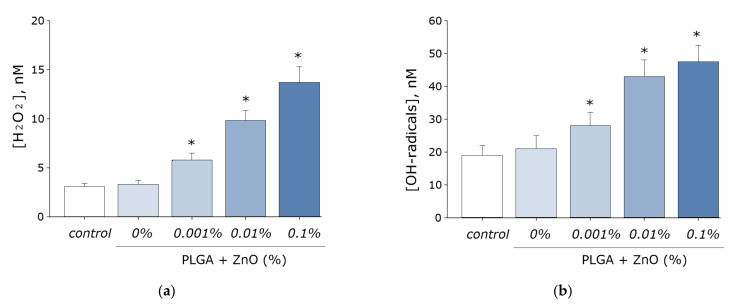
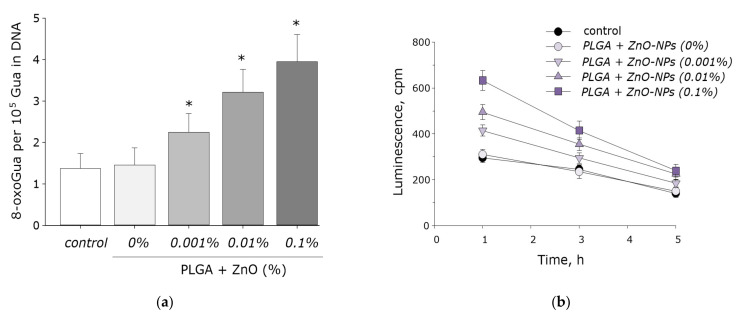
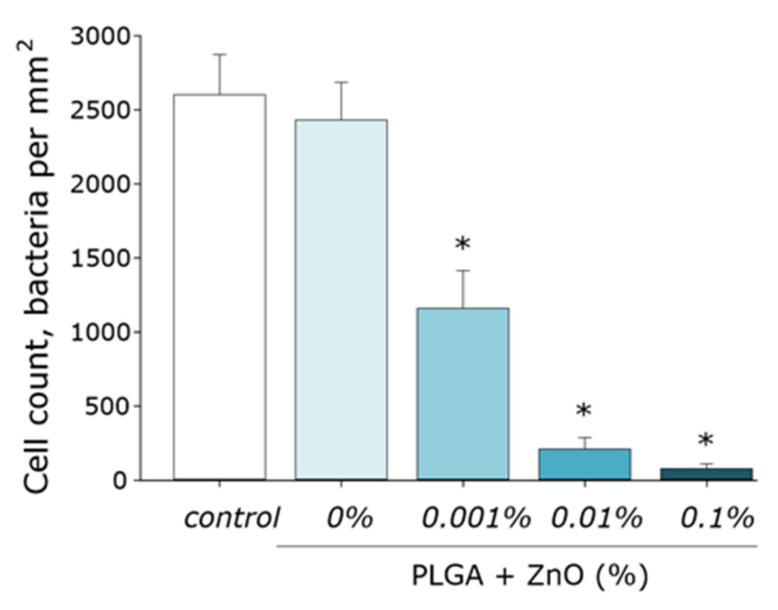
A low-temperature technology was developed for producing a nanocomposite based on poly (lactic-co-glycolic acid) and zinc oxide nanoparticles (ZnO-NPs), synthesized by laser ablation. Nanocomposites were created containing 0.001, 0.01, and 0.1% of zinc oxide nanoparticles with rod-like morphology and a size of 40-70 nm. The surface of the films from the obtained nanomaterial was uniform, without significant defects. Clustering of ZnO-NPs in the PLGA matrix was noted, which increased with an increase in the concentration of the dopant in the polymer. The resulting nanomaterial was capable of generating reactive oxygen species (ROS), such as hydrogen peroxide and hydroxyl radicals. The rate of ROS generation increased with an increase in the concentration of the dopant. It was shown that the synthesized nanocomposite promotes the formation of long-lived reactive protein species, and is also the reason for the appearance of a key biomarker of oxidative stress, 8-oxoguanine, in DNA. The intensity of the process increased with an increase in the concentration of nanoparticles in the matrix. It was found that the nanocomposite exhibits significant bacteriostatic properties, the severity of which depends on the concentration of nanoparticles. In particular, on the surface of the PLGA-ZnO-NPs composite film containing 0.001% nanoparticles, the number of bacterial cells was 50% lower than that of pure PLGA. The surface of the composite is non-toxic to eukaryotic cells and does not interfere with their adhesion, growth, and division. Due to its low cytotoxicity and bacteriostatic properties, this nanocomposite can be used as coatings for packaging in the food industry, additives for textiles, and also as a material for biomedicine.
开发了一种低温技术,用于制备基于聚(乳酸-乙醇酸共聚物)和通过激光烧蚀合成的氧化锌纳米颗粒(ZnO-NPs)的纳米复合材料。制备了含有0.001%、0.01%和0.1%棒状形态且尺寸为40-70nm的氧化锌纳米颗粒的纳米复合材料。所得纳米材料制成的薄膜表面均匀,无明显缺陷。注意到ZnO-NPs在PLGA基质中发生聚集,且随着聚合物中掺杂剂浓度的增加而增加。所得纳米材料能够产生活性氧(ROS),如过氧化氢和羟基自由基。ROS的产生速率随着掺杂剂浓度的增加而增加。结果表明,合成的纳米复合材料促进了长寿命活性蛋白物种的形成,也是DNA中氧化应激关键生物标志物8-氧代鸟嘌呤出现的原因。该过程的强度随着基质中纳米颗粒浓度的增加而增加。发现该纳米复合材料具有显著的抑菌性能,其严重程度取决于纳米颗粒的浓度。特别是,在含有0.001%纳米颗粒的PLGA-ZnO-NPs复合薄膜表面,细菌细胞数量比纯PLGA低50%。该复合材料的表面对真核细胞无毒,不干扰其粘附、生长和分裂。由于其低细胞毒性和抑菌性能,这种纳米复合材料可用作食品工业包装的涂层、纺织品添加剂以及生物医学材料。