Gudkov Sergey V, Simakin Alexander V, Sarimov Ruslan M, Kurilov Alexander D, Chausov Denis N
Prokhorov General Physics Institute of the Russian Academy of Sciences, Vavilova St., 38, 119991 Moscow, Russia.
Nanomaterials (Basel). 2021 Oct 22;11(11):2804. doi: 10.3390/nano11112804.
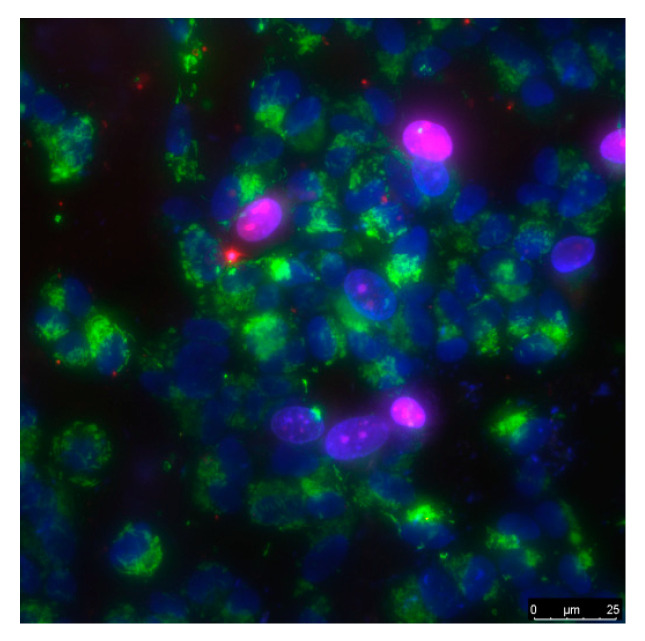
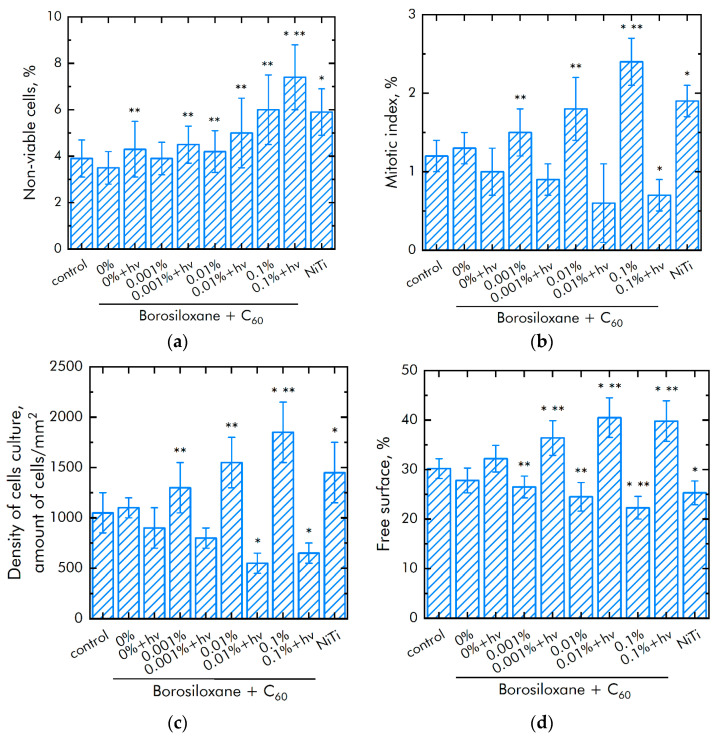
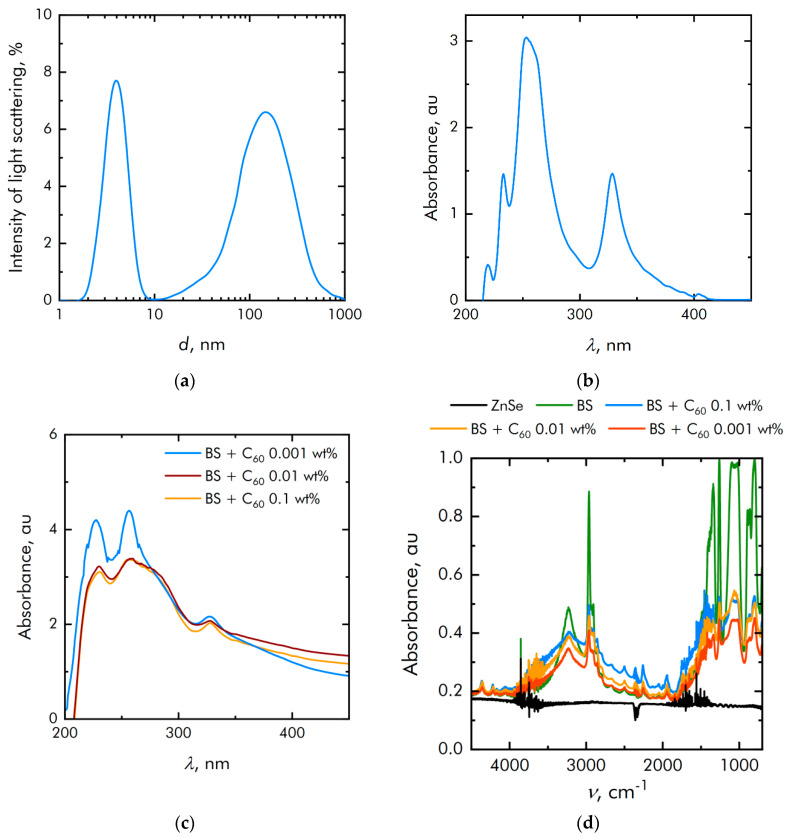
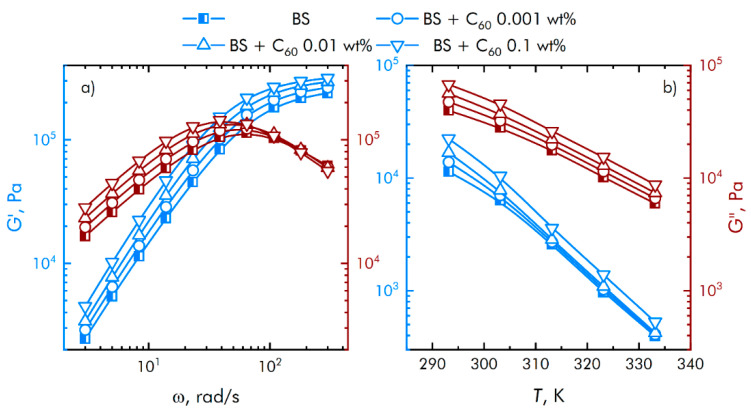
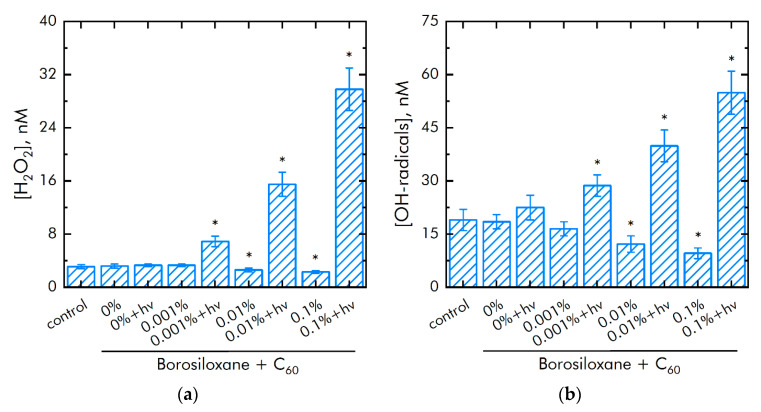
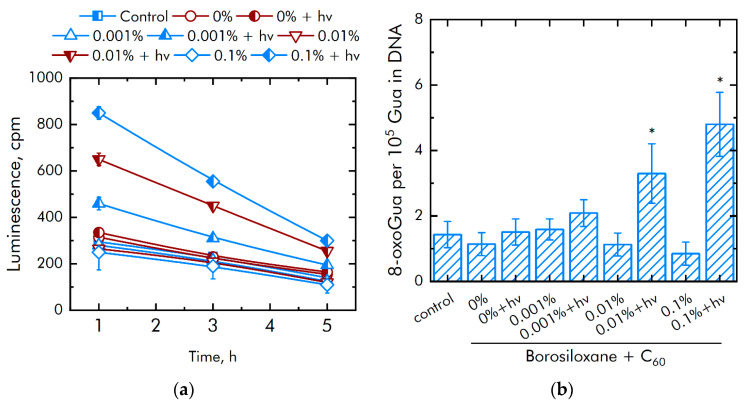
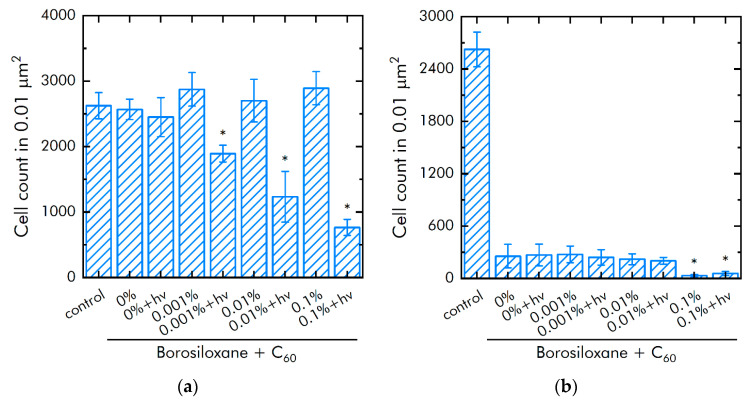
A technology for producing a nanocomposite based on the borsiloxane polymer and chemically unmodified fullerenes has been developed. Nanocomposites containing 0.001, 0.01, and 0.1 wt% fullerene molecules have been created. It has been shown that the nanocomposite with any content of fullerene molecules did not lose the main rheological properties of borsiloxane and is capable of structural self-healing. The resulting nanomaterial is capable of generating reactive oxygen species (ROS) such as hydrogen peroxide and hydroxyl radicals in light. The rate of ROS generation increases with an increase in the concentration of fullerene molecules. In the absence of light, the nanocomposite exhibits antioxidant properties. The severity of antioxidant properties is also associated with the concentration of fullerene molecules in the polymer. It has been shown that the nanocomposite upon exposure to visible light leads to the formation of long-lived reactive protein species, and is also the reason for the appearance of such a key biomarker of oxidative stress as 8-oxoguanine in DNA. The intensity of the process increases with an increase in the concentration of fullerene molecules. In the dark, the polymer exhibits weak protective properties. It was found that under the action of light, the nanocomposite exhibits significant bacteriostatic properties, and the severity of these properties depends on the concentration of fullerene molecules. Moreover, it was found that bacterial cells adhere to the surfaces of the nanocomposite, and the nanocomposite can detach bacterial cells not only from the surfaces, but also from wetted substrates. The ability to capture bacterial cells is primarily associated with the properties of the polymer; they are weakly affected by both visible light and fullerene molecules. The nanocomposite is non-toxic to eukaryotic cells, the surface of the nanocomposite is suitable for eukaryotic cells for colonization. Due to the combination of self-healing properties, low cytotoxicity, and the presence of bacteriostatic properties, the nanocomposite can be used as a reusable dry disinfectant, as well as a material used in prosthetics.
已开发出一种基于硼硅氧烷聚合物和化学未改性富勒烯制备纳米复合材料的技术。已制备出含有0.001 wt%、0.01 wt%和0.1 wt%富勒烯分子的纳米复合材料。结果表明,含有任何含量富勒烯分子的纳米复合材料都不会丧失硼硅氧烷的主要流变学性能,并且能够进行结构自修复。所得纳米材料能够在光照下产生活性氧(ROS),如过氧化氢和羟基自由基。ROS的产生速率随富勒烯分子浓度的增加而增加。在无光照的情况下,纳米复合材料表现出抗氧化性能。抗氧化性能的强弱也与聚合物中富勒烯分子的浓度有关。结果表明,纳米复合材料在可见光照射下会导致长寿命活性蛋白物种的形成,也是DNA中出现氧化应激关键生物标志物8-氧代鸟嘌呤的原因。该过程的强度随富勒烯分子浓度的增加而增加。在黑暗中,该聚合物表现出较弱的保护性能。研究发现,在光照作用下,纳米复合材料表现出显著的抑菌性能,且这些性能的强弱取决于富勒烯分子的浓度。此外,还发现细菌细胞会附着在纳米复合材料的表面,并且纳米复合材料不仅可以将细菌细胞从表面分离,还可以从湿润的基质上分离。捕获细菌细胞的能力主要与聚合物的性能有关;可见光和富勒烯分子对其影响较小。该纳米复合材料对真核细胞无毒,其表面适合真核细胞定植。由于具有自修复性能、低细胞毒性和抑菌性能的组合,该纳米复合材料可作为可重复使用的干式消毒剂,以及用于假肢的材料。