Zheng Jianglin, Zhou Zijie, Qiu Yue, Wang Minjie, Yu Hao, Wu Zhipeng, Wang Xuan, Jiang Xiaobing
Department of Neurosurgery, Union Hospital, Tongji Medical College, Huazhong University of Science and Technology, Wuhan, People's Republic of China.
Department of Otolaryngology, Union Hospital, Tongji Medical College, Huazhong University of Science and Technology, Wuhan, People's Republic of China.
J Inflamm Res. 2022 Jan 4;15:17-32. doi: 10.2147/JIR.S341774. eCollection 2022.
As an inflammatory form of programmed cell death, pyroptosis has been well established to be associated with tumorigenesis and tumor immune microenvironment. In this paper, we aimed at the construction of a pyroptosis-related gene prognostic index (PRGPI) for predicting prognosis and guiding individualized immunotherapy in glioma patients.
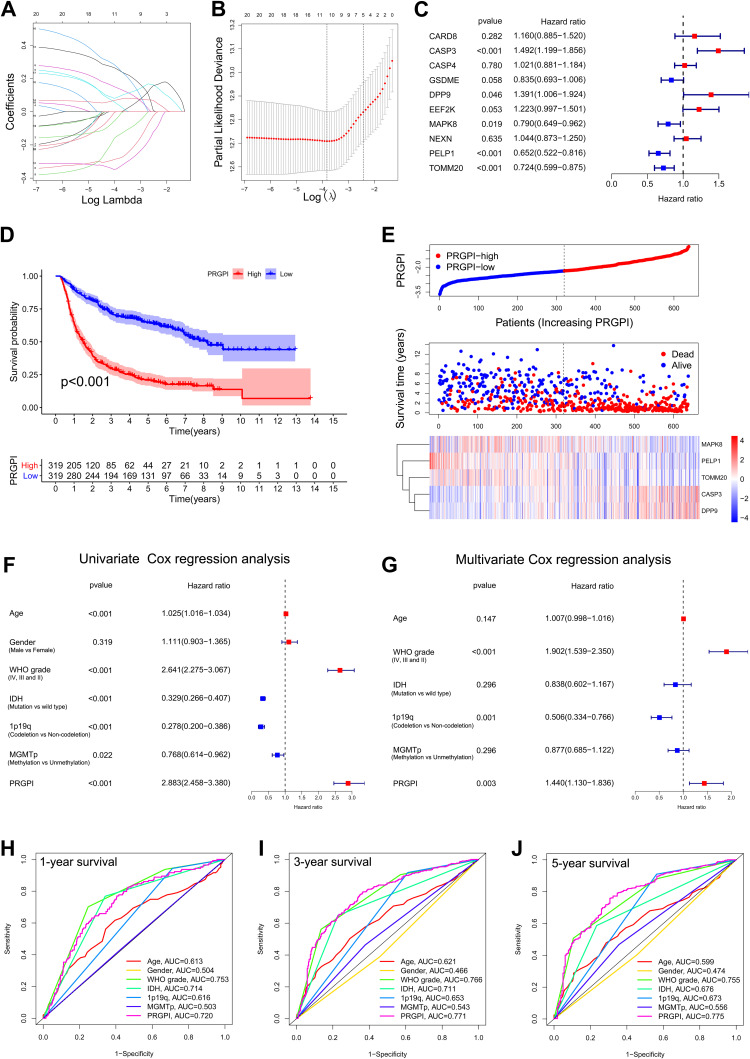
Pyroptosis-related genes (PRGs) were identified based on a detailed review of published literatures. The transcriptome data and clinical information of glioma patients were obtained from CGGA and TCGA databases. PRGPI was constructed by using the multivariate Cox regression method. The immune cell infiltration level was analyzed via CIBERSORT algorithm. The tumor immune dysfunction and exclusion (TIDE) algorithm was applied to evaluate the potential response to immune checkpoint inhibitor (ICI) therapy. The expression patterns of PRGs in PRGPI were validated in cell lines and pathological specimens.
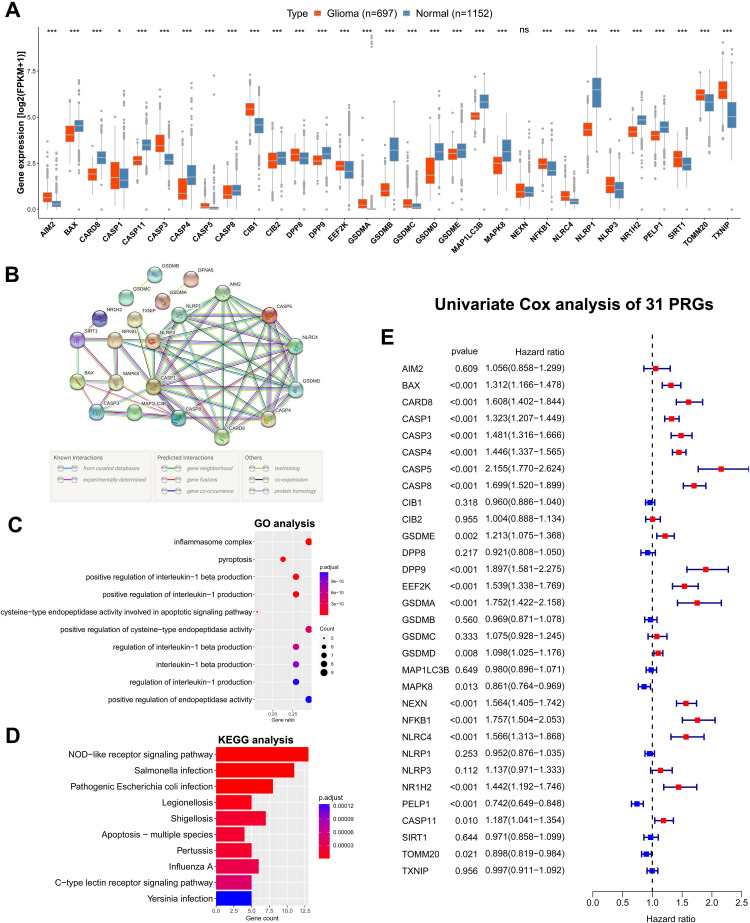
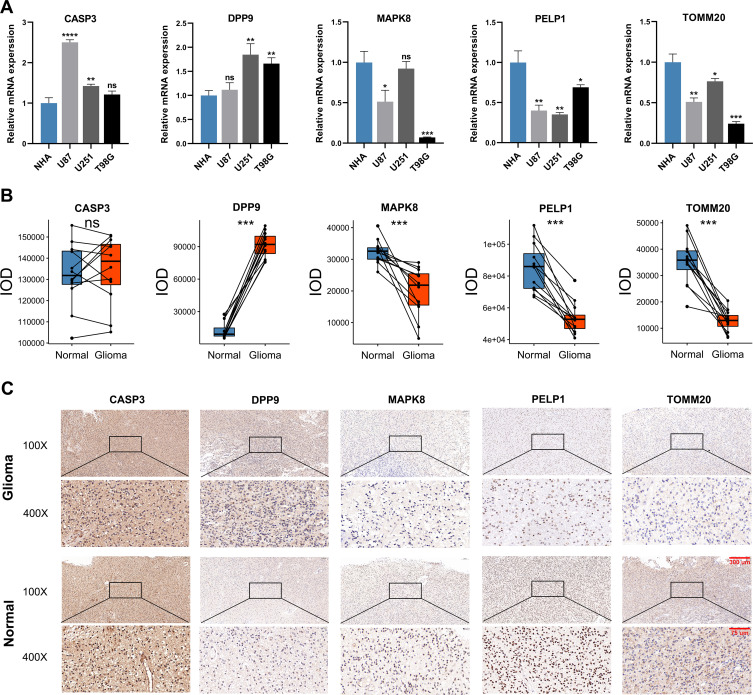
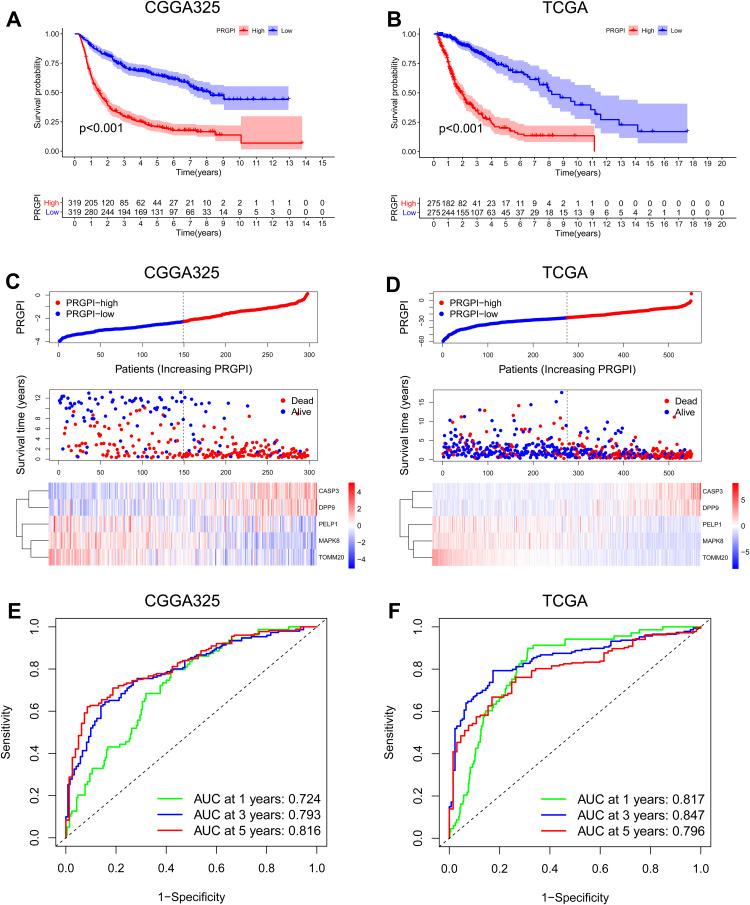
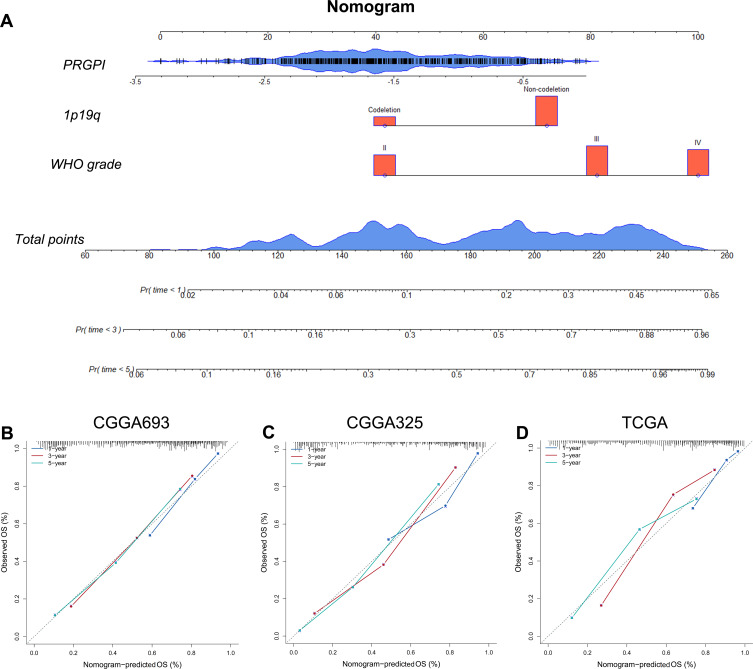
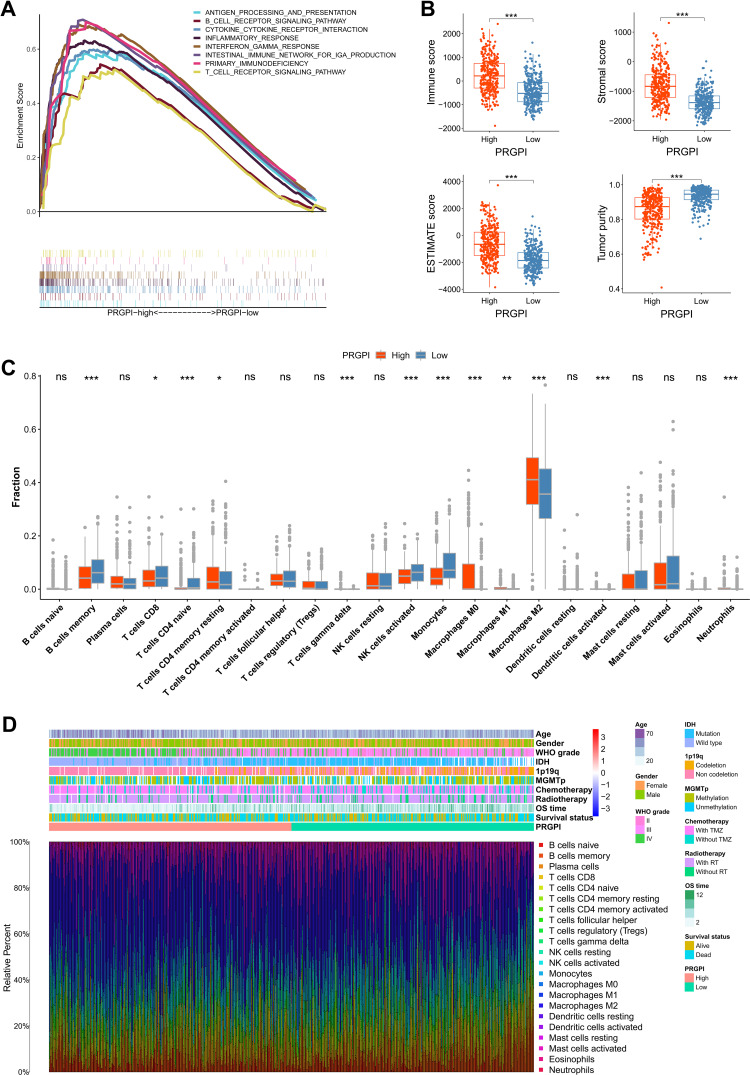
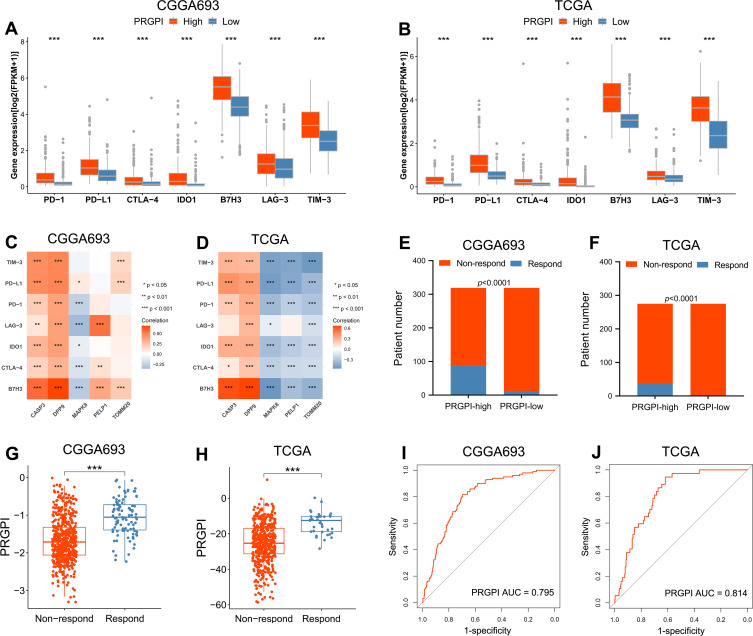
We identified a total of 31 PRGs. Among them, PRGs (CASP3, DPP9, MAPK8, PELP1 and TOMM20) were selected for the construction of PRGPI. In both training (CGGA693) and validation (CGGA325 and TCGA) cohorts, PRGPI-high patients showed an inferior survival outcome compared with PRGPI-low patients. ROC curves illustrated that the prognostic prediction power of PRGPI was robust. A nomogram was developed based on independent prognostic indicators (PRGPI, age and WHO grade), and also exhibited a strong forecasting ability for overall survival (OS). Additionally, PRGPI-high patients exhibited higher immune, stroma and ESTIMATE scores, lower tumor purity, higher infiltration of M2-type macrophages, lower infiltration of CD8 T cells and activated NK cells, higher tumor mutation burden (TMB), and higher expression of immune checkpoints. TIDE showed that PRGPI-high group had more responders of ICI therapy than PRGPI-low group. Finally, the expression patterns of five selected PRGs in PRGPI were significantly different between normal and glioma.
The constructed PRGPI can be used for predicting prognosis and guiding individualized immunotherapy in glioma patients.
作为程序性细胞死亡的一种炎症形式,细胞焦亡已被充分证实与肿瘤发生及肿瘤免疫微环境相关。在本文中,我们旨在构建一种细胞焦亡相关基因预后指数(PRGPI),用于预测胶质瘤患者的预后并指导个体化免疫治疗。
基于对已发表文献的详细综述确定细胞焦亡相关基因(PRGs)。从CGGA和TCGA数据库获取胶质瘤患者的转录组数据及临床信息。采用多因素Cox回归方法构建PRGPI。通过CIBERSORT算法分析免疫细胞浸润水平。应用肿瘤免疫功能障碍与排除(TIDE)算法评估对免疫检查点抑制剂(ICI)治疗的潜在反应。在细胞系和病理标本中验证PRGPI中PRGs的表达模式。
我们共鉴定出31个PRGs。其中,选择PRGs(CASP3、DPP9、MAPK8、PELP1和TOMM20)构建PRGPI。在训练队列(CGGA693)和验证队列(CGGA325和TCGA)中,PRGPI高的患者与PRGPI低的患者相比生存结局较差。ROC曲线表明PRGPI的预后预测能力较强。基于独立预后指标(PRGPI、年龄和WHO分级)绘制了列线图,其对总生存期(OS)也具有较强的预测能力。此外,PRGPI高的患者免疫、基质和ESTIMATE评分较高,肿瘤纯度较低,M2型巨噬细胞浸润较高,CD8 T细胞和活化NK细胞浸润较低,肿瘤突变负荷(TMB)较高,免疫检查点表达较高。TIDE显示PRGPI高的组比PRGPI低的组有更多ICI治疗反应者。最后,PRGPI中五个选定PRGs的表达模式在正常组织和胶质瘤之间存在显著差异。
构建的PRGPI可用于预测胶质瘤患者的预后并指导个体化免疫治疗。