Ramou Efthymia, Palma Susana I C J, Roque Ana Cecília A
Associate Laboratory i4HB─Institute for Health and Bioeconomy, School of Science and Technology, NOVA University Lisbon, 2829-516 Caparica, Portugal.
UCIBIO─Applied Molecular Biosciences Unit, Department of Chemistry, School of Science and Technology, NOVA University Lisbon, 2829-516 Caparica, Portugal.
ACS Appl Mater Interfaces. 2022 Feb 2;14(4):6261-6273. doi: 10.1021/acsami.1c24721. Epub 2022 Jan 19.
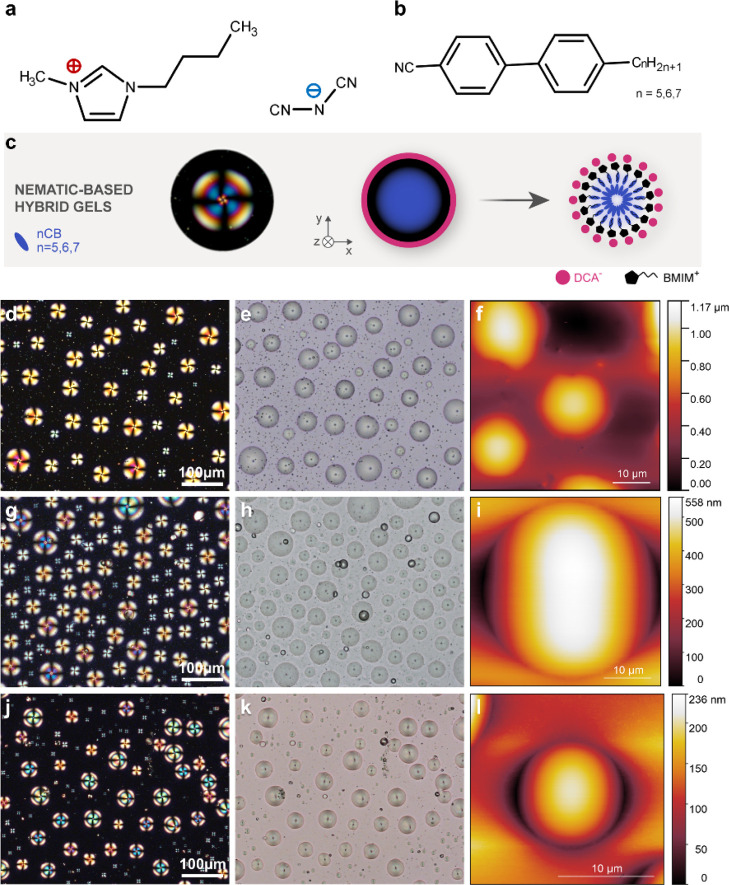
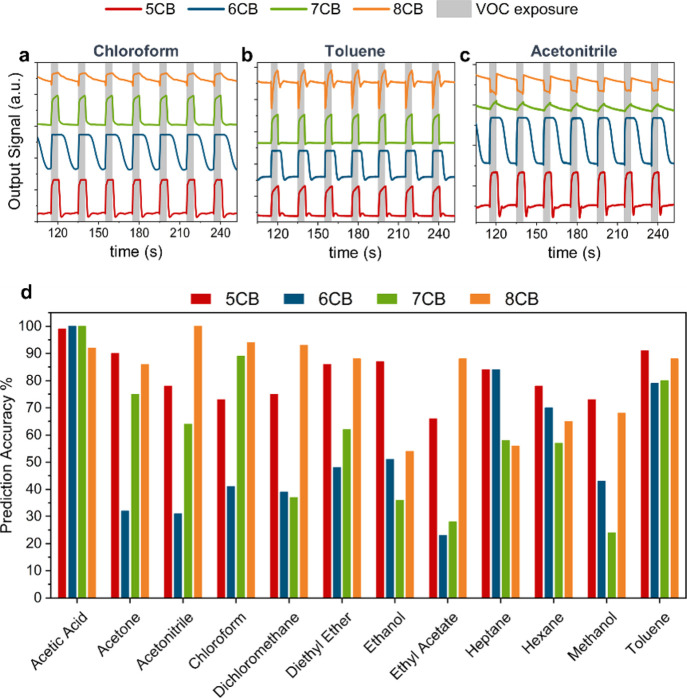
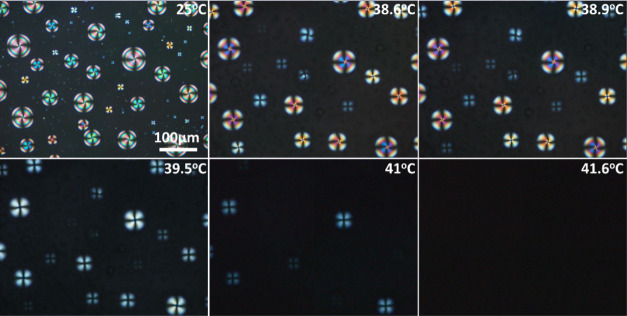
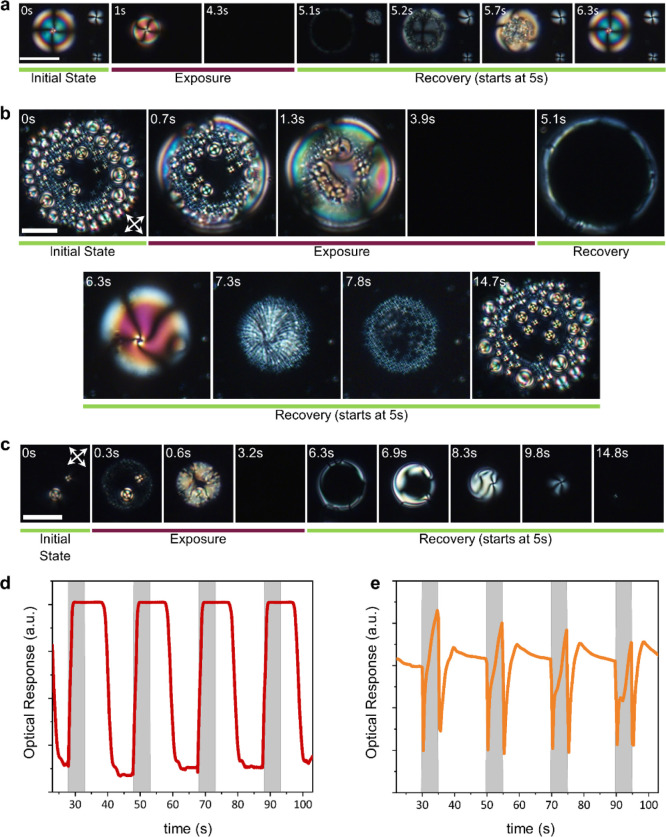
Liquid crystals (LCs) are prime examples of dynamic supramolecular soft materials. Their autonomous self-assembly at the nanoscale level and the further nanoscale events that give rise to unique stimuli-responsive properties have been exploited for sensing purposes. One of the key features to employ LCs as sensing materials derives from the fine-tuning between stability and dynamics. This challenging task was addressed in this work by studying the effect of the alkyl chain length of cyanobiphenyl LCs on the molecular self-assembled compartments organized in the presence of ionic liquid molecules and gelatin. The resulting multicompartment nematic and smectic gels were further used as volatile organic compound chemical sensors. The LC structures undergo a dynamic sequence of phase transitions, depending on the nature of the LC component, yielding a variety of optical signals, which serve as optical fingerprints. In particular, the materials incorporating smectic compartments resulted in unexpected and rich optical textures that have not been reported previously. Their sensing capability was tested in an in-house-assembled electronic nose and further assessed via signal collection and machine-learning algorithms based on support vector machines, which classified 12 different gas analytes with high accuracy scores. Our work expands the knowledge on controlling LC self-assembly to yield fast and autonomous accurate chemical-sensing systems based on the combination of complex nanoscale sensing events with artificial intelligence tools.
液晶(LCs)是动态超分子软材料的典型例子。它们在纳米尺度上的自主自组装以及引发独特刺激响应特性的进一步纳米级事件已被用于传感目的。将液晶用作传感材料的关键特性之一源于稳定性和动力学之间的微调。在这项工作中,通过研究氰基联苯液晶的烷基链长度对在离子液体分子和明胶存在下组织的分子自组装隔室的影响,解决了这一具有挑战性的任务。由此产生的多隔室向列相和近晶相凝胶进一步用作挥发性有机化合物化学传感器。液晶结构经历动态的相变序列,这取决于液晶成分的性质,产生各种光学信号,这些信号可作为光学指纹。特别是,包含近晶相隔室的材料产生了以前未报道过的意想不到的丰富光学纹理。它们的传感能力在内部组装的电子鼻中进行了测试,并通过基于支持向量机的信号收集和机器学习算法进一步评估,该算法以高精度分数对12种不同的气体分析物进行了分类。我们的工作扩展了关于控制液晶自组装的知识,以基于复杂的纳米级传感事件与人工智能工具的结合,产生快速且自主的精确化学传感系统。