Key Laboratory of Quality and Safety Risk Assessment for Aquatic Products on Storage and Preservation (Shanghai), Ministry of Agriculture and Rural Affairs of the People's Republic of China, College of Food Science and Technology, Shanghai Ocean University, Shanghai, 201306, China.
Department of Internal Medicine, Virginia Commonwealth University/McGuire VA Medical Centre, Richmond, VA, USA.
Curr Genet. 2022 Apr;68(2):267-287. doi: 10.1007/s00294-022-01229-z. Epub 2022 Jan 22.
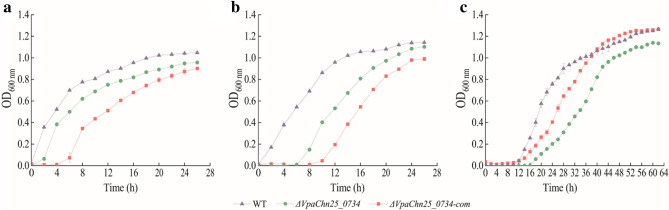
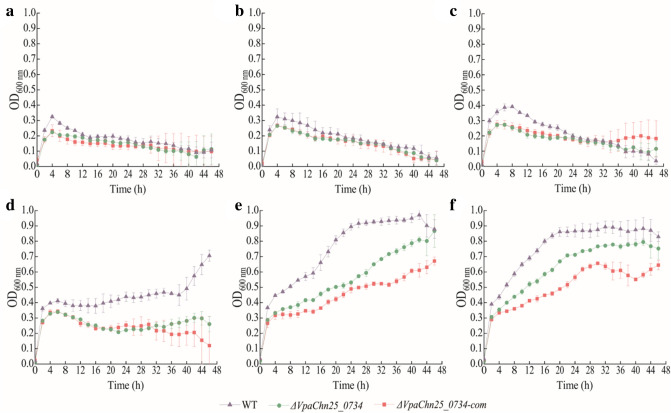
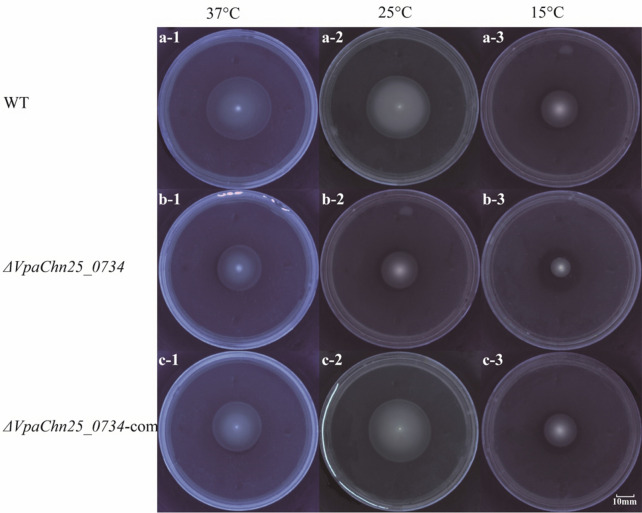
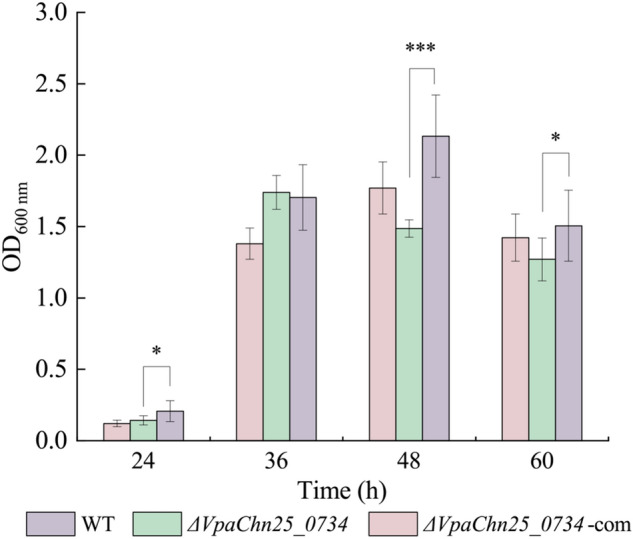
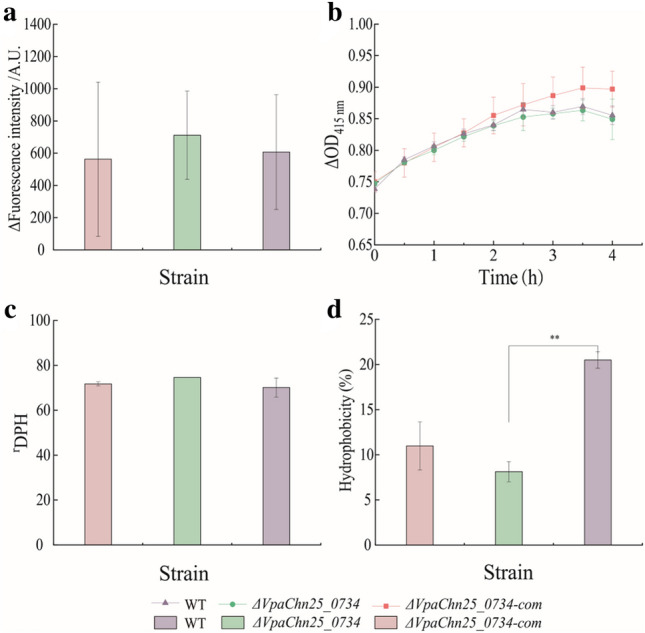
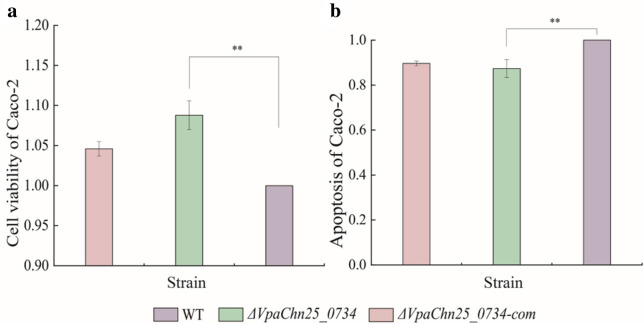
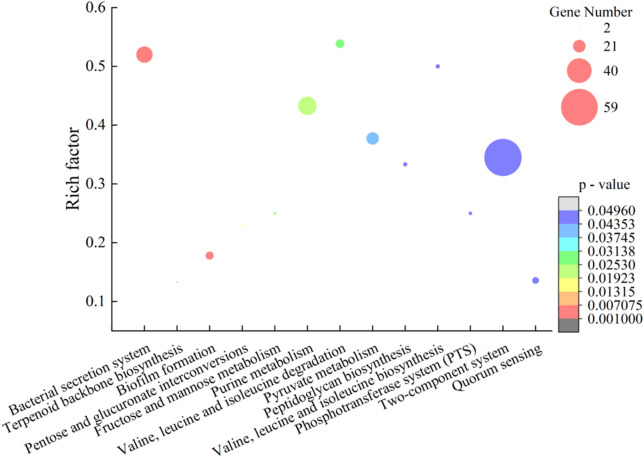
Vibrio parahaemolyticus is a waterborne pathogen that can cause acute gastroenteritis, wound infection, and septicemia in humans. The molecular basis of its pathogenicity is not yet fully understood. Phages are found most abundantly in aquatic environments and play a critical role in horizontal gene transfer. Nevertheless, current literature on biological roles of prophage-encoded genes remaining in V. parahaemolyticus is rare. In this study, we characterized one such gene VpaChn25_0734 (543-bp) in V. parahaemolyticus CHN25 genome. A deletion mutant ΔVpaChn25_0734 (543-bp) was obtained by homologous recombination, and a revertant ΔVpaChn25_0734-com (543-bp) was also constructed. The ΔVpaChn25_0734 (543-bp) mutant was defective in growth and swimming mobility particularly at lower temperatures and/or pH 7.0-8.5. Cell surface hydrophobicity and biofilm formation were significantly decreased in the ΔVpaChn25_0734 (543-bp) mutant (p < 0.05). Based on the in vitro Caco-2 cell model, the deletion of VpaChn25_0734 (543-bp) gene significantly reduced the cytotoxicity of V. parahaemolyticus CHN25 to human intestinal epithelial cells (p < 0.05). Comparative secretomic and transcriptomic analyses revealed a slightly increased extracellular proteins, and thirteen significantly changed metabolic pathways in the ΔVpaChn25_0734 (543-bp) mutant, showing down-regulated carbon source transport and utilization, biofilm formation, and type II secretion system (p < 0.05), consistent with the observed defective phenotypes. Taken, the prophage-encoded gene VpaChn25_0734 (543-bp) enhanced V. parahaemolyticus CHN25 fitness for survival in the environment and the host. The results in this study facilitate better understanding of pathogenesis and genome evolution of V. parahaemolyticus, the leading sea foodborne pathogen worldwide.
副溶血弧菌是一种水生病原体,可导致人类急性肠胃炎、伤口感染和败血症。其致病性的分子基础尚未完全了解。噬菌体在水生环境中最为丰富,在水平基因转移中起着关键作用。然而,目前关于副溶血弧菌中前噬菌体编码基因的生物学作用的文献很少。在本研究中,我们对副溶血弧菌 CHN25 基因组中的一个这样的基因 VpaChn25_0734(543bp)进行了表征。通过同源重组获得了 VpaChn25_0734(543bp)缺失突变体ΔVpaChn25_0734(543bp),并构建了回复突变体ΔVpaChn25_0734-com(543bp)。ΔVpaChn25_0734(543bp)突变体在较低温度和/或 pH7.0-8.5 时生长和泳动能力特别受损。ΔVpaChn25_0734(543bp)突变体的细胞表面疏水性和生物膜形成显著降低(p<0.05)。基于体外 Caco-2 细胞模型,VpaChn25_0734(543bp)基因的缺失显著降低了副溶血弧菌 CHN25 对人肠道上皮细胞的细胞毒性(p<0.05)。比较分泌组学和转录组学分析显示,ΔVpaChn25_0734(543bp)突变体的细胞外蛋白略有增加,13 个代谢途径发生显著变化,表现为碳源转运和利用、生物膜形成和 II 型分泌系统下调(p<0.05),与观察到的表型缺陷一致。综上所述,前噬菌体编码基因 VpaChn25_0734(543bp)增强了副溶血弧菌 CHN25 在环境和宿主中生存的适应性。本研究结果有助于更好地了解副溶血弧菌的发病机制和基因组进化,副溶血弧菌是全球主要的食源性病原体。