Department of Neurology and Pediatrics, University of Massachusetts Medical School, Worcester, MA 01655, USA.
G3 (Bethesda). 2022 Mar 4;12(3). doi: 10.1093/g3journal/jkac002.
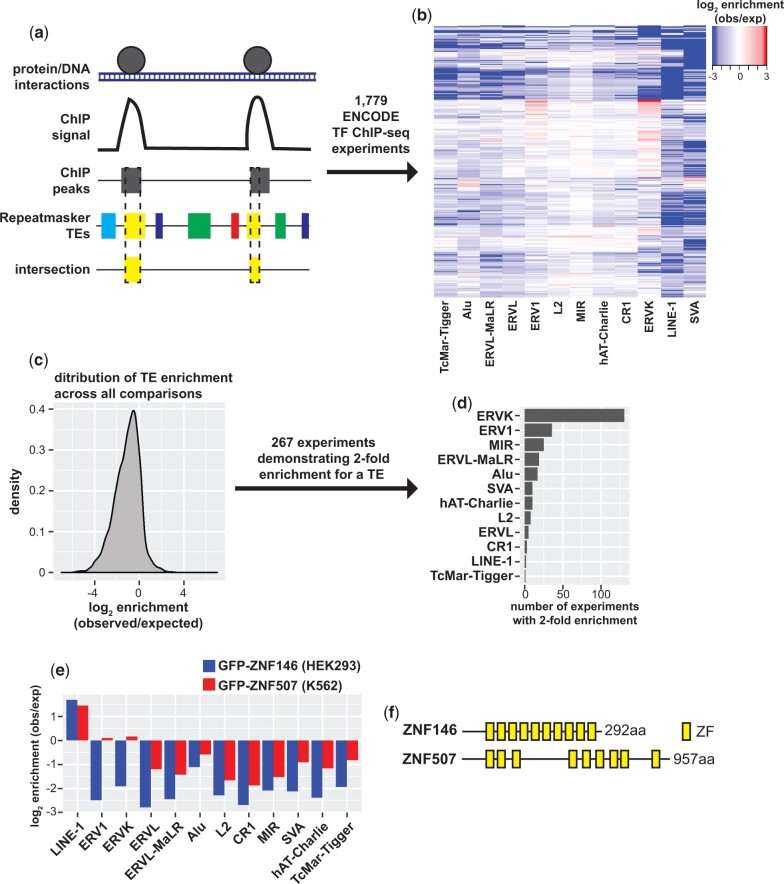
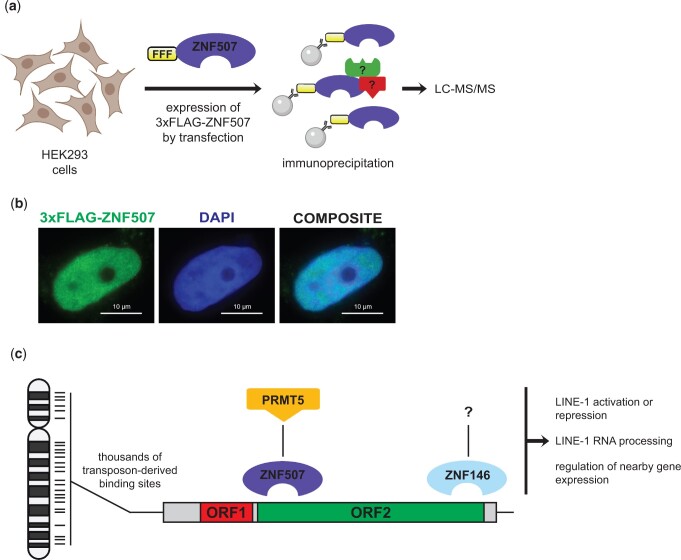
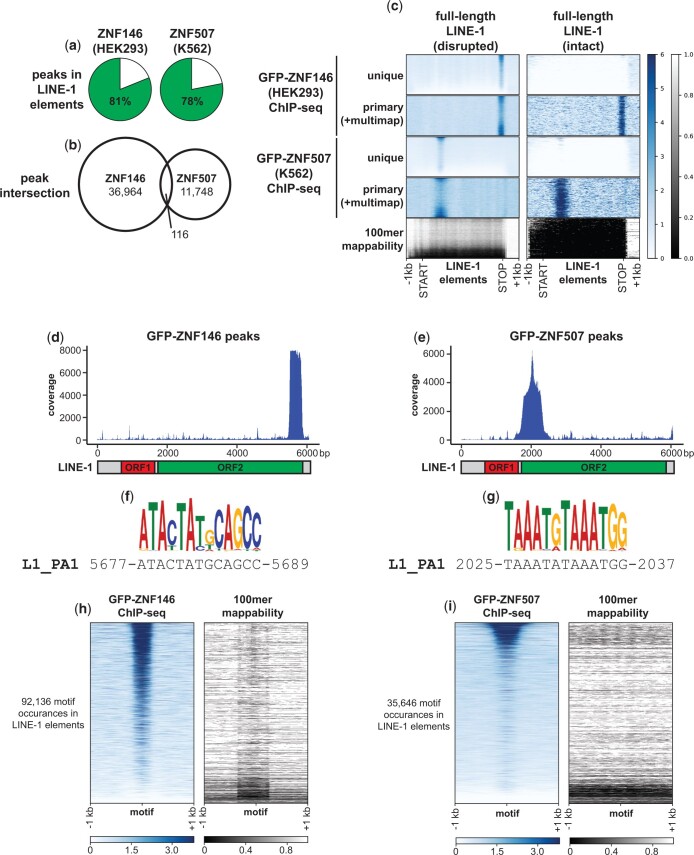
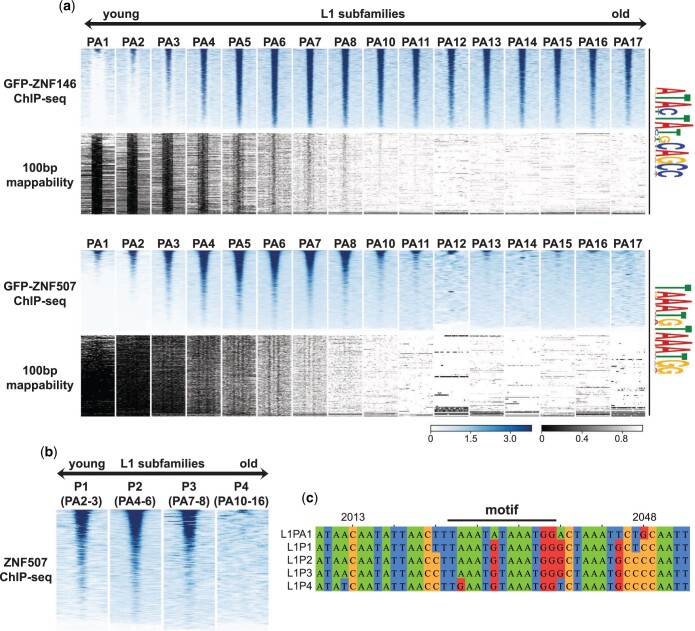
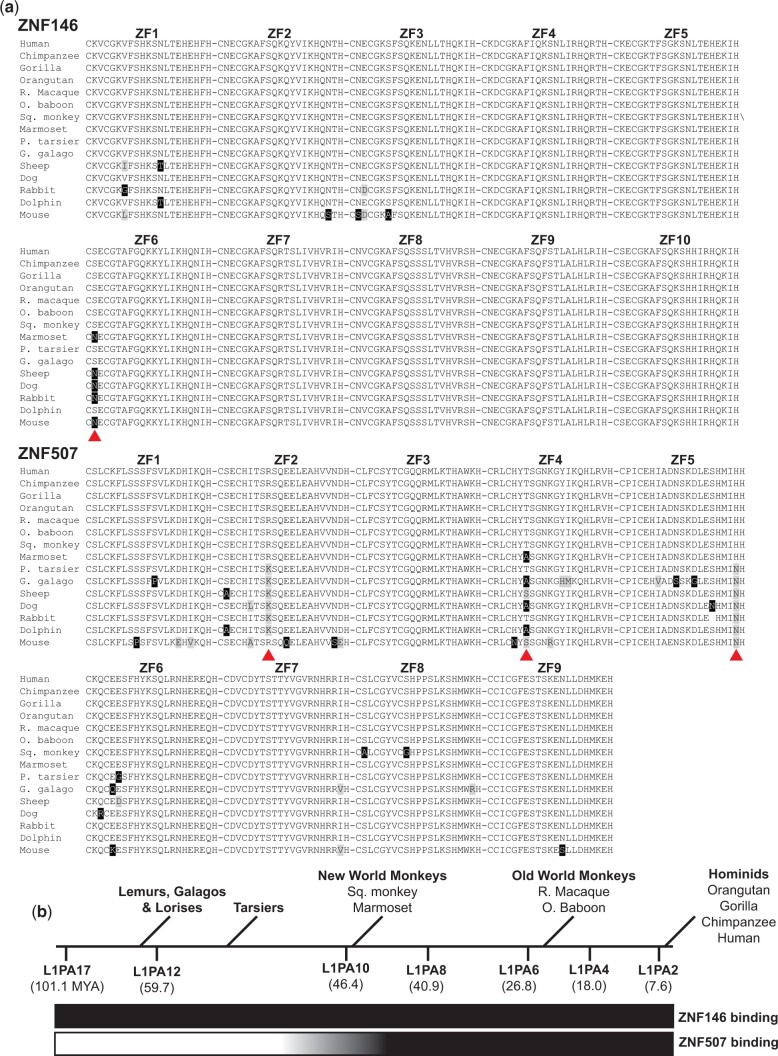
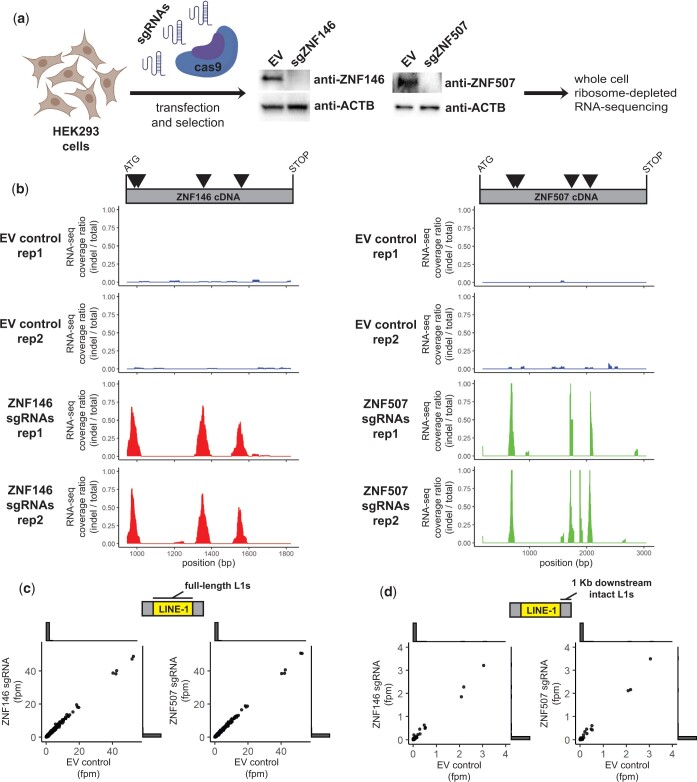
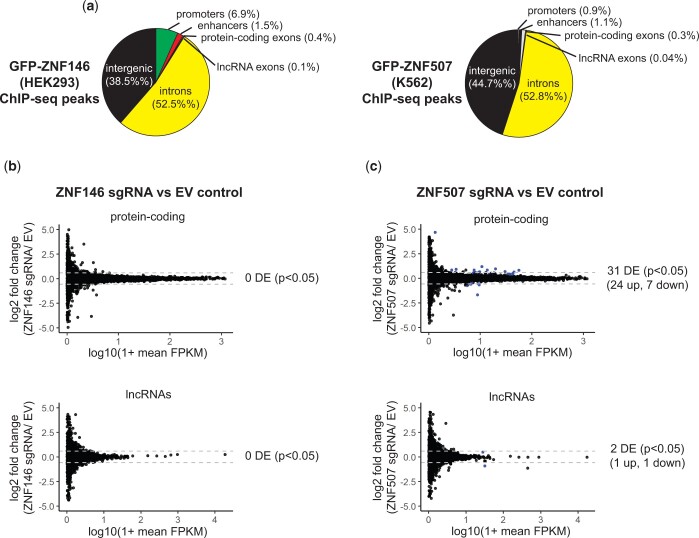
Repetitive sequences including transposable elements and transposon-derived fragments account for nearly half of the human genome. While transposition-competent transposable elements must be repressed to maintain genomic stability, mutated and fragmented transposable elements comprising the bulk of repetitive sequences can also contribute to regulation of host gene expression and broader genome organization. Here, we analyzed published ChIP-seq data sets to identify proteins broadly enriched on transposable elements in the human genome. We show 2 of the proteins identified, C2H2 zinc finger-containing proteins ZNF146 (also known as OZF) and ZNF507, are targeted to distinct sites within LINE-1 ORF2 at thousands of locations in the genome. ZNF146 binding sites are found at old and young LINE-1 elements. In contrast, ZNF507 preferentially binds at young LINE-1 sequences correlated to sequence changes in LINE-1 elements at ZNF507's binding site. To gain further insight into ZNF146 and ZNF507 function, we disrupt their expression in HEK293 cells using CRISPR/Cas9 and perform RNA sequencing, finding modest gene expression changes in cells where ZNF507 has been disrupted. We further identify a physical interaction between ZNF507 and PRMT5, suggesting ZNF507 may target arginine methylation activity to LINE-1 sequences.
重复序列包括转座元件和转座子衍生片段,占人类基因组的近一半。虽然转座活性的转座元件必须被抑制以维持基因组的稳定性,但大量重复序列中突变和碎片化的转座元件也可以有助于调节宿主基因表达和更广泛的基因组组织。在这里,我们分析了已发表的 ChIP-seq 数据集,以鉴定在人类基因组中转座元件广泛富集的蛋白质。我们表明,鉴定出的 2 种蛋白质,C2H2 锌指蛋白 ZNF146(也称为 OZF)和 ZNF507,靶向于 LINE-1 ORF2 内的不同位点,在基因组的数千个位置。ZNF146 结合位点存在于旧的和年轻的 LINE-1 元件中。相比之下,ZNF507 优先结合与 ZNF507 结合位点处 LINE-1 元件序列变化相关的年轻 LINE-1 序列。为了更深入地了解 ZNF146 和 ZNF507 的功能,我们使用 CRISPR/Cas9 技术在 HEK293 细胞中破坏它们的表达,并进行 RNA 测序,发现 ZNF507 被破坏的细胞中基因表达有轻微变化。我们进一步鉴定了 ZNF507 和 PRMT5 之间的物理相互作用,表明 ZNF507 可能将精氨酸甲基化活性靶向到 LINE-1 序列。