Wickramasinghe Ashani, Muthukumarana Saman
Department of Statistics, Faculty of Science, University of Manitoba, Winnipeg, MB R3T 2N2 Canada.
Int J Inf Technol. 2022;14(2):607-618. doi: 10.1007/s41870-022-00873-5. Epub 2022 Jan 27.
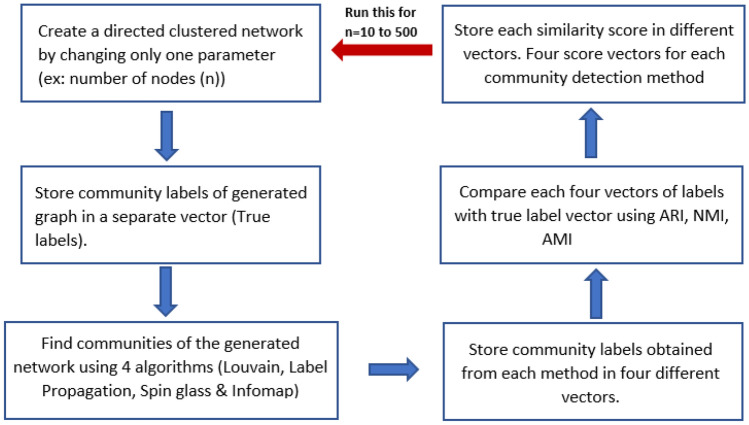
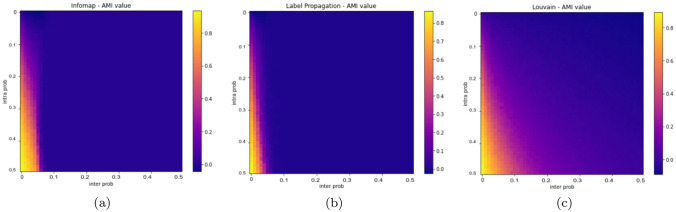
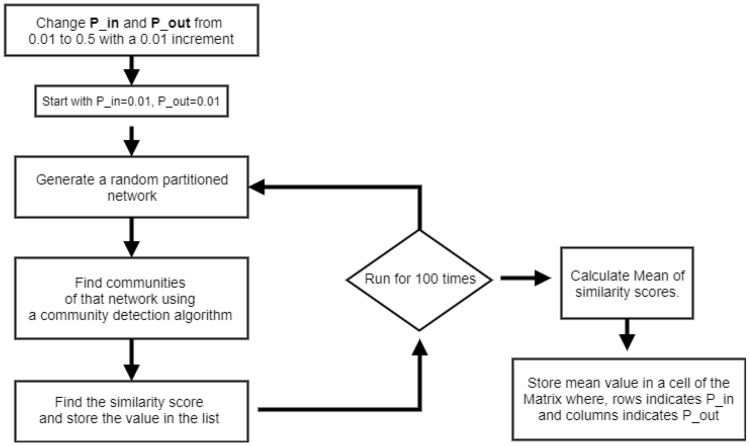
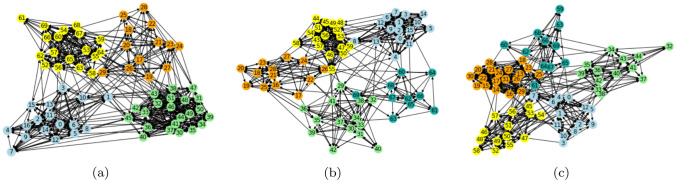
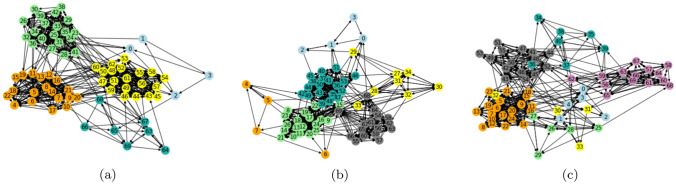
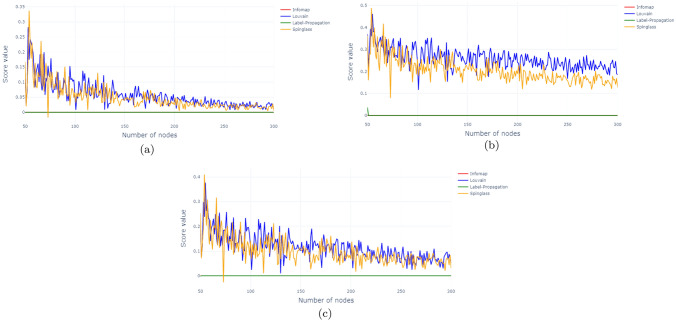
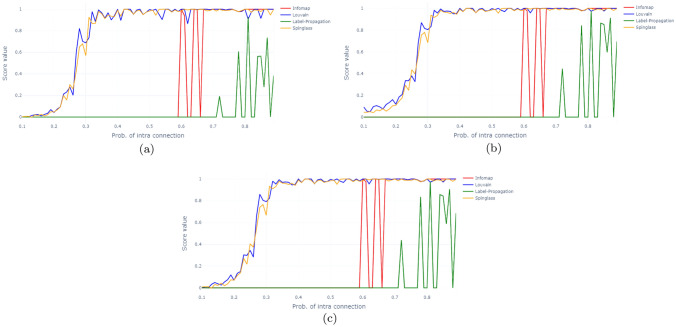
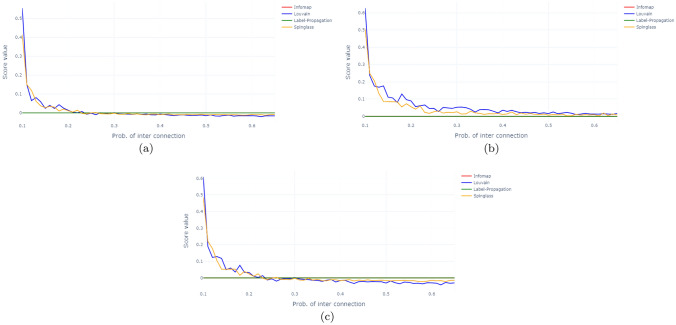
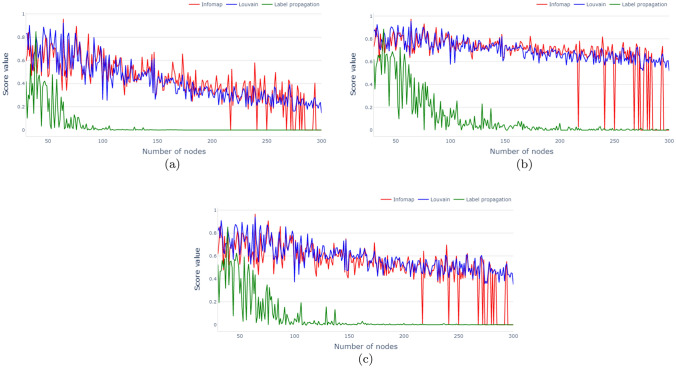
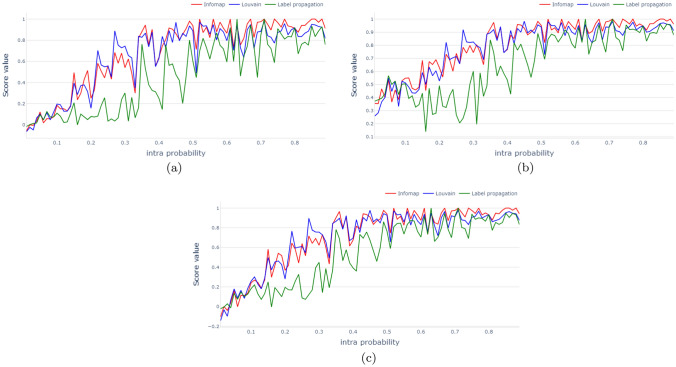
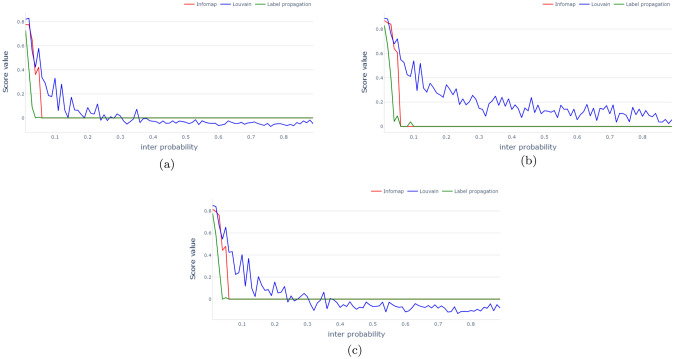
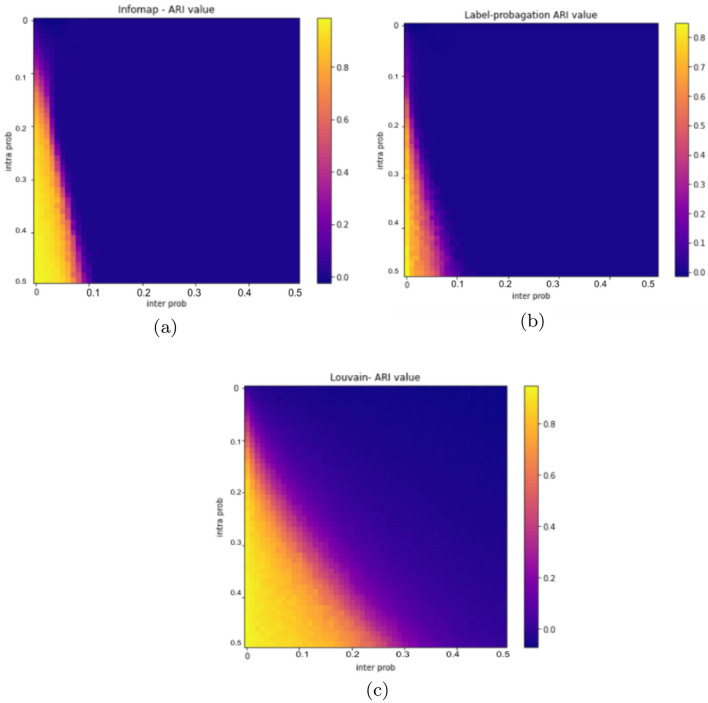
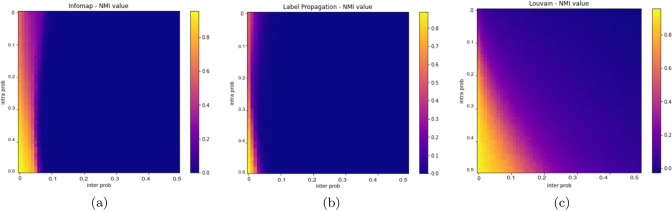
Identification of sub-networks within a network is essential to understand the functionality of a network. This process is called as 'Community detection'. There are various existing community detection algorithms, and the performance of these algorithms can be varied based on the network structure. In this paper, we introduce a novel random graph generator using a mixture of Gaussian distributions. The community sizes of the generated network depend on the given Gaussian distributions. We then develop simulation studies to understand the impact of density and sparsity of the network on community detection. We use Infomap, Label propagation, Spinglass, and Louvain algorithms to detect communities. The similarity between true communities and detected communities is evaluated using Adjusted Rand Index, Adjusted Mutual Information, and Normalized Mutual Information similarity scores. We also develop a method to generate heatmaps to compare those similarity score values. The results indicate that the Louvain algorithm has the highest capacity to detect perfect communities while Label Propagation has the lowest capacity.
识别网络中的子网对于理解网络功能至关重要。这个过程被称为“社区检测”。现有各种社区检测算法,这些算法的性能会因网络结构而异。在本文中,我们介绍了一种使用高斯分布混合的新型随机图生成器。生成网络的社区大小取决于给定的高斯分布。然后,我们开展模拟研究以了解网络的密度和稀疏性对社区检测的影响。我们使用Infomap、标签传播、自旋玻璃和Louvain算法来检测社区。使用调整兰德指数、调整互信息和归一化互信息相似性分数来评估真实社区与检测到的社区之间的相似性。我们还开发了一种生成热图的方法来比较这些相似性分数值。结果表明,Louvain算法检测完美社区的能力最高,而标签传播算法的能力最低。