MRC Human Genetics Unit, Institute of Genetics & Cancer, University of Edinburgh, Edinburgh, United Kingdom.
PLoS Comput Biol. 2022 Feb 4;18(2):e1009858. doi: 10.1371/journal.pcbi.1009858. eCollection 2022 Feb.
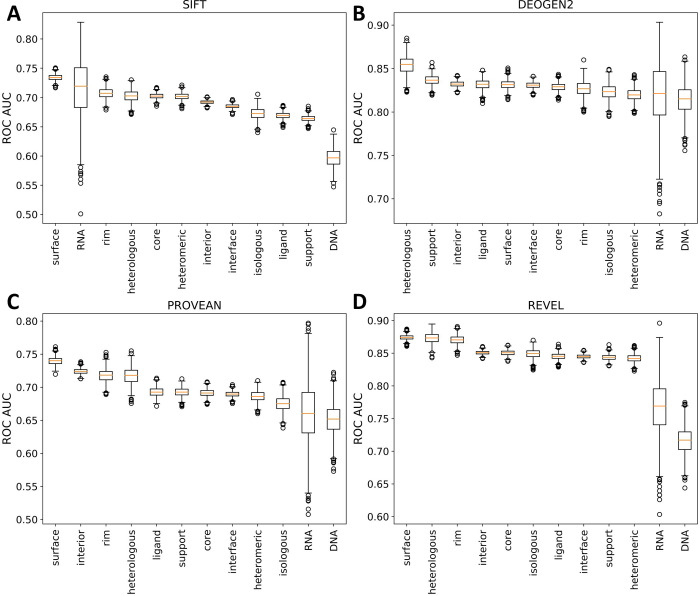
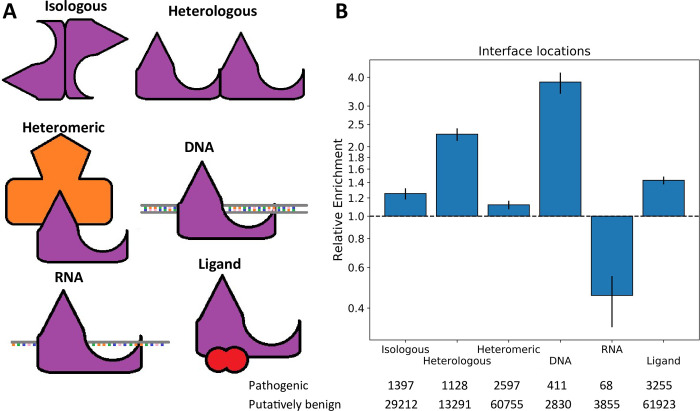
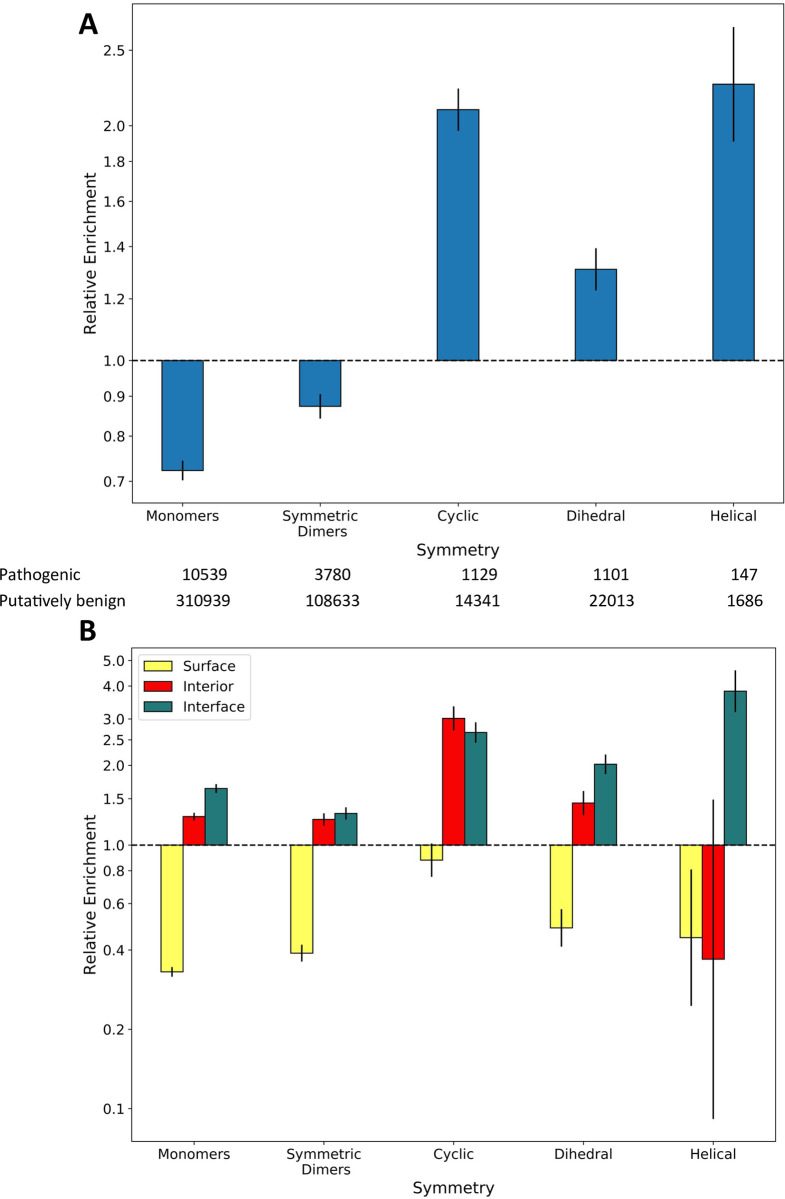
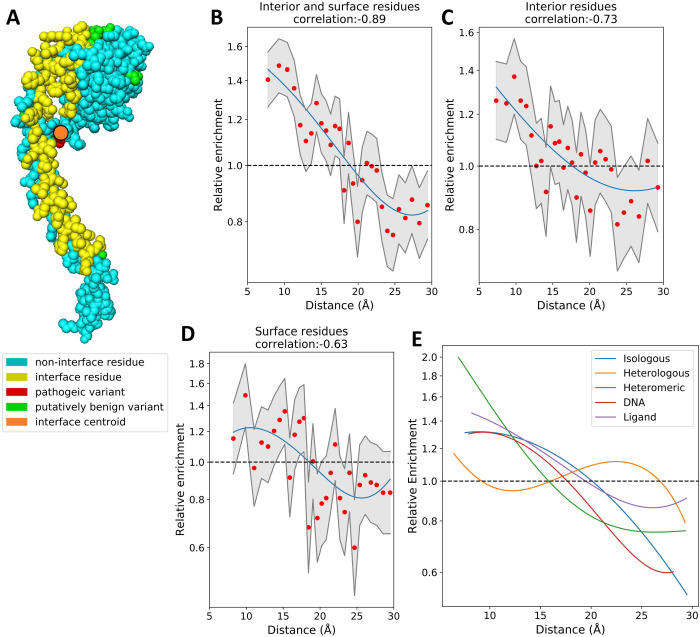
The assembly of proteins into complexes and their interactions with other biomolecules are often vital for their biological function. While it is known that mutations at protein interfaces have a high potential to be damaging and cause human genetic disease, there has been relatively little consideration for how this varies between different types of interfaces. Here we investigate the properties of human pathogenic and putatively benign missense variants at homomeric (isologous and heterologous), heteromeric, DNA, RNA and other ligand interfaces, and at different regions in proteins with respect to those interfaces. We find that different types of interfaces vary greatly in their propensity to be associated with pathogenic mutations, with homomeric heterologous and DNA interfaces being particularly enriched in disease. We also find that residues that do not directly participate in an interface, but are close in three-dimensional space, show a significant disease enrichment. Finally, we observe that mutations at different types of interfaces tend to have distinct property changes when undergoing amino acid substitutions associated with disease, and that this is linked to substantial variability in their identification by computational variant effect predictors.
蛋白质复合物的组装及其与其他生物分子的相互作用通常对其生物功能至关重要。虽然已知蛋白质界面上的突变很可能具有破坏性并导致人类遗传疾病,但对于不同类型的界面之间的差异,人们的关注相对较少。在这里,我们研究了同源(同系物和异源)、异源、DNA、RNA 和其他配体界面以及蛋白质中与这些界面不同区域的致病性和推测良性错义变异的特性。我们发现,不同类型的界面在与致病性突变相关的倾向方面差异很大,同型异源和 DNA 界面特别容易发生疾病。我们还发现,尽管没有直接参与界面,但在三维空间中接近的残基,在疾病中也有明显的富集。最后,我们观察到,在不同类型的界面上发生的突变在与疾病相关的氨基酸取代时往往会发生明显的性质变化,这与计算变异效应预测器对它们的识别有很大的可变性有关。