Department of Pathology and Laboratory Medicine, Rhode Island Hospital, Warren Alpert Medical School at Brown University, Providence, RI, 02903, USA.
Center for Computational Molecular Biology, Brown University, Providence, RI, 02903, USA.
BMC Cancer. 2022 Feb 4;22(1):139. doi: 10.1186/s12885-021-09136-1.
Gastric cancer is a heterogeneous disease with poorly understood genetic and microenvironmental factors. Mutations in collagen genes are associated with genetic diseases that compromise tissue integrity, but their role in tumor progression has not been extensively reported. Aberrant collagen expression has been long associated with malignant tumor growth, invasion, chemoresistance, and patient outcomes. We hypothesized that somatic mutations in collagens could functionally alter the tumor extracellular matrix.
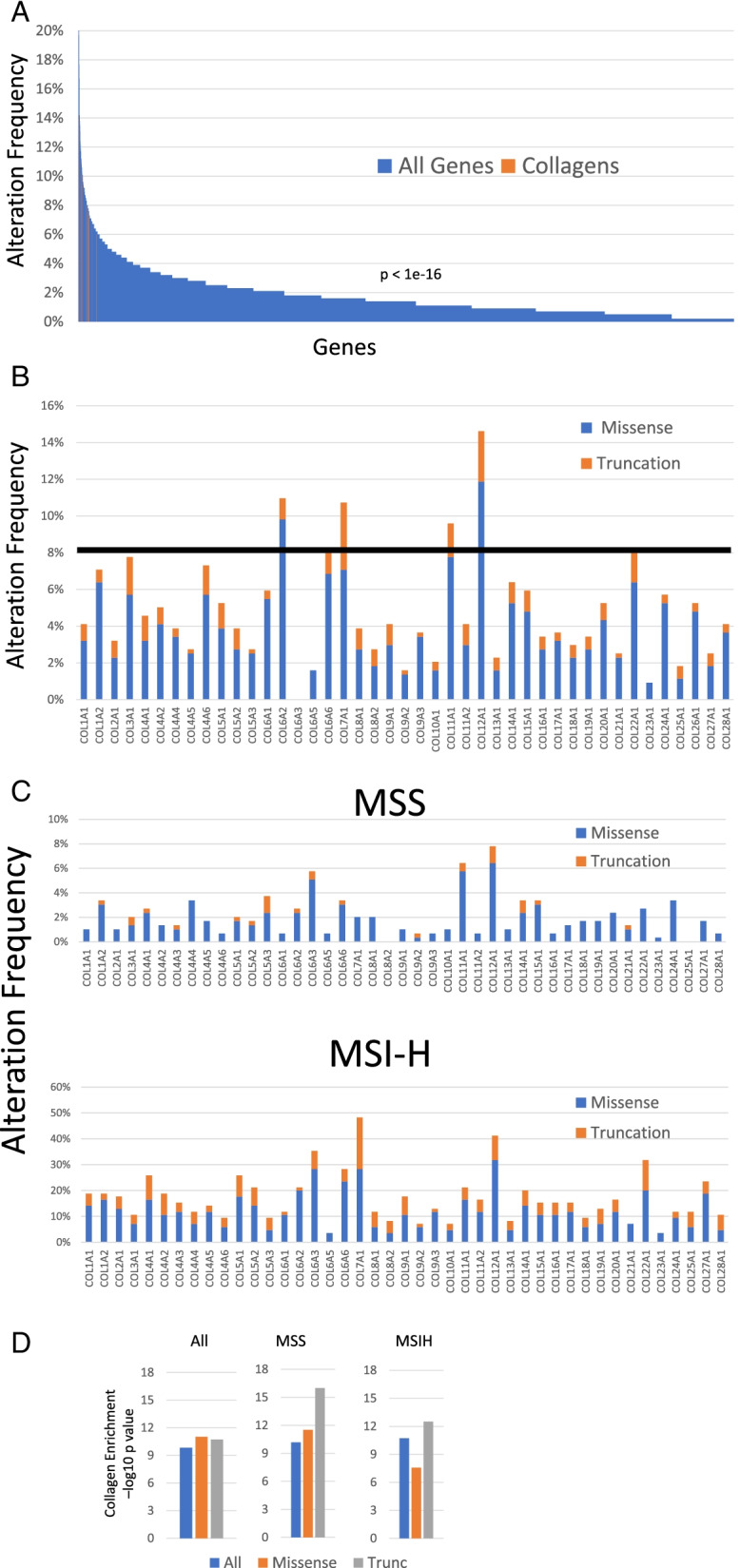
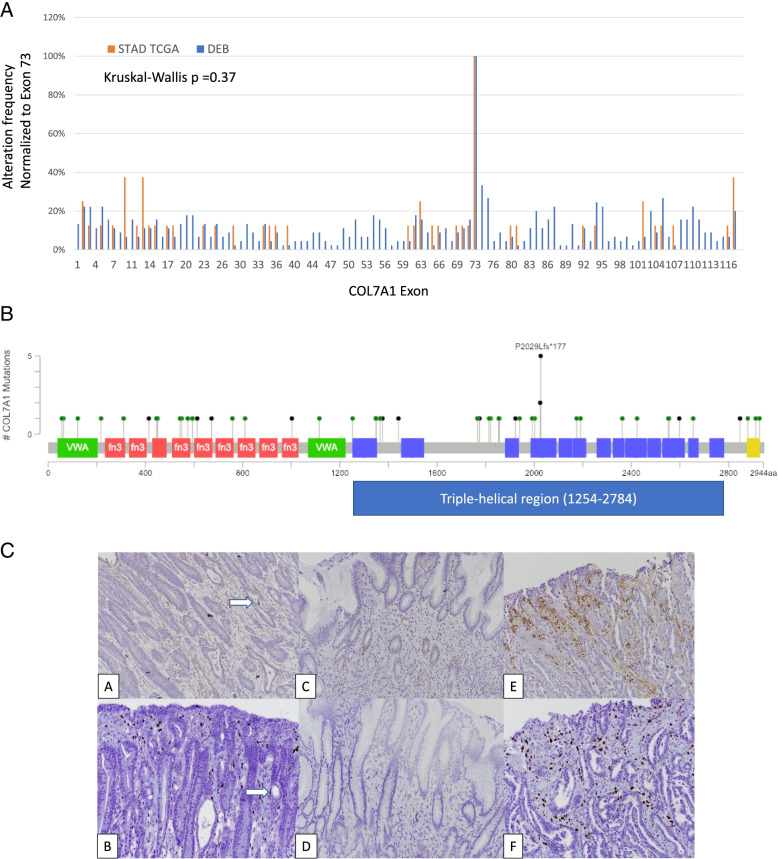
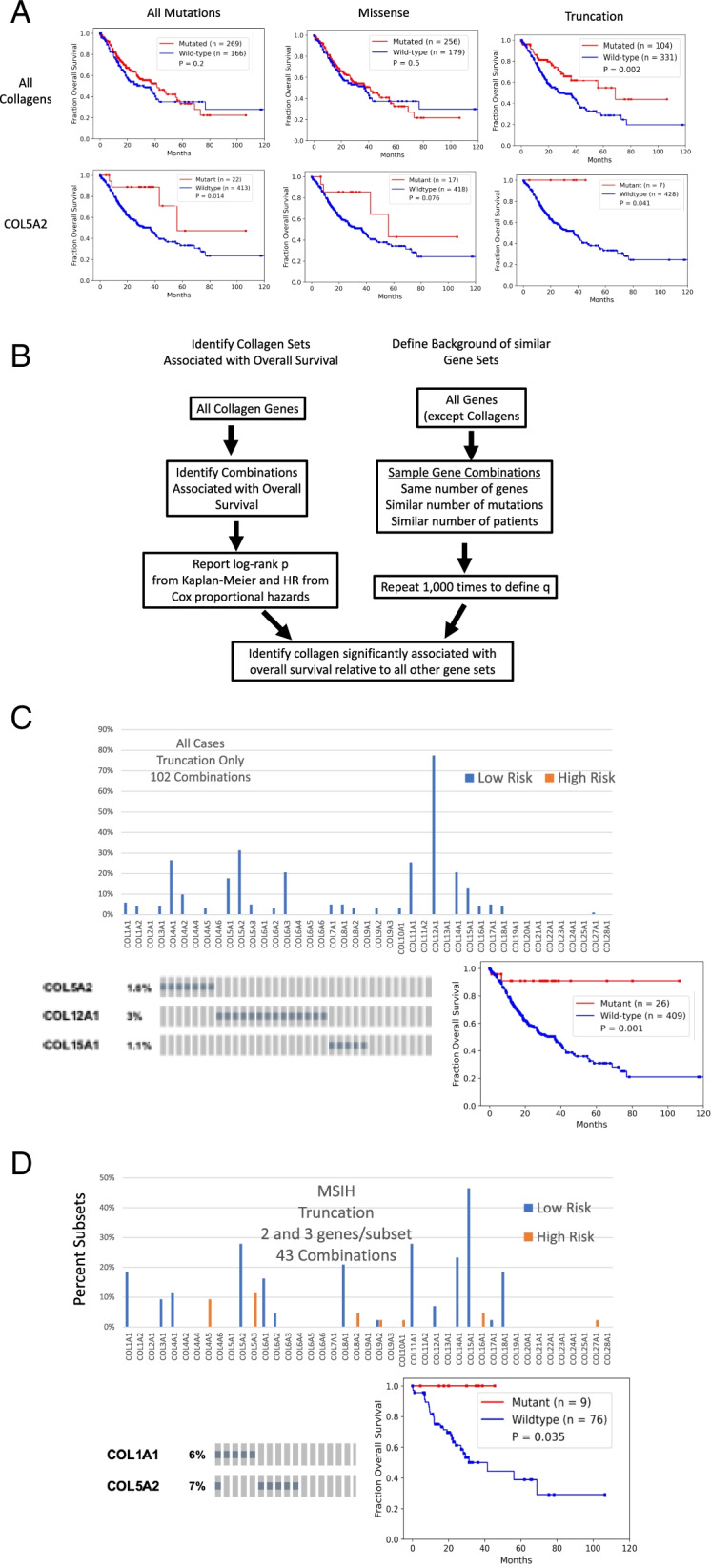
We used publicly available datasets including The Tumor Cancer Genome Atlas (TCGA) to interrogate somatic mutations in collagens in stomach adenocarcinomas. To demonstrate that collagens were significantly mutated above background mutation rates, we used a moderated Kolmogorov-Smirnov test along with combination analysis with a bootstrap approach to define the background accounting for mutation rates. Association between mutations and clinicopathological features was evaluated by Fisher or chi-squared tests. Association with overall survival was assessed by Kaplan-Meier and the Cox-Proportional Hazards Model. Gene Set Enrichment Analysis was used to interrogate pathways. Immunohistochemistry and in situ hybridization tested expression of COL7A1 in stomach tumors.
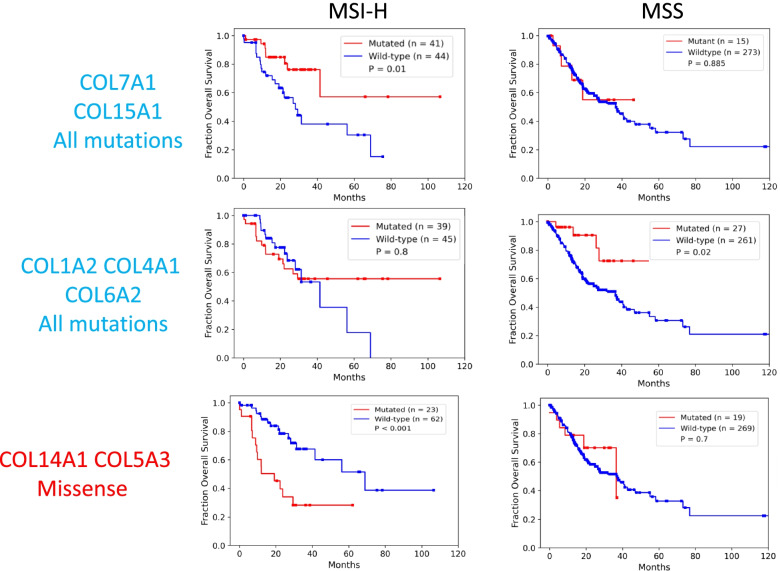
In stomach adenocarcinomas, we identified individual collagen genes and sets of collagen genes harboring somatic mutations at a high frequency compared to background in both microsatellite stable, and microsatellite instable tumors in TCGA. Many of the missense mutations resemble the same types of loss of function mutations in collagenopathies that disrupt tissue formation and destabilize cells providing guidance to interpret the somatic mutations. We identified combinations of somatic mutations in collagens associated with overall survival, with a distinctive tumor microenvironment marked by lower matrisome expression and immune cell signatures. Truncation mutations were strongly associated with improved outcomes suggesting that loss of expression of secreted collagens impact tumor progression and treatment response. Germline collagenopathy variants guided interpretation of impactful somatic mutations on tumors.
These observations highlight that many collagens, expressed in non-physiologically relevant conditions in tumors, harbor impactful somatic mutations in tumors, suggesting new approaches for classification and therapy development in stomach cancer. In sum, these findings demonstrate how classification of tumors by collagen mutations identified strong links between specific genotypes and the tumor environment.
胃癌是一种具有多种遗传和微环境因素的异质性疾病。胶原蛋白基因突变与影响组织完整性的遗传疾病有关,但它们在肿瘤进展中的作用尚未得到广泛报道。异常的胶原蛋白表达长期以来一直与恶性肿瘤的生长、侵袭、化疗耐药性和患者预后相关。我们假设胶原蛋白中的体细胞突变可能会在功能上改变肿瘤细胞外基质。
我们使用了包括肿瘤癌症基因组图谱(TCGA)在内的公开数据集,研究了胃腺癌中胶原蛋白的体细胞突变。为了证明胶原蛋白的突变频率明显高于背景突变率,我们使用了一种适度的柯尔莫哥洛夫-斯米尔诺夫检验,并结合了一种带有引导方法的组合分析,以确定考虑突变率的背景。通过 Fisher 或卡方检验评估突变与临床病理特征之间的关联。通过 Kaplan-Meier 和 Cox 比例风险模型评估与总生存期的关联。基因集富集分析用于探究通路。免疫组织化学和原位杂交检测了胃肿瘤中 COL7A1 的表达。
在胃腺癌中,我们在 TCGA 中发现了单个胶原蛋白基因和一组胶原蛋白基因,与背景相比,它们在微卫星稳定和微卫星不稳定的肿瘤中具有高频的体细胞突变。许多错义突变类似于胶原蛋白病中相同类型的功能丧失突变,这些突变破坏组织形成并使细胞不稳定,为解释体细胞突变提供了指导。我们确定了与总生存期相关的胶原蛋白体细胞突变组合,其特征是肿瘤微环境中基质表达和免疫细胞特征较低。截断突变与改善的结果强烈相关,这表明分泌胶原蛋白的表达缺失会影响肿瘤的进展和治疗反应。胶原病的种系变体指导了对肿瘤中具有重要影响的体细胞突变的解释。
这些观察结果强调了许多在肿瘤中以非生理相关条件表达的胶原蛋白在肿瘤中存在具有重要影响的体细胞突变,这为胃癌的分类和治疗方法的发展提供了新的途径。总之,这些发现表明通过胶原蛋白突变对肿瘤进行分类,可以确定特定基因型与肿瘤环境之间的强关联。