Key Laboratory of Agricultural Water Resources, Center for Agricultural Resources Research, Institute of Genetics and Developmental Biology, Chinese Academy of Sciences, 286 Huaizhong Road, Shijiazhuang, 050021, China.
Water Systems and Global Change Group, Wageningen University & Research, Droevendaalsesteeg 3, 6708 PB, Wageningen, the Netherlands.
Nat Commun. 2022 Feb 8;13(1):730. doi: 10.1038/s41467-022-28351-3.
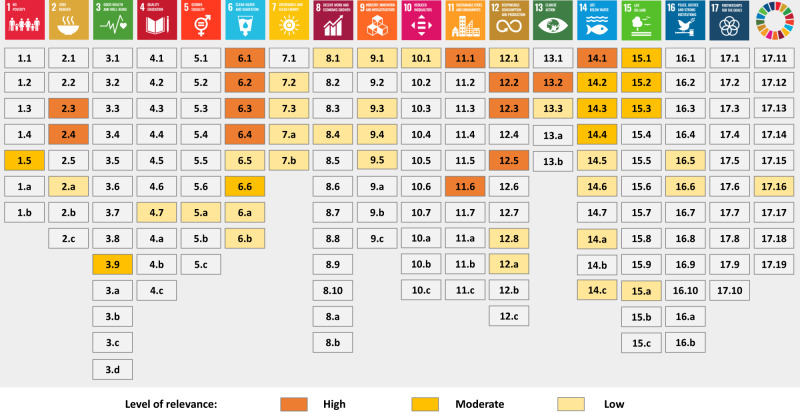
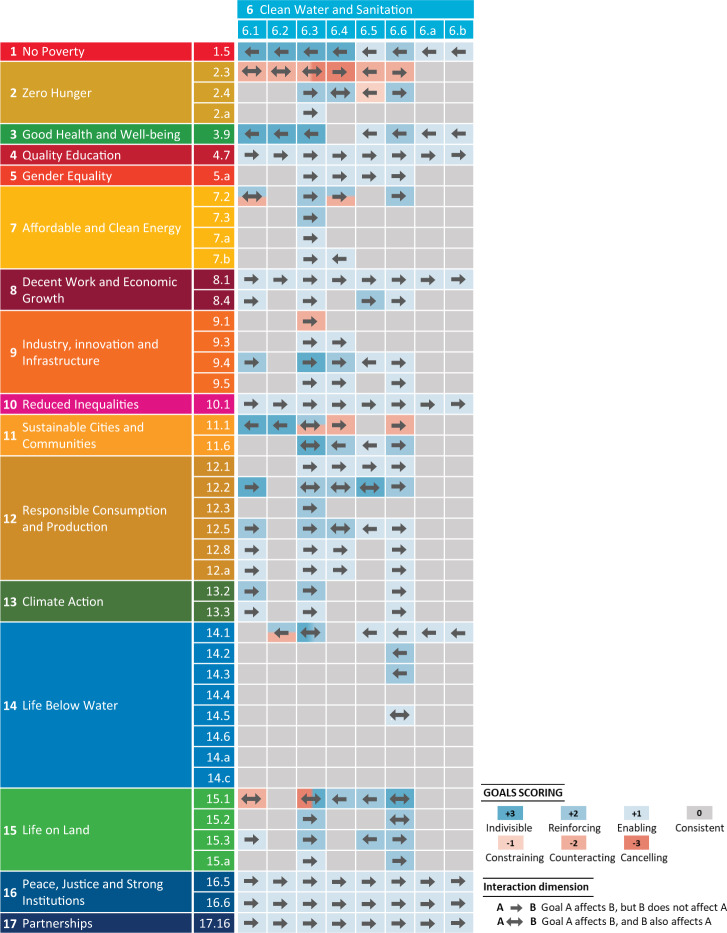
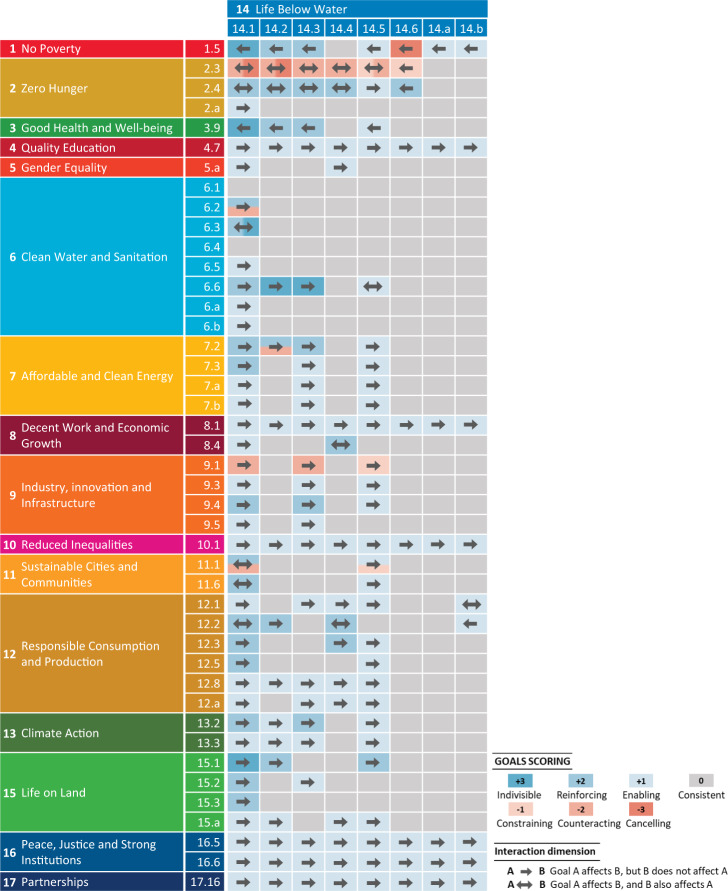
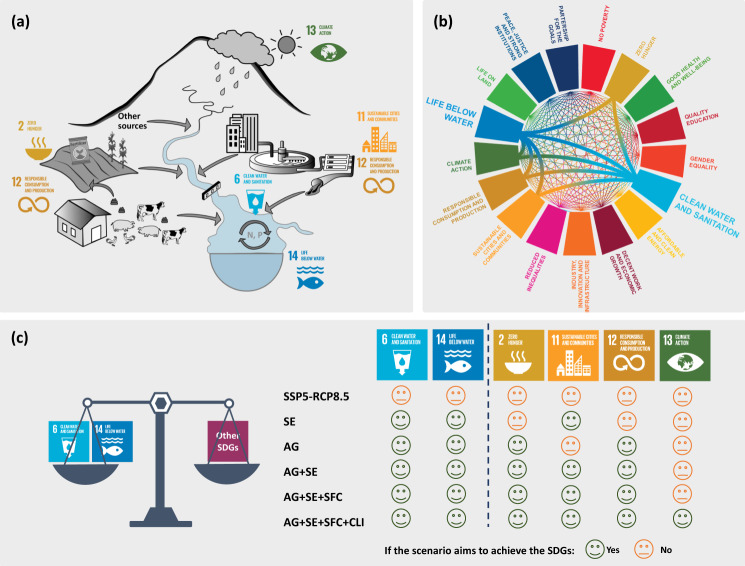
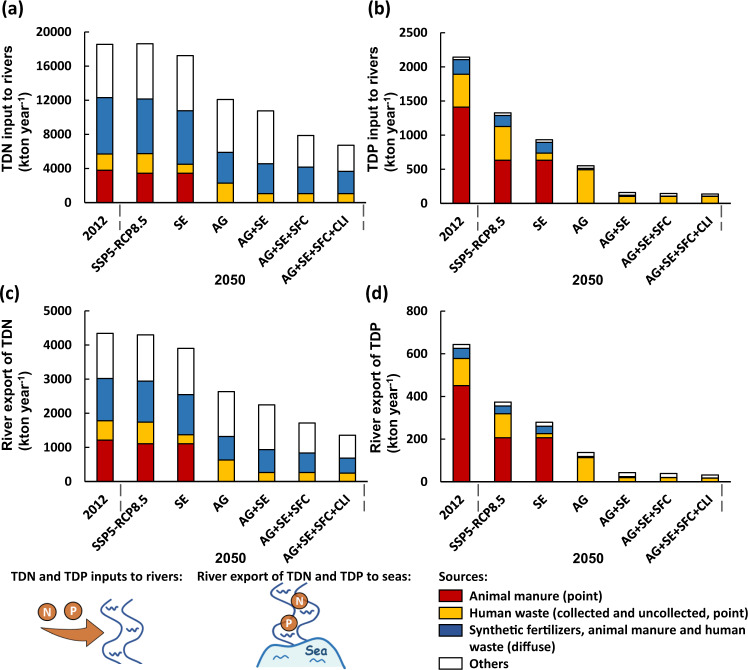
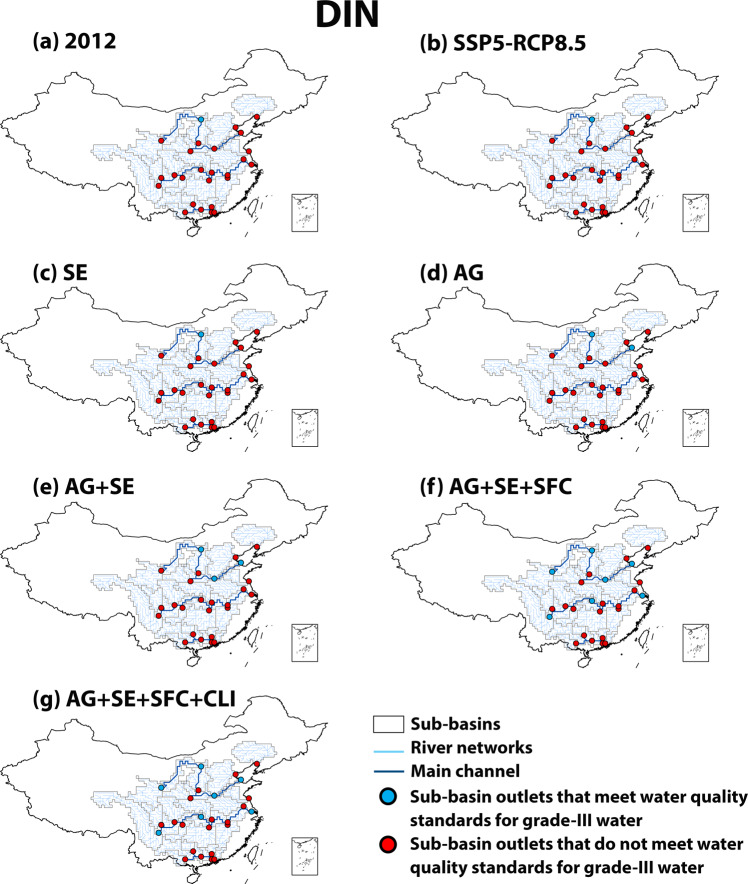
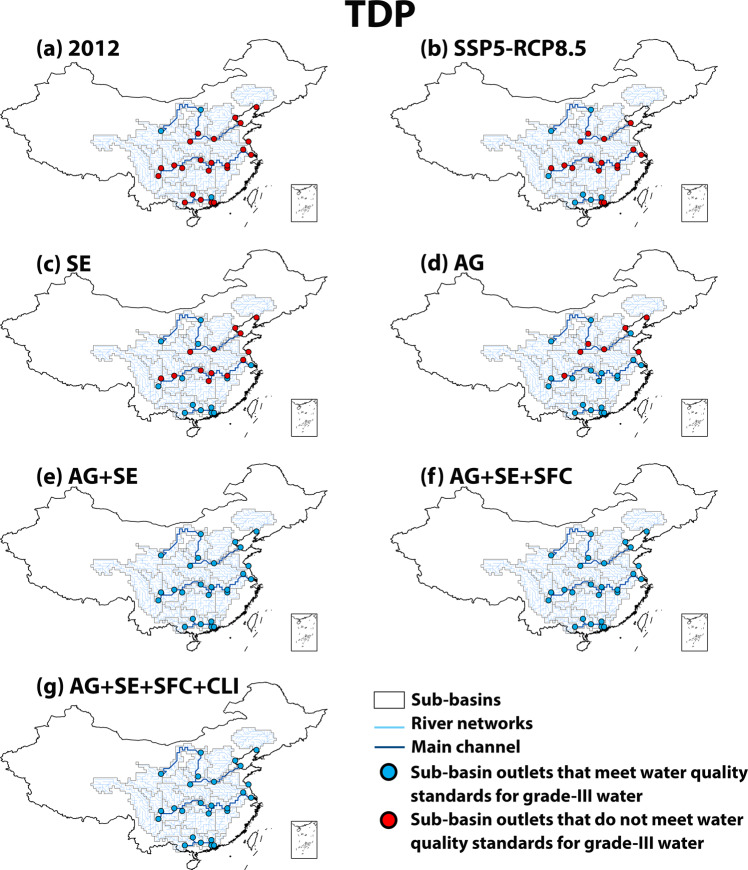
Meeting the United Nations' (UN's) 17 Sustainable Development Goals (SDGs) has become a worldwide mission. How these SDGs interrelate, however, is not well known. We assess the interactions between SDGs for the case of water pollution by nutrients in China. The results show 319 interactions between SDGs for clean water (SDGs 6 and 14) and other SDGs, of which 286 are positive (synergies) and 33 are negative (tradeoffs) interactions. We analyze six scenarios in China accounting for the cobenefits of water pollution control using a large-scale water quality model. We consider scenarios that benefit from synergies and avoid tradeoffs. Our results show that effective pollution control requires accounting for the interactions between SDGs. For instance, combining improved nutrient management, efficient food consumption, and climate mitigation is effective for simultaneously meeting SDGs 6 and 14 as well as other SDGs for food, cities and climate. Our study serves as an example of assessing SDG interactions in environmental policies in China as well as in other regions of the world.
实现联合国(UN)的 17 项可持续发展目标(SDGs)已成为全球使命。然而,这些 SDGs 之间的相互关系并不为人所知。我们以中国的营养物质水污染为例,评估了 SDGs 之间的相互作用。结果表明,清洁水(SDGs 6 和 14)和其他 SDGs 之间存在 319 种相互作用,其中 286 种是积极的(协同作用),33 种是消极的(权衡取舍)。我们使用大规模水质模型分析了中国的六个情景,这些情景考虑了水污染控制的共同效益。我们考虑了受益于协同作用并避免权衡取舍的情景。我们的结果表明,有效的污染控制需要考虑 SDGs 之间的相互作用。例如,结合改进的养分管理、高效的食品消费和气候缓解措施,对于同时实现 SDGs 6 和 14 以及其他与食品、城市和气候相关的 SDGs 是有效的。我们的研究为评估中国以及世界其他地区环境政策中的 SDG 相互作用提供了范例。