Hoori Ammar, Hu Tao, Lee Juhwan, Al-Kindi Sadeer, Rajagopalan Sanjay, Wilson David L
Department of Biomedical Engineering, Case Western Reserve University, Cleveland, OH, 44106, USA.
Department of Cardiology, University Hospitals Cleveland Medical Center, Cleveland, OH, 44106, USA.
Sci Rep. 2022 Feb 10;12(1):2276. doi: 10.1038/s41598-022-06351-z.
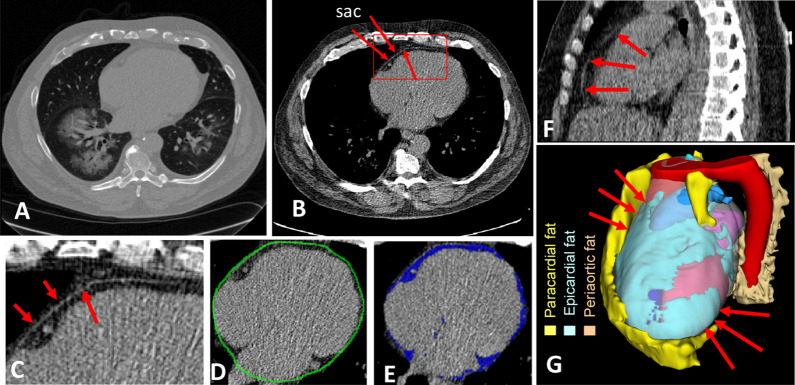
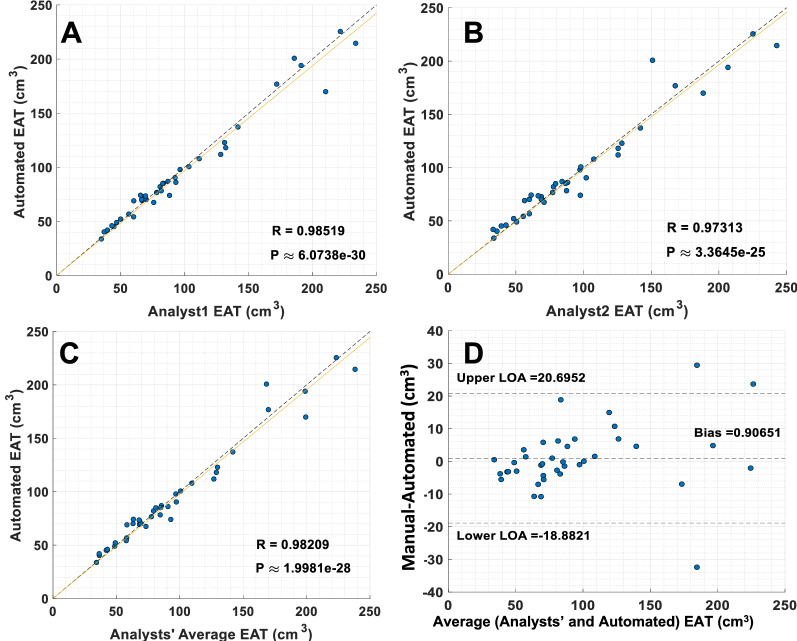
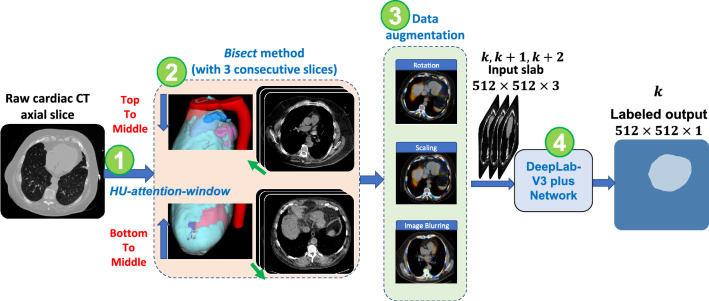
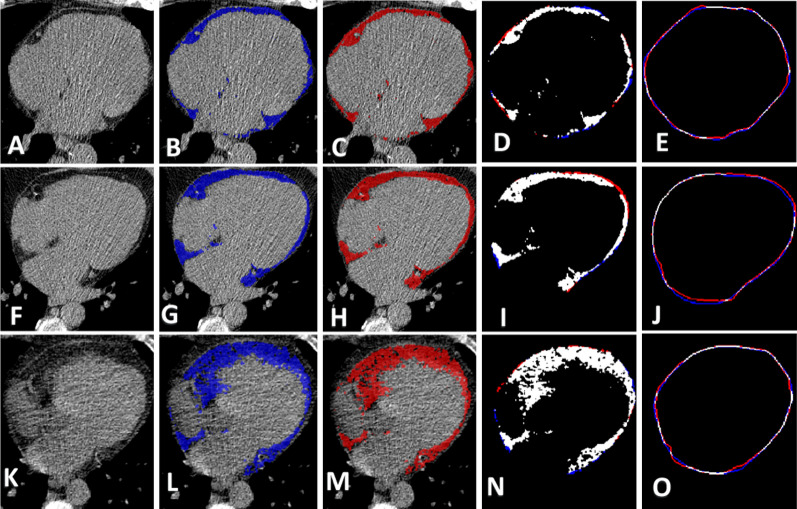
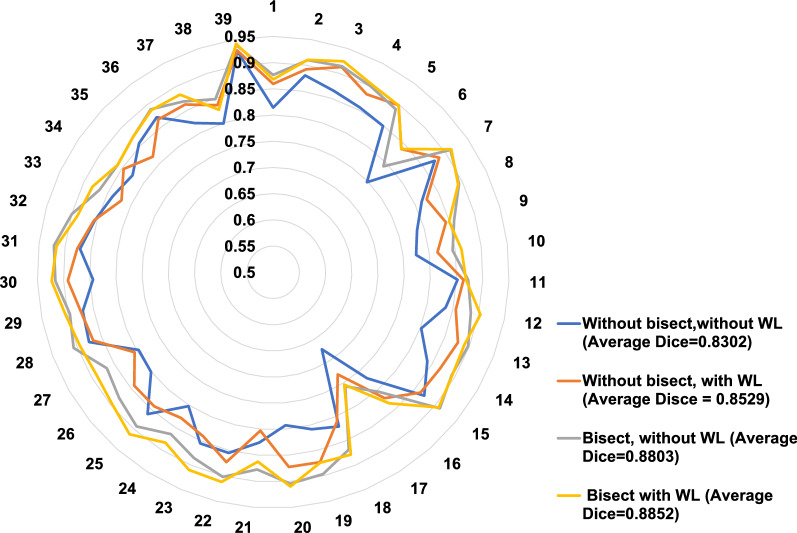
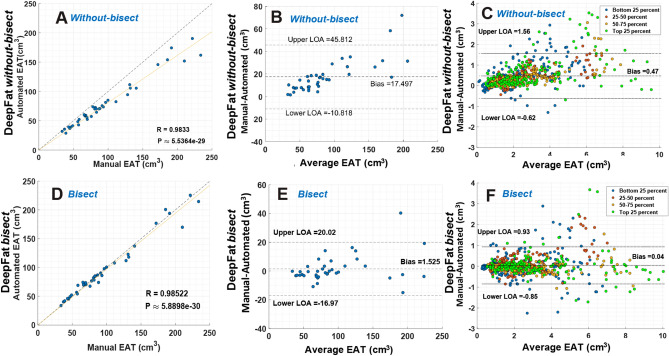
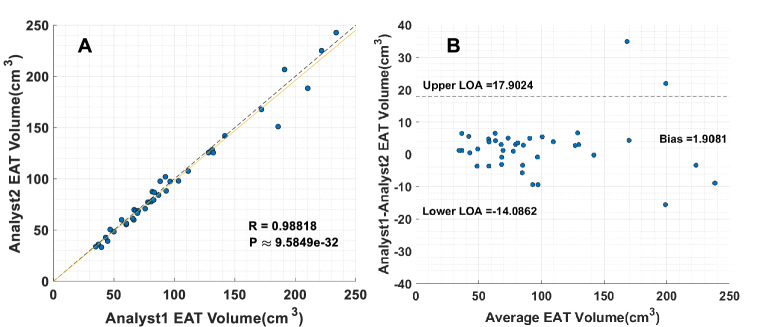
Epicardial adipose tissue volume (EAT) has been linked to coronary artery disease and the risk of major adverse cardiac events. As manual quantification of EAT is time-consuming, requires specialized training, and is prone to human error, we developed a deep learning method (DeepFat) for the automatic assessment of EAT on non-contrast low-dose CT calcium score images. Our DeepFat intuitively segmented the tissue enclosed by the pericardial sac on axial slices, using two preprocessing steps. First, we applied a HU-attention-window with a window/level 350/40-HU to draw attention to the sac and reduce numerical errors. Second, we applied a novel look ahead slab-of-slices with bisection ("bisect") in which we split the heart into halves and sequenced the lower half from bottom-to-middle and the upper half from top-to-middle, thereby presenting an always increasing curvature of the sac to the network. EAT volume was obtained by thresholding voxels within the sac in the fat window (- 190/- 30-HU). Compared to manual segmentation, our algorithm gave excellent results with volume Dice = 88.52% ± 3.3, slice Dice = 87.70% ± 7.5, EAT error = 0.5% ± 8.1, and R = 98.52% (p < 0.001). HU-attention-window and bisect improved Dice volume scores by 0.49% and 3.2% absolute, respectively. Variability between analysts was comparable to variability with DeepFat. Results compared favorably to those of previous publications.
心外膜脂肪组织体积(EAT)与冠状动脉疾病及主要不良心脏事件风险相关。由于手动定量EAT耗时、需要专业培训且容易出现人为误差,我们开发了一种深度学习方法(DeepFat),用于在非增强低剂量CT钙评分图像上自动评估EAT。我们的DeepFat使用两个预处理步骤,直观地在轴向切片上分割心包囊所包围的组织。首先,我们应用了一个窗宽/窗位为350/40 - HU的HU注意力窗口,以吸引对心包囊的关注并减少数值误差。其次,我们应用了一种新颖的带有二分法的前瞻性切片板(“二分法”),即将心脏分成两半,并对下半部分从底部到中部进行排序,对上半部分从顶部到中部进行排序,从而向网络呈现心包囊不断增加的曲率。通过对脂肪窗口(-190 / -30 - HU)内心包囊内的体素进行阈值处理来获得EAT体积。与手动分割相比,我们的算法取得了优异的结果,体积Dice系数 = 88.52% ± 3.3,切片Dice系数 = 87.70% ± 7.5,EAT误差 = 0.5% ± 8.1,相关系数R = 98.52%(p < 0.001)。HU注意力窗口和二分法分别使Dice体积分数绝对提高了0.49%和3.2%。分析人员之间的变异性与DeepFat的变异性相当。结果优于先前出版物中的结果。