Finnish Institute for Health and Welfare, P.O. Box 30, FI-00271, Helsinki, Finland.
Faculty of Social Sciences, University of Helsinki, PO Box 54, 00014, Helsinki, Finland.
BMC Health Serv Res. 2022 Feb 12;22(1):188. doi: 10.1186/s12913-022-07584-4.
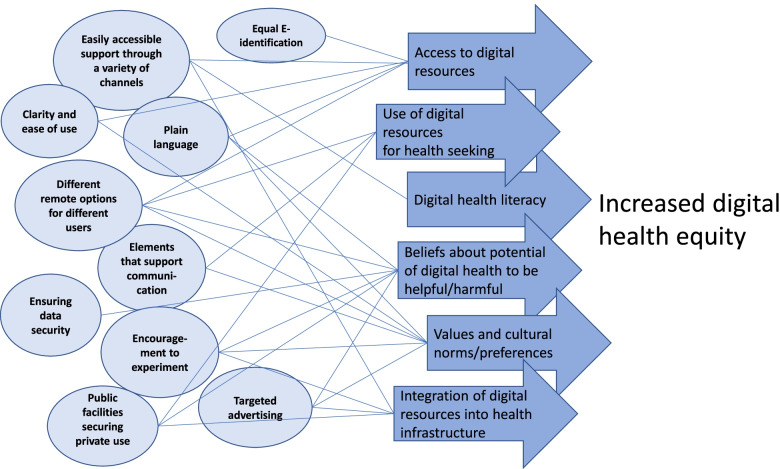
The COVID-19 pandemic has given an unprecedented boost to already increased digital health services, which can place many vulnerable groups at risk of digital exclusion. To improve the likelihood of achieving digital health equity, it is necessary to identify and address the elements that may prevent vulnerable groups from benefiting from digital health services. This study examined the challenges experienced by vulnerable groups in using digital health services during the COVID-19 pandemic.
Qualitative descriptive design was utilized. Semi-structured interviews were conducted between October 2020 and May 2021. The participants (N = 74) were older adults, migrants, mental health service users, high users of health services, and the unemployed. Qualitative content analysis with both inductive and deductive approach was used to analyze the data. Challenges related to the use of digital health services were interpreted through digital determinants of health from the Digital Health Equity Framework.
For most of the participants the access to digital health services was hampered by insufficient digital, and / or local language skills. The lack of support and training, poor health, as well as the lack of strong e-identification or suitable devices also prevented the access. Digital services were not perceived to be applicable for all situations or capable of replacing face-to-face services due to the poor communication in the digital environment. Fears and the lack of trust regarding digital platforms were expressed as well as concerns related to the security of the services. Contact with a health care professional was also considered less personal and more prone to misunderstandings in the digital environment than in face-to-face services. Finally, digital alternatives were not always available as desired by participants, or participants were unaware of existing digital services and their value.
Several development needs in the implementation of digital health services were identified that could improve equal access to and benefits gained from digital services in the future. While digital health services are increasing, traditional face-to-face services will still need to be offered alongside the digital ones to ensure equal access to services.
新冠疫情大流行使得数字医疗服务得到了前所未有的增长,这可能使许多弱势群体面临数字排斥的风险。为了提高实现数字健康公平的可能性,有必要确定并解决可能阻止弱势群体从数字医疗服务中受益的因素。本研究考察了弱势群体在新冠疫情期间使用数字医疗服务时所面临的挑战。
采用定性描述设计。于 2020 年 10 月至 2021 年 5 月间进行了半结构式访谈。参与者(N=74)包括老年人、移民、精神卫生服务使用者、高频率使用卫生服务者和失业者。使用定性内容分析法(结合归纳和演绎方法)对数据进行分析。通过数字健康公平框架中的数字健康决定因素来解释与数字医疗服务使用相关的挑战。
对于大多数参与者来说,数字和/或当地语言技能不足限制了他们获取数字医疗服务的机会。缺乏支持和培训、健康状况不佳、缺乏强大的电子身份识别或合适的设备也阻碍了服务的获取。由于数字环境中的沟通不畅,数字服务被认为并不适用于所有情况,也无法替代面对面服务。参与者还表达了对数字平台的恐惧和不信任,以及对服务安全性的担忧。与医疗保健专业人员的联系也被认为在数字环境中不如面对面服务那么有个人感,更容易产生误解。最后,数字替代方案并不总是如参与者所愿可用,或者参与者不知道现有的数字服务及其价值。
确定了数字医疗服务实施中需要改进的几个发展需求,这将有助于未来改善数字服务的平等获取和受益。虽然数字医疗服务在不断增加,但仍需要提供传统的面对面服务,以确保服务的平等获取。