Chen Elizabeth, Moracco Kathryn E, Kainz Kirsten, Muessig Kathryn E, Tate Deborah F
Department of Health Behavior, Gillings School of Global Public Health, The University of North Carolina at Chapel Hill, Chapel Hill, NC, USA.
School of Social Work, The University of North Carolina at Chapel Hill, Chapel Hill, NC, USA.
Digit Health. 2022 Feb 7;8:20552076211067660. doi: 10.1177/20552076211067660. eCollection 2022 Jan-Dec.
The acceptability of health interventions is centrally important to achieving their desired health outcomes. The construct of acceptability of mobile health interventions among adolescents is neither well-defined nor consistently operationalized.
Building on the theoretical framework of acceptability, these two studies developed and assessed the reliability and validity of a new scale to measure the acceptability of mobile health applications ("apps") among adolescents.
We followed a structured scale development process including exploratory factor analyses (EFAs), confirmatory factor analyses (CFAs), and employed structural equation modeling (SEM) to assess the relationship between the scale and app usage. Adolescent participants used the healthy eating app and completed the acceptability scale at baseline and one-week follow-up.
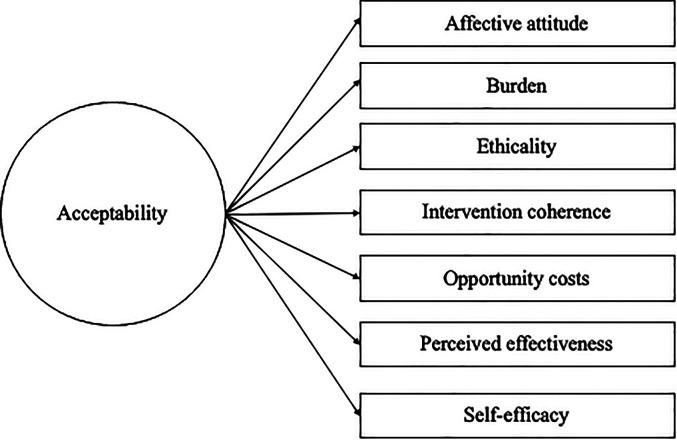
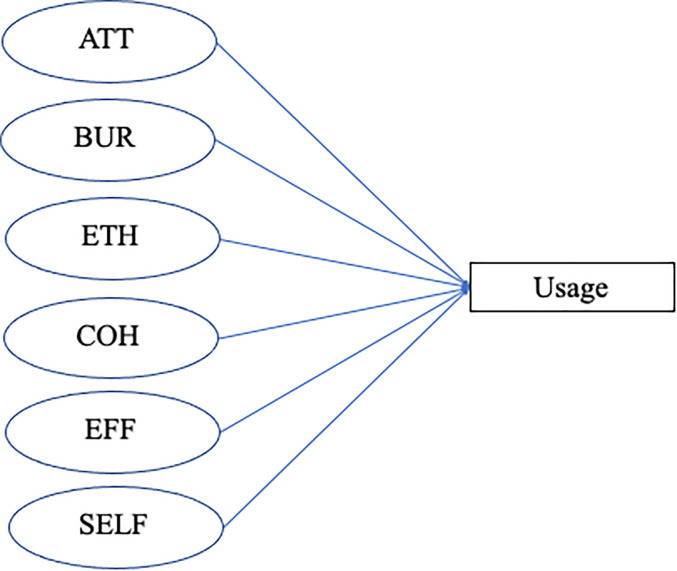
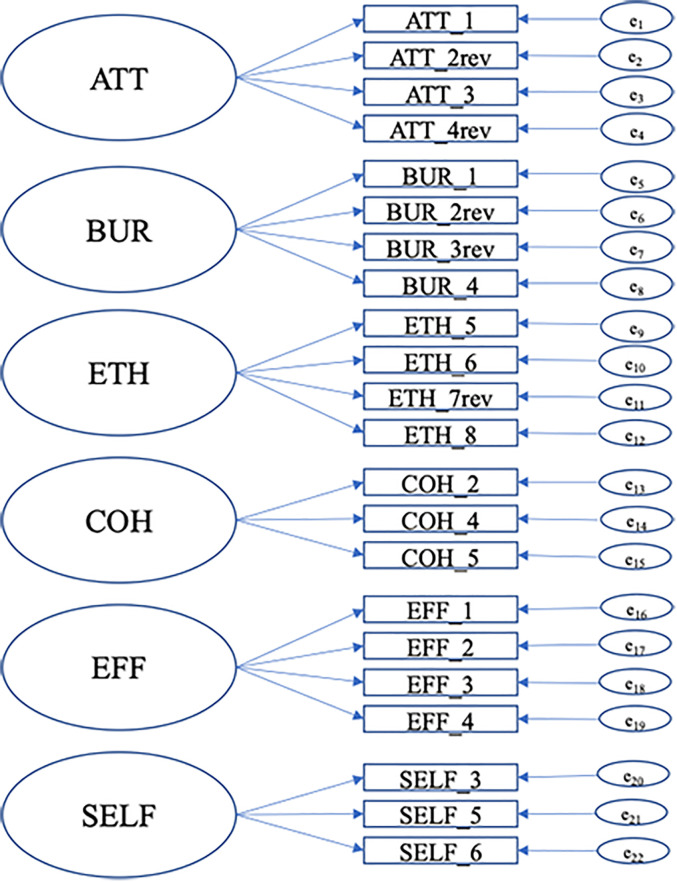
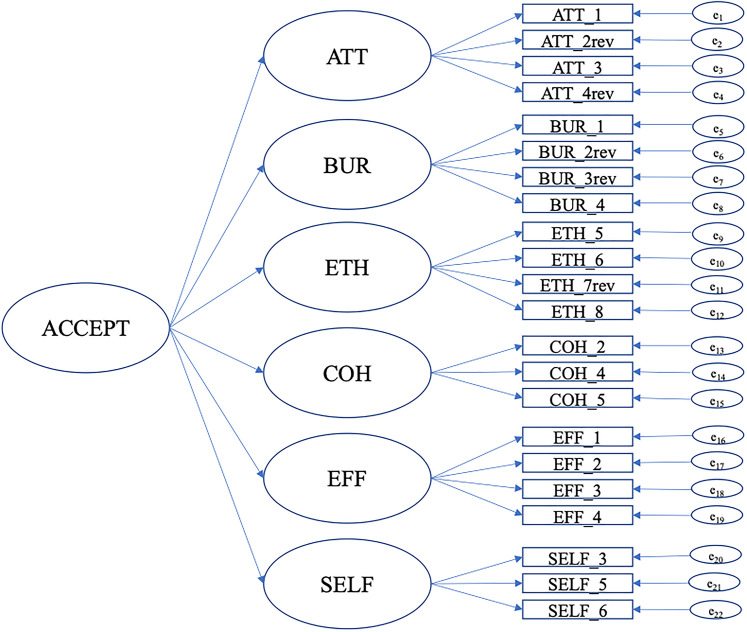
EFA ( = 182) determined that the acceptability of health apps was a multidimensional construct with six latent factors: affective attitude, burden, ethicality, intervention coherence, perceived effectiveness, and self-efficacy. CFA ( = 161) from the second sample affirmed the six-factor structure and the unidimensional structures for each of the six subscales. However, CFA did not confirm the higher-order latent factor model suggesting that the six subscales reflect unique aspects of acceptability. SEM indicated that two of the subscales-ethicality and self-efficacy-were predictive of health app usage at one-week follow-up.
These results highlight the importance of ethicality and self-efficacy for health app acceptability. Future research testing and adapting this new acceptability scale will enhance measurement tools in the fields of mobile health and adolescent health.
健康干预措施的可接受性对于实现其预期的健康结果至关重要。青少年对移动健康干预措施的可接受性这一概念既没有得到很好的界定,也没有得到一致的实施。
基于可接受性的理论框架,这两项研究开发并评估了一种新量表的信度和效度,以测量青少年对移动健康应用程序(“应用”)的可接受性。
我们遵循了一个结构化的量表开发过程,包括探索性因素分析(EFA)、验证性因素分析(CFA),并采用结构方程模型(SEM)来评估量表与应用使用之间的关系。青少年参与者使用健康饮食应用程序,并在基线和一周随访时完成可接受性量表。
探索性因素分析(n = 182)确定,健康应用程序的可接受性是一个多维概念,有六个潜在因素:情感态度、负担、道德性、干预连贯性、感知有效性和自我效能感。第二个样本的验证性因素分析(n = 161)确认了六因素结构以及六个子量表各自的单维结构。然而,验证性因素分析并未证实高阶潜在因素模型,这表明六个子量表反映了可接受性的独特方面。结构方程模型表明,在一周随访时,其中两个子量表——道德性和自我效能感——可预测健康应用程序的使用情况。
这些结果突出了道德性和自我效能感对健康应用程序可接受性的重要性。未来测试和调整这种新的可接受性量表的研究将改进移动健康和青少年健康领域的测量工具。