Eltlhawy Basma, Fouda Noha, Eldesouky Ibrahim
PhD Candidate, Assistant Lecturer, Department of Mechanical Engineering, Higher Future Institute of Engineering and Technology, Mansoura, Egypt.
PhD, Department of Production and Mechanical Design Engineering, Faculty of Engineering, Mansoura University, Egypt.
J Biomed Phys Eng. 2022 Feb 1;12(1):75-82. doi: 10.31661/jbpe.v0i0.2005-1116. eCollection 2022 Feb.
Porous materials are recommended for orthopedic applications as they eliminate issues of interfacial instability with tissues and reduce mechanical mismatch of the young's modulus.
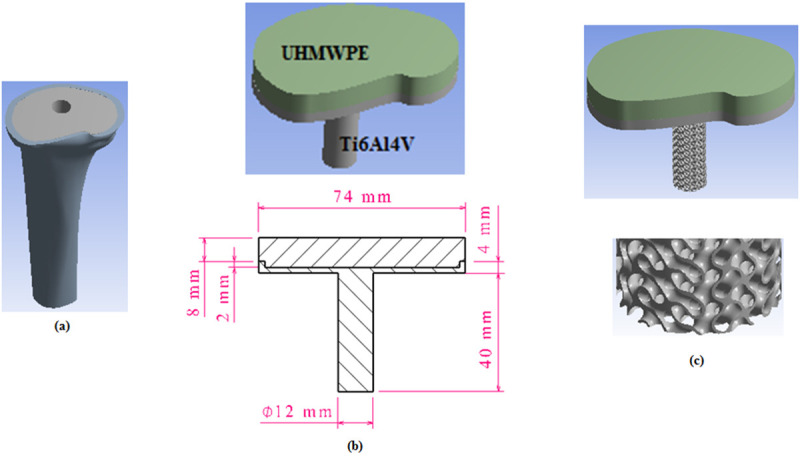
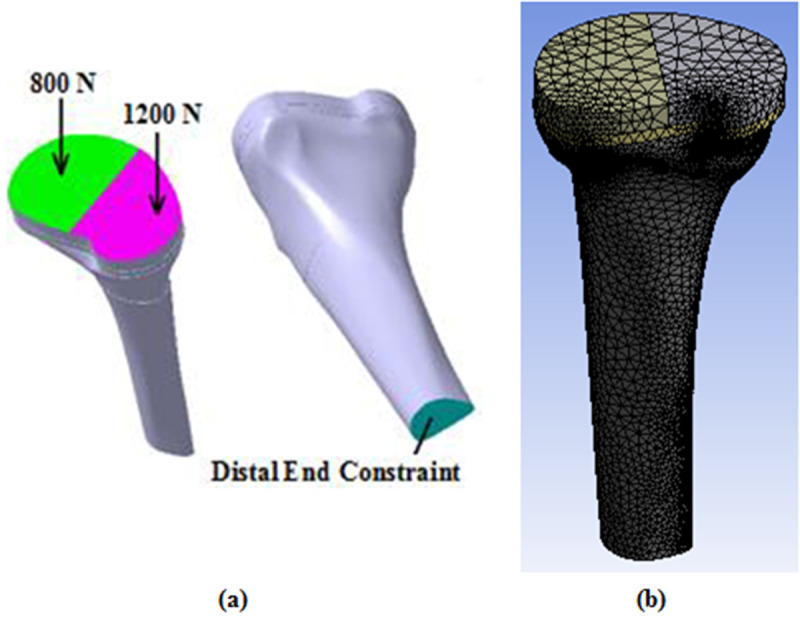
The current research provides a finite element analysis (FEA) to investigate porous gyroid Ti6Al4V structure compared to a solid stem model for human tibial-knee implantation of total knee replacement (TKR).
In this study, the implant proximal portion was designed as porous gyroid Ti6Al4V structure with 500 µm pore size. CATIA V5R18 was used for modeling both gyroid and full solid models. Structural analysis was carried out using ANSYS R18.1 to evaluate the implant performance.
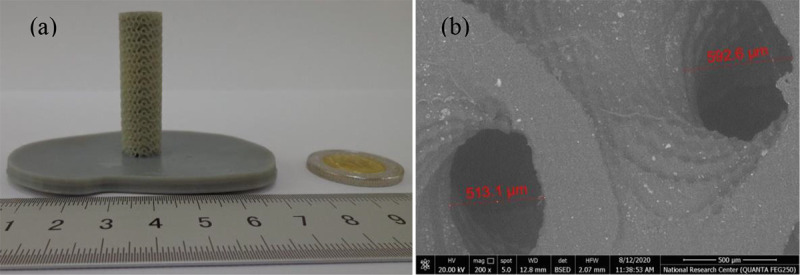
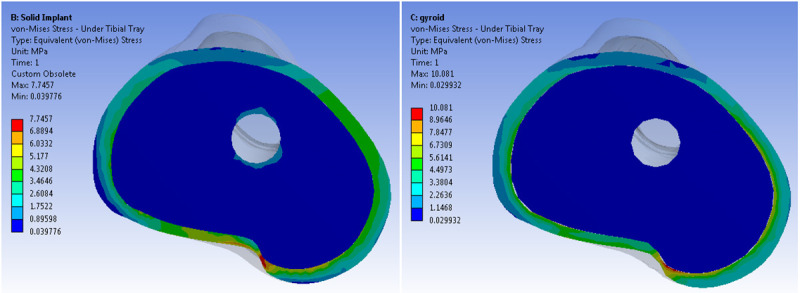
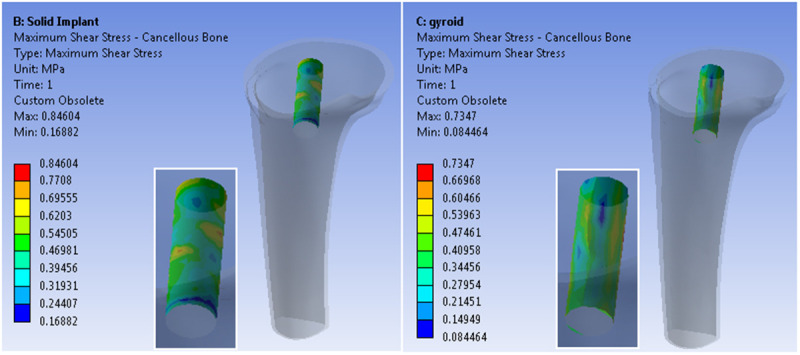
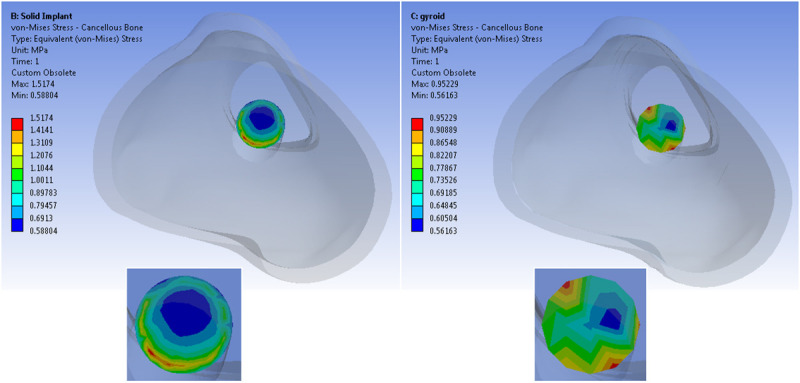
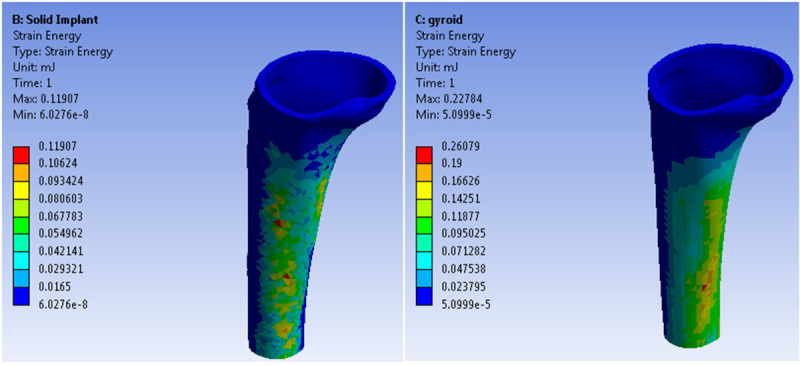
After gyroid implantation, the maximum von-Mises stress obtained under the tibial tray was increased to 10.081 MPa. Also, the maximum shear stress at the stem/bone interface was reduced to 0.7347 MPa. The stress concentration at the stem tip and the bone strain energy were also improved. The minimum factor of safety is 4.6 for the gyroid porous implant. A proof of concept model was additively manufactured successfully with pore size 577.7733 ± 34.762 µm.
The results indicated enhanced clinical performance of the porous tibial-knee implant compared to the solid titanium implant via increasing the maximum von-Mises bone stresses and decreasing the maximum shear stress at the bone/implant interface.
多孔材料因消除了与组织的界面不稳定性问题并降低了杨氏模量的机械不匹配性,而被推荐用于骨科应用。
本研究提供有限元分析(FEA),以研究用于全膝关节置换(TKR)的人体胫骨 - 膝关节植入的多孔类螺旋体Ti6Al4V结构与实心柄模型相比的情况。
在本研究中,植入物近端部分设计为孔径500 µm的多孔类螺旋体Ti6Al4V结构。使用CATIA V5R18对类螺旋体模型和全实心模型进行建模。使用ANSYS R18.1进行结构分析以评估植入物性能。
植入类螺旋体结构后,胫骨托下获得的最大冯·米塞斯应力增加到10.081 MPa。此外,柄/骨界面处的最大剪应力降低到0.7347 MPa。柄尖处的应力集中和骨应变能也得到改善。类螺旋体多孔植入物的最小安全系数为4.6。成功增材制造了一个概念验证模型,孔径为577.7733 ± 34.762 µm。
结果表明,与实心钛植入物相比,多孔胫骨 - 膝关节植入物通过增加最大冯·米塞斯骨应力和降低骨/植入物界面处的最大剪应力,具有更好的临床性能。