• 文献检索
  • 文档翻译
  • 深度研究
  • 学术资讯
  • Suppr Zotero 插件Zotero 插件
  • 邀请有礼
  • 套餐&价格
  • 历史记录
应用&插件
Suppr Zotero 插件Zotero 插件浏览器插件Mac 客户端Windows 客户端微信小程序
定价
高级版会员购买积分包购买API积分包
服务
文献检索文档翻译深度研究API 文档MCP 服务
关于我们
关于 Suppr公司介绍联系我们用户协议隐私条款
关注我们

Suppr 超能文献

核心技术专利:CN118964589B侵权必究
粤ICP备2023148730 号-1Suppr @ 2026

文献检索

告别复杂PubMed语法,用中文像聊天一样搜索,搜遍4000万医学文献。AI智能推荐,让科研检索更轻松。

立即免费搜索

文件翻译

保留排版,准确专业,支持PDF/Word/PPT等文件格式,支持 12+语言互译。

免费翻译文档

深度研究

AI帮你快速写综述,25分钟生成高质量综述,智能提取关键信息,辅助科研写作。

立即免费体验

运用交叉性理论识别坦桑尼亚农牧区发热疾病就医过程中的性别障碍

Using Intersectionality to Identify Gendered Barriers to Health-Seeking for Febrile Illness in Agro-Pastoralist Settings in Tanzania.

作者信息

Barasa Violet, Virhia Jennika

机构信息

The Institute of Development Studies, University of Sussex, Brighton, United Kingdom.

The Institute of Health and Wellbeing, School of Social and Political Science, The University of Glasgow, Glasgow, United Kingdom.

出版信息

Front Glob Womens Health. 2022 Jan 28;2:746402. doi: 10.3389/fgwh.2021.746402. eCollection 2021.

DOI:10.3389/fgwh.2021.746402
PMID:35156085
原文链接:https://pmc.ncbi.nlm.nih.gov/articles/PMC8835114/
Abstract

BACKGROUND

Research has shown that gender is a significant determinant of health-seeking behavior around the world. Gender power relations and lay etiologies of illness can influence the distribution of household resources, including for healthcare. In some rural settings in Africa, gender intersects with multiple forms of health inequities, from proximal socio-cultural factors to more "upstream" or distal health system determinants which can amplify barriers to health-seeking for specific groups in specific contexts.

AIM

We used an intersectionality approach to determine how women in particular, experience gendered barriers to accessing healthcare among Maa and non-Maa speaking agro-pastoralists in northern Tanzania. We also explored lay etiologies of febrile illness, perceptions of health providers and rural health-seeking behavior in order to identify the most common barriers to accessing healthcare in these settings.

METHODS

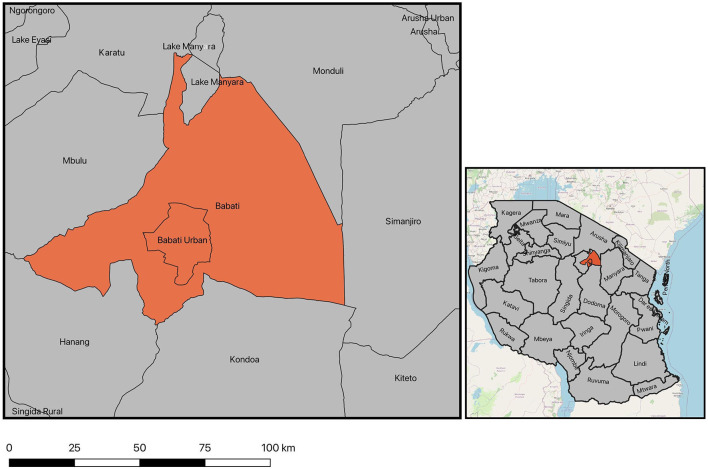
Mixed method ethnographic approaches were used to collect data between 2016 and 2018 from four Maa-speaking and two Swahili-speaking agro-pastoralist villages in northern Tanzania. Maa-speaking villages were based in Naiti, Monduli district while non-Maa speaking villages were selected from Msitu in Babati district. Data on health seeking behaviors was collected through semi-structured questionnaires, in-depth interviews, focus group discussions, and home and facility-based participant observation.

FINDINGS

The results primarily focus on the qualitative outcomes of both studies. We found that febrile illness was locally categorized across a spectrum of severity ranging from normal and expected illness to serious illness that required hospital treatment. Remedial actions taken to treat febrile illness included attending local health facilities, obtaining medicines from drug sellers and use of herbal remedies. We found barriers to health-seeking played out at different scales, from the health system, community (inter-household decision making) and household (intra-household decision making). Gender-based barriers at the household had a profound effect on health-seeking. Younger married women delayed seeking healthcare the most, as they often had to negotiate health-seeking with husbands and extended family members, including co-wives and mothers-in-law who make the majority of health-related decisions.

CONCLUSION

An intersectional approach enabled us to gain a nuanced understanding of determinants of health-seeking behavior beyond the commonly assumed barriers such lack of public health infrastructure. We propose tapping into the potential of senior older women involved in local therapy-management groups, to explore gender-transformative approaches to health-seeking, including tackling gender-based barriers at the community level. While these social factors are important, ultimately, improving the public health infrastructure in these settings is a first step toward addressing structural determinants of treatment-seeking.
https://cdn.ncbi.nlm.nih.gov/pmc/blobs/912b/8835114/d5b49910c671/fgwh-02-746402-g0007.jpg
https://cdn.ncbi.nlm.nih.gov/pmc/blobs/912b/8835114/b6e5680253bf/fgwh-02-746402-g0001.jpg
https://cdn.ncbi.nlm.nih.gov/pmc/blobs/912b/8835114/215f799bbebd/fgwh-02-746402-g0002.jpg
https://cdn.ncbi.nlm.nih.gov/pmc/blobs/912b/8835114/4fba205966ec/fgwh-02-746402-g0003.jpg
https://cdn.ncbi.nlm.nih.gov/pmc/blobs/912b/8835114/0d5e8b4abd14/fgwh-02-746402-g0004.jpg
https://cdn.ncbi.nlm.nih.gov/pmc/blobs/912b/8835114/c8e348ee8d3a/fgwh-02-746402-g0005.jpg
https://cdn.ncbi.nlm.nih.gov/pmc/blobs/912b/8835114/36cf8aada420/fgwh-02-746402-g0006.jpg
https://cdn.ncbi.nlm.nih.gov/pmc/blobs/912b/8835114/d5b49910c671/fgwh-02-746402-g0007.jpg
https://cdn.ncbi.nlm.nih.gov/pmc/blobs/912b/8835114/b6e5680253bf/fgwh-02-746402-g0001.jpg
https://cdn.ncbi.nlm.nih.gov/pmc/blobs/912b/8835114/215f799bbebd/fgwh-02-746402-g0002.jpg
https://cdn.ncbi.nlm.nih.gov/pmc/blobs/912b/8835114/4fba205966ec/fgwh-02-746402-g0003.jpg
https://cdn.ncbi.nlm.nih.gov/pmc/blobs/912b/8835114/0d5e8b4abd14/fgwh-02-746402-g0004.jpg
https://cdn.ncbi.nlm.nih.gov/pmc/blobs/912b/8835114/c8e348ee8d3a/fgwh-02-746402-g0005.jpg
https://cdn.ncbi.nlm.nih.gov/pmc/blobs/912b/8835114/36cf8aada420/fgwh-02-746402-g0006.jpg
https://cdn.ncbi.nlm.nih.gov/pmc/blobs/912b/8835114/d5b49910c671/fgwh-02-746402-g0007.jpg
摘要

背景

研究表明,性别是全球寻求医疗行为的一个重要决定因素。性别权力关系和疾病的民间病因会影响家庭资源的分配,包括医疗保健资源。在非洲的一些农村地区,性别与多种形式的健康不平等相互交织,从近端的社会文化因素到更“上游”或远端的卫生系统决定因素,这些因素会在特定背景下加剧特定群体寻求医疗的障碍。

目的

我们采用交叉性方法来确定坦桑尼亚北部说马赛语和非马赛语的农牧民中,女性在获取医疗保健方面如何经历性别障碍。我们还探讨了发热疾病的民间病因、对医疗服务提供者的看法以及农村的就医行为,以便找出这些地区获取医疗保健最常见的障碍。

方法

2016年至2018年期间,采用混合方法人种志研究方法,从坦桑尼亚北部四个说马赛语和两个说斯瓦希里语的农牧民村庄收集数据。说马赛语的村庄位于蒙杜利区的奈蒂,非马赛语村庄则从巴巴蒂区的姆西图选取。通过半结构化问卷、深入访谈、焦点小组讨论以及家庭和医疗机构参与观察等方式收集就医行为数据。

结果

结果主要聚焦于两项研究的定性结果。我们发现,发热疾病在当地根据严重程度分为不同类别,从正常和预期的疾病到需要住院治疗的严重疾病。治疗发热疾病采取的补救措施包括前往当地医疗机构、从药品销售商处获取药品以及使用草药疗法。我们发现,寻求医疗的障碍在不同层面发挥作用,包括卫生系统、社区(家庭间决策)和家庭(家庭内决策)。家庭层面基于性别的障碍对寻求医疗有深远影响。年轻已婚女性寻求医疗的延迟最为严重,因为她们常常要与丈夫和大家庭成员(包括共同妻子和婆婆,她们做出大多数与健康相关的决策)协商就医事宜。

结论

交叉性方法使我们能够更细致入微地理解寻求医疗行为的决定因素,而不仅仅局限于诸如缺乏公共卫生基础设施等常见假设的障碍。我们建议挖掘参与当地治疗管理小组的老年女性的潜力,探索寻求医疗的性别变革方法,包括解决社区层面基于性别的障碍。虽然这些社会因素很重要,但最终,改善这些地区的公共卫生基础设施是解决寻求治疗的结构决定因素的第一步。

相似文献

1
Using Intersectionality to Identify Gendered Barriers to Health-Seeking for Febrile Illness in Agro-Pastoralist Settings in Tanzania.运用交叉性理论识别坦桑尼亚农牧区发热疾病就医过程中的性别障碍
Front Glob Womens Health. 2022 Jan 28;2:746402. doi: 10.3389/fgwh.2021.746402. eCollection 2021.
2
Determinants of treatment-seeking behavior during self-reported febrile illness episodes using the socio-ecological model in Kilombero District, Tanzania.坦桑尼亚基利莫博罗区应用社会生态学模型对自述发热病例求医行为的影响因素研究。
BMC Public Health. 2021 Jun 5;21(1):1075. doi: 10.1186/s12889-021-11027-w.
3
Increasing understanding of the relationship between geographic access and gendered decision-making power for treatment-seeking for febrile children in the Chikwawa district of Malawi.对马拉维奇夸瓦区发热儿童就医的地理可及性与性别化决策权力之间关系的理解不断加深。
Malar J. 2016 Oct 24;15(1):521. doi: 10.1186/s12936-016-1559-0.
4
Determinants and Experiences of Care-Seeking for Childhood Pneumonia in a Rural Indian Setting: A Mixed-Methods Study.印度农村地区儿童肺炎就医的决定因素与经历:一项混合方法研究
Health Expect. 2025 Apr;28(2):e70263. doi: 10.1111/hex.70263.
5
A one health approach to tackling AMR and why gender matters: findings from pastoralist communities in Tanzania.一种应对抗菌药物耐药性的“同一健康”方法及性别为何重要:来自坦桑尼亚牧民社区的研究结果
Front Glob Womens Health. 2024 Jul 18;5:1429203. doi: 10.3389/fgwh.2024.1429203. eCollection 2024.
6
"I thought it was only ordinary fever!" cultural knowledge and the micropolitics of therapy seeking for childhood febrile illness in Tanzania.“我原以为只是普通发烧!”坦桑尼亚儿童发热疾病的文化知识与寻求治疗的微观政治
Soc Sci Med. 2006 Jun;62(12):2945-59. doi: 10.1016/j.socscimed.2005.11.042. Epub 2006 Jan 5.
7
Why don't illiterate women in rural, Northern Tanzania, access maternal healthcare?为什么坦桑尼亚北部农村地区不识字的女性无法获得孕产妇保健服务?
BMC Pregnancy Childbirth. 2021 Jun 28;21(1):452. doi: 10.1186/s12884-021-03906-2.
8
Gender-related influences on adherence to advice and treatment-seeking guidance for infants and young children post-hospital discharge in Bangladesh.孟加拉国婴儿和幼儿出院后对医嘱和治疗建议的依从性与性别相关的影响。
Int J Equity Health. 2021 Feb 24;20(1):64. doi: 10.1186/s12939-021-01404-7.
9
Exploring barriers to reproductive, maternal, child and neonatal (RMNCH) health-seeking behaviors in Somali region, Ethiopia.探讨埃塞俄比亚索马里地区生殖、孕产妇、儿童和新生儿(RMNCH)健康寻求行为的障碍。
PLoS One. 2019 Mar 15;14(3):e0212227. doi: 10.1371/journal.pone.0212227. eCollection 2019.
10
Barriers to uptake of reproductive information and contraceptives in rural Tanzania: an intersectionality informed qualitative enquiry.坦桑尼亚农村地区获取生殖信息和避孕药具的障碍:一项基于交叉性理论的定性调查
BMJ Open. 2020 Oct 10;10(10):e036600. doi: 10.1136/bmjopen-2019-036600.

引用本文的文献

1
Caregivers' lived experiences of childhood probable pneumonia through a gendered lens in western Kenya.肯尼亚西部照顾者透过性别视角对儿童疑似肺炎的亲身经历
Afr J Prim Health Care Fam Med. 2025 Jul 8;17(1):e1-e10. doi: 10.4102/phcfm.v17i1.4758.
2
Healthcare-seeking behaviour of fever cases in Magude district, southern Mozambique: A qualitative study.莫桑比克南部马古德区发热病例的就医行为:一项定性研究。
PLoS One. 2025 May 29;20(5):e0323117. doi: 10.1371/journal.pone.0323117. eCollection 2025.
3
Healthcare utilisation for febrile diseases in northern Tanzania: a randomised population-based cluster survey.

本文引用的文献

1
Contextualising health seeking behaviours for febrile illness: Lived experiences of farmers in northern Tanzania.背景化发热疾病求医行为:坦桑尼亚北部农民的生活经历。
Health Place. 2022 Jan;73:102710. doi: 10.1016/j.healthplace.2021.102710. Epub 2021 Nov 19.
2
One Health Research in Northern Tanzania - Challenges and Progress.坦桑尼亚北部的“同一健康”研究——挑战与进展
East Afr Health Res J. 2017;1(1):8-18. doi: 10.24248/EAHRJ-D-16-00379. Epub 2017 Mar 1.
3
Lay attitudes and misconceptions and their implications for the control of brucellosis in an agro-pastoral community in Kilombero district, Tanzania.
坦桑尼亚北部发热性疾病的医疗服务利用情况:一项基于人群的随机整群调查。
BMJ Glob Health. 2025 Mar 6;10(3):e017913. doi: 10.1136/bmjgh-2024-017913.
4
Prevalence and factors associated with multidrug resistant Escherichia coli carriage on chicken farms in west Nile region in Uganda: A cross-sectional survey.乌干达西尼罗河地区养鸡场耐多药大肠杆菌携带情况及其相关因素:一项横断面调查
PLOS Glob Public Health. 2025 Jan 16;5(1):e0003802. doi: 10.1371/journal.pgph.0003802. eCollection 2025.
5
A one health approach to tackling AMR and why gender matters: findings from pastoralist communities in Tanzania.一种应对抗菌药物耐药性的“同一健康”方法及性别为何重要:来自坦桑尼亚牧民社区的研究结果
Front Glob Womens Health. 2024 Jul 18;5:1429203. doi: 10.3389/fgwh.2024.1429203. eCollection 2024.
6
Gender and equity considerations in AMR research: a systematic scoping review.抗菌药物耐药性研究中的性别与公平性考量:一项系统性综述
Monash Bioeth Rev. 2024 Dec;42(Suppl 1):16-40. doi: 10.1007/s40592-024-00194-2. Epub 2024 Apr 27.
7
Using intersectionality to study gender and antimicrobial resistance in low- and middle-income countries.运用交叉性理论研究低收入和中等收入国家的性别与抗微生物药物耐药性问题。
Health Policy Plan. 2023 Oct 11;38(9):1017-1032. doi: 10.1093/heapol/czad054.
坦桑尼亚基隆贝罗地区农牧社区中与牛布鲁氏菌病控制相关的民众态度和误解及其影响。
PLoS Negl Trop Dis. 2021 Jun 10;15(6):e0009500. doi: 10.1371/journal.pntd.0009500. eCollection 2021 Jun.
4
Global Water, Sanitation, and Hygiene Approaches: Anthropological Contributions and Future Directions for Engineering.全球水、环境卫生与个人卫生方法:人类学贡献及工程学未来方向
Environ Eng Sci. 2021 May 1;38(5):402-417. doi: 10.1089/ees.2020.0321. Epub 2021 May 24.
5
Prevalence and speciation of brucellosis in febrile patients from a pastoralist community of Tanzania.坦桑尼亚牧民社区发热患者中布氏杆菌病的流行情况和种型分布。
Sci Rep. 2020 Apr 27;10(1):7081. doi: 10.1038/s41598-020-62849-4.
6
Knowledge and Health Seeking Behaviour of Breast Cancer Patients in Ghana.加纳乳腺癌患者的知识与就医行为
Int J Breast Cancer. 2019 Apr 1;2019:5239840. doi: 10.1155/2019/5239840. eCollection 2019.
7
Applying an intersectionality lens to examine health for vulnerable individuals following devolution in Kenya.运用交叉性视角审视肯尼亚权力下放后弱势个体的健康状况。
Int J Equity Health. 2019 Jan 30;18(1):24. doi: 10.1186/s12939-019-0917-2.
8
Pastoralists' Vulnerability to Trypanosomiasis in Maasai Steppe.马赛草原牧民对锥虫病的易感性
Ecohealth. 2017 Dec;14(4):718-731. doi: 10.1007/s10393-017-1275-4. Epub 2017 Nov 2.
9
How to Construct a Mixed Methods Research Design.如何构建混合方法研究设计。
Kolner Z Soz Sozpsychol. 2017;69(Suppl 2):107-131. doi: 10.1007/s11577-017-0454-1. Epub 2017 Jul 5.
10
One Health contributions towards more effective and equitable approaches to health in low- and middle-income countries.“同一健康”对低收入和中等收入国家更有效、更公平的健康方法所做的贡献。
Philos Trans R Soc Lond B Biol Sci. 2017 Jul 19;372(1725). doi: 10.1098/rstb.2016.0168.