Kim Sang-Hyun, Lee Ji Hee, Kim Eun Hae, Reaney Martin J T, Shim Youn Young, Chung Mi Ja
Institute of Animal Medicine, College of Veterinary Medicine, Gyeongsang National University, Jinju 52828, Korea.
Department of Food Science and Nutrition, College of Health Welfare, Gwangju University, Gwangju 61743, Korea.
Foods. 2022 Jan 24;11(3):313. doi: 10.3390/foods11030313.
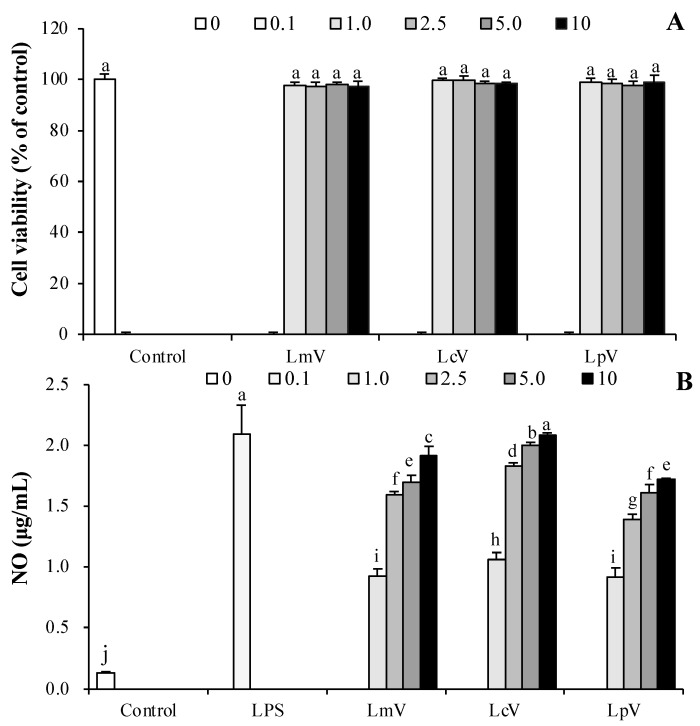
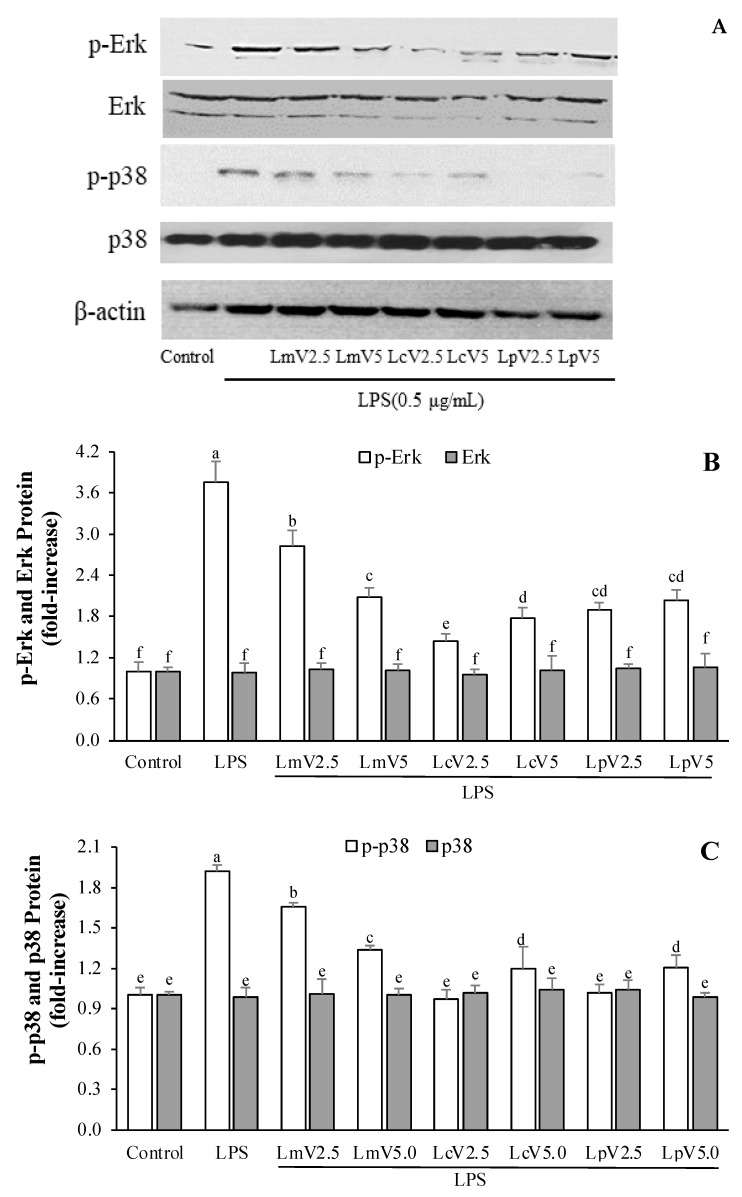
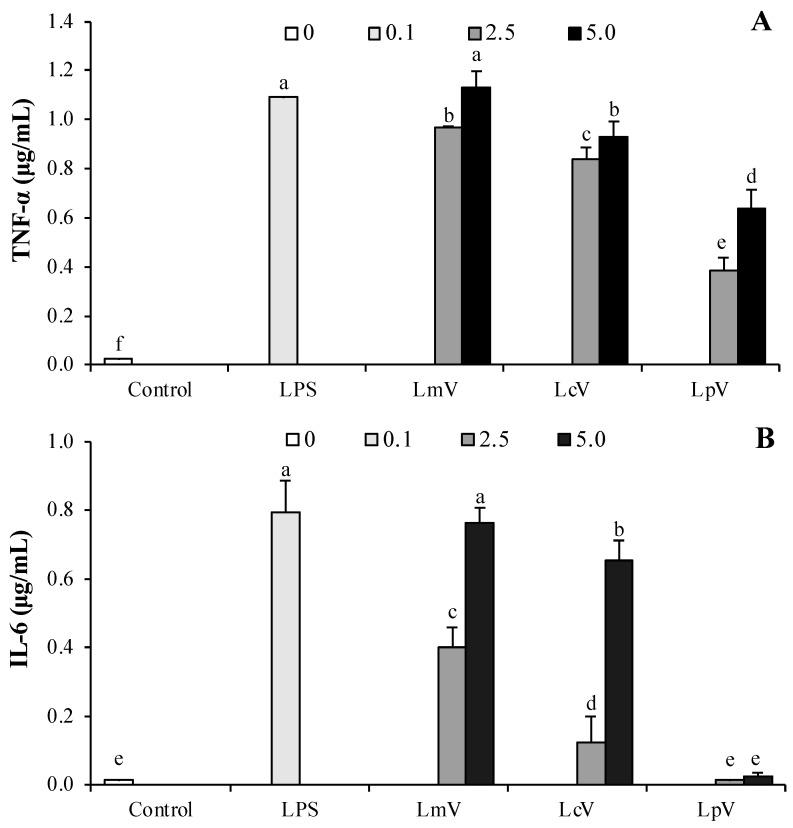
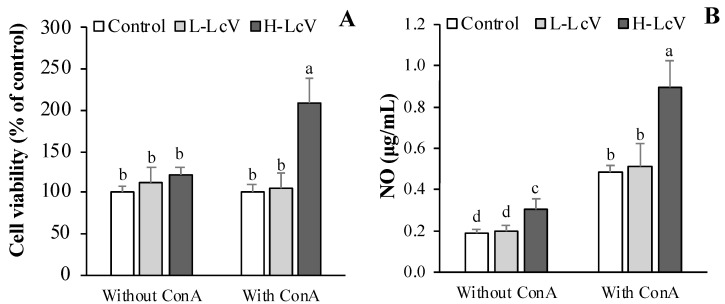
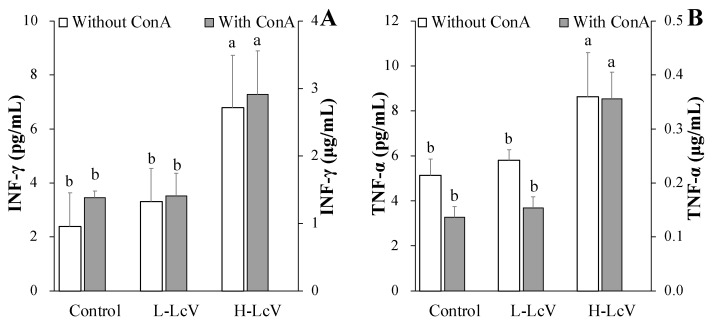
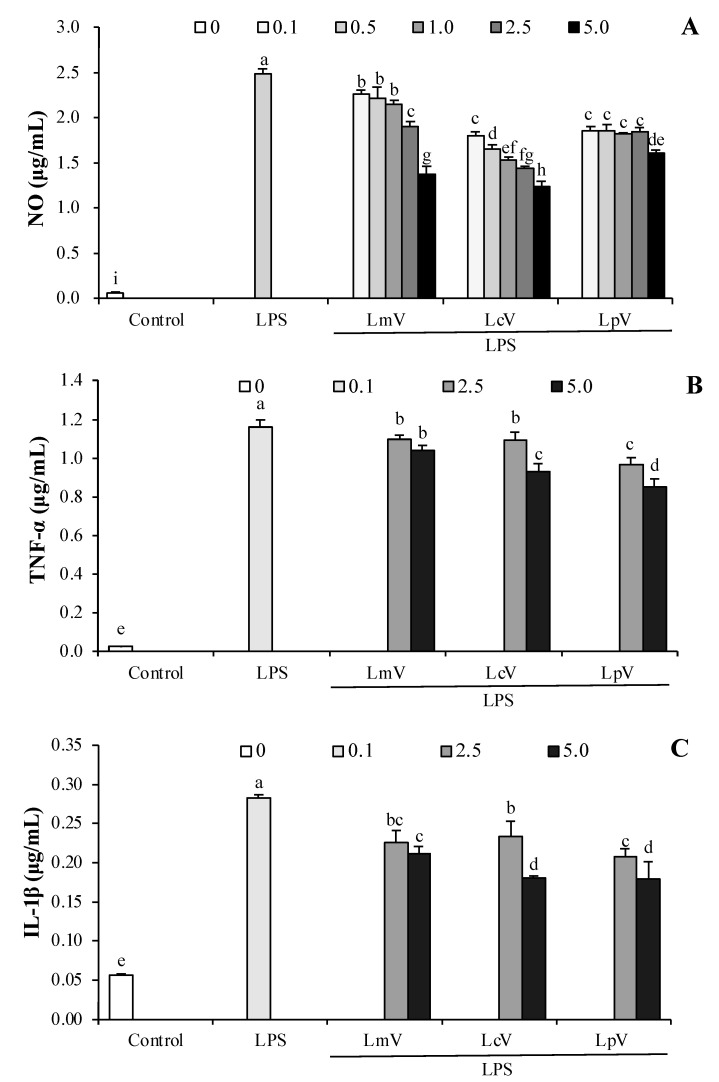
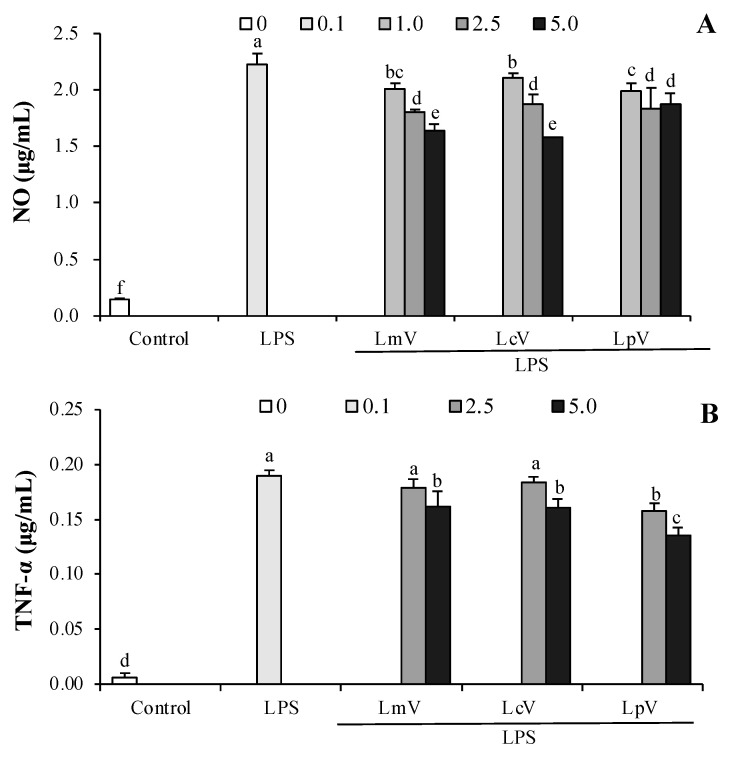
Lactic acid bacteria present in Kimchi, such as (Lm), (Lc), and (Lp) produce extracellular vesicles (ECVs) that modulate immune responses. The ECVs of probiotic Kimchi bacteria are abbreviated as LmV, LcV, and LpV. Treatment of macrophages (RAW264.7) with ECVs (LmV, LcV, and LpV) increased the production of nitric oxide (NO), tumor necrosis factor (TNF)-α, and interleukin-6 (IL-6). Immunostimulatory effects exerted on the RAW264.7 cells were stronger after treatments with LmV and LcV than with LpV. Treatment of mice with LcV (1 mg/kg, orally) induced splenocyte proliferation and subsequent production of both NO and cytokines (INF-γ, TNF-α, IL-4, and IL-10). Furthermore, pre-treatment of macrophages and microglial cells with ECVs prior to LPS stimulation significantly attenuated the production of NO and pro-inflammatory cytokines (TNF-α, IL-1β, and IL-6). Therefore, ECVs (LmV, LcV, and LpV) prevent inflammatory responses in the LPS-stimulated microglial cells by blocking the extracellular signal-regulated kinase (Erk) and p38 signaling pathways. These results showed that LmV, LcV, and LpV from Kimchi probiotic bacteria safely exert immunomodulatory effects.
泡菜中存在的乳酸菌,如乳酸乳球菌(Lm)、嗜酸乳杆菌(Lc)和植物乳杆菌(Lp)会产生可调节免疫反应的细胞外囊泡(ECV)。益生菌泡菜细菌的ECV缩写为LmV、LcV和LpV。用ECV(LmV、LcV和LpV)处理巨噬细胞(RAW264.7)可增加一氧化氮(NO)、肿瘤坏死因子(TNF)-α和白细胞介素-6(IL-6)的产生。用LmV和LcV处理后对RAW264.7细胞产生的免疫刺激作用比用LpV处理更强。用LcV(1毫克/千克,口服)处理小鼠可诱导脾细胞增殖以及随后NO和细胞因子(INF-γ、TNF-α、IL-4和IL-10)的产生。此外,在脂多糖(LPS)刺激之前用ECV对巨噬细胞和小胶质细胞进行预处理可显著减弱NO和促炎细胞因子(TNF-α、IL-1β和IL-6)的产生。因此,ECV(LmV、LcV和LpV)通过阻断细胞外信号调节激酶(Erk)和p38信号通路来预防LPS刺激的小胶质细胞中的炎症反应。这些结果表明,泡菜益生菌细菌来源的LmV、LcV和LpV可安全地发挥免疫调节作用。