Bruserud Øystein, Vo Anh Khoi, Rekvam Håkon
Department of Clinical Science, University of Bergen, 5020 Bergen, Norway.
Department of Medicine, Haukeland University Hospital, 5021 Bergen, Norway.
J Clin Med. 2022 Jan 28;11(3):706. doi: 10.3390/jcm11030706.
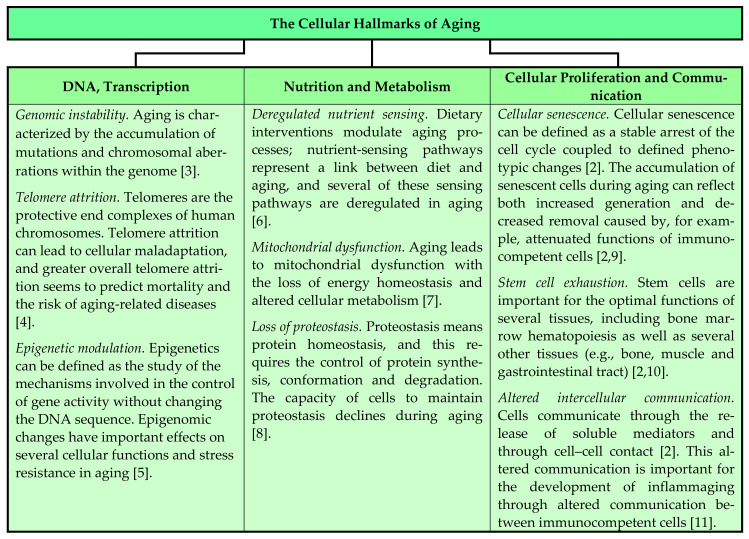
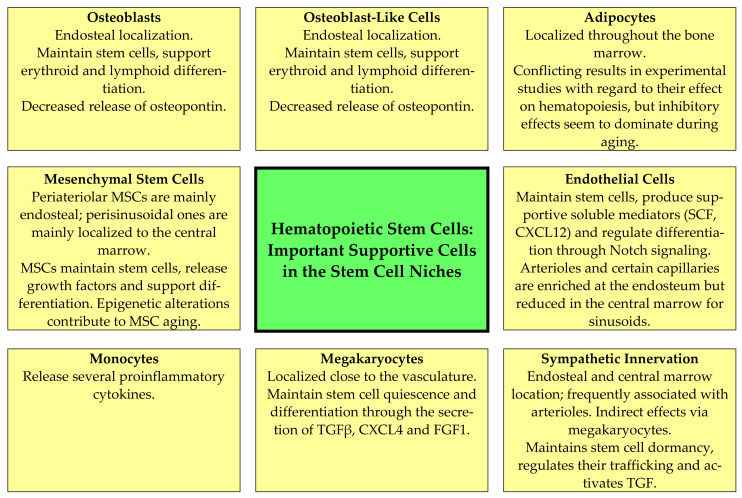
Anemia and systemic signs of inflammation are common in elderly individuals and are associated with decreased survival. The common biological context for these two states is then the hallmarks of aging, i.e., genomic instability, telomere shortening, epigenetic alterations, loss of proteostasis, deregulated nutrient sensing, mitochondrial dysfunction, cellular senescence, stem cell exhaustion and altered intercellular communication. Such aging-associated alterations of hematopoietic stem cells are probably caused by complex mechanisms and depend on both the aging of hematopoietic (stem) cells and on the supporting stromal cells. The function of inflammatory or immunocompetent cells is also altered by aging. The intracellular signaling initiated by soluble proinflammatory mediators (e.g., IL1, IL6 and TNFα) is altered during aging and contributes to the development of both the inhibition of erythropoiesis with anemia as well as to the development of the acute-phase reaction as a systemic sign of inflammation with increased CRP levels. Both anemia and increased CRP levels are associated with decreased overall survival and increased cardiovascular mortality. The handling of elderly patients with inflammation and/or anemia should in our opinion be individualized; all of them should have a limited evaluation with regard to the cause of the abnormalities, but the extent of additional and especially invasive diagnostic evaluation should be based on an overall clinical evaluation and the possible therapeutic consequences.
贫血和全身炎症体征在老年人中很常见,且与生存率降低有关。这两种状态共同的生物学背景是衰老的标志,即基因组不稳定、端粒缩短、表观遗传改变、蛋白稳态丧失、营养感应失调、线粒体功能障碍、细胞衰老、干细胞耗竭以及细胞间通讯改变。造血干细胞的这种与衰老相关的改变可能是由复杂机制引起的,并且依赖于造血(干)细胞和支持性基质细胞的衰老。炎症或免疫活性细胞的功能也会因衰老而改变。可溶性促炎介质(如白细胞介素1、白细胞介素6和肿瘤坏死因子α)引发的细胞内信号在衰老过程中发生改变,这既导致了贫血时红细胞生成受抑制的发生,也导致了急性期反应的发生,后者是炎症的全身体征,表现为C反应蛋白水平升高。贫血和C反应蛋白水平升高均与总体生存率降低和心血管死亡率增加有关。我们认为,对患有炎症和/或贫血的老年患者的处理应个体化;所有患者都应对异常原因进行有限评估,但额外的,尤其是侵入性诊断评估的范围应基于全面的临床评估和可能的治疗后果。