Department of Electronic Engineering, Gachon University, Seongnam-Daero 1342, Incheon 13120, Korea.
Int J Mol Sci. 2022 Jan 31;23(3):1641. doi: 10.3390/ijms23031641.
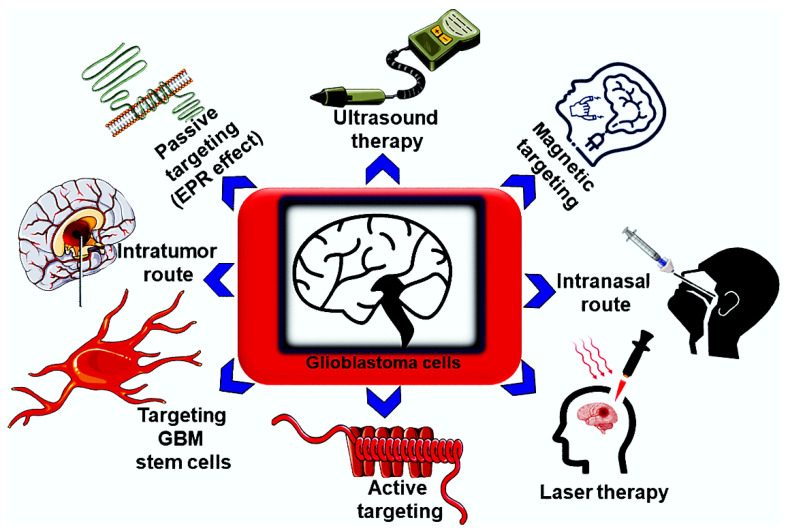
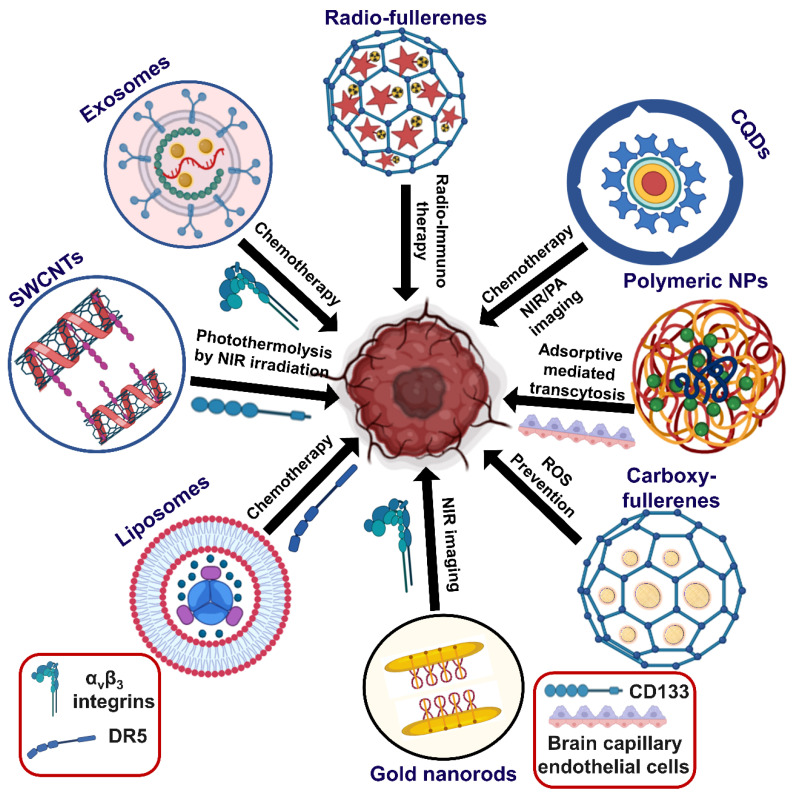
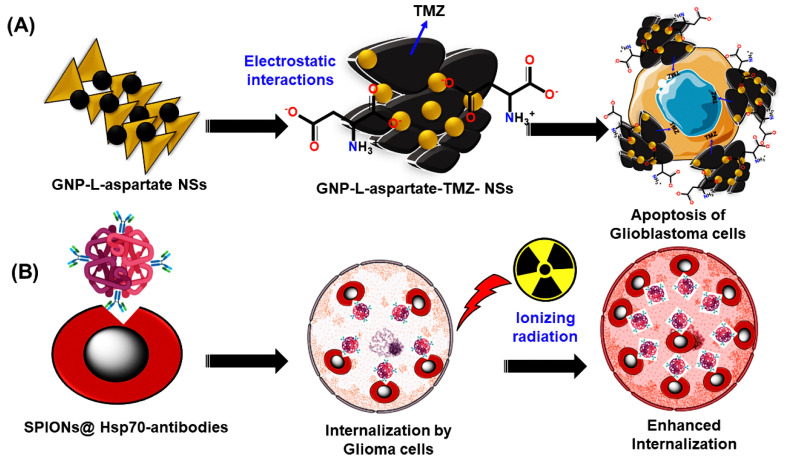
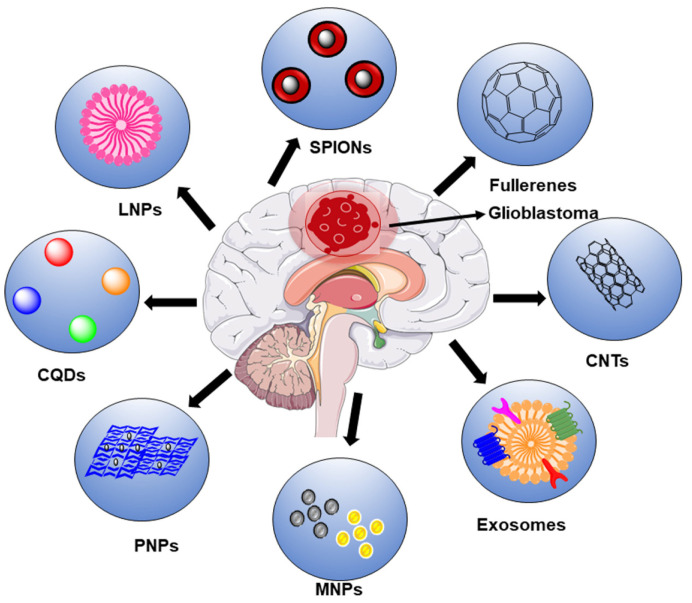
Brain tumors such as glioblastoma are typically associated with an unstoppable cell proliferation with aggressive infiltration behavior and a shortened life span. Though treatment options such as chemotherapy and radiotherapy are available in combating glioblastoma, satisfactory therapeutics are still not available due to the high impermeability of the blood-brain barrier. To address these concerns, recently, multifarious theranostics based on nanotechnology have been developed, which can deal with diagnosis and therapy together. The multifunctional nanomaterials find a strategic path against glioblastoma by adjoining novel thermal and magnetic therapy approaches. Their convenient combination of specific features such as real-time tracking, in-depth tissue penetration, drug-loading capacity, and contrasting performance is of great demand in the clinical investigation of glioblastoma. The potential benefits of nanomaterials including specificity, surface tunability, biodegradability, non-toxicity, ligand functionalization, and near-infrared (NIR) and photoacoustic (PA) imaging are sufficient in developing effective theranostics. This review discusses the recent developments in nanotechnology toward the diagnosis, drug delivery, and therapy regarding glioblastoma.
脑肿瘤,如神经胶质瘤,通常与不可阻挡的细胞增殖、侵袭性行为和寿命缩短有关。尽管化疗和放疗等治疗选择可用于治疗神经胶质瘤,但由于血脑屏障的高通透性,仍没有满意的治疗方法。为了解决这些问题,最近,基于纳米技术的多种治疗策略已经被开发出来,可以同时进行诊断和治疗。多功能纳米材料通过结合新型热疗和磁疗方法,为治疗神经胶质瘤找到了一条战略途径。它们具有实时跟踪、深层组织穿透、载药能力和对比性能等独特特性,这在神经胶质瘤的临床研究中具有很大的需求。纳米材料具有特异性、表面可调性、生物降解性、低毒性、配体功能化以及近红外(NIR)和光声(PA)成像等潜在优势,足以开发有效的治疗策略。本文综述了纳米技术在神经胶质瘤的诊断、药物输送和治疗方面的最新进展。